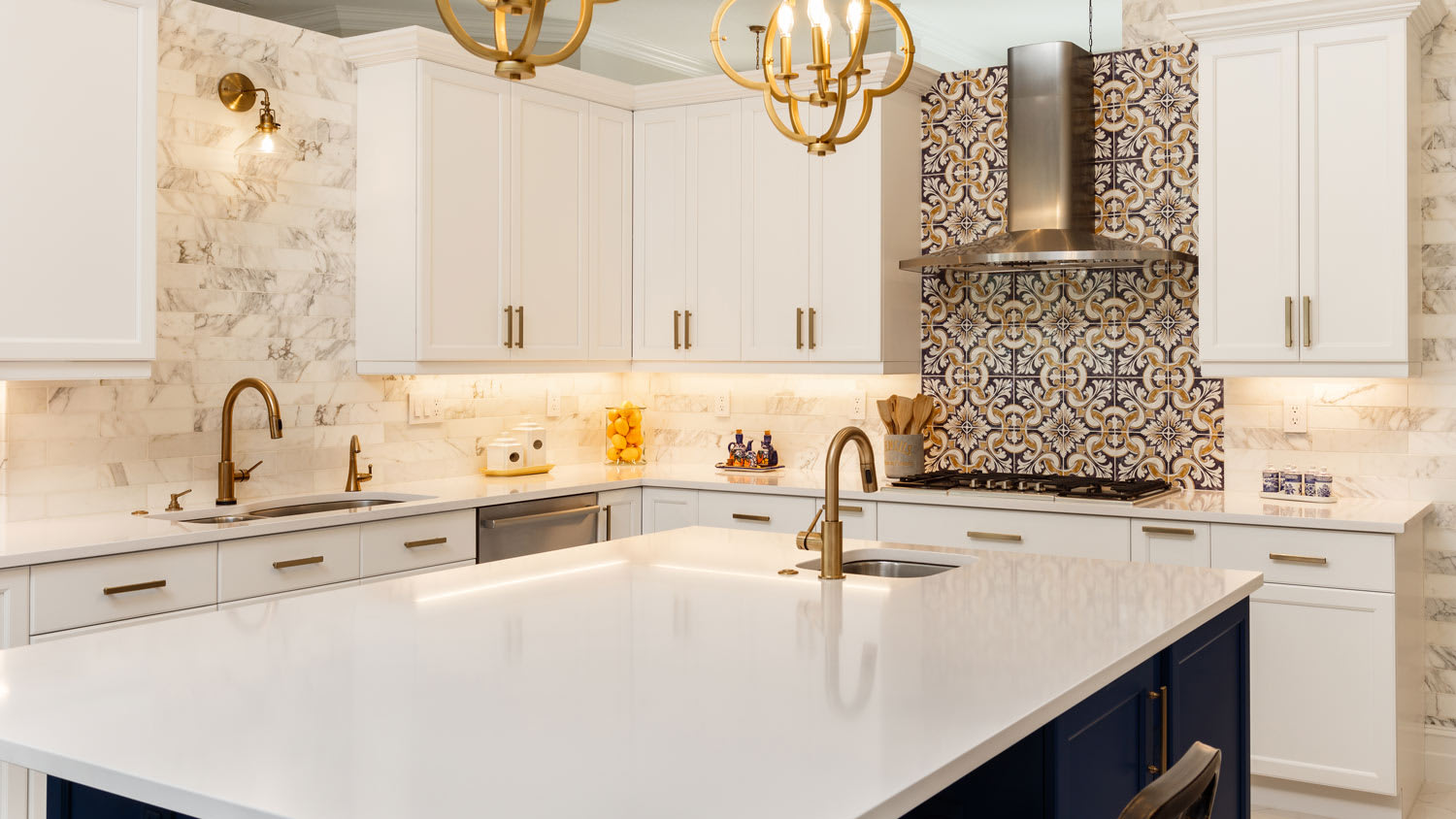
We take great pride in our experience, expertise, quality, and customer service that we provide to meet the consumers' needs. It is our mission to provide excellent workmanship and complete customer satisfaction from start to completion of a project. In order to understand the needs and expectations of our customers, we take great care to work and communicate with every customer in a professional manner. Our reputation is based on service, safety, and quality, regardless of how large, or small the job.
Countertops and Backsplashes questions, answered by experts
Concrete countertops require regular upkeep and can be harder to maintain than other materials. For daily cleaning, use a mild, pH-neutral cleaner and avoid harsh, acidic products that can damage the sealant. It's important to wipe up spills immediately, especially from acidic substances, as concrete stains easily. To prevent scratches, always use a cutting board. The countertops must be resealed periodically—at least once a year—to protect them from stains and moisture. Be aware that concrete is also prone to cracking over time and may require repairs.
The standard kitchen countertop height is 36 inches, so a 37-inch countertop should work fine. However, if you’re 5’4” or shorter, a 37-inch countertop might be too high. Ideally, the countertop will be three to four inches below your elbows.
Yes, you can generally put hot pans directly on a granite countertop without worrying about cracking, as it is a durable, heat-resistant stone that can withstand high temperatures. However, it is still highly recommended to use a trivet or hot pad as a precaution. Prolonged or repeated exposure to high heat can potentially cause discoloration or damage the countertop's sealant, making it more susceptible to staining. Additionally, the heat from a pan can transfer to the granite, creating a burn hazard for anyone who touches the surface shortly after.
Most homebuyers value standard counter height (34–36 inches) over bar height (40–42 inches).
New countertops can last for anywhere between 15 and 50 years, with the exact lifespan depending on the material:
Quartz: 50 to 100 years
Marble: 50 to 100 years
Granite: 50 to 100 years
Laminate: 15 to 20 years
Concrete: 20 to 30 years
Tile: 40 to 100 years
Keep in mind some materials are more likely to stain and chip than others, which is an important factor to consider when it comes to the longevity of your countertops. Some materials also need special cleaning and maintenance, like tile countertops, which need grout cleaning, and concrete countertops, which need resealing.
The Ashley, ND homeowners’ guide to countertop and backsplash services
From average costs to expert advice, get all the answers you need to get your job done.
Are you getting close to deciding on Caesarstone® countertops for your home? Discover all the details behind Caesarstone® countertop costs in this guide.
The cost of porcelain countertops is affected by many factors, primarily the material's type (tile or slab) and finish, as well as your counter’s size and shape.
From protecting your walls from cooking spatter to solidifying your aesthetic, these backsplash ideas will elevate the form and function of your kitchen.