
Top-rated arborists.

Get matched with top arborists in Humansville, MO

Enter your zip and get matched with up to 5 pros

Need a pro for your arboricultural service project in Humansville, MO?

Select your specific project to find the pro for you.

TRUSTED BY HUMANSVILLE, MO HOMEOWNERS

  • Average homeowner rating star icon5
    Average homeowner rating
  • Verified reviews icon24
    Verified arboricultural services reviews

Find Arborists in Humansville

Avatar for K&S Quality Landscape & Tree Care LLC
K&S Quality Landscape & Tree Care LLC
4.9(
10
)
Tree RemovalTree TrimmingTree Removal - For Business+3 more

Serving Humansville, MO and surrounding areas

Approved

Free estimates

Emergency services offered

Small jobs welcome

"They arrived on time, did the job and cleaned up all the tree branches and leaves, taking them with them. The company owner was a little over anxious in wanting to increase the amount of work they were preforming to get more money for the day. The only real issue was the owner came and went and a limb was dropped on one of my fences, but there was little damage. I would suggest that his employees pick up after themselves, I picked up four water bottles and a big gulp cup scattered around my yard. I recommended this company to my neighbor who also had some work done."
44 neighbors recently requested a quote
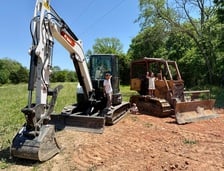
Avatar for TREE HUGGERS TREE CARE
TREE HUGGERS TREE CARE
5.0(
14
)
Tree RemovalTree Removal - For BusinessTree Stump - Remove+5 more

Serving Humansville, MO and surrounding areas

In business since 2002

Free estimates

Emergency services offered

"the provider cut down several dead limbs, and also used a leaf blower to remove some maple debris from my house's roof.
he gave me a cost discount to make up for some previous work his company had done that was not quite to my satisfaction.


"
Tree Removal
Tree Removal
Tree Removal
Recommended by100%of homeowners
Showing 1-10 of 31
Arborists questions, answered by experts

A tree growing close to a house can pose several risks, but removal isn't always the only or best solution. Potential problems include roots growing into the foundation and causing structural cracks, branches damaging the roof or promoting moss growth, and debris clogging gutters, which can lead to water damage. Trees can also provide access for pests and encourage mold. However, a small, healthy tree may not be a problem, and for larger, established trees, strategic trimming can be a cheaper and more beneficial alternative to removal. It is generally recommended to take action for trees within 10 to 20 feet of your home, especially if they are unhealthy or encroaching. Your best bet is to consult a professional arborist who can assess the specific situation and provide expert advice.

State and local laws vary, but in most cases, you are allowed to trim any branches from your neighbor's tree that cross your property line. However, it's important to ensure you do not damage the overall health of the tree in the process. Removing branches incorrectly can jeopardize the health of the tree and could lead to you being on the hook to replace it.

If you’re wondering whether you can plant a tree where the stump was removed, know that the soil conditions won’t be ideal, so you should avoid it. The soil beneath the previous tree will likely be depleted of nutrients, plus there may be roots left behind that will seriously hinder the growth of a new tree. Also, if you use salt or other chemical solutions to kill the stump, these can linger in the soil for months or even years and prevent healthy growth. It’s best to choose a different spot that’s at least three feet away for a new tree, or wait at least a year and thoroughly amend the soil before you plant.

Tree roots are hearty and complex systems, so they don’t die immediately after the rest of the tree is removed. If you leave the root system in place, it takes anywhere from two to seven years for it to run out of nutrients. It is worth noting, however, that the roots stop growing and expanding after cutting down the rest of the tree.

In most cases, you should not use a pruning seal on trees after trimming. Applying a sealant can interfere with the tree's natural healing process, and it does not guarantee protection from pathogens. Instead of sealing the cut, the best practice is to support the tree's natural recovery by providing it with plenty of water and a dormant-style fertilizer. However, there are exceptions. Pruning seals may be recommended for very vulnerable species, like elm trees, in areas where dangerous diseases such as Dutch elm disease are prevalent. In these specific situations, the protection offered by a sealant can outweigh its downsides. For advice tailored to your situation, especially after cutting large branches, it is best to consult a local tree trimming professional.

The Humansville, MO homeowners’ guide to arboricultural services

From average costs to expert advice, get all the answers you need to get your job done.