


Top-rated deck maintenance specialists.

Get matched with top deck maintenance specialists in Hartville, MO

Enter your zip and get matched with up to 5 pros

Need a pro for your deck maintenance project in Hartville, MO?

Select your specific project to find the pro for you.

Find Deck maintenance specialists in Hartville

RJ Decorators
4.6(
6
)
Deck, Fence, Patio or Porch - Clean and Seal

Serving Hartville, MO and surrounding areas

In business since 1980

Free estimates

Credit card accepted

"Home Adviser should let the company know that I wanted them to do the work when they came out. They were not prepared totally to power wash my house. They did have their power washer but did not have any chemicals to clean with. If I was suppose to supply the chemicals I should have been informed ahead of time. They did an excellent job cleaning my siding."
Response time2 days
Recommended by100%of homeowners

Showing 1-10 of 38
Deck Maintenance questions, answered by experts

Composite decking requires a solid foundation, substructure, or subframe to ensure stability. This base is typically composed of posts, beams, joists, and footings. The frame's joists can be built from various materials like composite, plastic, timber, or metal, as long as the base can support the deck's weight without shifting. A professional deck builder might recommend installing the frame on a solid concrete base for added durability. The final design and materials for the substructure will depend on your budget, the type of deck, and environmental conditions.

Pressure-treated lumber is one of the most affordable types of decking upfront. This material is widely available, so you can usually find pressure-treated lumber at almost any local home improvement store you visit. Keep in mind that wood requires a lot of upkeep with repainting and restaining, so any kind of wood may be more expensive in the long run than something like PVC decking.

Before installing a deck, you must build a base for the deck to rest upon, often made of compacted soil or gravel. While gravel is an optional material, it helps with drainage. Some contractors also recommend installing a weed control membrane, which helps provide a solid foundation for the frame. In the case of an elevated deck, a pro will often lay down a concrete slab as a foundation. 

Both aluminum and composite decking materials are environmentally friendly, with aluminum decking coming in as the most eco-friendly option. 

Though composite decking helps remove plastics from landfills, recycles wood, and lasts longer than traditional wood decks, it’s not recyclable and only lasts for 25 to 30 years on average. Aluminum can last well over 30 years and is almost always recyclable.

Homeowners should build their floating decks at least 18 inches off the ground. Having it at this height will allow for better airflow underneath and help prevent moisture-related problems like warping or rot. That being said, local guidelines for deck heights may vary depending on where you live.
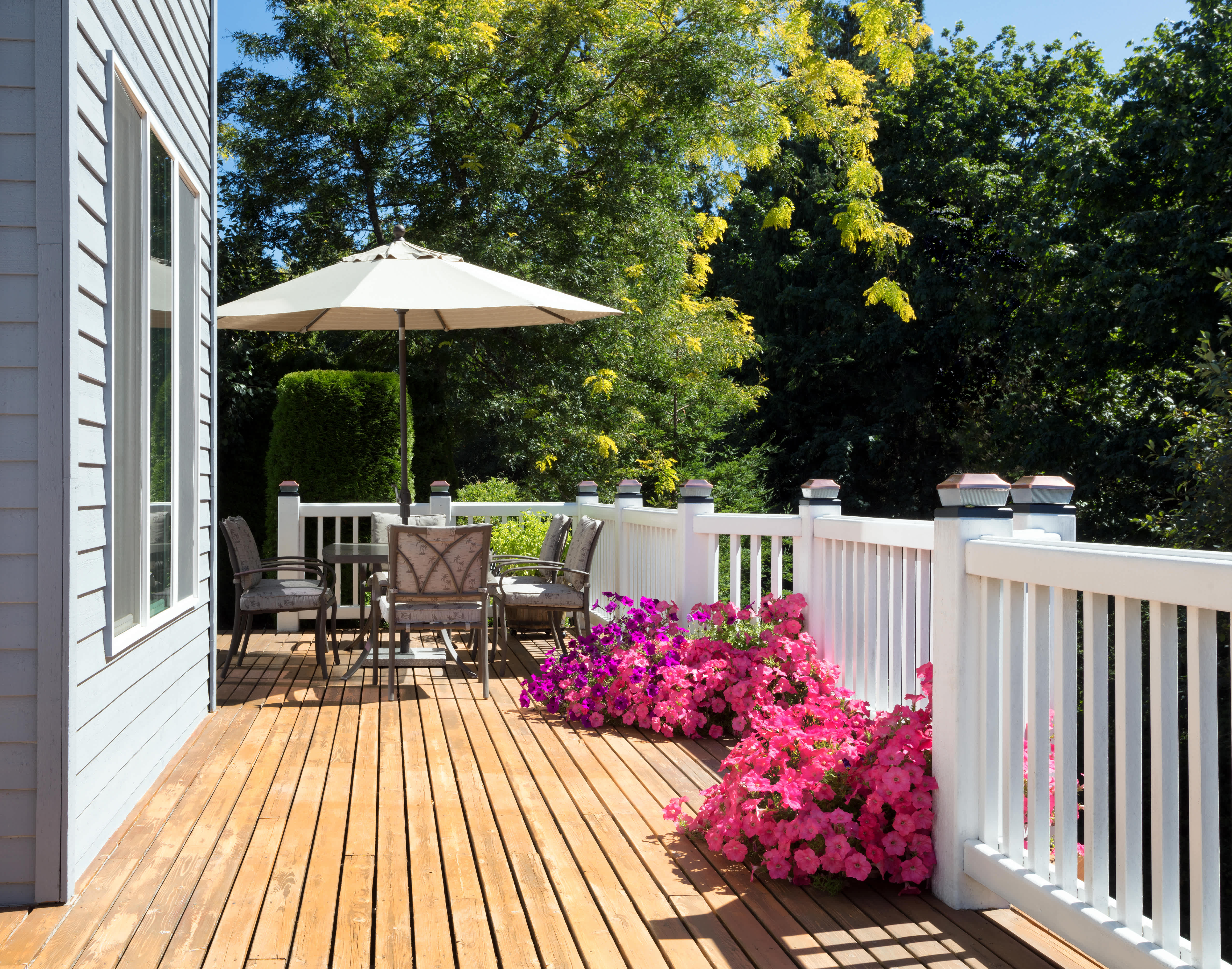
The Hartville, MO homeowners’ guide to deck maintenance services

From average costs to expert advice, get all the answers you need to get your job done.