We provide residential and commercial solar power options, and provide support services for industry partner companies. We offer no cost consultations and $0 down financing. Please contact our office for a consultation at (931)922-8258.
"I was very impressed with the installer who was sent. He mounted the dish without drilling through my new roof, which might have voided my roof warranty, Also, he mounted the dish in a location where it is easy for me to brush the snow off it in winter. I appreciate his knowledge and thoughtfulness. Also, they didn't charge me to re-install the dish."
"The last was a rental company that we have and we used them for an air conditioning and heating system. It was Bototach Mechanical. It’s been a good program for us. They’re very responsive. I don’t know what the thought process was. My husband said, well let’s try these guys and so we did. We have an older home and it’s proved to be a very good deal. The quality has been pretty good, so I would give them an A for the quality. I will give you one helpful hint though. If the company decides they want to replace an appliance, you need to call them and negotiate with them because you can upgrade, but you need to talk to them in person not just do it over the internet."
The best solar panels to withstand hail are those rated UL 61730. These solar panels are certified to withstand hailstones up to 3 inches in diameter and travel at speeds up to 88 mph. IP68 solar panels are the next most resilient solar panel. Solar panels without these ratings can handle hail up to 1 inch in diameter that travels up to 50 miles per hour. If you live in an area with frequent or severe hailstorms, purchasing UL 61730 solar panels is often worth the investment.
Does your total price include the equipment and labor?
How long do you expect the installation process to take?
What kind of workmanship warranty do you include with your installations?
Who should I contact if I have a problem with my system after installation?
Do you install the panels or outsource the work to third parties?
Will you file for solar incentives for me?
Solar panels can pay for themselves in five to 15 years, depending on the cost of your system, how much energy it generates, whether you qualify for incentives or power buybacks, and the price of energy in your area. Solar panels pay for themselves over time as they lower electricity bills, so it will take time to recoup your initial investment. However, the longer you have your system, the more money you can save and earn.
While solar panels can be a great investment, they aren’t ideal for every roof. For example, some roofs, especially older or structurally weak ones, may struggle to support the added weight, leading to potential damage. Roofs with complex designs, obstructions, or limited sunlight exposure might not provide optimal conditions for solar energy production. Consider these downsides when determining if solar panel installation costs are worth it.
Solar panels should get at least four to six hours of direct sunlight daily. It’s even better if sunlight reaches panels between the peak hours of 10 a.m. and 3 p.m. This is enough to power a home, depending on your solar system’s size and energy needs. Remember that panels will generate some power under cloudy skies or in the shade, and many systems compensate for lower sun exposure by drawing energy from the grid or battery storage.
The Tyler, MN homeowners’ guide to solar panel services
From average costs to expert advice, get all the answers you need to get your job done.
There are a few factors to consider when it comes to solar panel repair costs. This guide breaks down the prices of solar panel removal, repair, and replacement.
Find out how much it costs to remove solar panels, including average prices, key cost factors, and tips to save money on your solar panel removal project.
Residential solar panel dimensions can vary slightly from brand to brand, but this guide can help you understand the basics and choose the best option.
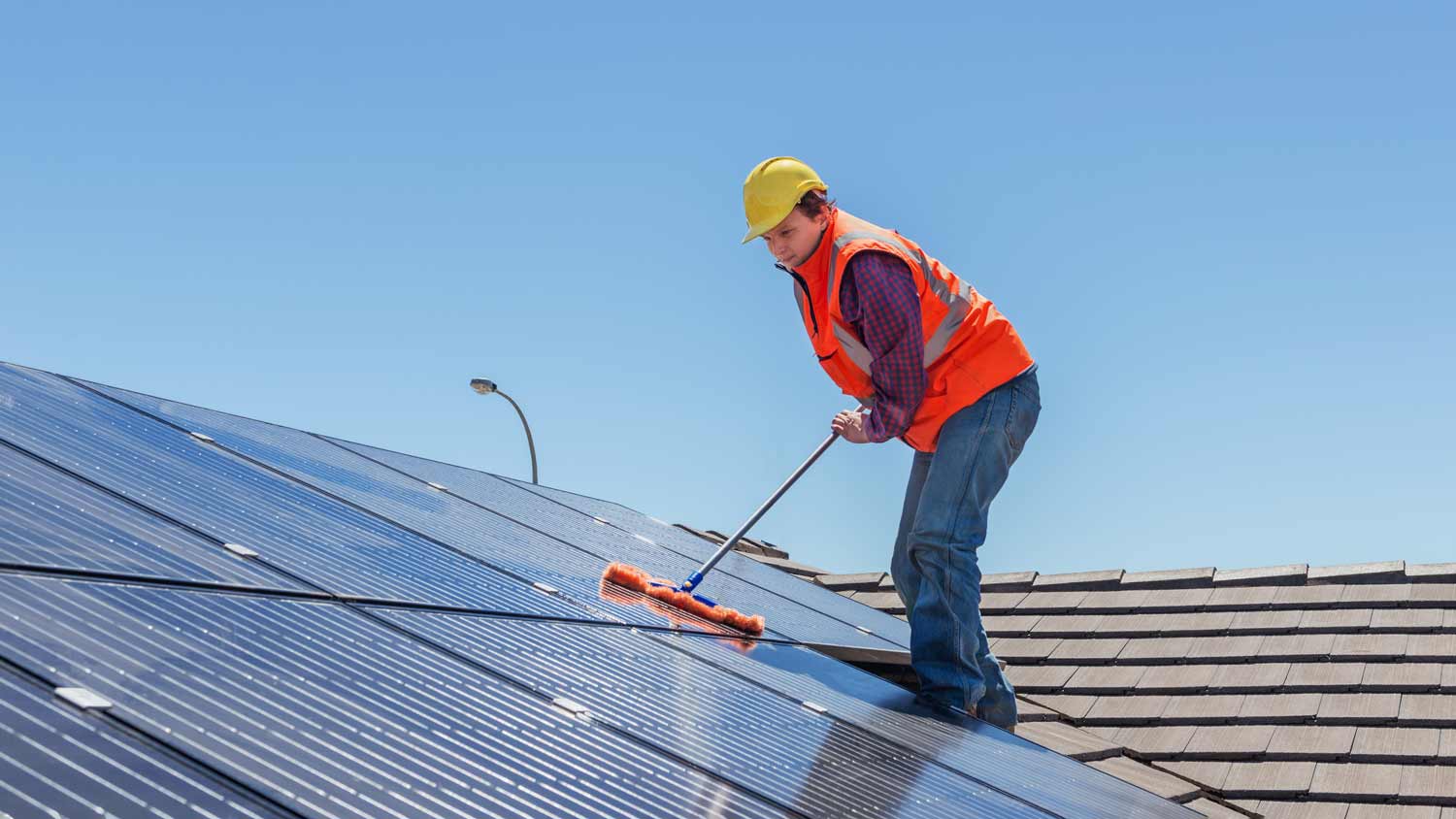
Solar panels are low-maintenance but occasionally require some elbow grease. This guide will help you learn how often solar panel maintenance is required.