
Top-rated fence painters.

Get matched with top fence painters in Appleton, MN

Enter your zip and get matched with up to 5 pros

Need a pro for your fence painting project in Appleton, MN?

Select your specific project to find the pro for you.

Find Fence painters in Appleton

No results for Fence painter in

Try adjusting your search criteria.
Fence Painting questions, answered by experts

Generally, these steps are included in exterior house painting:

  • Prepping and protecting the areas not being painted

  • Scraping away loose paint

  • Cleaning off dirt, grease, and debris

  • Caulking gaps and openings

  • Priming with a quality paint primer

  • Painting the prepared areas, including trim and accents with chosen paint finish

  • Adding a second coat

  • Cleaning up the site and disposing of tape, plastic, and drop cloths

Wood stain is typically dry to the touch within 6 to 12 hours, but it is not fully cured at this point. You should wait at least 24 hours before applying a second coat or a protective finish. For surfaces like decks, avoid walking on them for at least 24 to 48 hours, and wait even longer before placing furniture. The full curing process can take from 24 hours to one week, depending on the type of stain. Factors like high humidity and cold temperatures can extend drying and curing times, so it's wise to allow for extra time in these conditions.

You shouldn't paint a metal fence. Painting doesn't necessarily damage a corrugated metal fence, but these types of fences are meant to flex, and paint can easily chip and break off. Latex paints can address this issue, but those tend not to be very weather-resistant. Certain paints can trap moisture in the corrugation, which can rust the metal and lead to corrosion. And finally, if you paint a copper fence, it won't patina, which is one of the main reasons people buy copper.  

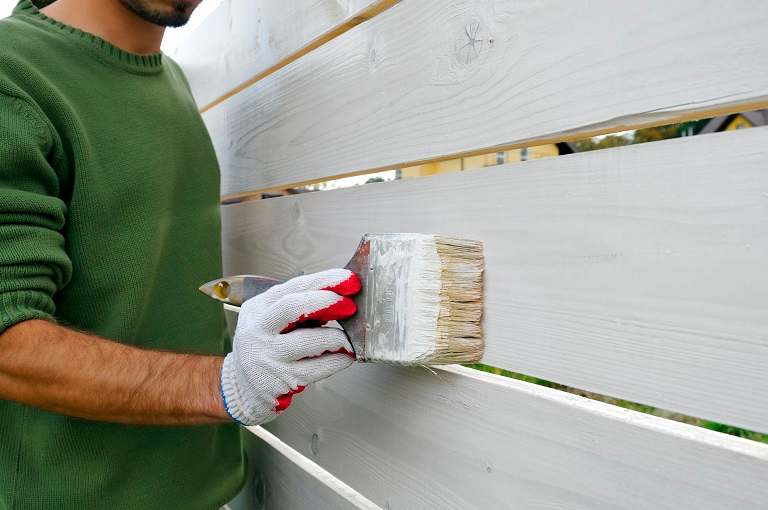
Whether to brush or roll stain on wood depends on the project and your preference. Brushing is ideal for smaller, intricate areas and offers more control over the application, ensuring thorough coverage and penetration into the wood's grain. 

Conversely, rolling is efficient for more extensive, flat surfaces and can save time. However, it is not always the best fit for textured or uneven wood. Some projects may benefit from combining both methods, using a brush for detail work and a roller for broader areas. Ultimately, the choice between brushing and rolling depends on the specific requirements of your staining project.

The best time to stain a fence is when the weather is dry and temperatures are between 50 and 90 degrees Fahrenheit. Late spring, early summer, and fall are typically the best seasons for this project. You should avoid staining during very hot weather, like in the middle of summer, or when it is raining. Heat and moisture can cause the stain to dry unevenly. Likewise, if it's too cold, such as in winter or early spring, the stain may not be able to dry fully. Before you start, check the forecast to ensure there will be no rain and low humidity for at least a few days.

The Appleton, MN homeowners’ guide to fence painting services

From average costs to expert advice, get all the answers you need to get your job done.