






Top-rated ceiling fan pros.

Get matched with top ceiling fan pros in Washington, MI

Enter your zip and get matched with up to 5 pros

Need a pro for your ceiling fan service project in Washington, MI?

Select your specific project to find the pro for you.

TRUSTED BY WASHINGTON, MI HOMEOWNERS

  • Average homeowner rating star icon4.6
    Average homeowner rating
  • Verified reviews icon68
    Verified ceiling fan services reviews

Find Ceiling fan pros in Washington

Avatar for Valentine Publications & Repairs
Valentine Publications & Repairs
4.9(
88
)
Ceiling Fan - InstallCeiling Fan - Repair

Serving Washington, MI and surrounding areas

Approved

Super Service Award Winner

In business since 2007

Free estimates

Emergency services offered

"Writer Busch did an outstanding job in the triage and resolution of an electrical issue I had with the strip of lights in a bathroom. Luckily, it was only the switch that he carefully replaced. He exceeded my expectations by looking at and correcting the light bulb issue over the tub and shower as well, ruling out that the three light issues were not related. He was very professional and friendly. I recommend hiring him for electrical work."
Ceiling Fans - Berkeley
A/C-Burned Electrical Receptacle  - Clinton Township
Ceiling Fans Project
Diagnose Power Outage - GFCI - Southfield
Pushmatic Circuit Breaker - R&R - Farmington

+263

Response time9 hrs
Response rate100%
Recommended by47%of homeowners
Showing 1-10 of 49
Ceiling Fans questions, answered by experts

The direction your ceiling fan spins helps create comfortable airflow in your home and can also help cut down on energy costs. 
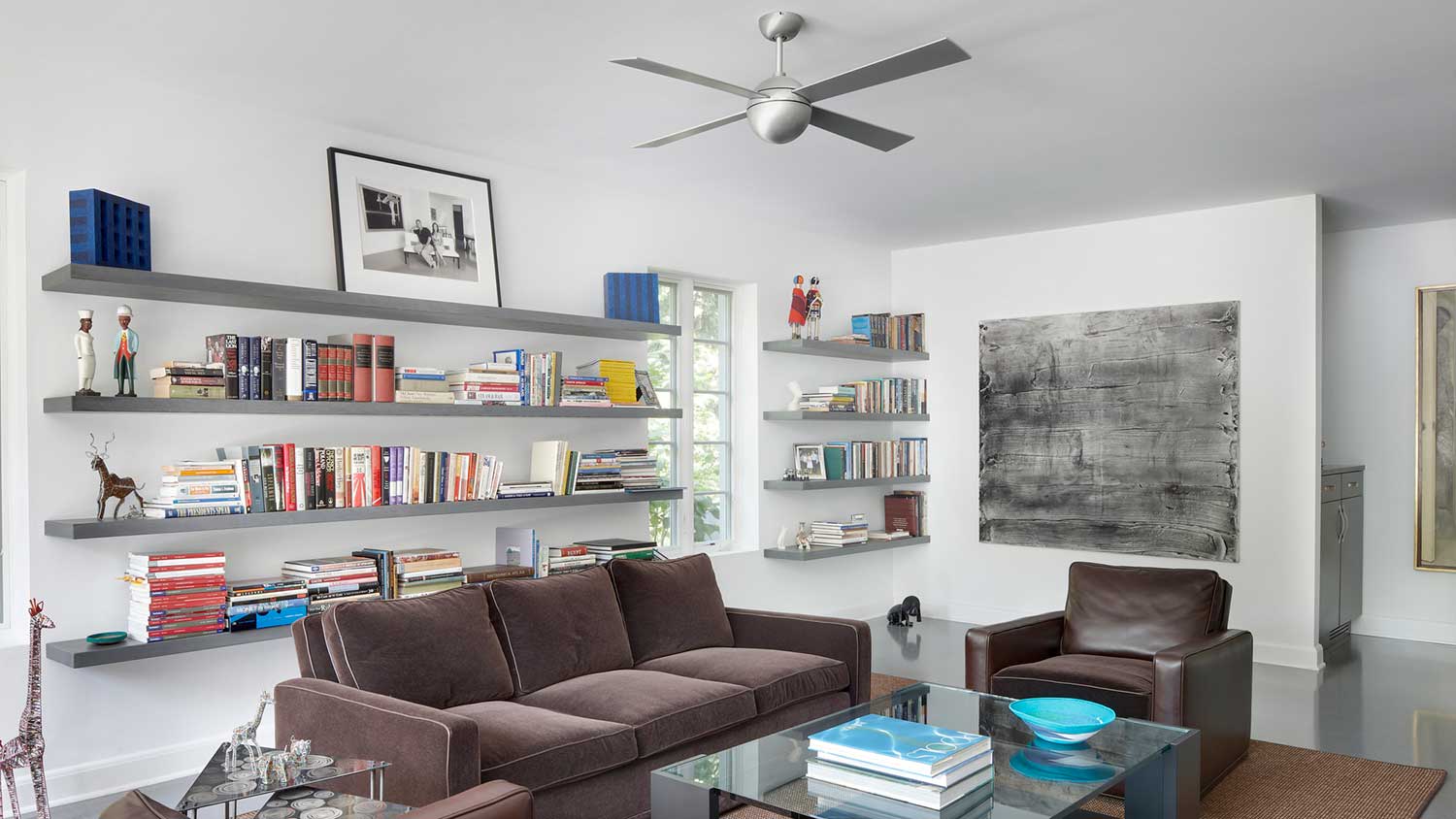

During summer, your ceiling fan should spin counterclockwise. This will push cooler air downward in a column and help lower your room’s air temperature. In the winter, set your ceiling fan to spin clockwise and at the lowest speed setting. This will pull cool air upwards, displacing the warm air that pools towards the top of your ceiling and bringing it down towards the floor.

The more surface area that a ceiling fan blade has, the more effective it will be at producing airflow. Therefore, a longer ceiling fan blade is the better option if you’re looking for more wind. However, a longer blade will consume more energy than a shorter blade.

The most efficient ceiling fan height is 8 to 9 feet from the floor to the fan blades. For ceilings higher than 9 feet, a downrod can be used to lower the fan to the optimal height. This positioning ensures adequate air circulation and maximizes the cooling effect. Remember, fans should be installed at least 7 feet above the floor for safety.

There are several telltale signs to let you know that your ceiling fan needs servicing or replacement. For instance, if it’s wobbling, rotating too slowly, or if your ceiling fan is making noise such as squeaks, buzzes, and thumps, it’s time to have it looked at by a professional. Not only may it indicate a potential problem with the fan itself, but it could also signal a red flag that it’s improperly assembled or there’s an issue with the wiring.

Since the cost of installing a ceiling fan is $250 for most homeowners, it might be beneficial to replace your existing fan if you are experiencing a significant repair issue, like a broken motor. However, for less expensive repairs, like a fan blade replacement, you’ll likely spend less on the repair than a complete fan replacement. Of course, if you’re looking for an upgrade or a new style fan, replacing it altogether is always an option. 

The Washington, MI homeowners’ guide to ceiling fan services

From average costs to expert advice, get all the answers you need to get your job done.