

Top-rated arborists.

Get matched with top arborists in Reese, MI

Enter your zip and get matched with up to 5 pros

Need a pro for your arboricultural service project in Reese, MI?

Select your specific project to find the pro for you.

TRUSTED BY REESE, MI HOMEOWNERS

  • Average homeowner rating star icon4.6
    Average homeowner rating
  • Verified reviews icon69
    Verified arboricultural services reviews

Find Arborists in Reese

Avatar for Belle Boy Snow Plowing Service, LLC
Belle Boy Snow Plowing Service, LLC
4.9(
7
)

Serving Reese, MI and surrounding areas

Approved

In business since 2018

Free estimates

Emergency services offered

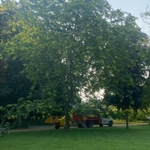
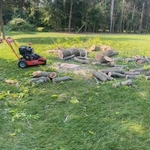
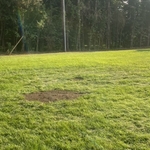
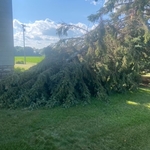
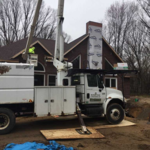
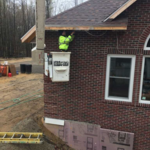
"I had a huge tree fall in my front yard, and Belle Boy Snow Plowing Service came through for me! They gave me an amazing price—literally almost half of what other companies were charging—and still did an incredible job. They cleaned everything up so well, no stubs or mess left behind, and got it done quickly. On top of that, they were very professional and really knew what they were doing. I would definitely recommend them and will be using them again if I ever need to!"
Response time3 days
4 neighbors recently requested a quote
Recommended by33%of homeowners
Kuhn Tree
New to Angi

Serving Reese, MI and surrounding areas

Approved

In business since 2004

Free estimates

Credit card accepted

Kuhn Tree is committed to excellence in every aspect of our business. We uphold a standard of integrity bound by fairness, honesty, and personal responsibility. Our distinction is the quality of service we bring to our customers. Accurate knowledge of our trade combined with ability is what makes us true professionals. Above all, we are watchful of our customers' interests and make their concerns the basis of our business.

Avatar for NATO Tree Service
NATO Tree Service
5.0(
30
)

Serving Reese, MI and surrounding areas

In business since 2018

Free estimates

Emergency services offered

"I have used many tree services in the past but now I will only use NATO tree service by far the best I have ever used !!! Troy has done three jobs for me and four for my friends all say the he is the best."
Response time4 days
Response rate92%
Recommended by100%of homeowners
...
Showing 1-10 of 78
Arborists questions, answered by experts

Carefully pruning small roots no thicker than three inches in diameter won’t harm the tree. However, cutting larger roots may impact the tree's stability and nutrient absorption. It's advisable to consult an arborist or tree care professional to evaluate the root's size, the tree's health, and the potential impact of cutting. Proper tree pruning techniques and timing can minimize damage, but larger root removal may necessitate expert guidance to avoid compromising the tree's overall health and stability.

You should avoid cutting off the top of mature cherry trees. This process is called tree topping, and it’s not recommended for cherry trees—or any trees, for that matter. Tree topping removes between one-third to half of the length of the tree trunk, resulting in structurally unsound, fruitless suckers. The only exception is for saplings. Young pie, sour, and tart cherry trees that are over 30 inches tall in the fall or winter before the tree blooms can benefit from heading cuts.

For safety reasons, leaning trees are best removed by a professional, as they may often tear away from the hinge, causing you to lose control over where the tree falls. If you choose to cut down a tree leaning slightly, avoid cutting off root protrusions before you start. Make your hinge a little longer than usual by cutting it deeper (up to 30% of the diameter) and applying a wedge into the felling cut on the side the tree is leaning. Stand away from the direction the tree leans while making your felling cut.

Unfortunately, palm tree stumps are one of the most difficult types to remove due to how their roots grow. Unlike other trees, palm tree roots grow horizontally and vertically. Palm tree roots grow as deep as three feet into the ground, although soil and growing conditions could mean they go as far as 50 inches into the earth. 

If you want to be able to repurpose the grass in the area where you removed a stump later, you’ll have to dig quite deep—and perhaps wide—to trim away all the roots.

Common signs that a tree is rotting include dead branches, a leaning trunk, peeling or cracked bark, leaf discoloration, and the presence of fungi. If you notice any of these signs, it’s best to hire an arborist near you to inspect your tree and determine if it can be saved or if it needs to come down.

The Reese, MI homeowners’ guide to arboricultural services

From average costs to expert advice, get all the answers you need to get your job done.