






Top-rated bird control service pros.

Get matched with top bird control service pros in Rapid City, MI

Enter your zip and get matched with up to 5 pros

Need a pro for your bird control service project in Rapid City, MI?

Select your specific project to find the pro for you.

TRUSTED BY RAPID CITY, MI HOMEOWNERS

  • Average homeowner rating star icon4.7
    Average homeowner rating
  • Verified reviews icon23
    Verified bird control services reviews

Find Bird control service pros in Rapid City

Bird Control questions, answered by experts

Yes, it is generally safe to return to your house once the pest control professionals have granted permission. Keep in mind that you’ll only need to evacuate your home during extreme pest control treatments, such as whole-home fumigation, while more minor treatments don’t require leaving. When you return home, be sure to follow the pest pro’s instructions carefully, especially those surrounding wait times and safety precautions.

Set live traps or install a one-way door to evict squirrels, rodents, and other animals from your attic. Once they’re out, seal any entry points to prevent the animals from returning. If you’re dealing with an infestation, call a pro. 

Fake owls are a common goose deterrent decoy and one of the most humane ways to scare away geese. Unfortunately, some geese are wise to fake predators. Decoys can be more effective if you move them around frequently or purchase ones with motion features. Decoys that move in the wind are also more effective than stationary decoys.

It is possible, though unlikely, that a home insurance policy will help cover the costs of professional bat removal. However, some policies will chip in for guano removal and associated repairs, such as replacing drywall. Take some time to read the fine print of your homeowner’s insurance policy and call your provider to inquire about bat removal, guano removal, and related repairs.

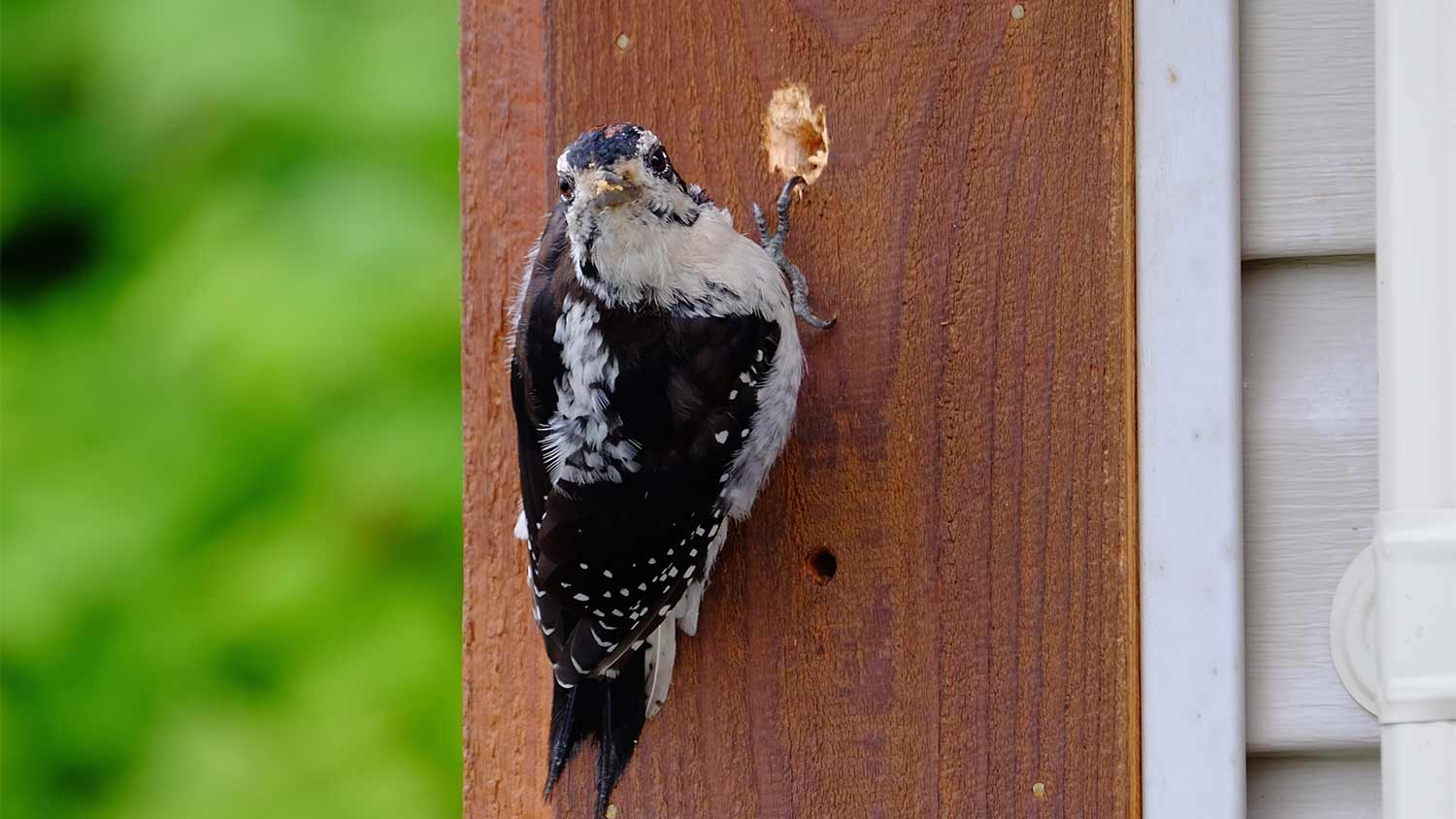
When woodpeckers start banging on your walls or roof, they are probably looking for insects to eat, storing nuts for winter, drilling a hole to make a nest, or communicating with other birds to establish territory or find a mate.

The size of the hole can help determine the reason for the pecking. Small irregular holes are a result of insect hunts. Acorn holes are more consistently sized and often fitted with a nut in the middle. Nest holes are large and have rounded edges. If the bird is pecking to mark its territory or attract a mate, it may leave dents rather than holes, and the noise will stop when the mating season starts in spring.

The Rapid City, MI homeowners’ guide to bird control services

From average costs to expert advice, get all the answers you need to get your job done.