




Top-rated deck maintenance specialists.

Get matched with top deck maintenance specialists in Leroy, MI

Enter your zip and get matched with up to 5 pros

Need a pro for your deck maintenance project in Leroy, MI?

Select your specific project to find the pro for you.

Find Deck maintenance specialists in Leroy

Avatar for Property Services of Michigan
Property Services of Michigan
5.0(
3
)
Deck, Fence, Patio or Porch - Clean and SealDeck, Fence, Patio or Porch - Clean and Seal - For Business

Serving Leroy, MI and surrounding areas

In business since 2007

Free estimates

Emergency services offered

"He gave me a quote and did exactly what he said he was going to do. He was clear about to procedure and what he needed to do. It was nice and clean after the service, I didn't have to do any touch ups or clean ups. I was so happy with the results, I hired him to complete resurface my driveway."
Recommended by100%of homeowners
Showing 1-10 of 30
Deck Maintenance questions, answered by experts

Pressure-treated lumber is one of the most affordable types of decking upfront. This material is widely available, so you can usually find pressure-treated lumber at almost any local home improvement store you visit. Keep in mind that wood requires a lot of upkeep with repainting and restaining, so any kind of wood may be more expensive in the long run than something like PVC decking.

When installing deck boards, screws are generally a better option than nails. Screws offer superior holding strength over time, keeping the boards securely in place. In contrast, nails are more likely to pop out, which can create a tripping hazard. While you can use either, we recommend using 3-inch galvanized deck screws. To minimize the risk of cracking the wood, it's a good practice to drill small pilot holes before driving the screws into the deck joists.

Pressure-treated wood contains preservatives that give the material internal protection from rot and pests. Untreated lumber won’t last more than a few years unless you choose a more expensive wood, like cedar, that naturally stands up well to moisture. Composite decking can outlast wood but is more expensive and doesn’t look as natural. Keep in mind that you’ll need to seal any exterior wood product to protect it from the elements and other forms of external damage.

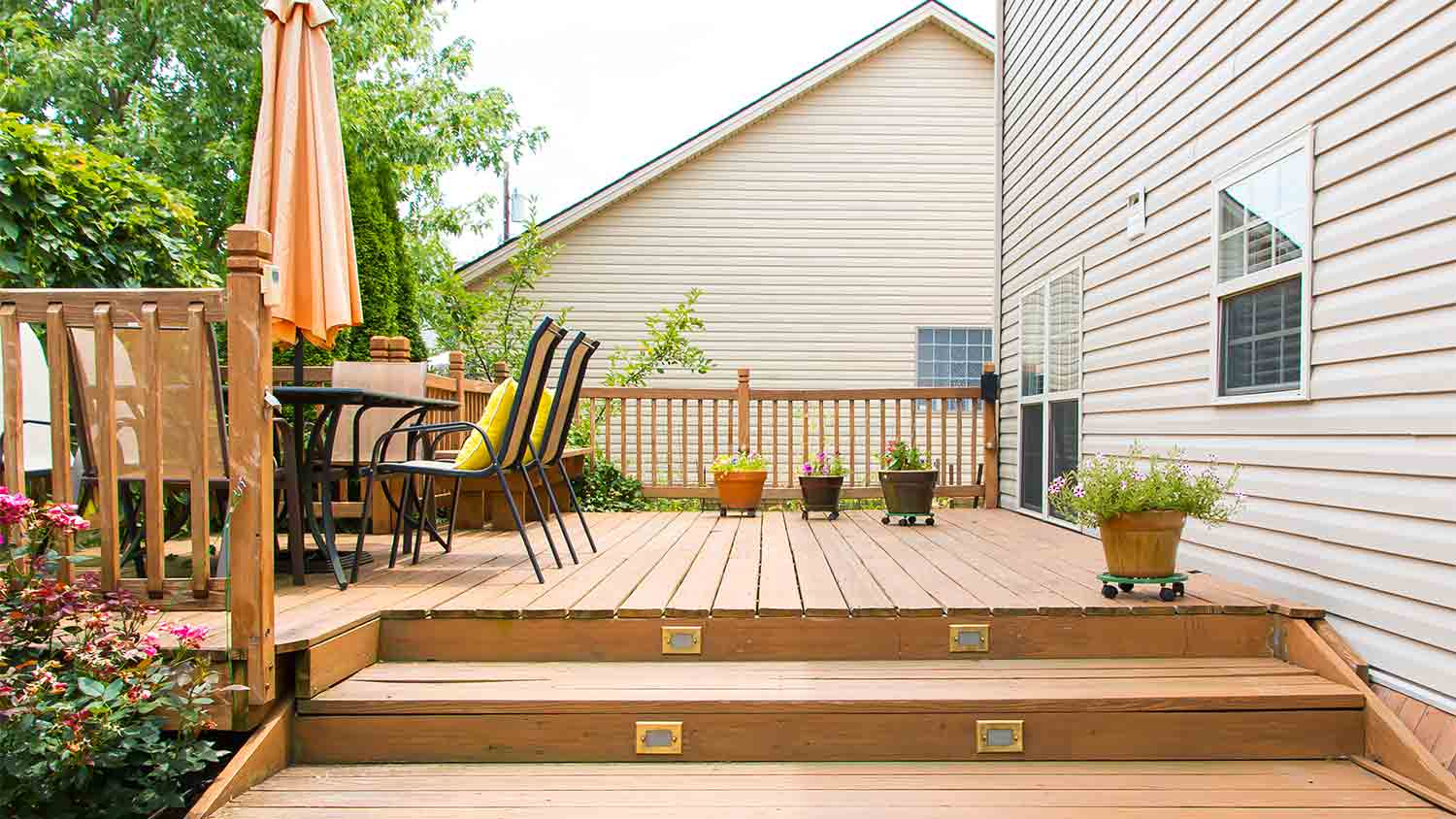
The overhang, or nosing, of deck steps is another area that will be covered in building code requirements. The noses on your deck steps should have a minimum overhang of ¾ inch. For safety, usability, and code compliance, the nosing of deck steps should not extend past 1¼ inches.

The proper height for a stair riser or deck step is between four and seven inches, with seven inches often considered the most comfortable. Building your stairs to this height ensures a strain-free step position and minimizes the risk of trip and fall injuries. For optimal safety and comfort, especially on deck stairs, a rise of around seven inches should be paired with a tread depth (or run) of at least 10 to 12 inches. While it is possible to design stairs with risers up to 12 inches, this height can be challenging for children, pets, or individuals with mobility issues. Always check with your local building codes, as they may mandate specific dimensions that differ from these general recommendations.

The Leroy, MI homeowners’ guide to deck maintenance services

From average costs to expert advice, get all the answers you need to get your job done.