




Top-rated energy efficiency auditors.

Get matched with top energy efficiency auditors in Flint, MI

Enter your zip and get matched with up to 5 pros

Need a pro for your energy efficiency auditing project in Flint, MI?

Select your specific project to find the pro for you.

Find Energy efficiency auditors in Flint

Avatar for Green Energy Management Solutions Corp.
Green Energy Management Solutions Corp.
4.5(
5
)
Energy Audit - For BusinessHome Energy Audit

Serving Flint, MI and surrounding areas

In business since 2001

Free estimates

"They came down and did their work on a Saturday and returned at my convenience as well. They explained everything and offered future opportunities to ask questions. I would have liked a better idea of ROI for the different projects."
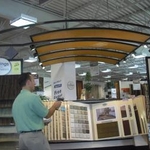
Documenti lighting usage.
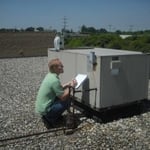
Documenting HVAC units.
Measuring perimiter
Recommended by80%of homeowners
Energy Masters, Inc.
New to Angi
Energy Audit - For Business

Serving Flint, MI and surrounding areas

In business since 2008

Free estimates

Energy Masters, Inc., is proud to be a locally owned and owner operated business. With over 60 years of combined experience, you can rest assured that your project will be completed with the expert results that only experience can bring. Our staff is highly qualified to take care of your needs on a timely basis and always with your satisfaction as our ultimate goal. Call on us today.\n\nAll charges for estimates will be applied to final bill. \n

Showing 1-10 of 18
Energy Efficiency Auditing questions, answered by experts

To determine the right size generator for your house, you should calculate the total wattage of the appliances and devices you want to power during an outage. List all essential items, note their start-up wattages, and add them together.

Here are some typical wattage requirements for common appliances:

  • Refrigerator: 600 watts

  • Large dehumidifier: 700 watts

  • Large window air conditioner: 1,400 watts

  • Water heater: 3,000 to 4,500 watts

  • Electric furnace: 5,000 to 25,000 watts

A 7,500-watt generator might be sufficient for essentials like a refrigerator, freezer, well pump, and lighting circuits. However, for high-demand items like a water heater or furnace, a whole-home generator is a better choice. A portable generator may be enough if you only need to power a few critical items.

While home square footage can offer a rough estimate, it is not always a reliable indicator. For reference, here are some typical generator sizes based on square footage:

  • 1,000 sq ft: 6–9 kW

  • 1,500 sq ft: 7–10 kW

  • 2,000 sq ft: 10–14 kW

  • 2,500 sq ft: 12–16 kW

  • 3,000 sq ft: 16–20 kW+

For the most accurate sizing, consult a professional who can calculate your home's peak and average power consumption and recommend the optimal generator.

If your AC runs constantly, it could be due to a number of things, including a faulty thermostat, incorrect temperature settings, or broken equipment. Alternatively, you might have an airflow problem (for example, blocked vents or leaky ductwork). Either way, an HVAC pro can identify the specific problem and fix it for you.

The three levels of home energy audits include:

  • Level 1: Review of your energy bills and home for signs of energy inefficiency and areas for improvement. The average cost range is $0.08 to $0.12 per square foot.

  • Level 2: A level 2 ASHRAE energy audit costs $0.12 and $0.35 per square foot. In-depth analysis of your energy usage and provides a report of cost-saving changes.

  • Level 3: Comprehensive analysis and detailed recommendations for ways to improve your home’s energy efficiency. A level 3 audit costs about $0.36 to $0.50 per square foot.

Installing weather stripping or upgrading to insulated panels can improve efficiency.

If you have central air conditioning, it’s fine to run your AC all day if that’s what you want—as long as the AC unit is in good condition. But if your AC runs constantly when you don’t want it to, there may be a problem with your system (like the ones we’ve mentioned above). Window AC units and wall air conditioners aren’t as powerful as central AC, so you should only run those kinds of air conditioners for eight to 12 hours at a time.

The Flint, MI homeowners’ guide to energy efficiency auditing services

From average costs to expert advice, get all the answers you need to get your job done.