




Top-rated deck staining pros.

Get matched with top deck staining pros in Centreville, MI

Enter your zip and get matched with up to 5 pros

Need a pro for your deck staining project in Centreville, MI?

Select your specific project to find the pro for you.

TRUSTED BY CENTREVILLE, MI HOMEOWNERS

  • Average homeowner rating star icon3.9
    Average homeowner rating
  • Verified reviews icon21
    Verified deck staining services reviews

Find Deck staining pros in Centreville

Avatar for Miranda Painting
Miranda Painting
5.0(
8
)
Exterior Home or Structure - Paint or StainExterior Home or Structure - Paint or Stain: LargeExterior Home or Structure - Paint or Stain: Medium

Serving Centreville, MI and surrounding areas

Approved

In business since 2024

Free estimates

Credit card accepted

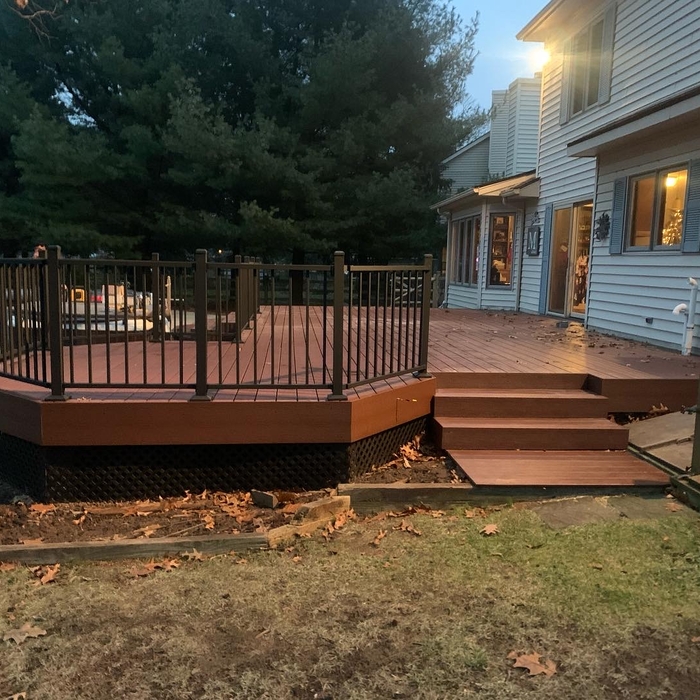
We have 20 years experience and specialize in interior and exterior painting services. We are fast & flawless and offer great prices. We pride ourselves on the quality work we provide, while delivering great customer service. Please see the services we offer below and call -or- click to schedule a free estimate today

Gallery
Gallery
Recommended by87%of homeowners
Gussenburg In & Out Painting
New to Angi
Exterior Home or Structure - Paint or Stain: Medium

Serving Centreville, MI and surrounding areas

Approved

Free estimates

Credit card accepted

Offers commercial services

We invite you to experience a tradition of customer satisfaction that will exceed your greatest expectations. Our professionalism and quality workmanship will accurately reflect your taste and lifestyle. From conception to completion, we work with you until the job is done. We are ethical, honest, and easy to communicate with. \n\nCall us today you'll be pleased you did. Thank you

1 neighbors recently requested a quote
...
Showing 1-10 of 59
Deck Staining questions, answered by experts

Whether to brush or roll stain on wood depends on the project and your preference. Brushing is ideal for smaller, intricate areas and offers more control over the application, ensuring thorough coverage and penetration into the wood's grain. 

Conversely, rolling is efficient for more extensive, flat surfaces and can save time. However, it is not always the best fit for textured or uneven wood. Some projects may benefit from combining both methods, using a brush for detail work and a roller for broader areas. Ultimately, the choice between brushing and rolling depends on the specific requirements of your staining project.

Applying too much sealer to a deck might seem like extra protection, but it can cause more harm than good. Wood is a porous material with a limited capacity to absorb liquids. When you go overboard with sealer, the excess can't soak in and instead forms a film on the surface. This leftover layer is prone to peeling, cracking, and trapping moisture, ultimately defeating the purpose of sealing in the first place. 

Limewash and whitewash are two techniques used to give brick a light, matte finish, but they differ in composition, application, and permanence. The best choice depends on your aesthetic goals and the specific surface.

Composition

  • Limewash: A natural and environmentally friendly option made from limestone, water, and sometimes pigments. It is breathable and soaks into porous surfaces like brick.

  • Whitewash: Traditionally made from lime, water, chalk, and binders, but a similar look can be achieved with watered-down white paint. It is paint-based and sits on top of the surface.

Appearance and Finish

  • Limewash: Provides a natural, textured appearance that allows the brick's character to show through. It offers a more traditional finish.

  • Whitewash: Creates a softer, more opaque finish, often used for a rustic or shabby-chic style.

Application and Permanence

  • Limewash: Is semi-permanent and can be removed, making it a good choice if you might want to change the look in the future. It requires more skill to apply and cannot be used on previously painted brick.

  • Whitewash: Is a more permanent solution. It is more forgiving to apply and can be used on painted brick. However, because it sits on the surface, it can trap moisture.

Ultimately, if you want a breathable, natural, and reversible finish for unpainted brick, limewash is a great option. If you need a more permanent, opaque coating that can be applied over painted surfaces, whitewash is the better choice. Whitewashing may also be more economical, costing approximately $1.40 to $4.20 per square foot.

It’s a good idea to sand your porch before painting. This will remove loose or chipped paint and debris, and give you a cleaner surface so that your new paint goes on smoothly. But if the existing surface is in good condition, it’s not necessary to sand your porch before you paint.

The number of coats you need to apply when whitewashing a surface depends on how opaque you want the final product to be. If you're going for a transparent, barely there look, a single coat or two may suffice. For fuller coverage, you'll want to use multiple coats. Another option is to use a less diluted paint to get a thicker coverage. 

The Centreville, MI homeowners’ guide to deck staining services

From average costs to expert advice, get all the answers you need to get your job done.