








Top-rated excavation pros.

Get matched with top excavation pros in Cedarville, MI

Enter your zip and get matched with up to 5 pros

Need a pro for your excavation project in Cedarville, MI?

Select your specific project to find the pro for you.

Find Excavation pros in Cedarville

Martin Land Improvement, Inc.
5.0(
1
)

Serving Cedarville, MI and surrounding areas

In business since 1980

Free estimates

Emergency services offered

"They were fantastic he called me right back after I call. Very prompt, always available, the question I had he got all the information we needed for putting the septic and over all electrical wires, he explained everything. Over all great business people and I was very satisfied with the work that he did. I will definitely use them again, he always explained the cost about financial."
Recommended by100%of homeowners
Kilpatrick Landscaping and Retaining Walls, Inc.
New to Angi

Serving Cedarville, MI and surrounding areas

In business since 2002

Free estimates

Locally owned and operated, Kilpatrick Landscaping and Retaining Walls, Inc. provides quality work at a fair price. As we place the highest priority on customer satisfaction and the quality of our work, feel free to ask for pictures of our completed projects, or for references in your area. Call Leon today for a free estimate and see your home transform before your eyes!

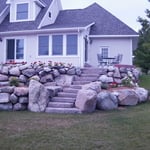
 Rock Retaining Wall with Steps
 Rock Retaining with natrual stone steps
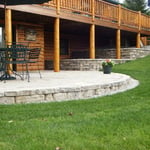
 Brick Paver Patio
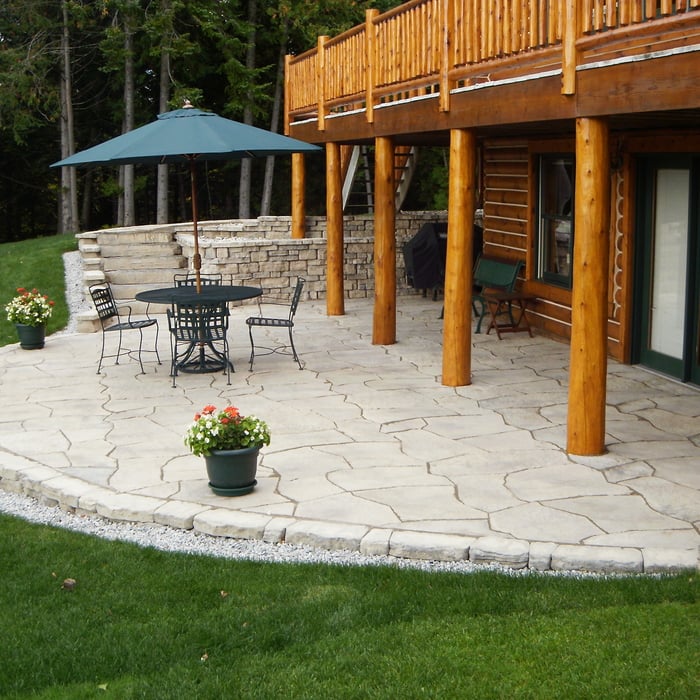
 Retaining Wall with Flagstone Patios
 Flage Stone Patio

+3

Excavating questions, answered by experts

Prior to excavation, you should prepare the dig site and call 311 before you sign anything.

To get your site ready for excavation, you should move anything in the area that isn’t affixed to the land. You can save money on the excavation by removing hardscaping, including walkways, decks, concrete patios, and paver patios.

Before you carry out any digging, you should call 311 to confirm that there are no utility lines running through your excavation site. Skipping this step could lead to severe injury and property damage if your excavator hits a water, sewage, or gas line.

Most residential basements are 8 to 10 feet deep. You can dig deeper depending on building codes, but it does become more difficult. You’ll likely need to install stronger foundation walls and additional supports to handle the increased load. Depending on the water table, you may also need a water management system. Clay soil can support a deeper foundation than sandy soil. A structural engineer will be able to tell you the maximum, feasible depth.

The best method for digging a trench depends on the scope of the project. For a short, shallow trench (less than 2 feet deep) in light, soft soil, digging by hand may be sufficient. However, digging by hand is labor-intensive, so consider the effort required. A machine trencher is the better option for longer trenches (over 100 feet), deeper ones, or when dealing with difficult soil conditions, such as rocky or hard ground, or obstructions like tree roots. A machine can save significant time and energy in these situations.

Excavations take a few days or up to a few weeks. The time it takes to excavate an area depends on the size of the area, the type of soil, the type of excavator, and even the time of year, since winter can make digging up the ground more difficult.

You can bury underground electrical wire six inches deep—but only if you use a rigid metal electrical conduit. For rigid, non-metallic conduits, bury the wire at least 12 inches deep. If using an underground feeder cable rated for direct burial, you'll need to place it at least 18 inches deep, as it has no conduit for extra protection.

The Cedarville, MI homeowners’ guide to excavation services

From average costs to expert advice, get all the answers you need to get your job done.