




Top-rated excavation pros.

Get matched with top excavation pros in Pickford, MI

Enter your zip and get matched with up to 5 pros

Need a pro for your excavation project in Pickford, MI?

Select your specific project to find the pro for you.

Find Excavation pros in Pickford

Martin Land Improvement, Inc.
5.0(
1
)

Serving Pickford, MI and surrounding areas

In business since 1980

Free estimates

Emergency services offered

"They were fantastic he called me right back after I call. Very prompt, always available, the question I had he got all the information we needed for putting the septic and over all electrical wires, he explained everything. Over all great business people and I was very satisfied with the work that he did. I will definitely use them again, he always explained the cost about financial."
Recommended by100%of homeowners
Kilpatrick Landscaping and Retaining Walls, Inc.
New to Angi

Serving Pickford, MI and surrounding areas

In business since 2002

Free estimates

Locally owned and operated, Kilpatrick Landscaping and Retaining Walls, Inc. provides quality work at a fair price. As we place the highest priority on customer satisfaction and the quality of our work, feel free to ask for pictures of our completed projects, or for references in your area. Call Leon today for a free estimate and see your home transform before your eyes!

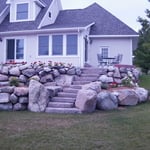
 Rock Retaining Wall with Steps
 Rock Retaining with natrual stone steps
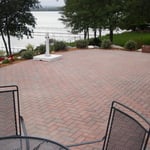
 Brick Paver Patio
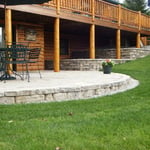
 Retaining Wall with Flagstone Patios
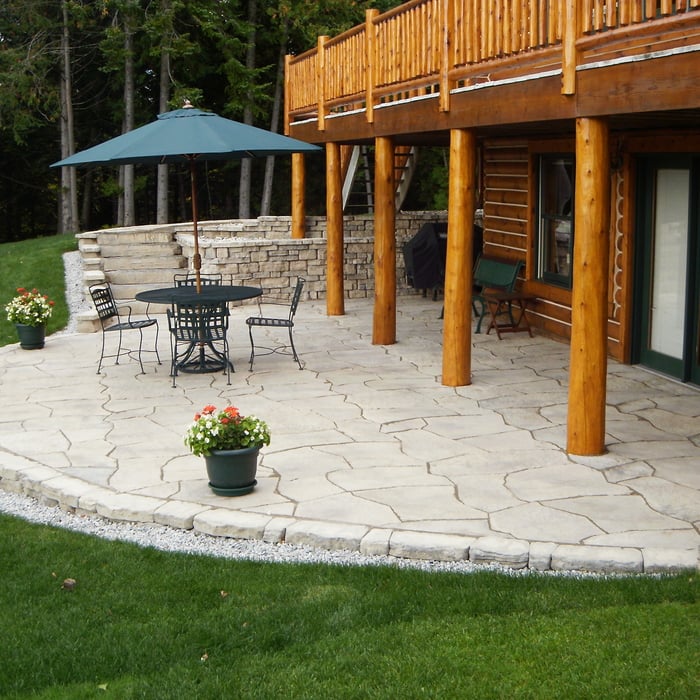
 Flage Stone Patio

+3

Excavating questions, answered by experts

To determine whether your homeowners' insurance will cover crawl space repair, consider the cause of the issue. Repair may be covered if the problems were caused by an event that the insurance covers, such as vandalism or a windstorm. However, companies won't cover the repair if the issues are caused by neglect or wear and tear.

Most residential basements are 8 to 10 feet deep. You can dig deeper depending on building codes, but it does become more difficult. You’ll likely need to install stronger foundation walls and additional supports to handle the increased load. Depending on the water table, you may also need a water management system. Clay soil can support a deeper foundation than sandy soil. A structural engineer will be able to tell you the maximum, feasible depth.

Septic drain lines (or leach lines) are typically buried between 18 and 36 inches underground, and should be at least 6 inches below the surface. These pipes are perforated and surrounded by filtering materials like sand or gravel. Burying the lines at this depth helps minimize odors and allows bacteria and other biological processes in the soil to effectively treat the wastewater. Burying lines too close to the surface can cause issues unless the soil is very compact and stable.

There is no standard depth for burying a septic tank; they are typically buried anywhere from 4 inches to 4 feet underground. The final depth depends on several factors, including the depth of your main sewer line, the height of the bedrock, soil type, local regulations, and the property's landscape. If you plan to grow grass or plants over the tank, a depth of at least 4 to 6 inches is recommended. Deeper tanks can be more difficult to locate, but a septic professional can help find it for you.

The best way to protect tree roots is to avoid the roots entirely by excavating outside the root radius of the tree. For nearby projects, it’s a good idea to construct a temporary retaining wall. But that’s not always possible, depending on the project and the root system. In these cases, consider using alternative equipment like an auger to tunnel under the ground.

Remember, tree roots can damage nearby cement foundations as they grow. If a tree is close enough to interfere with large excavations, it may be better to remove the tree than risk future problems.

The Pickford, MI homeowners’ guide to excavation services

From average costs to expert advice, get all the answers you need to get your job done.