




Top-rated energy efficiency auditors.

Get matched with top energy efficiency auditors in Cedar, MI

Enter your zip and get matched with up to 5 pros

Need a pro for your energy efficiency auditing project in Cedar, MI?

Select your specific project to find the pro for you.

Find Energy efficiency auditors in Cedar

Avatar for Johns Home Inspections -    Facebook
Johns Home Inspections - Facebook
4.5(
30
)
Home Energy Audit

Serving Cedar, MI and surrounding areas

In business since 2019

Emergency services offered

Small jobs welcome

"John and Pamela have done a very good job and work quite fast to provide their reports in a matter of hours, not days. Their cost of service is better than their competition. John's Home Inspections can provide excellent work for both home sellers and home buyers."
Cabin of 1998
Home Inspection
Outside Construction
Credit Card Accepted
Complete Home

+3

Response time2 hrs
Response rate97%
Recommended by96%of homeowners
Avatar for Geofurnace Heating & Cooling, LLC
Geofurnace Heating & Cooling, LLC
4.6(
51
)
Home Energy Audit

Serving Cedar, MI and surrounding areas

In business since 1990

Free estimates

Emergency services offered

"To hid the heat pump condenser we had the unit mounted on our house. It makes a vibrating sound in the house. But in defense of Geofurance we haven't given them a chance to resolve the problem. I would also like to say the heat pump has saved us a lot of money as far as propane cost. It also replaced a resistance heating system in our loft. It now allows us the ability to use the loft in the winter."
Blower Door Test
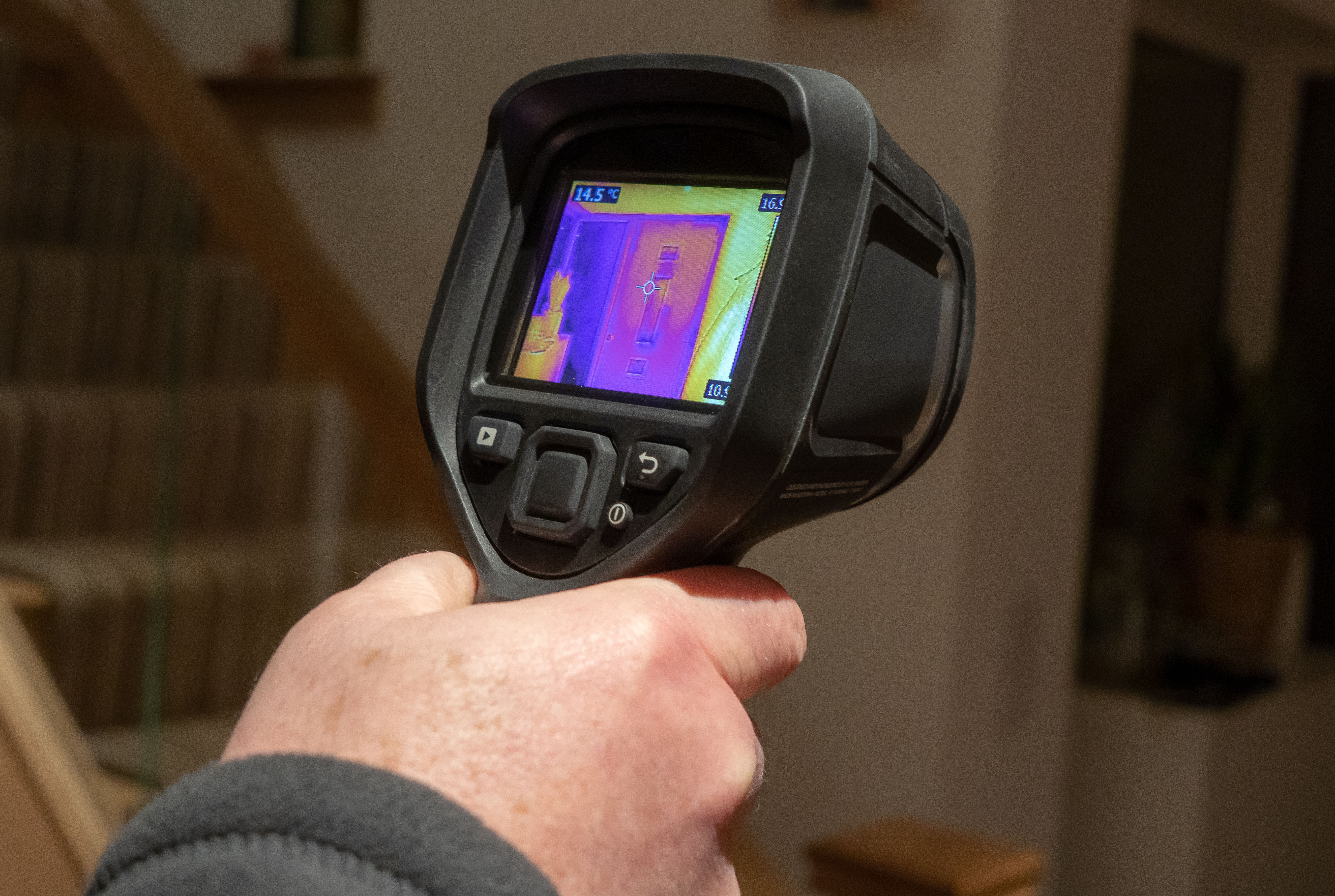
Inferred Imaging
Hands on Evaluating
Spray Foam Insulation
We service all makes and models

+1

Response time1 day
Recommended by95%of homeowners
Second Opinion Home Inspections
New to Angi
Energy Audit - For BusinessHome Energy Audit

Serving Cedar, MI and surrounding areas

In business since 2001

Free estimates

Credit card accepted

We offer a variety of Home Improvement services that are customizable to each individual project. We specialize in handyman/carpentry work and a variety of related service and repair projects. We pride ourselves on the quality of our work as well as our commitment to outstanding results. We look forward to building lasting relationships with our clients and guarantee your satisfaction!

Energy Efficiency Auditing questions, answered by experts

If your AC runs constantly, it could be due to a number of things, including a faulty thermostat, incorrect temperature settings, or broken equipment. Alternatively, you might have an airflow problem (for example, blocked vents or leaky ductwork). Either way, an HVAC pro can identify the specific problem and fix it for you.

Yes, mini-split or ductless AC systems add value to a home and do not devalue it. They are an attractive feature for potential buyers, especially in older homes without existing ductwork, as they provide a practical air conditioning solution without the significant expense and hassle of installing traditional ducts. Ductless systems also eliminate issues associated with conventional ductwork, such as noise and the potential for pests. Furthermore, homeowners value energy-efficient solutions, and mini-splits offer high efficiency for both heating and cooling, plus zoned temperature control. This leads to lower energy consumption and reduced electric bills, which is a major selling point.

To determine the right size generator for your house, you should calculate the total wattage of the appliances and devices you want to power during an outage. List all essential items, note their start-up wattages, and add them together.

Here are some typical wattage requirements for common appliances:

  • Refrigerator: 600 watts

  • Large dehumidifier: 700 watts

  • Large window air conditioner: 1,400 watts

  • Water heater: 3,000 to 4,500 watts

  • Electric furnace: 5,000 to 25,000 watts

A 7,500-watt generator might be sufficient for essentials like a refrigerator, freezer, well pump, and lighting circuits. However, for high-demand items like a water heater or furnace, a whole-home generator is a better choice. A portable generator may be enough if you only need to power a few critical items.

While home square footage can offer a rough estimate, it is not always a reliable indicator. For reference, here are some typical generator sizes based on square footage:

  • 1,000 sq ft: 6–9 kW

  • 1,500 sq ft: 7–10 kW

  • 2,000 sq ft: 10–14 kW

  • 2,500 sq ft: 12–16 kW

  • 3,000 sq ft: 16–20 kW+

For the most accurate sizing, consult a professional who can calculate your home's peak and average power consumption and recommend the optimal generator.

Home power is measured in kilowatt-hours, commonly expressed as kWh. The average home uses between 800 and 1,000 kWh per month. Peak usage (and highest bills) occurs in the middle of summer and the depths of winter. Keeping on top of your usage during these crucial months will lower your annual average usage considerably. 

They’ll use more electricity than the average upright vacuum, but not remarkably more. Most power units plug into a standard 120-volt outlet and don’t have significant power demands. You shouldn’t notice an increase in electricity bills. If you have any specific questions about energy costs, ask your installer as you examine purchase decisions. Larger power units will need more electricity for their suction levels.

The Cedar, MI homeowners’ guide to energy efficiency auditing services

From average costs to expert advice, get all the answers you need to get your job done.