




Top-rated wrought iron workers.

Best wrought iron workers near Limestone, ME

Enter your zip and get matched with up to 5 pros

Need a pro for your wrought iron service project in Limestone, ME?

Select your specific project to find the pro for you.

Top-Rated Wrought iron workers in Limestone - Updated Nov 2026

Bryan Searles
New to Angi
Wrought Iron Fence - InstallWrought Iron Fence - Install - For BusinessWrought Iron Fence - Repair or Weld+1 more

Serving Limestone, ME and surrounding areas

In business since 2023

Offers commercial services

Bryan Searles is committed to excellence in every aspect of our business. We uphold a standard of integrity bound by fairness, honesty, and personal responsibility. Our distinction is the quality of service we bring to our customers. Accurate knowledge of our trade combined with ability is what makes us true professionals. Above all, we are watchful of our customers' interests, and make their concerns the basis of our business.

Friendly Odd Jobs, LLC
1.9(
4
)
Wrought Iron Fence - InstallWrought Iron Fence - Install - For BusinessWrought Iron Fence - Repair or Weld+1 more

Serving Limestone, ME and surrounding areas

In business since 2015

Credit card accepted

Friendly Odd Jobs is dedicated to providing our customers with the best quality and craftsmanship. We are here to build relationships with our customers and communities and to provide our employees with a great place to work. We look forward to working with you!

Response time4 days
Wrought Iron FAQs, answered by experts

Generally, the height of your dog fence should be 3 times the distance from the ground to your dog’s shoulder. For most small breeds, a 4-foot high fence will be more than enough to keep them from jumping out. Medium-sized breeds like Golden Retrievers, Labradors, and German Shepherds will need at least a 5-6 foot fence to stay contained. Large breeds that are also excellent jumpers, such as Greyhounds, may need a 7-foot high fence. 

One common approach to attaching lattice is using screws or nails. Align the lattice panel with the wood frame, then secure it by driving screws or nails through the lattice into the wood. Another option is using U-shaped or J-shaped clips or brackets designed for lattice attachment, which provide a neater look. For added stability and aesthetics, you can use molding or framing around the lattice edges, attaching it to the wood with screws or nails—lastly, construction adhesive works when combined with other fasteners for enhanced durability.

The maximum recommended slope on which you can build a racked or stepped fence is 45 degrees. After that, construction becomes quite tricky and may require the use of retaining walls or terraces to make the fenced area flatter.

The most durable metal for a fence is wrought iron. With proper care, a wrought iron fence can last for centuries. This means regular resealing to stave off rust and corrosion, especially in coastal climates with salty sea air. In these environments, chain link and corrugated fencing tend to stand up better to the elements with fewer maintenance needs.

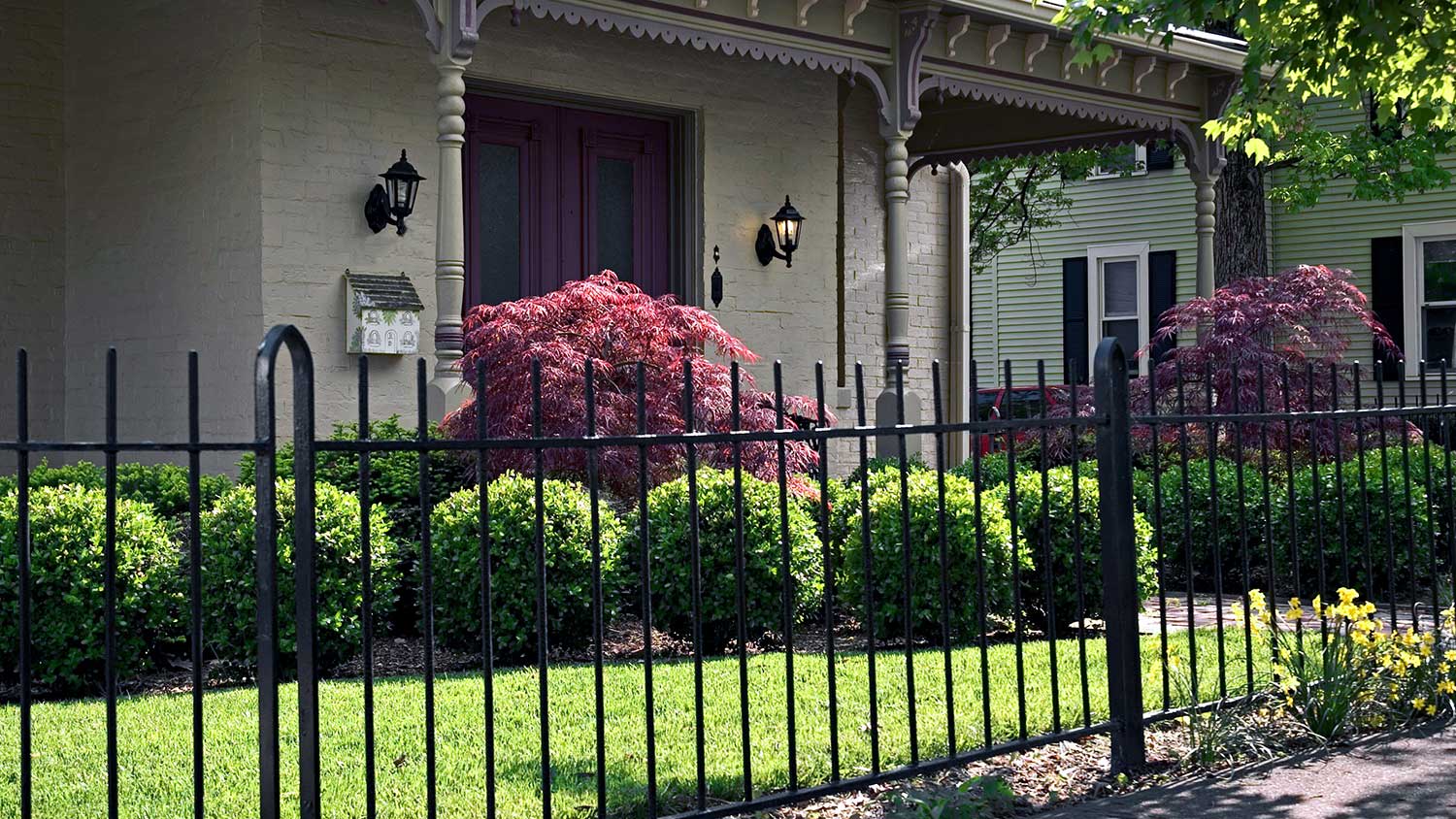
While many fence companies and fence material retailers refer to their metal fencing as wrought iron fencing, most of it is actually ornamental wrought iron fence. This means that the fence is made to look like traditional wrought iron but is actually made out of either steel or aluminum. Old wrought iron fences typically found at estate sales or on older properties are much heavier and much more prone to rust than the ornamental wrought iron that newer homes and fences use.

The Limestone, ME homeowners’ guide to wrought iron services

From average costs to expert advice, get all the answers you need to get your job done.