


Get matched with top electricians in Geismar, LA

Geismar homeowners rate electricians in our network

4.7

(539 reviews)

Top-rated electricians.

Find Electricians in Geismar

Avatar for Office Electrical Co., Inc.
Office Electrical Co., Inc.
4.9(
17
)

Serving Geismar, LA and surrounding areas

Approved

Super Service Award Winner

In business since 2010

Emergency services offered

Warranties offered

"He called almost immediately after I requested a quote, he came within two hours, saw the problem, fixed it and very impressed with him. They will be hired if we ever need more electrical work done."
Response time5 hrs
Response rate97%
Recommended by68%of homeowners
Avatar for Mr. Electric of Baton Rouge
Mr. Electric of Baton Rouge
4.2(
56
)

Serving Geismar, LA and surrounding areas

Approved

In business since 2009

Free estimates

Emergency services offered

"I will hire this contractor ( Mr. Quincey) for any and all my electric needs. They were on time, courteous, very professional and very knowledgeable. I'm very satisfied. The price was reasonably on the average and the main thing. They get the job done."
Projects
Projects
Projects
Projects
Projects

+4

54 neighbors recently requested a quote
Recommended by80%of homeowners

Avatar for AccuTemp Services, LLC
AccuTemp Services, LLC
4.8(
158
)

Serving Geismar, LA and surrounding areas

Approved (Corporate)

In business since 2005

Free estimates

Emergency services offered

"Joey did an excellent job. He asked questions pertinent to the issue, then evaluated the unit. He dismissed the trouble and made the necessary repair. He then asked if I would like further evaluation, and I accepted that. He advised that although the unit was working, it had some weak issues that could cause trouble, but considering the urgency of the immediate repair and the age of unit and plan for sale, we choose not to do additional repairs. It does make us aware of what else to watch for. Replaced faulty capacitor and checked lithe components of system."
Experts you can trust!
Residential Service
Commercial A/C installation
Plumbing & Drain Services
Main Sewer Line

+13

73 neighbors recently requested a quote
Recommended by88%of homeowners
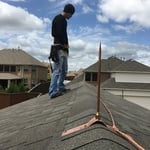
United Lightning Rods
4.9(
63
)

Serving Geismar, LA and surrounding areas

Approved

Super Service Award Winner

In business since 1941

Free estimates

Warranties offered

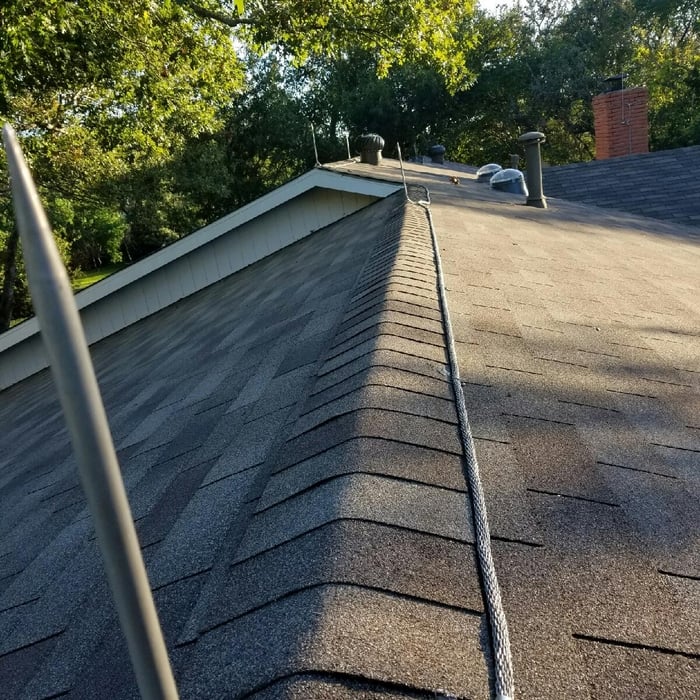
"Ed Riley is extremely knowledgeable about what causes lighting and how to protect from it. He explained to me which and how structures develop static electricity that lead to lighting discharges in a way that the physics made sense to me. They were also reasonably priced and kept their word. Definitely recommend them."
Response time2 days
Response rate85%
65 neighbors recently requested a quote
...
Showing 1-10 of 339
Electrical questions, answered by experts

You can distinguish the amplitude and voltage of most outlets by looking at the shape and positioning of the holes. Other features like buttons, switches, and USB ports help identify electric outlets, too. Use labeled images, like the ones we’ve included above, to cross-reference with your outlets.

If it’s called a USB outlet without any further designation, it likely refers to a USB-A port. These are the original USB connections and are commonly integrated within power outlets. In recent years, USB-A cables have slowly been usurped by faster and more reliable USB-C cables. USB-C connectors are small and ultra-thin with a reversible design, while USB-A connectors are slightly larger and bulkier.


The most common gauge for indoor outlets around your home is 12- and 14-gauge wires. But if you’re working with larger appliances like ovens, washing machines, or dryers (all of which require more amplitude), you might find 10-, eight-, or six-gauge wires to help support those hefty appliances.

The answer depends on your needs and the availability of your current electrical panel. If you’re hoping to seriously up the power in your detached living space, you may also need to consider increasing the power of the amp your home runs on (from 100-amps to 200-amps, for example).

You can bury underground electrical wire six inches deep—but only if you use a rigid metal electrical conduit. For rigid, non-metallic conduits, bury the wire at least 12 inches deep. If using an underground feeder cable rated for direct burial, you'll need to place it at least 18 inches deep, as it has no conduit for extra protection.

The Geismar, LA homeowners’ guide to electrical services

From average costs to expert advice, get all the answers you need to get your job done.