


Top-rated electricians.

Get matched with top electricians in Saint George, KS

Enter your zip and get matched with up to 5 pros

Need a pro for your electrical service project in Saint George, KS?

Select your specific project to find the pro for you.

TRUSTED BY SAINT GEORGE, KS HOMEOWNERS

  • Average homeowner rating star icon4.8
    Average homeowner rating
  • Verified reviews icon137
    Verified electrical services reviews

Find Electricians in Saint George

Avatar for Donohue's Lightning Rods
Donohue's Lightning Rods
4.3(
70
)
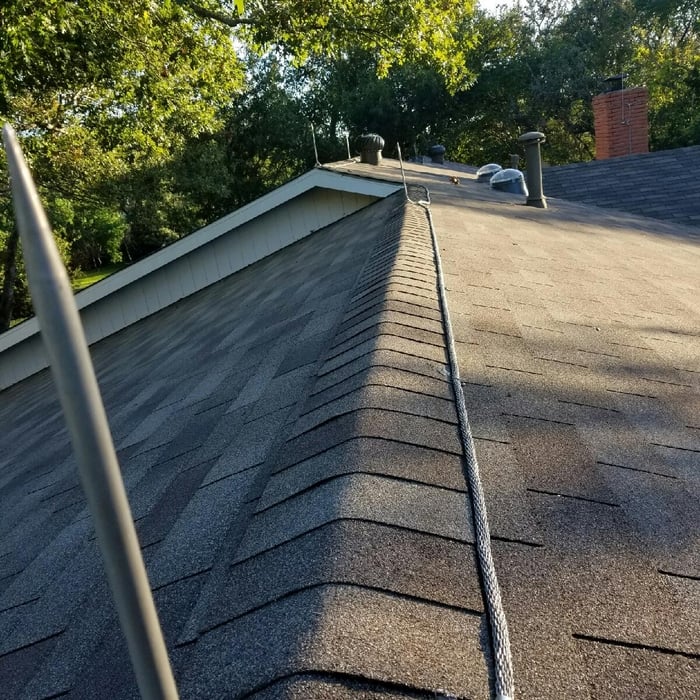
Lightning Protection - Install or Repair

Serving Saint George, KS and surrounding areas

Approved

In business since 1971

Free estimates

Emergency services offered

"The man who did the job were awesome. They were very thorough, professional, and speedy. They left our church grounds spotless. I could not recommend them highly enough."
Jobs from the last 3 year
Lightning protection

+10

Response time1 day
95 neighbors recently requested a quote

Recommended by96%of homeowners
H.E.M.I. Electric, LLC
5.0(
1
)
Electrical Switches, Outlets & Fixtures - Install or RepairElectrical Wiring or Panel UpgradeElectrical for Home Addition or Remodel - Install

Serving Saint George, KS and surrounding areas

Approved

In business since 1995

Free estimates

Credit card accepted

We are a locally owned and operated company that values honesty and integrity and treats your home as if it were our own. We offer a variety of electrical services that are customized to each individual project. You will find us to be competitively priced, paying close attention to the details of each and every project that we are involved with. We look forward to building lasting relationships and guarantee your satisfaction!

Response time3 hrs
Recommended by100%of homeowners
...
Showing 1-10 of 51
Electrical questions, answered by experts

Knob and tube wiring is old, and its casing is brittle. This means that it's possible to receive a dangerous electrical shock if you touch a live wire and essentially become an electrical pathway. Although the scenario is unlikely, touching any K&T wiring is simply not a good idea in any instance. Leave any wire handling to the professionals.

Well pumps need power to run, so they can’t function without electricity. If your power shuts off, there can sometimes be enough pressure in the water tank to allow for a lucky flush or a bit of tap water—but this won’t last long. It’s a good idea to have a backup generator or an alternative power source like solar if you’re worried about losing power.

When converting a standard 120-volt outlet to a 240-volt outlet, the only components you can typically reuse are the existing electrical box and the hole in the wall. Everything else—including the wiring, breaker, and receptacle—should be replaced to ensure both safety and efficiency. Appliances designed for 240 volts have different plug configurations that won’t fit into a standard 120-volt outlet, making it necessary to install a compatible 240-volt receptacle. This design helps prevent overloading or underloading the power available to any one outlet or circuit.

Smart light switches are designed to be compatible with most lights and traditional home wiring, but there are several key factors to check. First, verify your home's wiring, as some smart switches require a neutral wire to operate, which may not be present in older houses (often built before 1985). Always check the wiring requirements for the specific model you choose. Second, consider your light bulbs; while smart switches work with almost any light, using a dimming feature requires dimmable bulbs, such as dimmable LEDs. Finally, ensure you have the necessary network connection. Most smart switches need a Wi-Fi connection for remote control, but some older models might use other standards like ZigBee, which would require a compatible hub.

Volts and watts aren’t directly convertible units—they measure different aspects of electricity. Volts measure electrical potential, while watts quantify the power. The relationship between the two is defined by the equation: Power (watts)= Voltage (volts) x Current (amperes). In other words, the product of volts and amps results in watts, but there is no fixed conversion of volts into watts.

The Saint George, KS homeowners’ guide to electrical services

From average costs to expert advice, get all the answers you need to get your job done.