



Top-rated paving pros.

Best paving pros near Minneapolis, KS

Enter your zip and get matched with up to 5 pros

Need a pro for your paving service project in Minneapolis, KS?

Select your specific project to find the pro for you.

Top-Rated Paving pros in Minneapolis - Updated Nov 2026

Bullseye Earthmoving LLC
New to Angi
Gravel or Loose Fill Paving - Install, Spread or Scrape

Serving Minneapolis, KS and surrounding areas

In business since 2020

Free estimates

Offers commercial services

Thank you for considering hiring us for your project! At Bullseye Earthmoving LLC we pride ourselves on quality work, integrity and competitive pricing. We believe in giving our absolute best, no matter how big or small your project. \n \nWe are experts in our trade, and we will keep you educated and informed throughout the completion of your project. We treat your property like it's our own, with the utmost respect, just like we would our own family! \n \nAs the owner, my aim is to earn a 5-star review on the completion of your project. So, please let me know if at any time we are not living up to earning your perfect 5-star review. \n \nWe look forward to earning your business, so please ask us for references!

Showing 1-10 of 15
Paving Services FAQs, answered by experts

Generally speaking, tiles are for indoor use, while pavers are for outdoor use. The main difference between travertine tiles and pavers is their thickness. Tiles are around 1/2 inch thick, and pavers are 1 1/4 inches to 2 inches thick.

Pavers are more rugged and can handle different weather. The extra thickness on pavers also makes them ideal for high-traffic areas.

Yes, pea gravel is good for driveways as long as your driveway isn’t built on a hill or any type of slope where it can slide. It’ll settle on a flat surface and create a suitable driveway over time, though some spreading initially will take place. If you're wondering how to make a gravel driveway in a high-rainfall area, using pea gravel could help you to cut down on costs needed for extra drainage solutions.

While some areas may allow for a slope of up to 20%, this is often the maximum slope for driveways, with a few exceptions of up to 25%. Other regions may have a maximum of 12%, 15%, or 18%, so check with your local building department to ensure you’re laying a driveway that is up to code for your location.

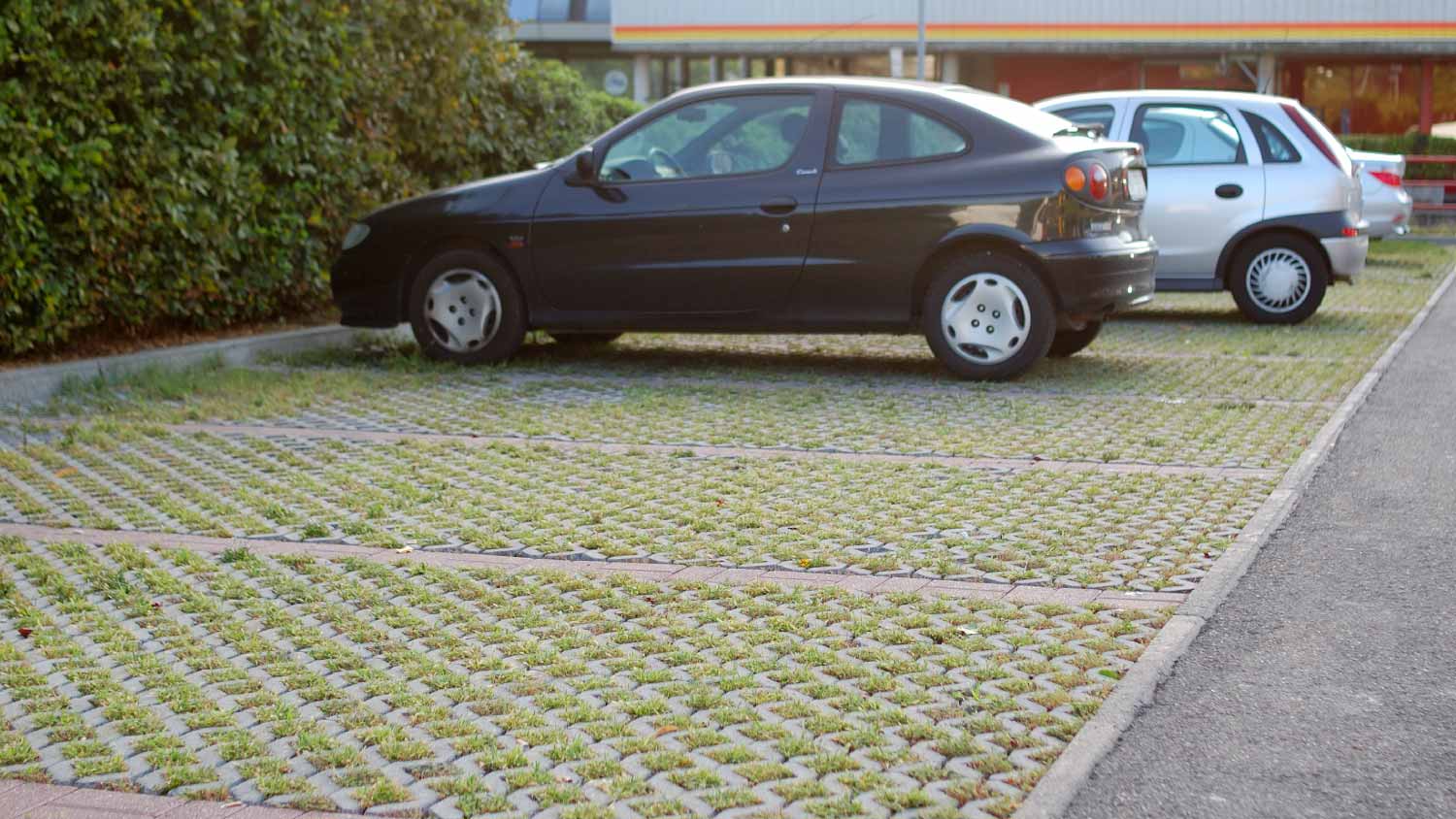
The most obvious disadvantage of permeable paving is that the cost is typically higher compared to non-permeable concrete, pavers, or asphalt methods. Also, the porous material can get clogged with dirt and debris, requiring cleaning and power washing more frequently than standard paving materials and methods. Although permeable paving is not ideal for highways, airports, and other surfaces supporting heavy traffic and machinery, it is suitable for regular residential driveways.

To adhere pavers to concrete, you can use either mortar or a concrete-specific adhesive. For border pavers, a polyurethane-based adhesive is a good choice as it expands and contracts with temperature changes, keeping them firmly in place. For the non-border pavers, polymeric sand is used between the joints to prevent shifting. In most cases, it is also recommended to lay a permeable sand layer below the pavers to ensure proper stability and drainage. Before starting, always take the proper preparatory steps for a professional result.

The Minneapolis, KS homeowners’ guide to paving services

From average costs to expert advice, get all the answers you need to get your job done.