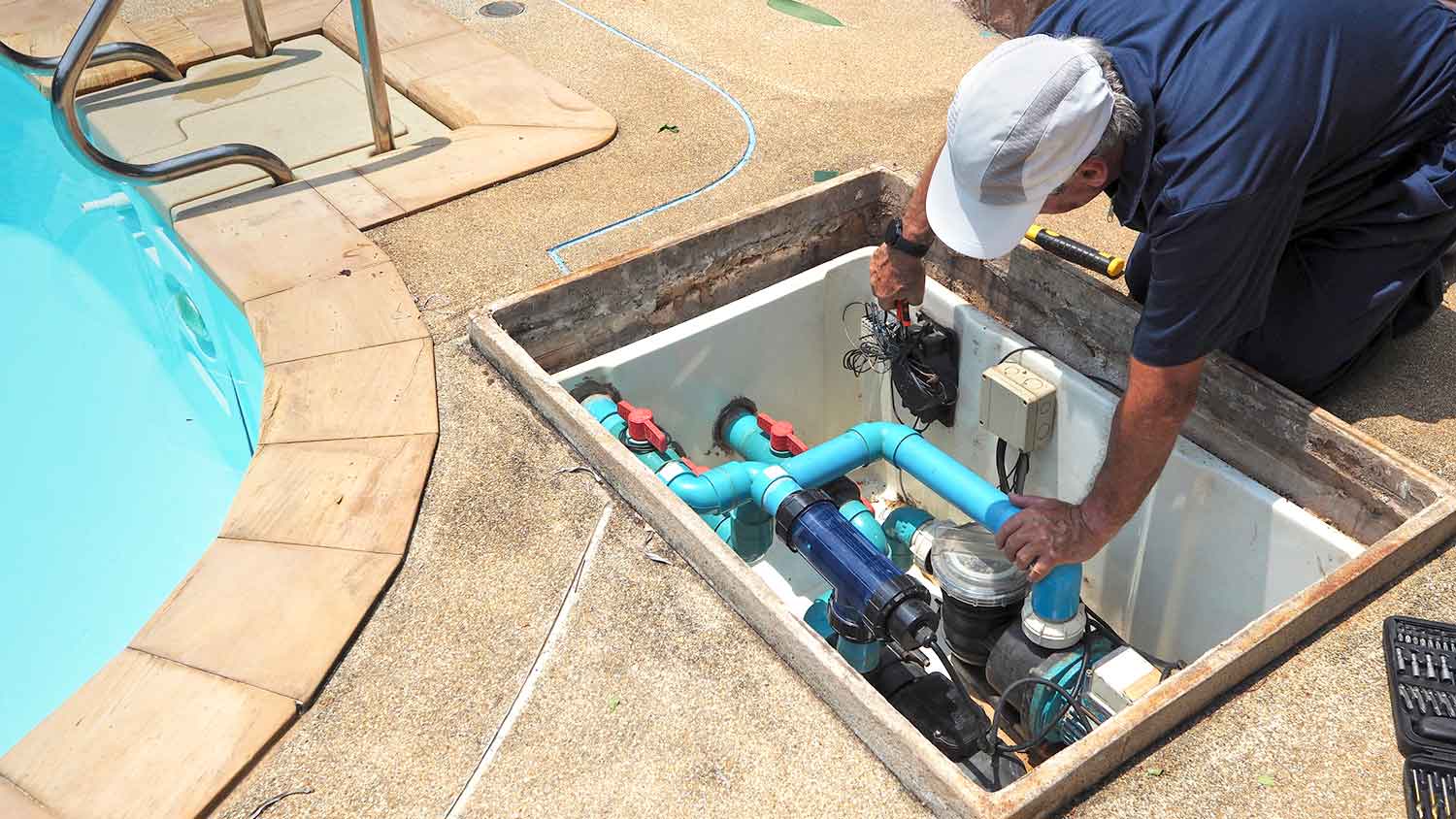





Top-rated pool and spa technicians.

Best pool and spa technicians near Downs, KS

Enter your zip and get matched with up to 5 pros

Need a pro for your pool and spa servicing project in Downs, KS?

Select your specific project to find the pro for you.

Top-Rated Pool and spa technicians in Downs - Updated Nov 2026

Pool and Spa Servicing FAQs, answered by experts

Yes. If you test the water and the alkalinity is too low, you can raise it by adding an alkalinity increaser, which likely came with your hot tub’s chemical kit. In a pinch, you can use baking soda to raise the hot tub’s alkalinity. Raising the alkalinity will prevent the hot tub water from becoming too acidic.

Hot tub heaters typically last seven to 10 years, though some might only last five years if not properly maintained. You can maximize your hot tub heater’s lifespan by ensuring the water’s pH level is properly balanced.

For a fully-foamed hot tub, freezing typically occurs when the temperature drops below 28 degrees Fahrenheit and remains at or below this level continuously for a minimum of 36 hours. If your hot tub and pumps are still operational, however, the water circulates, and this continuous movement helps prevent freezing, even in very cold conditions. This circulation, along with the insulation provided by the foam, helps maintain the water temperature and prevent it from freezing during extended cold periods. Still, if you’re not planning to run it regularly, be sure to winterize the hot tub properly to prevent damage from freezing.

If you want to have a chemical-free spa, or if you are wondering how to keep your hot tub clean naturally, there are several options. Some individuals choose to run their hot tub without treatment at all and simply clean it more often (although you risk bacteria, fungi, and algae growth if you take this route); others use natural products like vinegar or Borax. Ozone, ultraviolet light, and electrolysis systems are also eco-friendly ways to have a clean hot tub without chemicals. Saltwater hot tubs are popular with people who are sensitive to chlorine, bromine, and other traditional hot tub chemicals.

When your hot tub is not in use, you can keep it at a constant soaking temperature of around 100 degrees Fahrenheit. For extended periods of non-use, you can lower the temperature by about five degrees. This slight decrease makes it easier and quicker to heat back up to a desirable level when you're ready to use it again. Additionally, you might consider lowering the temperature by a couple of degrees during the summer to avoid feeling overheated.

The Downs, KS homeowners’ guide to pool and spa services

From average costs to expert advice, get all the answers you need to get your job done.