Top-rated drywall pros.

Get matched with top drywall pros in Campbellsburg, IN

Enter your zip and get matched with up to 5 pros

Need a pro for your drywall service project in Campbellsburg, IN?

Select your specific project to find the pro for you.

Find Drywall pros in Campbellsburg

Morales Painting & Cleaning, LLC
New to Angi

Serving Campbellsburg, IN and surrounding areas

Approved

In business since 2020

Free estimates

Offers commercial services

At Morales Painting & Cleaning LLC, excellence is our commitment. We take pride in delivering top tier painting services, specializing in both interior and exterior projects. From flawless drywall installations to meticulous repairs, power washing, and transformative kitchen and bath remodeling, we offer a comprehensive suite of services tailored to your needs. Whether it's a one-time deep clean or recurring maintenance, our dedication to exceeding expectations shines through in every task we undertake. Your satisfaction is our priority, and we guarantee every client leaves with a smile. At Morales Painting & Cleaning LLC, we're not just a company – we're your partners in achieving excellence.

K&J Home Services
New to Angi

Serving Campbellsburg, IN and surrounding areas

Approved

In business since 2000

Offers commercial services

K&J Home Repairs is committed to excellence every aspect of our business. We uphold a standard of integrity bound by fairness, honesty and responsibility in all of our jobs. We are a locally owned and operated business with more than 10 years of experience serving Louisville, and surrounding areas. There is no job too big, or too small for our team. Call today and let us put our experience to work for you!

...
Showing 1-10 of 83
Drywall questions, answered by experts

Yes, it matters which side of drywall you use. One side is smooth, and the other is rough. The smooth side should be facing outward, toward the room, while the rough side should be hidden and facing the studs and framing of the house. The smooth side will be easier to apply tape, joint compound, and, later, paint to.

The two most common drywall thicknesses for ceilings are 1/2-inch and 5/8-inch. For most standard residential applications, 1/2-inch drywall is sufficient and widely used. It provides adequate support and is lighter and easier to handle during installation compared to thicker sheets. However, 5/8-inch drywall is often used for specific cases where additional benefits are needed. It is heavier but provides superior sound dampening and fire resistance. You should consider using 5/8-inch drywall for ceilings in commercial buildings, between a garage and a living space, or above a finished basement to meet building codes or for enhanced soundproofing.

Small patches can be DIY, but professionals handle large-scale repairs with seamless results.

While not always necessary, you can glue a drywall ceiling in addition to using screws or nails. Drywall is typically secured to ceiling joists with fasteners, which is often sufficient. However, adding construction adhesive can offer benefits like preventing sagging, bridging gaps, and reducing air leaks for better energy efficiency. It may also be used for specific acoustic or insulation needs. On the other hand, many professionals advise against it because properly placed screws make the drywall structural, glue doesn't add strength, and it makes future repairs or replacements significantly more difficult. Ultimately, it's best to follow local building codes and project-specific requirements to decide if adhesive is right for your ceiling.

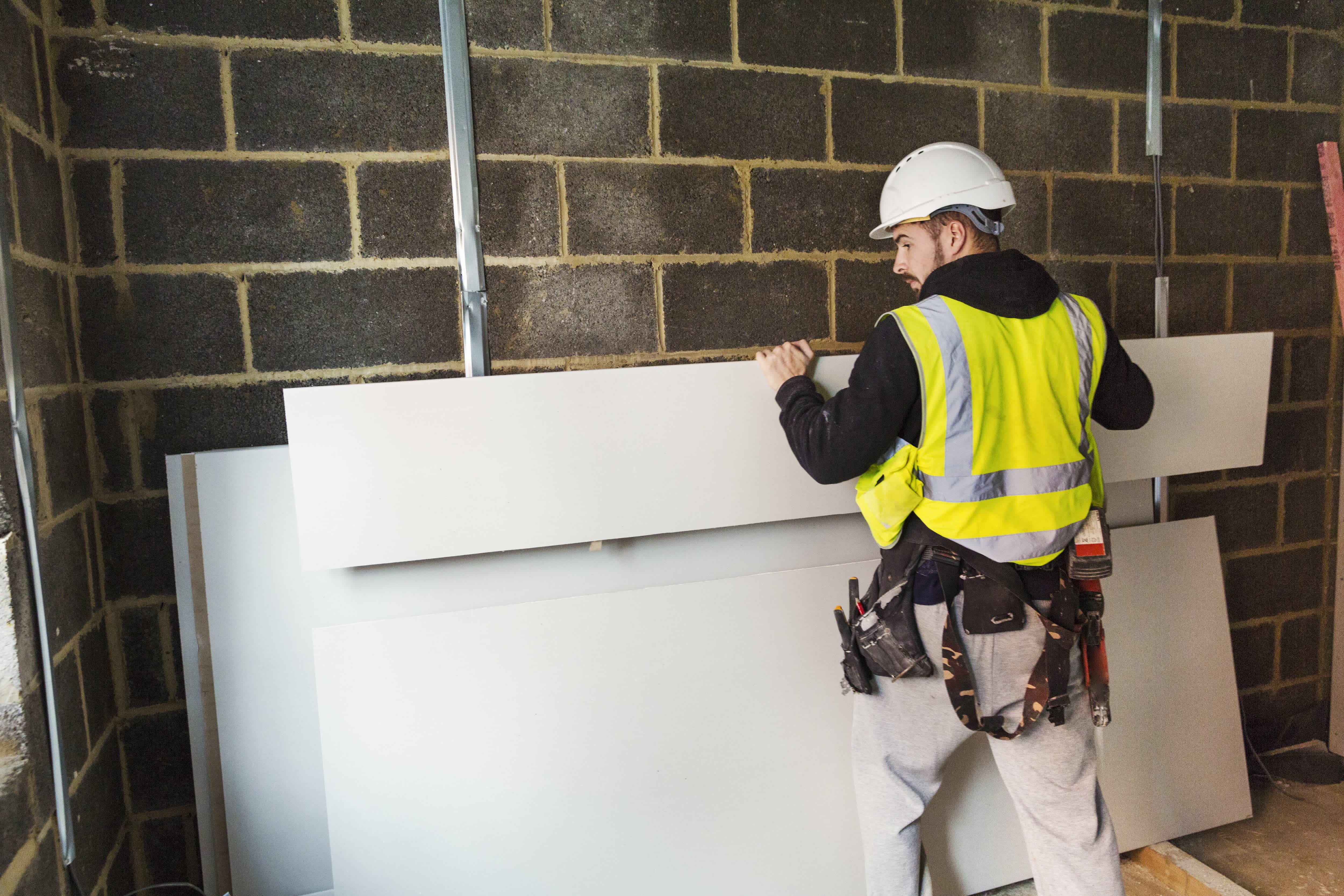
It doesn’t matter which way you lay drywall, and you can choose to install it horizontally or vertically depending on the size of the wall and how tall the ceiling is. It’s easier to lay drywall sheets vertically if you have a taller ceiling, but laying sheets horizontally makes it easier to apply joint compound.

The Campbellsburg, IN homeowners’ guide to drywall services

From average costs to expert advice, get all the answers you need to get your job done.