





Top-rated radon detection and reduction specialists.

Get matched with top radon detection and reduction specialists in Bridgeport, IL

Enter your zip and get matched with up to 5 pros

Need a pro for your radon detection and reduction project in Bridgeport, IL?

Select your specific project to find the pro for you.

Find Radon detection and reduction specialists in Bridgeport

Avatar for BreathSafe Radon and Moisture Control
BreathSafe Radon and Moisture Control
4.2(
9
)

Serving Bridgeport, IL and surrounding areas

In business since 2023

Free estimates

Emergency services offered

"It went great! I have a home where the system was not easy to install, but they stayed until it was finished. A test kit was left to see if it was working properly, but they added that they would return if our radon wasn't lowered. IT WAS!! Money very well spent"
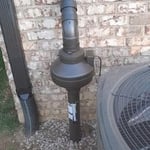
Additional Photos
Additional Photos
Additional Photos
Additional Photos
Additional Photos

+5

Recommended by85%of homeowners

Fowler Home Inspection Services
2.3(
6
)

Serving Bridgeport, IL and surrounding areas

Emergency services offered

Credit card accepted

"The insurance money was in the bank in which the loan for the house is from.
My banker wanted a bid and a waiver of lien to be given them BUT John Fowler never produced one to me.
My banker also wanted receipts from Fowler and I told Mr Fowler that I needed the waiver signed and all receipts as he buys
any items.  Mr Fowler say OK, but he never signed till the very end and I had to hold money till he did signed it.
As for the receipts, never did he give me any but at the end, he took all at once to the bank to give to them.  I decided to go to the bank and get copies of the receipts but beat him there and so I got a copy plus he got a copy and the bank got the originals.
My banker was great on this as we went over the receipts and I went home and did it again, more then once.
What got me most of all was he kept asking my insurance adjustor what kind of money I was going to get and using my name saying I also wanted to know.  To me, he had no reason to do this, ever.
Fowler charged my insurance for saws of $200.00 and other items plus an account that didn't have any thing to do with me and had no proof that it was plus another account.  All and all, Fowler charged my insurance to pay him $2,588.17.  His bonus money and since he broke our hand shake, didn't get anymore bonus money.
Trust, no way, the work, fine but I had to hold back more money as he didn't finish a few little things that needed to get done and so I had to hold that money just to get his men back.
He said he hates lairs!   He needs to read a dictionary on what a liar is.   I will never use him again for anything and he asked me to allow him to inspect all my rentals as he does that to.  NOPE, can't trust him, hand shake or not, can't trust him.
"
Recommended by25%of homeowners
Radon Detection and Reduction questions, answered by experts

The soil beneath your house is most likely what’s causing an increased level of radon. This is because soil holds radioactivity for a long time and it’s also what most buildings are built on. Another common source of radon is water from a source that hasn’t been through periodic radon tests, such as well water. Over time, the radon from the soil can inhabit other parts of your house like the foundation or plumbing.

Mitigation reduces radon levels, protecting your health and complying with safety standards.

Radon is a cancer-causing radioactive gas that poses serious health risks, infiltrating homes through foundation cracks and unnoticed spaces.

The natural breakdown of uranium in soil, rock, and water can cause radon to appear in a home. The gas seeps into homes through cracks in foundations, walls, or floors, as well as through gaps around pipes or construction joints. Radon levels are influenced by soil composition, building materials, and ventilation. Poorly sealed or airtight homes can trap radon, allowing it to accumulate.

The lifespan of a radon mitigation system depends on the type of system and its maintenance. With proper care, a system can last for many decades. Passive systems tend to last longer as they have fewer components that require replacement. Active systems, which have more moving parts like fans, generally have a shorter lifespan. For instance, water filtration devices and active pressurization systems require more frequent maintenance. While the system as a whole is durable, the radon fan in an active system typically has a lifespan of 5 to 10 years and will need to be replaced. As long as the fan is working, the mitigation system should function correctly.

The Bridgeport, IL homeowners’ guide to radon detection and reduction services

From average costs to expert advice, get all the answers you need to get your job done.