My name is David Michl, and Next Phase Power LLC is built on 20 years of hands-on electrical experience across residential, commercial, and industrial work. From home wiring to underground PVC trenching for services, fuel stations, and farms, I understand how important reliable power is to everyday life.\nProudly serving Jasper County, Effingham, and surrounding communities with dependable service, honest work, and quality craftsmanship. Fully licensed and insured, competitive pricing, and free estimates. Feel free to call or text anytime, and don’t forget to leave a review here or on our Facebook page. Thank you for your support!
We take great pride in our experience, expertise, quality, and customer service that we provide to meet the consumer's needs. It is our mission to provide excellent workmanship and complete customer satisfaction from start to completion of a project. In order to understand the needs and expectations of our customers, we take great care to work and communicate with every customer in a professional manner. Our reputation is based on service, safety, and quality, regardless of how large or small the job.
We’re here to change your perceptions of what it means to be a property owner in today’s fast paced marketplace. Whether you are a landowner with rental property, or if you would like to “flip” a property you've just purchased or maybe you're a Realty Management Company seeking to prepare your managed property for the market or simply the next tenant. We're here to help you meet your needs in an affordable & efficient manner. We offer a wide array of services to choose from in whole or in part, as it fits your needs & budget. We look forward to doing business with you! Additional Emails - [email protected], [email protected], [email protected]. Additional Address - Princeton, IL 61356.
"The furnace took 4 days to get approved( not counting a Sunday) the others were quick but the water heater had to be ordered so without hot water for a week. One ceiling fan was easy but within a year their policy changed and They would not install the one I purchased and had to get a new one approved and then ordered online and took several weeks to get straightened out. Not sure who was at fault, AHS, installer or scheduling with renter. Fee is usually $75 per visit"
We have the experience and dedication to bring your dreams to reality! Specializing in Electrical Services, we guarantee your satisfaction, and we won’t leave until the job is done right. We pride ourselves on the quality work we provide, while delivering great customer service! Call or click to schedule a free estimate today!\n
We offer over 30 years of industry experience and will provide you with an unmatched level of experience and commitment to your home improvement project. We have earned a solid reputation for a variety of residential home improvement and repair projects to include painting, cabinetry, doors, and windows. We pride ourselves on the quality of our work as well as our commitment to outstanding results. We look forward to building long-term relationships with our clients and guarantee your satisfaction! References are available upon request. Give us a call today, and let us get started.
Log Cabin Electric, is the answer to all of your residential electrical needs. We pride ourselves making sure the job is done to your satisfaction every time! It is our priority to get the job done with integrity and quality. Contact us today for a free estimate!
Fan power is measured by CFM, or cubic feet per minute. For every 1,000 feet of square footage in your attic, you need a minimum of 700 CFM. Steeper roofs may need larger fans or about 840 CFM. You can figure the size of attic fan you need by multiplying the square footage of your attic floor by 0.7. (multiply by 1.2 for a steep roof and 1.15 for a dark roof). That number is the CFM required for your fan to run efficiently.
To convert a ceiling fan to wireless, you’ll need to install a canopy module to access the lighting and fan controls. Many options are available, all of which help you control specific elements of your ceiling fan, so you have plenty of choices depending on your needs.
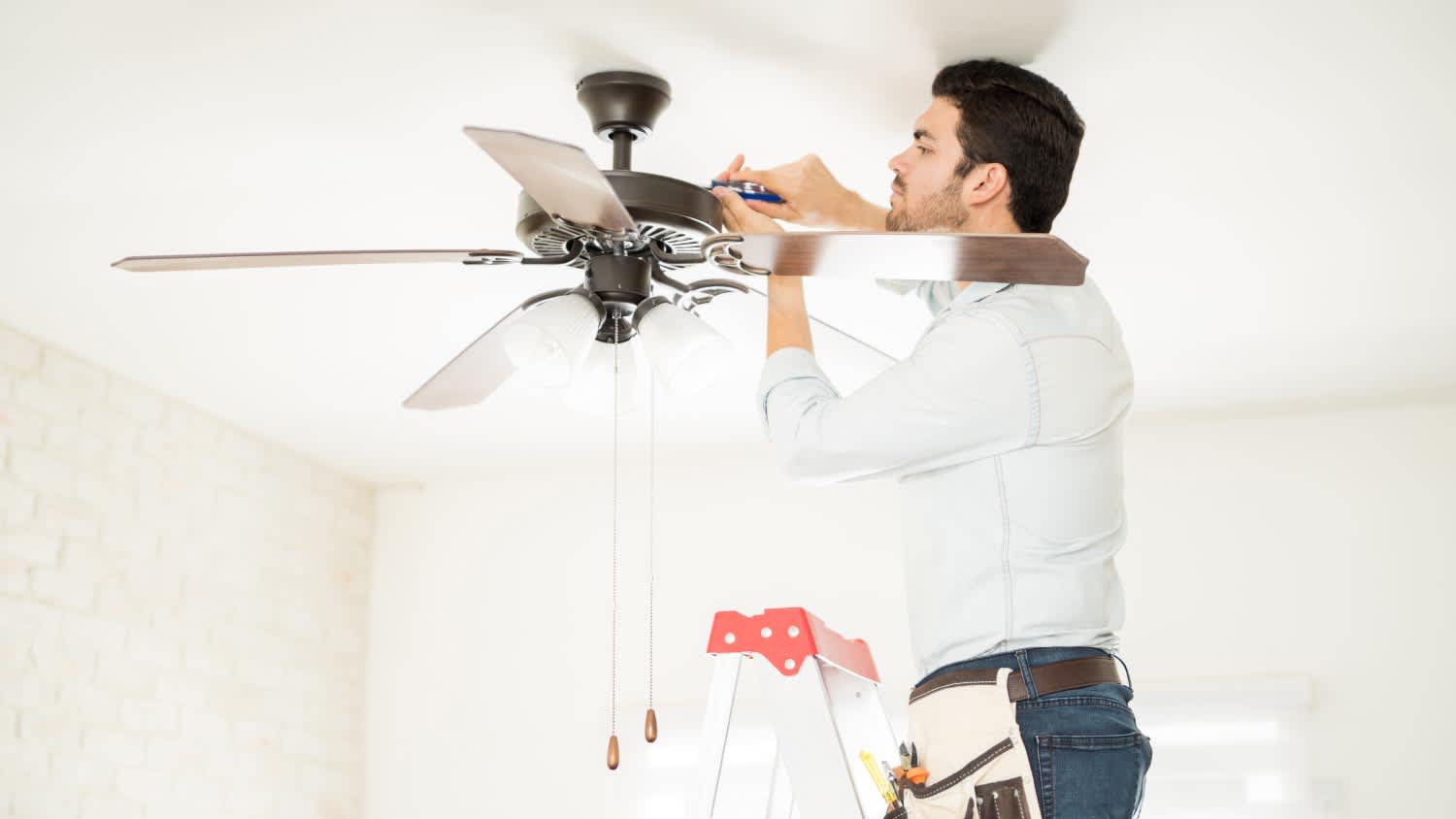
Yes, you can install a ceiling fan where a standard light fixture is, as the electrical wiring is often similar and may not need to be replaced. The most important step is to ensure the ceiling can support the fan's weight and motion. You will need to replace the existing light fixture's electrical box with a fan-rated electrical box, which is specifically designed to handle the extra weight and vibration. These boxes will be labeled as suitable for ceiling fan support and will indicate the maximum weight they can hold. Before you begin, also consider if you need an extension rod for a high ceiling or a special mount for an angled ceiling.
For a 12x12 room, a fan between 36" and 50" will work, as it falls in the range for spaces up to 144 square feet. These size fans provide adequate air circulation and ensure a comfortable environment without being overpowering. Even better, they come in a broad range of styles, offering aesthetics and functionality, making them suitable choices for maintaining an ideal room temperature and enhancing overall comfort.
Coffered ceilings often come with additional embellishments and accessories, including tin panels, medallions, trim, molding, recessed lights, and finials. Whether you’re looking for a simple grid pattern or want an elaborate, decorative ceiling with all the bells and whistles, there are plenty of options to choose from.
The Albion, IL homeowners’ guide to ceiling fan services
From average costs to expert advice, get all the answers you need to get your job done.
Discover the cost to install a ceiling fan, including labor, materials, and tips to save. Learn what impacts your price and how to budget for your project.
Ceiling fans cool down your home while stylishly accenting your space. With a variety of types of ceiling fan on the market to choose from, you can’t go wrong.
Although the risk is low, there are a few telltale signs that a ceiling fan will fall off your ceiling. This guide explains when to worry (and when not to).