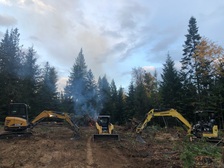
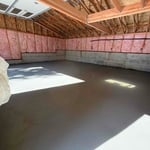
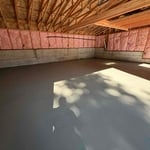
"Excellent. The job was done exactly as discussed and turned out great. I plan on using Gman construction for further projects and highly recommend them for anyone’s excavation needs."
"I have worked with trackwest fencing on several occasions. They've always sent trustworthy people who can communicate well and produce a really good product. I've done a lot of fencing work in the past but they've always come up with new techniques that I learned from. I plan on working with this company on many occasions in the future."
"Weâ ve hired Nova for irrigation installation in large yard front and rear, prep and plant landscaping, design and install stone walkway, create and install 90 ft. berm around back garden, Spring yard cleanup with large and small tree and bush pruning, rake and removal, replace bark, etc. They do it all, very professional, creative and reasonably priced."
"Kyle and Gus from Summit were great to work with. They cleared approx. 1/4 acre of trees and brush, leveled my build area with dirt available elsewhere on my property, contoured and compacted the remaining area in preparation for fabric and rock. We worked together on this project over 6 weeks, a few days at a time. Communication was good, pricing reasonable and great guys to work with."
"Very thorough and communicative. Kept in touch while arranging for dumpster, etc., which was appreciated. Day of clean up went quickly with no problems and again, William was very good at keeping me abreast of what they were doing and their next move. I am so pleased, I am having William do more clean-up projects for me in the near future."
"I would highly recommend Duncan Construction & Development! Great communication, Fair pricing, reliable., and quality work. They did a great job from start to finish!! Answered all our questions at our site evaluation and finished our job in a timely manner. Did a great job with our excavation and septic install . Will definitely use them again in the future on more projects!"
"Fast and efficient. He performed absolutely quality work he listened and he worked with me he was able to answer my questions. He was very easy to speak."
"Dalin is a worker! He did the best job on my birch trees of all the trimmers I've had over the years. He's personable , efficient and on time. He had me checkout his job when he was done, and willing to do what I wanted. I'd use him again."
"I can't say enough about the guy!! He is a man of his word and has great pricing. He is very punctual and I don't know why anyone would go anywhere else!"
Septic drain lines (or leach lines) are typically buried between 18 and 36 inches underground, and should be at least 6 inches below the surface. These pipes are perforated and surrounded by filtering materials like sand or gravel. Burying the lines at this depth helps minimize odors and allows bacteria and other biological processes in the soil to effectively treat the wastewater. Burying lines too close to the surface can cause issues unless the soil is very compact and stable.
A mini excavator can dig between 5 and 11 feet deep, depending on the type and size of the mini excavator. Mini hydraulic excavators are more powerful and can reach deeper into the earth, but electric models have a more limited range. Mini excavators over two tons in size are also more powerful and able to dig as deep as 11 feet.
Depth is not a qualifying component of evacuation. Any human-made cut, cavity, or depression in the earth’s surface is considered excavation. The hole from excavation can be any size, shape, or depth. Excavation is used to create foundations, reservoirs, drainage ditches, and roads. Long, narrow excavations are called trenches and are often used for underground utilities.
No, a ditch isn’t a trench. A ditch is an open, relatively shallow channel that’s carved out of the ground and used for drainage purposes. In contrast, a trench is a deeper excavation that’s entirely underground. Trenches have many uses, including gas lines, sewage systems, and electrical wiring. Unlike trenches, ditches don’t get filled back in with dirt after they’re dug.
Digging out a basement takes anywhere from a few days to a few months. Most projects take at least two to five weeks, but it could take several months if you encounter obstacles. This project takes longer if you need to brace or raise your home before the excavation. Digging out a basement in new construction can take as little as three days.
The Ponderay, ID homeowners’ guide to excavation services
From average costs to expert advice, get all the answers you need to get your job done.
Excavation costs $1,500 to $6,300 for most residential projects—but it depends on factors like the size of the area. This guide will help you plan a budget.
You can't have an in-ground pool without digging into the ground. How much does pool excavation cost, and can you take it on yourself? Our guide explains.