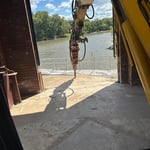
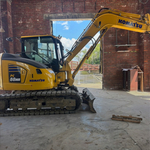
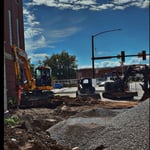
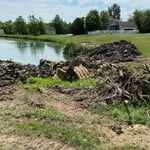
"Contacted Downs Excavating to assist with hauling away junk and debris from flood damage and he was quick to show up and get the job done! Fast and friendly service and have recommended Travis to everyone I know."
Vanderhart Construction is a well established business in Iowa, offering the finest in craftsmanship and quality. When it comes to professionalism and customer service, we are unmatched! For the best of the best call Vanderhart Construction for your next project!
We pride our services on reliability, great communication, integrity, and quality work. We will do our best to keep you as educated as we can on your particular task or project. We look forward to earning your business!
We pride ourselves on in the work we do for our customer\nClean Fence rows\nClear trees and shrubs on farms\nDo odd jobs with Excavator/Skid Loader\nBuild roadways\nDig footings\nDig basements\nHelped contractor with sports complex putting in drainage
Here at Custom Earth Works, we sustain our business on quality and integrity. We are experts in our trade and our commitment to quality from beginning to end of your project. We look forward to earning your business. Call us anytime with any questions you may have. Thanks for your time and have a great day.
Timothy is committed to excellence in every aspect of our business. We uphold a standard of integrity bound by fairness, honesty, and personal responsibility. Our distinction is the quality of service we bring to our customers. Accurate knowledge of our trade combined with ability is what makes us true professionals. Above all, we are watchful of our customers interests, and make their concerns the basis of our business.
Vanderhart Construction is a well established business in Iowa, offering the finest in craftsmanship and quality. When it comes to professionalism and customer service, we are unmatched! For the best of the best call Vanderhart Construction for your next project!
We are dedicated to providing our clients with the very best in excavation and building site services. We specialize in residential and commercial services and take pride in the attention to detail put into each of the projects we're involved with. We're known for our quality work and the integrity of our business. We look forward to building long-term relationships with our clients, and guarantee your satisfaction.
We treat your property like it’s our own. You’ll get honest communication, clear pricing, and a team that actually listens to what you want. No surprises, just great results you’ll be proud to show off.
Drilled wells have a pipe sticking up that’s covered in a plastic or metal casing. On the other hand, a dug well will look like a big hole in the ground and is more similar to what you’d see in a fantasy or Western movie. If you want to be sure, contact the city for documentation on your property’s construction and excavation history.
Yes, an excavation company is the best option for land grading and yard leveling. General landscapers might be able to tackle these projects, but an excavation company will do a better job because they’re used to operating the necessary heavy machinery. Landscapers might opt to do the work manually, which takes much longer and could cost you more in labor fees. Finally, excavation companies will understand local regulations and know when you need permits to legalize the work, while a landscaper might not.
There is no standard depth for burying a septic tank; they are typically buried anywhere from 4 inches to 4 feet underground. The final depth depends on several factors, including the depth of your main sewer line, the height of the bedrock, soil type, local regulations, and the property's landscape. If you plan to grow grass or plants over the tank, a depth of at least 4 to 6 inches is recommended. Deeper tanks can be more difficult to locate, but a septic professional can help find it for you.
There are many ways to cut through roots when digging, especially if your trencher doesn’t seem to be removing the roots. First, use a shovel to expose the roots. Then, use gardening shears to clear out smaller roots or a reciprocating saw to remove larger plant roots. If you plan on keeping the plant, avoid cutting any roots over 2 inches thick.
The cost to drill a well varies, with a national average of around $5,500 for a 150-foot well. However, prices can fluctuate significantly based on several factors, including your location, the required well depth, geological conditions, local regulations, and the specific drilling methods used. For the most accurate cost assessment, it is best to research and get quotes from local well-drilling professionals in your area.
The Williamsburg, IA homeowners’ guide to excavation services
From average costs to expert advice, get all the answers you need to get your job done.
Excavation costs $1,500 to $6,300 for most residential projects—but it depends on factors like the size of the area. This guide will help you plan a budget.
You can't have an in-ground pool without digging into the ground. How much does pool excavation cost, and can you take it on yourself? Our guide explains.
Picking the right pro can make or break your project. Learn how to hire an excavation pro with the qualifications and skillset to do the job efficiently.