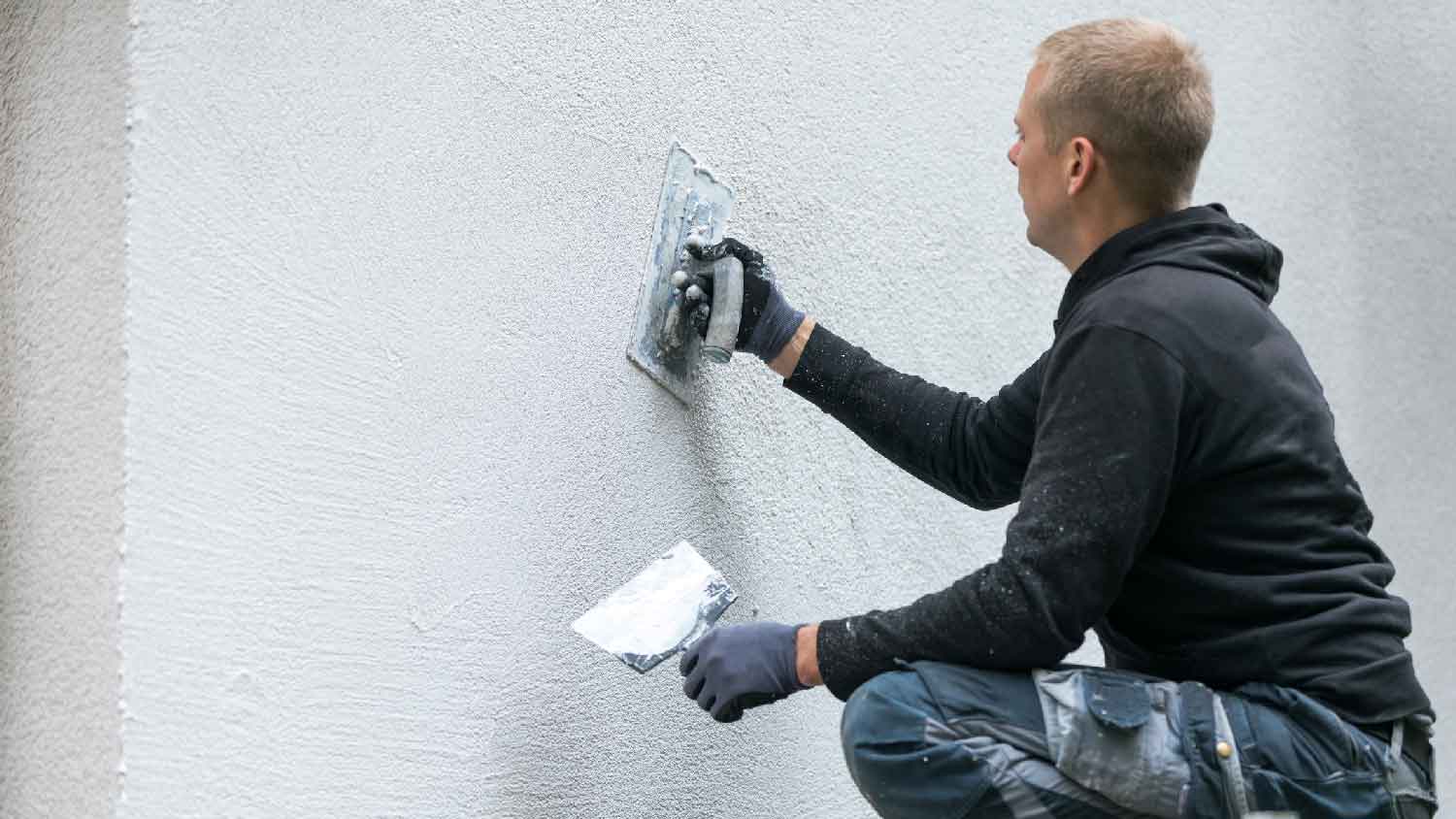






Top-rated stucco pros.

Best stucco pros near Templeton, IA

Enter your zip and get matched with up to 5 pros

Need a pro for your stucco service project in Templeton, IA?

Select your specific project to find the pro for you.

Top-Rated Stucco pros in Templeton - Updated Nov 2026

Stucco FAQs, answered by experts

The curing time for stucco typically takes several weeks to fully complete. During the curing process, the stucco undergoes a chemical reaction and gradually hardens. It's important to note that curing is different from drying. While the surface of the stucco may dry relatively quickly within a few hours or days, the curing process continues beneath the surface, strengthening and solidifying the stucco. 

It's best to avoid excessive moisture exposure during the curing period, as it can impede the curing process. The exact curing time can vary based on factors such as temperature, humidity, and the specific stucco mixture used.

It’s not advisable to use CLR on stucco. CLR is a powerful acidic cleaner designed for removing tough mineral stains. Stucco is a porous material commonly made of cement, lime, and sand. The acidic nature of CLR can potentially damage or etch the stucco surface, leading to discoloration or deterioration. 

It is best to use cleaning solutions specifically formulated for stucco or mild household cleaners mixed with water to clean stucco siding. Always test any cleaning product in a small, inconspicuous area before applying it to the entire stucco surface.

Hiring a professional for stucco repair ensures accurate diagnosis and application of appropriate techniques to prevent further damage. They deliver seamless results that maintain aesthetic appeal and prolong the exterior’s life.

Stucco repair can best be described as a patch. It involves identifying the problem and fixing that specific damage with additional stucco. If no mold infiltration or an underlying leak is causing the damage, repair is most likely all you need. 

Remediation, on the other hand, involves removing the existing siding, fixing the underlying cause of the damage, and then reapplying stucco siding for that wall. It’s a more permanent fix that takes longer to complete and, hence, comes with a steeper price tag than repair.

Masonry screws are the best option to be used on stucco. They’re thicker and made to penetrate harder surfaces like concrete and cinder blocks. Fluted masonry screws work the best because they create a stronger grasp thanks to the lines on their shafts. If you’re working on exterior stucco, use galvanized screws to prevent corrosion.

The Templeton, IA homeowners’ guide to stucco services

From average costs to expert advice, get all the answers you need to get your job done.