



Verified Reviews for Sandblasting Service pros in Maxwell, IA
*The Angi rating for Sandblasting Service companies in Maxwell, IA is a rating based on verified reviews from our community of homeowners who have used these pros to meet their Sandblasting Service needs.
*The HomeAdvisor rating for Sandblasting Service companies in Maxwell, IA is a rating based on verified reviews from our community of homeowners who have used these pros to meet their Sandblasting Service needs.
Last update on December 22, 2025
Veda B.
5.0
Reviewed in December 2025
Very knowledgeable; same day service; timely and very dependable. Would recommend!!
We pride our company on reliability, great communication, integrity, and quality work. We strongly believe in giving our absolute best in all of our projects no matter how big or small. We are experts in our trade and will always keep you educated on your particular task or project. We look forward to earning your business!
"I can't rate them high enough. Gia was there when she said she'd be & worked through the extreme heat. She did an excellent job, finished on time for a very reasonable price. We will definitely be using this service again!"
"The service was amazing from start to finish. I was able to call and get an estimate done quickly and hassle free. The handymen sent out were knowledgeable and professional. They were able to complete all work quickly. I would recommend to everyone I know."
"Went great. Worked over my garage and two of my neighbors sheds (one shed each). Had insurance which I verified the insurance was active. Did my own clean up. Sent letter to Better Business Bureau recommending Torres."
Sandblasting Services questions, answered by experts
Sand is a common sublayer for hardscape features like driveways, paver patios, and more. Most projects that involve sand require a 1-inch layer to promote evenness, drainage, and weight distribution. For further drainage, most projects have a 6-inch minimum layer of gravel beneath the sand.
Regular sealing and repainting help maintain the restored surface’s durability.
There are two ways sandblasting could be dangerous: improper use of the equipment so that the stream touches your skin, and air particles created during the sandblasting process. While the first is easier to avoid and fairly obvious, the second has the potential to be more serious and is much more difficult to understand. This is why you should always hire a pro to sandblast, as they understand the dangers associated with the process. If proper safety measures are taken, then sandblasting is rarely dangerous.
If you’re DIYing the project, it could take up to a week if you aren’t able to dedicate full-time hours. If you hire a professional and they arrive with a team, expect your stairs to be sanded in as little as 2 hours (for simple projects). Finishing the stairs takes a while longer as there are drying and sealing times to consider, but the actual work will take much less time than the sanding portion.
The best way to sand a deck is by cleaning it, sanding the boards and stairs with 60- or 80-grit sandpaper, and sanding the railings and posts with 80-grit sandpaper. You should sand in the direction of the wood grain to avoid damaging the timber. When sanding your deck, use medium pressure and aim for an even sand. Pressing too hard with a sander can damage decks, as most are softwoods.
The Maxwell, IA homeowners’ guide to sandblasting services
From average costs to expert advice, get all the answers you need to get your job done.
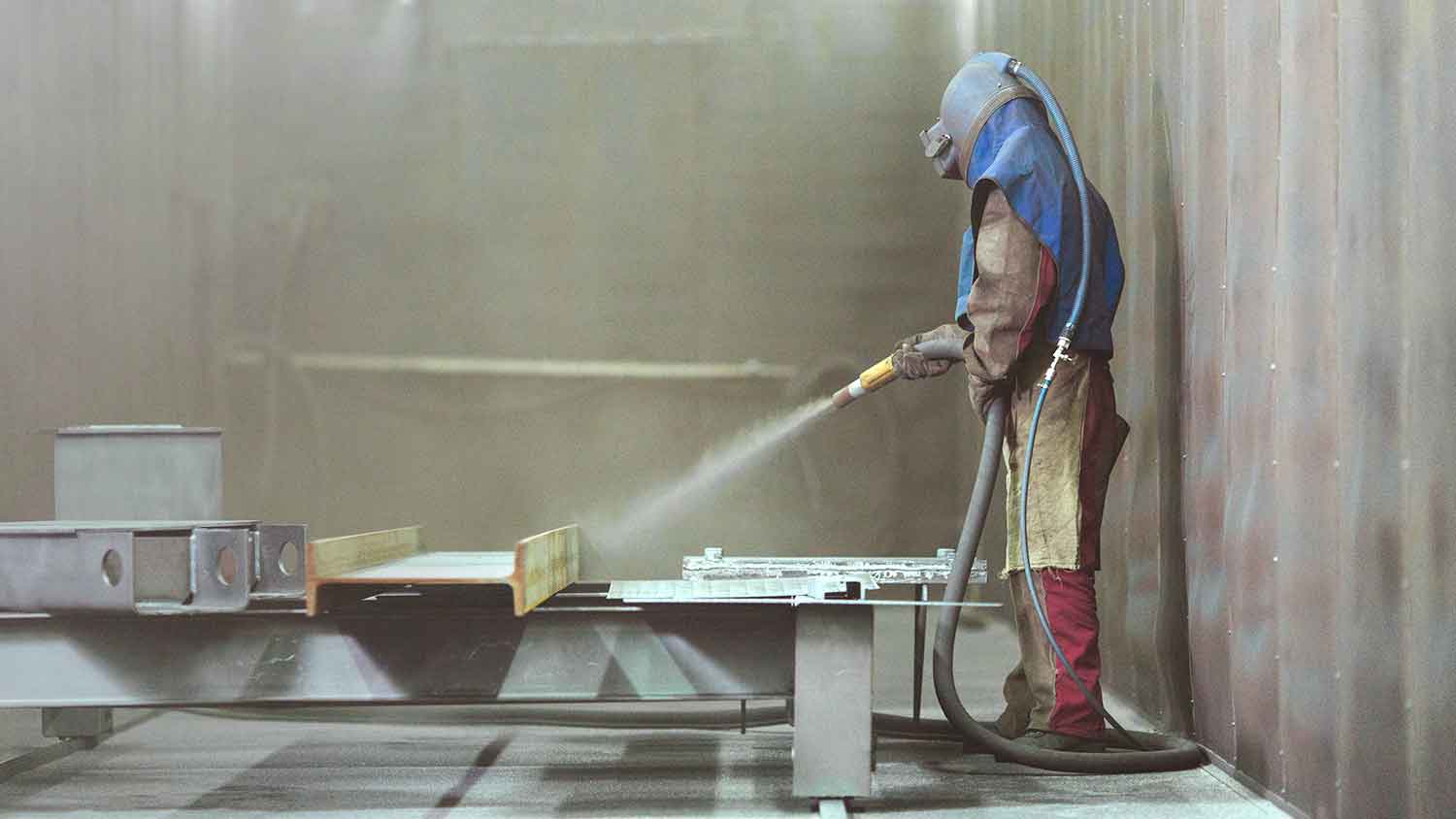
Sandblasting is a powerful method to remove paint, primer, and other coatings from hard surfaces. Learn the cost to rent a sandblaster and the factors involved.
The cost to sandblast your home’s exterior or another surface on your property depends on the method and the materials you use. Learn more with this guide.
Discover mosquito control service cost estimates, including average prices, key cost factors, and tips to save on professional mosquito treatments for your home.
Sandblasting is a powerful technique used to strip paint, rust, and other material from a surface. Learn when you’d use this technique, its cost, and how it works.