When pests show up, so do we.\n\nFor nearly a century, Terminix® has been one of America's most trusted names in pest control. Every day, our exterminators serve thousands of homes and businesses nationwide, combining national service with local knowledge to provide best-in-class, proactive pest management solutions. We stop problems before they start and respond quickly if issues arise, keeping your property protected.\n\nAnd for extra peace of mind, if pests come back, so do we — guaranteed.\n\nThe Terminix It Guarantee means that if pests come back, so do we, to re-treat at no additional cost. No excuses, just a commitment to care for your home like it's our own with protection you can trust.
"I doubt that you can find any harder working people than Paul Dawson & his daughter of Ace Animal Control. We couldn't be any happier with them & their services. Long story short, the squirrels are gone & they can't get back in again. Thanks Ace ! Alan Schrank God Bless"
Keeping birds away from a porch can involve a combination of strategies. Start with cleaning your porch. Remove food, debris, and plants that may be attracting feathered friends. Afterward, install physical deterrents like netting or spikes. Next, top off your porch with a decoy or two—and owl or hawk works. When wondering how to keep birds off the porch, it is always best to use humane efforts that won't harm winged creatures or the environment.
Many different types of animals like to build nests in attics. The types may vary depending on your home’s condition and location and you can prevent them by sealing off entry points and eliminating food sources.
The most common critters that like to build nests in your attic include:
Raccoons
Bats
Squirrels
Mice
Rats
DIY animal removal is rarely a good idea and is not advised for many reasons. First, these types of animals can carry diseases and, therefore, pose a health risk to you, your family, and your pets if mishandled. Second, depending on your city or municipality, it may be illegal to remove or handle wildlife yourself.
Sealing your home against these animals yourself is also a bad idea. Trapping an animal under your house will cause odor and insect problems when it passes away.
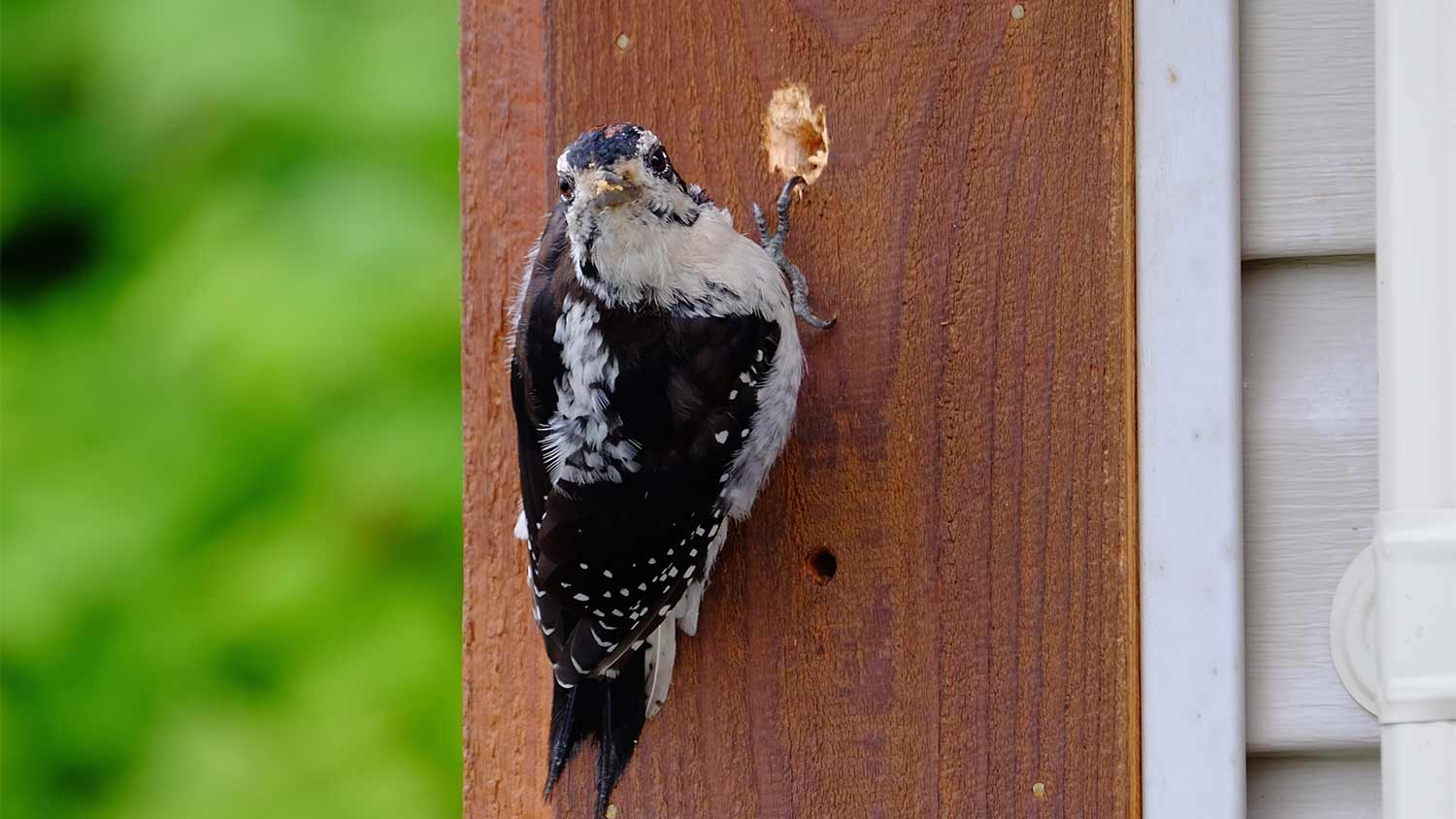
Woodpeckers may seek out homes with aluminum siding or tin roofs because these surfaces echo their drumming. Homes with wood siding are more frequently targeted as roosting areas or for food sources. If you have insects living in the exposed wood in your home, the birds are likely looking for a snack, in which case your best option is to hire an exterminator.
There are DIY methods and store-bought pesticides available for the public to use. However, these pesticides also come with a risk, and you need to follow the directions correctly and take precautionary measures to prevent exposure to these chemicals. These methods may be an option for small pest problems, but you should call in a pest control specialist for persistent pests and infestations.
The Boyden, IA homeowners’ guide to bird control services
From average costs to expert advice, get all the answers you need to get your job done.
Sometimes birds nest in unwelcome places. Find out how much bird nest removal will cost based on factors like location, bird species, and preventative measures.