


Top-rated generator install pros.

Get matched with top generator install pros in Quinebaug, CT

Enter your zip and get matched with up to 5 pros

Need a pro for your generator install project in Quinebaug, CT?

Select your specific project to find the pro for you.

Find Generator install pros in Quinebaug

Avatar for Electric Solutions Contracting
Electric Solutions Contracting
4.3(
59
)
Fixed Generator - InstallPortable Generator - Install

Serving Quinebaug, CT and surrounding areas

Approved

In business since 2014

Free estimates

Offers commercial services

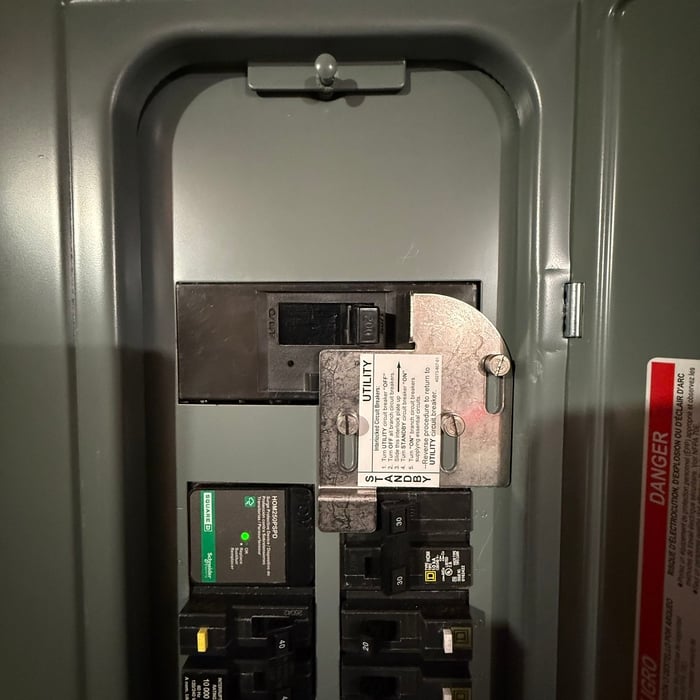
"Kevin did a great job installing our generator interlock kit. He responded quickly to my request for an estimate, he was on time for his appointment and he got back to us with an estimate ASAP. The work in our home was done efficiently and Kevin left the work area neat. The job cost was the exact figure quoted on the estimate. I highly recommend Electric Solutions and would hire Kevin again for any electrical work we need done."
13 neighbors recently requested a quote
Recommended by84%of homeowners
Deary Electric & Renovations
4.7(
33
)
Fixed Generator - InstallFixed Generator - Repair

Serving Quinebaug, CT and surrounding areas

Approved

In business since 2001

Emergency services offered

Credit card accepted

"I highly recommend Deary Electric. After finding them through Home Advisor, I spoke on the phone with Josh just a few minutes later. They arrived when he said and called ahead 30 minutes before he arrived. Once here, Josh and his partner were able to quickly figure out what the problem was and fixed it shortly thereafter. Cost was more than fair; money well spent. Will definitely call them for future work."
Additional Photos
Response time5 days
Response rate100%
7 neighbors recently requested a quote
Avatar for Blue Volt Electrical Contractors LLC
Blue Volt Electrical Contractors LLC
New to Angi
Portable Generator - Install

Serving Quinebaug, CT and surrounding areas

Approved

Free estimates

Emergency services offered

Warranties offered

I promise a commitment to quality workmanship, attention to detail, and customer satisfaction. Prioritizing safety and efficiency, ensuring that every project meets the highest industry standards. My team is highly trained, experienced, and dedicated to staying updated with the latest technologies and best practices.\n\nWe’ll do a great job because we genuinely care about our clients' needs, offering personalized solutions and transparent communication throughout each project. Our reliability, prompt service, and strong work ethic build trust and long-term relationships, setting us apart from the competition.

Panel Upgrade
Panel Upgrade
Panel Upgrade
Panel Upgrade
Generator Interlock

+15

30 neighbors recently requested a quote
Showing 1-10 of 45
Generator Install questions, answered by experts

To determine the right size generator for your house, you should calculate the total wattage of the appliances and devices you want to power during an outage. List all essential items, note their start-up wattages, and add them together.

Here are some typical wattage requirements for common appliances:

  • Refrigerator: 600 watts

  • Large dehumidifier: 700 watts

  • Large window air conditioner: 1,400 watts

  • Water heater: 3,000 to 4,500 watts

  • Electric furnace: 5,000 to 25,000 watts

A 7,500-watt generator might be sufficient for essentials like a refrigerator, freezer, well pump, and lighting circuits. However, for high-demand items like a water heater or furnace, a whole-home generator is a better choice. A portable generator may be enough if you only need to power a few critical items.

While home square footage can offer a rough estimate, it is not always a reliable indicator. For reference, here are some typical generator sizes based on square footage:

  • 1,000 sq ft: 6–9 kW

  • 1,500 sq ft: 7–10 kW

  • 2,000 sq ft: 10–14 kW

  • 2,500 sq ft: 12–16 kW

  • 3,000 sq ft: 16–20 kW+

For the most accurate sizing, consult a professional who can calculate your home's peak and average power consumption and recommend the optimal generator.

To reduce AC startup power for a whole-house generator, install a soft start kit or hard start capacitor, which lowers the initial surge by gradually ramping up the compressor. Using a smart load manager can also help by staggering startup loads, preventing a system overload and future costly repairs.

These advanced generators use a key fob or a smartphone app to remotely start, which is ideal for getting power back on immediately without venturing outside. This feature is more common on whole home generators, but you may be able to find it on large portable generators, too.

Yes, in some locations, it is required by the National Electric Code (NEC) to have a transfer switch installed for electrical emergencies. In addition to following electrical code, generator transfer switches ensure your home is fully protected during a power outage. By switching the power from the main breaker to the generator breaker, you can seamlessly operate your HVAC, lights, appliances, devices, and more during an emergency. 

Sizing a generator is a careful process that requires calculating the electrical load of your entire house. You have to take into account every device you want to use and their wattage requirements, plus the wattage needed to start them, and look for a generator that can safely run all that at around 80% capacity.

In more practical terms, a small home can run on a 10,000-watt generator (and if you only want to power a few key appliances, much less than that). A mid-sized home may need something between 15,000 and 22,000 watts. Larger homes require 25,000 watts or more. 

The Quinebaug, CT homeowners’ guide to generator installs

From average costs to expert advice, get all the answers you need to get your job done.