



Top-rated concrete leveling pros.

Best concrete leveling pros near Walnut Ridge, AR

Enter your zip and get matched with up to 5 pros

Need a pro for your concrete leveling project in Walnut Ridge, AR?

Select your specific project to find the pro for you.

Top-Rated Concrete leveling pros in Walnut Ridge - Updated Nov 2026

Avatar for Redeemers Group
Redeemers Group
4.5(
104
)
Concrete - Injection Leveling - MudjackingConcrete - Injection Leveling - Mudjacking - For Business

Serving Walnut Ridge, AR and surrounding areas

In business since 2007

Free estimates

Emergency services offered

"The crews were AWESOME! The first crew Jet & Jed, explained and invited us to watch the whole pillars installation! That was freaking Amazing! The second crew Aaron, Venny, & Tristian also explained the Poly process and I was able to see the cracks actually close right before my eyes! That was also Freaking Amazing! When I tell you these guys knew their stuff, these guys knew their STUFF! All were VERY FRIENDLY and easy to talk to! Finally, if you need any foundation work done, these men at Redeemers are the ones to do a ⭐️⭐️⭐️⭐️⭐️ job! Happy Customer, Regina"
Additional Photos
Additional Photos
Additional Photos
Additional Photos
Additional Photos

+14

Recommended by91%of homeowners
Concrete Leveling FAQs, answered by experts

Generally speaking, push piers—or steel piers—are the best option for underpinning, as they reach down to solid bedrock to find support for your foundation rather than relying on soil, which could be subject to the same issues as the soil directly below your foundation. However, the best underpinning method for your home depends on your location, how far down the bedrock is, and the type of soil in your area. Helical piers are usually the best option for sandy soil or in areas where the bedrock is too deep to use steel piers.

A good slump height really depends on the project, but there is a use for nearly all slump levels. For example, low slumps are best in projects that require structure, such as curbs and roads. High slumps often require additional reinforcement, but they flow more freely into hard-to-reach spaces.

Most states and municipalities don’t require concrete mudjacking companies to carry a specific license, but they usually need to have a general contractor’s license, and they should be fully insured. The only exception is if the mudjacking company provides foundation repairs as well, or if it offers mudjacking for home foundations. In that case, they will typically need a foundation repair contractor’s license. You can check state requirements and then use Angi’s license lookup tool to confirm that a company is properly licensed to provide mudjacking services in your area.

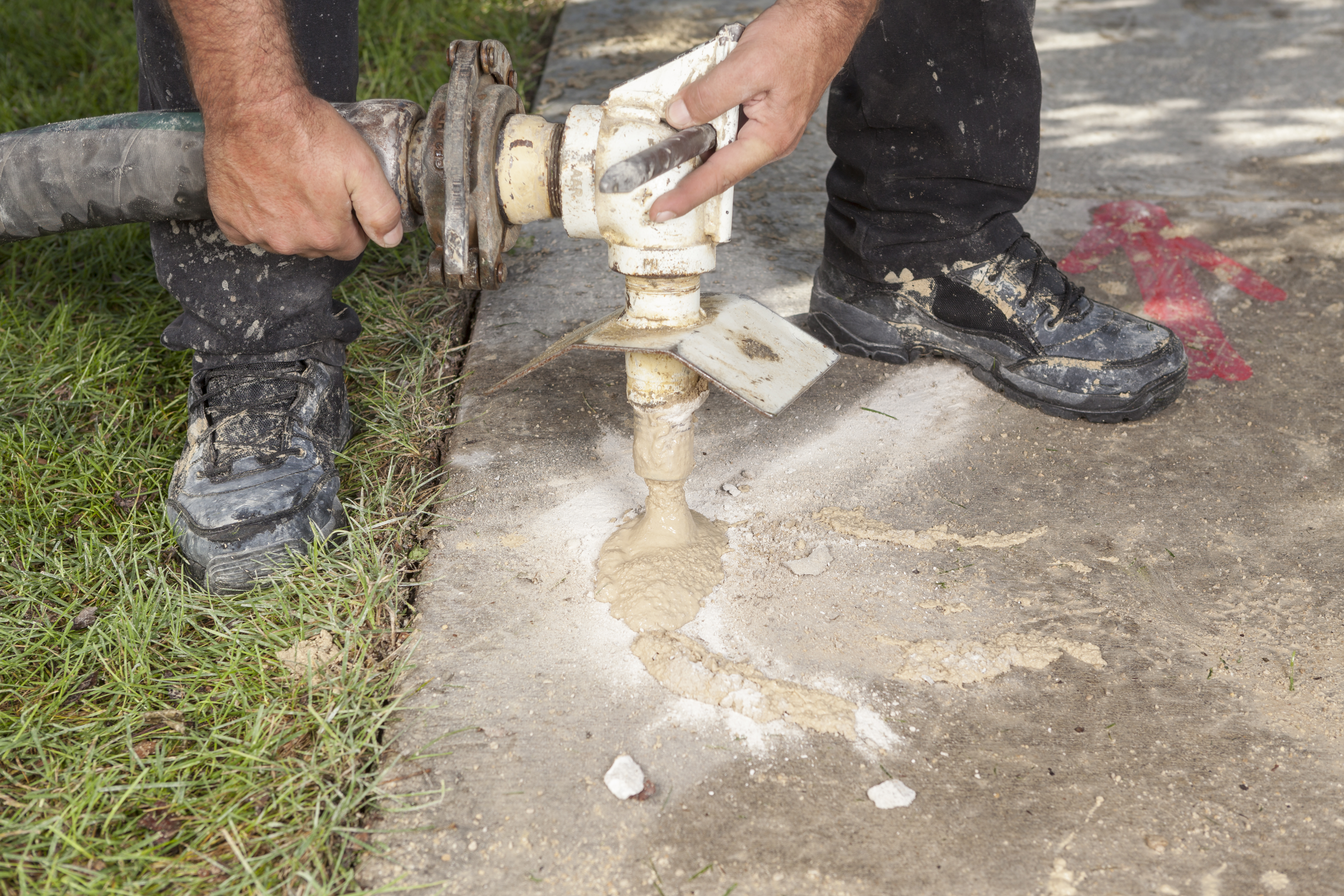
Mudjacking typically takes 24 to 72 hours (one to three days) to dry and cure completely before you can resume normal use. The exact time can vary depending on the size of the project. Because the slurry mixture contains cement, it must fully harden to ensure that added weight from walking, furniture, or vehicles won't shift the concrete slab. A professional contractor can advise you on when the surface is safe to use. For comparison, if you use polyjacking instead, the polyurethane foam can dry in just a few minutes, but it's best to wait about an hour before use.

It’s best not to perform mudjacking in the winter unless the ground temperature remains above freezing. Freezing temperatures can cause the slurry to harden too quickly, compromising its strength and longevity. Concrete is also more susceptible to cracking and splitting in cold temperatures, so there’s a higher risk of damaging the slab during the drilling and lifting process in winter.

The Walnut Ridge, AR homeowners’ guide to concrete leveling services

From average costs to expert advice, get all the answers you need to get your job done.