


Top-rated concrete leveling pros.

Get matched with top concrete leveling pros in Paris, AR

Enter your zip and get matched with up to 5 pros

Need a pro for your concrete leveling project in Paris, AR?

Select your specific project to find the pro for you.

Find Concrete leveling pros in Paris

Avatar for Vesta Foundation Solutions of Arkansas, LLC
Vesta Foundation Solutions of Arkansas, LLC
4.1(
29
)
Concrete - Injection Leveling - MudjackingConcrete - Injection Leveling - Mudjacking - For Business

Serving Paris, AR and surrounding areas

Approved

In business since 2016

Free estimates

Warranties offered

"VESTA sent us the outstanding team of JUSTIN and GREG to accomplish an outstanding job in our concrete driveway. They filled the underground voids and leveled off the several misadjusted segments of the driveway. Top notch. Justin and Greg are very courteous and respectful. They kept us informed at every step. They were very diligent and hardworking, particularly on cold temperature days. Upon completion they left the driveway in showroom condition. Or as our British cousins would say: Good show!! Jolly good show!! Bravo Zulu to VESTA and team."
Before
After
Response time3 days
35 neighbors recently requested a quote
Recommended by73%of homeowners
Concrete Leveling questions, answered by experts

Concrete leveling is not typically covered by insurance. In some cases where the shifting concrete is caused by a natural disaster or storm, you may be able to file an insurance claim if your policy specifically covers those circumstances. In most cases, though, you’ll pay out-of-pocket for concrete leveling.

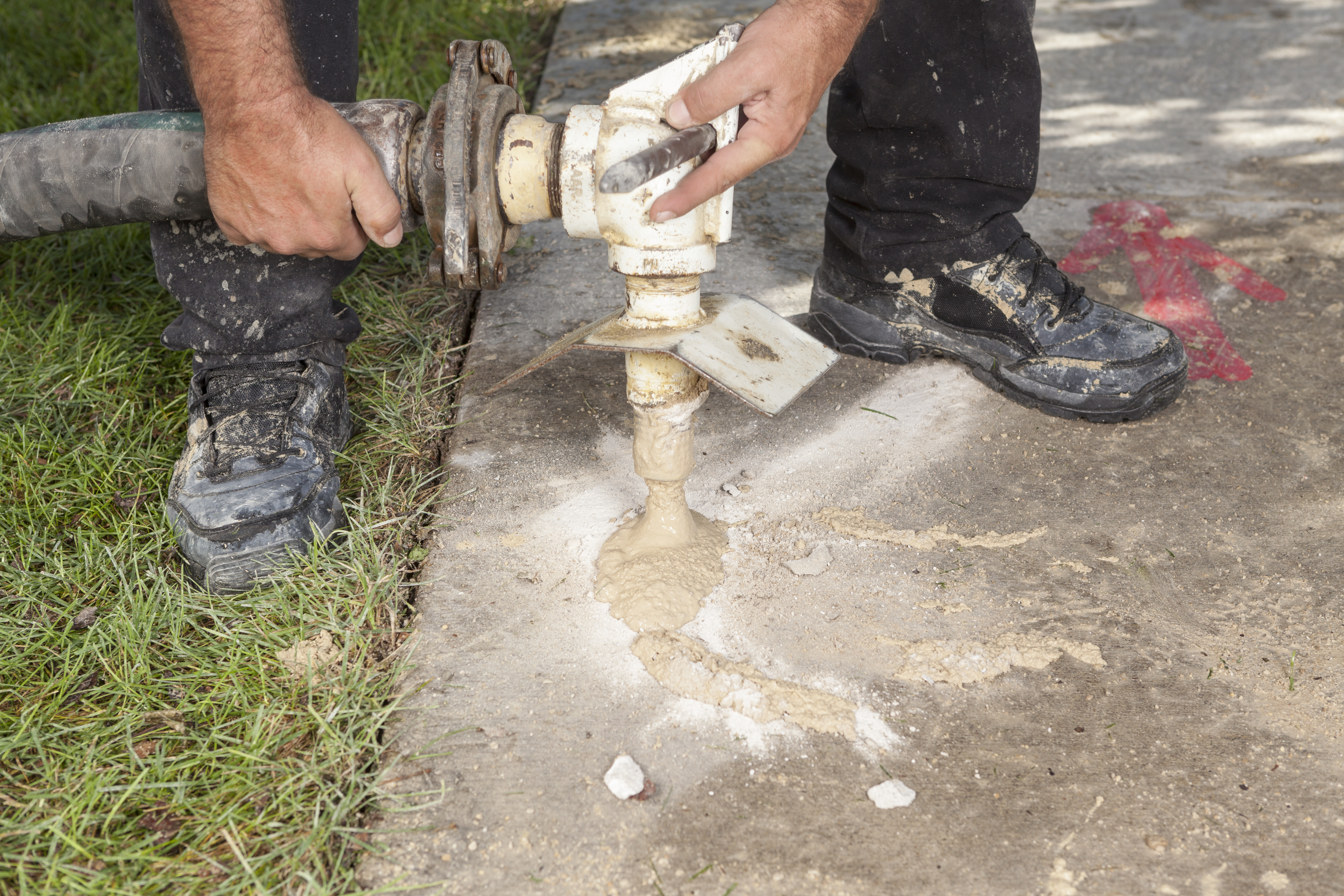
Pros often use mudjacking or polyurethane foam injection to level a sunken concrete patio. Both methods lift the slab by filling voids beneath it. After properly compacting the soil beneath it to prevent future settling, the concrete may need to be removed and re-poured for severe sinking.

Yes, expanding foam (also known as polyurethane foam) can lift concrete. This approach, called polyjacking, involves injecting the foam rather than concrete slurry to fill voids and raise the concrete slab back into place. It’s often faster and requires smaller drill holes than traditional mudjacking, though it may come at a higher cost. Some contractors also prefer polyjacking over mudjacking for more damaged and delicate slabs.

Trenching and boring are two distinct methods for installing underground utilities. Trenching involves digging a channel using equipment like an excavator, trencher, backhoe, or shovel. While it is a simpler process, it causes significant disruption to the surface, landscaping, and surrounding ecosystems.

Boring, also known as directional boring, is a less invasive alternative that uses a drill to create a tunnel for utility lines without disturbing the surface. This method is more precise and is ideal for installations that need to go underneath buildings, roads, or bodies of water. Although boring is less disruptive, it is generally more expensive than trenching.

On average, a mudjacking repair lasts between five and 10 years, though it can sometimes last for well beyond a decade under ideal conditions. Its longevity depends heavily on several factors, including the condition of the underlying soil, environmental conditions like freeze/thaw cycles and erosion, and whether the root cause of the sinking, such as drainage issues, is resolved. Because it doesn't always fix the underlying problem of loose soil, mudjacking is often considered a temporary solution. Proper maintenance and evaluation can help extend its lifespan.

The Paris, AR homeowners’ guide to concrete leveling services

From average costs to expert advice, get all the answers you need to get your job done.