
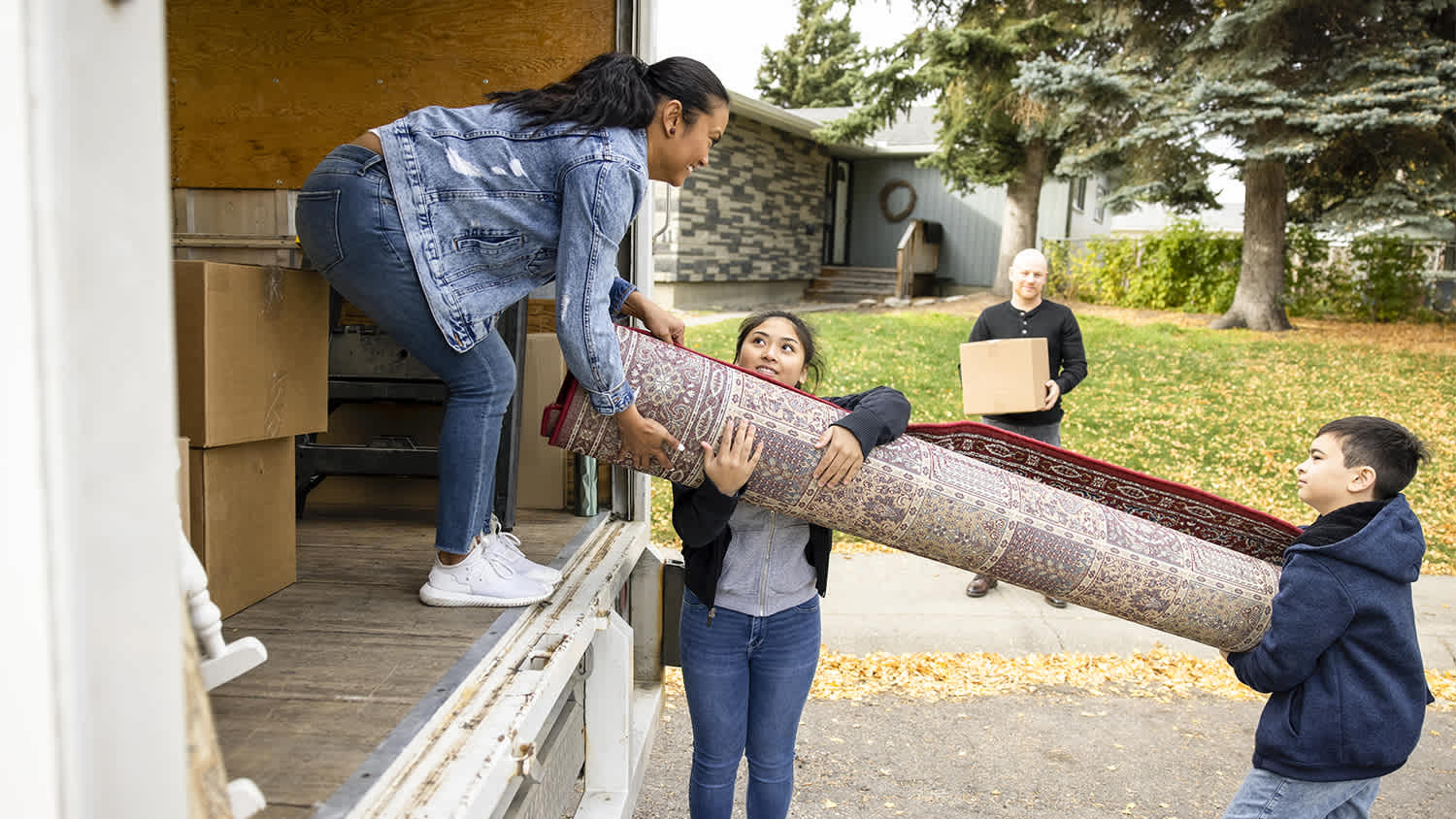
When planning a cross-country move, anticipate the total cost by looking at all the relevant price factors and consider ways to save money.
Do your part when the delivery person comes around

Packing paper is recyclable through regular curbside pickup in most areas, making it one of the easiest materials to dispose of responsibly after your move.
Expect to pay $100 to $300 for professional junk haulers who handle packing material removal, though costs can reach $700 for larger volumes.
You can recycle cardboard and paper through curbside pickup, while plastic films and packing peanuts need special facilities or donation to local movers.
Hiring a local garbage removal professional takes the sorting and hauling off your plate, so you can focus on settling into your new home.
Moving comes with a ton of extra packing materials, from boxes to packing tape to unpopped bubble wrap. And when you’re already in the weeds of unpacking your belongings, figuring out what to do with these materials can be another headache. Luckily, there are a few options for how to recycle packing materials.
As you plan for your next move, figure out what you’re going to do with your packing materials ahead of time to mitigate the hassle during the process. Let’s cover some of the options available for recycling packing materials so you’re prepared.

Recycling packing products is important because if cardboard, plastic spacers, bubble wrap, and tape are dumped in a landfill, some of the materials can take up to 1,000 years to decompose naturally. That’s not a sustainable solution to getting rid of packing materials, especially since landfills are quickly filling up.
While certain packing materials aren’t biodegradable, most are recyclable. By disposing of the materials properly, you can keep them out of landfills and also make sure they’re reused. This reduces strain on the environment and the need to manufacture new packing materials from newly sourced raw materials.
The best place to recycle old packing materials will depend on the specific material and the facilities available in your area.
Plastic used in packing materials—including plastic spacers, zip ties, and strapping—is recyclable in most areas at standard recycling facilities. Look for the plastic identification number printed or embedded on the components.
You can double-check with your local sanitation department for what numbers can go out with your standard recycling and include the matching packing materials with your bottles and cans on recycling day.
If the numbers don’t match, search online for a recycling center near you to see if they can handle the numbers. You can haul your plastic components to the facility yourself or hire a local garbage removal company to collect and haul them away for you. Just be sure to confirm that your professional will bring everything in for recycling rather than dumping it in a landfill.

Paper and cardboard are some of the most common packing materials for moving, and they’re among the easiest materials to recycle.
If your cardboard boxes are in good condition and could serve someone else during a move, you can try donating them or listing them for free on a local online marketplace. Some charitable organizations, like Habitat for Humanity, might also accept them.
In most municipalities, you can put paper and cardboard out on the appropriate recycling day. If you have a lot and want to get rid of it quickly, though, you can bring it to most recycling facilities or hire a junk removal company to pick it up and haul it away for you.
Styrofoam and packing peanuts are recyclable, but many facilities don’t have the equipment necessary to handle these materials.
These materials are reusable, so the easiest way to dispose of them is to donate them to local movers or list them as “free with local pick up” on an online marketplace. If you can’t find a donation center or an individual to take them and reuse them, call local recycling centers to see if there’s one nearby where you can deliver the items.
Bubble wraps and mailers are mostly made of plastic, but they won’t have the same plastic identification numbers as hard plastic packing materials. Instead, these are considered “film plastics,” and you shouldn’t mix these in with your regular plastic recycling. These materials are not biodegradable, either, so you shouldn’t throw them away.
The easiest and most responsible way to dispose of them is to donate them or give them away for use during another move. Try to find family, friends, or neighbors that are relocating, or list the materials for free on an online marketplace. You can also try donating them to local moving companies that might be able to put them to good use.
The next best option is to check with local recycling facilities that can handle plastic film. You’ll either have to deliver it yourself or hire a professional to pick it up and recycle it for you.
Unfortunately, most rubber bands are not recyclable because they’re made with synthetic materials that create toxic compounds during the process of recovering the rubber. As such, you have two options to prevent them from ending up in a landfill.
First, you can repurpose them if you only have a handful. Use them as grips for container lids, to tie up power cords, or to keep stacks of pencils or pens neat and tidy. You can also wrap them around hangers to prevent clothes from slipping off. You might be able to reuse them for other crafts, too.
Second, you can donate them to schools or offices in your area that might use them rather than buying new ones.
Recycling packing materials right after you use them for a move can feel like a time-consuming chore. Here are a few tips to make the process faster and easier to manage, even if you have other things going on.
Sort as you go. First and foremost, sorting packing materials and transporting everything to the right facilities can take a lot of time and effort. Instead, sort things as you go to save time down the road. A little preparation can save a lot of time.
Rely on a professional. If you’re feeling overwhelmed from your move and just don’t have the time to sort and haul away materials to different facilities, call a garbage removal service. A professional will come pick everything up for you, and provided you call ahead to make sure they’ll recycle everything appropriately, you don’t have to worry about your materials ending up in a landfill.
Put them out with your normal recycling. Most packing materials can go out with your normal recycling, including cardboard, paper, and hard plastics. If you don’t mind storing your moving materials for a few weeks, you can get rid of batches of them over time without spending any money.
Wait until you have a large volume to get rid of. If you’re calling in a pro to pick everything up or you’re hauling everything away yourself, wait until you have a large volume to make it worth it.
Recycling packing materials is easy enough for virtually any homeowner to do themselves, even if they have no DIY experience. All you need to do is sort your materials, do a little research on your local regulations and recycling facilities, and then drive the materials to appropriate places for disposal. For things like cardboard, paper, and some plastics, you can even just put them out for pickup with your normal recycling.
However, if you just completed a stressful move and have other things on your mind, like finding new doctors, hiring professionals for renovations, or settling into a new job, then hiring a professional junk hauler can make responsible disposal of packing materials a breeze. You’ll pay between $100 and $300 in most cases, but they’ll know where to bring each material, and they’ll pick everything up and often sort it for you.
Junk removal costs between $60 to $700 or more, with an average price of $240. Removing packing materials will likely fall on the lower end of that price range, while large, bulky items like appliances cost more. Recycling light packing materials is a DIY-friendly project, especially if the items fit in your waste or recycling bins. However, we know how quickly those bins fill up. A good option is to hire a local garbage collector to pick up the materials and handle the disposal. Hiring these pros is a great thing to do before or after a move. You'll likely rack up bag upon bag of trash when cleaning the home before exiting.
Raven and crew does absolutely fantastic job. They are very professional if any concerns were to occur with any of her work she always took responsibility and finished out with a great job. I have worked with her business for a year and have always been satisfied. Very trusted business and...
 Creations of Transformation LLC
Amazing job. Efficient and quick without compromising quality. Basement feels brand new. Would use them again in a heartbeat.
 AffordaPro Restoration
Best cleaning I've had at my property
Scam. DO NOT use this company. We had a move where a Black Tie employee left the job site early (unknown to us until after the fact) and stole $40,000 worth of a private collection we had in a box that he watch use box up. On top of this we had several items missing and damaged where we had...
Fantastic group, very communicative, and they really did a great job cleaning my condo. Will be hiring them for recurring cleaning!
 eMaids of Northern Columbus
This company went above and beyond with their work, chimney sweeps are usually pretty messy, but the clean up was spot on.!! Josh explained every thing that he was doing, and the things that he was checking to make sure the chimney was safe for me and my family. He was very professional,...
 Supreme brick & chimney
I definitely recommend Ramonaâ s cleaning service! I have booked services with her many times and she arrives on time, ready to work and provides a great service.
 Your Cleaning Solutions LLC
Amazing! I’ve had plenty of services over the years and Mary Cleaning has gone beyond what I thought was possible. ❤️ them!
They cleaned my very dirty basement. They were prompts, quick, thorough and their price was fair.
 JDE House Cleaning LLC
The company was very easy to work with. My family is now able to enjoy a space that at one point, only collected junk!!!! I feel like i have a whole new addition to the house!!! Wonderful work Blurock on our basement, will recommend!
 BluRock Services, Inc.
From average costs to expert advice, get all the answers you need to get your job done.
When planning a cross-country move, anticipate the total cost by looking at all the relevant price factors and consider ways to save money.

Real talk—most people aren't keen on packing or moving. But you can make the experience more manageable by opting for brand new boxes instead of used ones.

Moving can be a pain, but it doesn’t have to be if you hire a professional organizer. Here’s what you need to know about hiring a moving organizer

Knowing what not to pack when moving will save you time, money, and a lot of hassle. Our guide will help your move go smoothly.

Wondering how to move into an apartment as efficiently as possible? Our checklist of apartment moving tips will help everything go smoothly.

Moving is a stressful process that also involves a lot of waste. Here are five ways to make your sustainable choices during your next move.