
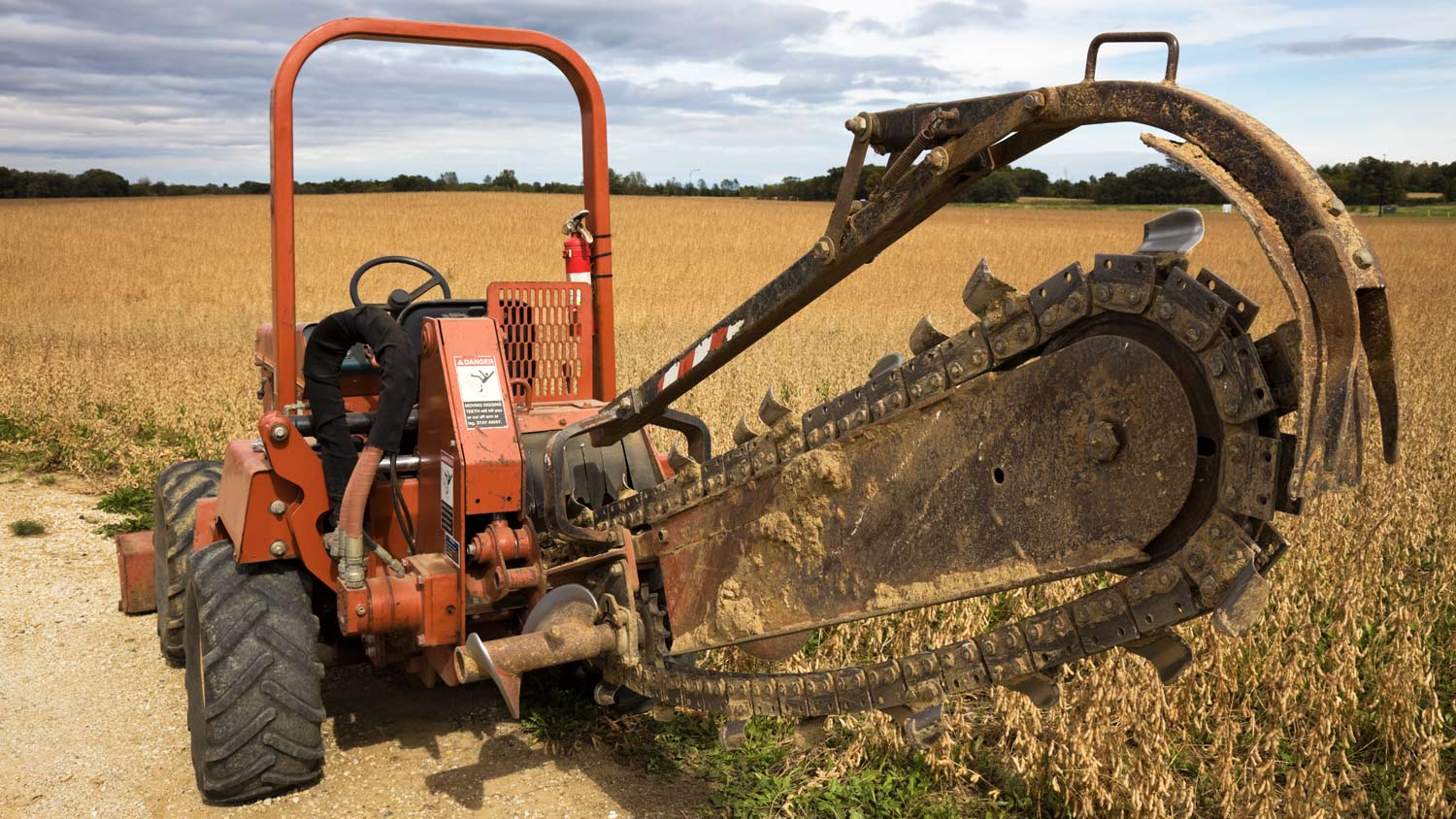
If you need to dig a trench, you might be tempted to do it yourself instead of hiring a pro. So, how much does it cost to rent a trencher? Let’s break it down.
Discover the difference before you dig

Trenches and ditches both cut ground channels, but a trench definition includes deep, narrow excavations buried underground while ditches stay open for drainage.
Trenches are deeper than they are wide, while ditches are wider and shallower, making ditches better suited for moving stormwater efficiently across your property.
The right choice depends on your project: utility lines or retaining walls require trenches, while stormwater management calls for ditches near roadways or yards.
Hiring a local excavation company keeps digging and backfilling on schedule, including operating trenchers, confirming permits, and locating utility lines.
You might’ve heard the terms “trench” and “ditch” used interchangeably, but they aren’t quite the same. In short, trenches are like underground tunnels that can perform several different functions, and ditches are fully open at the top and designed to help prevent flooding. Not sure which one is right for your home? We’ll help you figure it out in this trench versus ditch comparison.
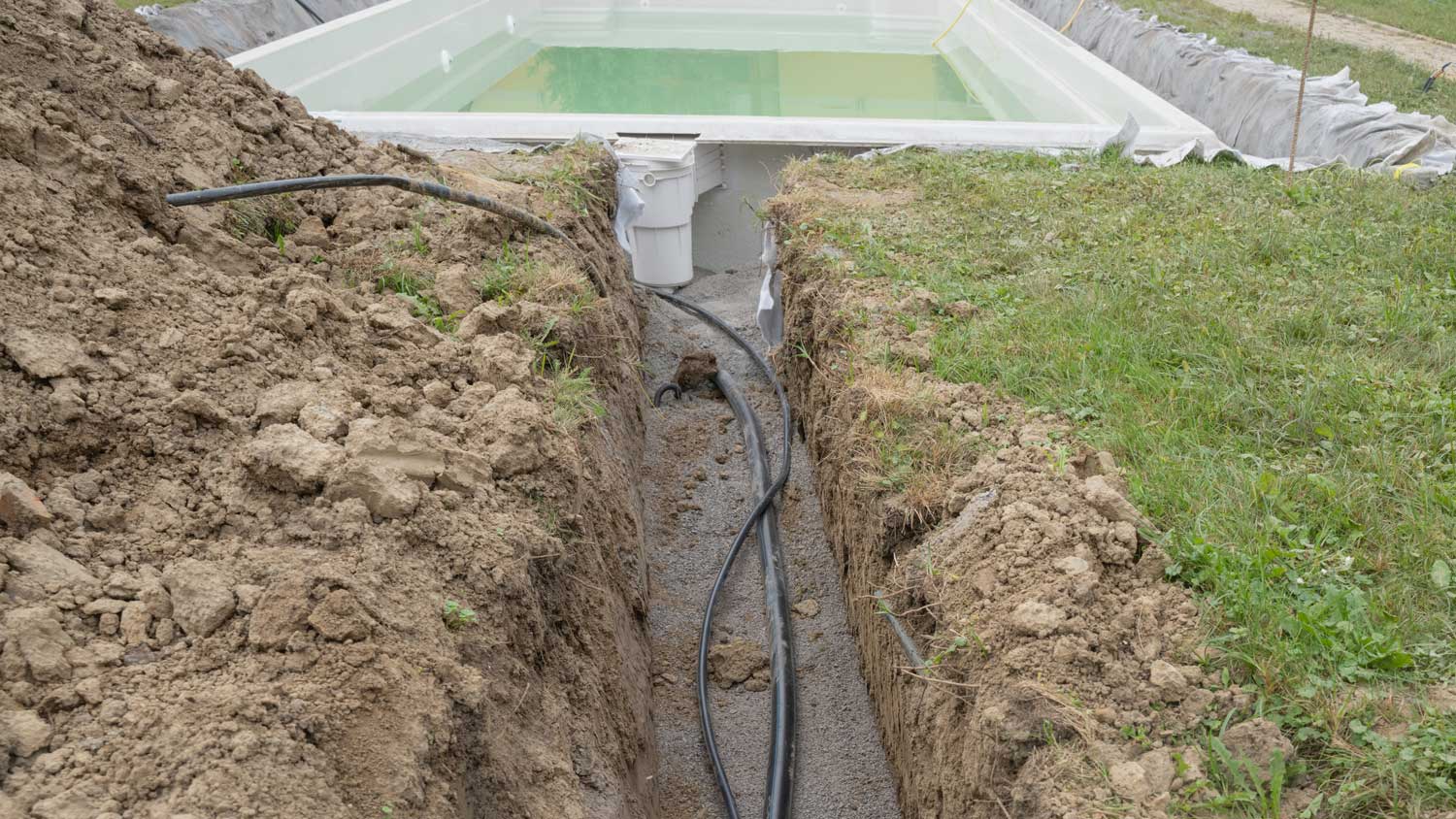
Ditches and trenches are two types of channels that are carved into the ground. Trenches are underground excavations that house utility lines, sewage systems, and drainage, whereas ditches are closer to the surface and act as a drainage system for rainwater.
| Type of Difference | Trench | Ditch |
|---|---|---|
| Purpose | Utility lines, sewage, drainage, retaining walls | Drainage |
| Size and shape | Narrow and deep | Wide and shallow |
| Location | Underground | On the surface |
| Installation | More complex | Simpler |
| Aesthetic | Hidden | Open and visible |
Trenches serve different purposes depending on the project. For example, you may need to dig a trench when installing or repairing water mains, sewer lines, gas pipes, or drainage systems. You might also need one when building a retaining wall or running certain types of electrical wiring.
On the other hand, ditches are primarily used for drainage. They provide a pathway for stormwater to flow through so that it doesn’t collect in your yard or flood your home. You’ll also find ditches alongside roads and highways, where they help prevent the roads from flooding.
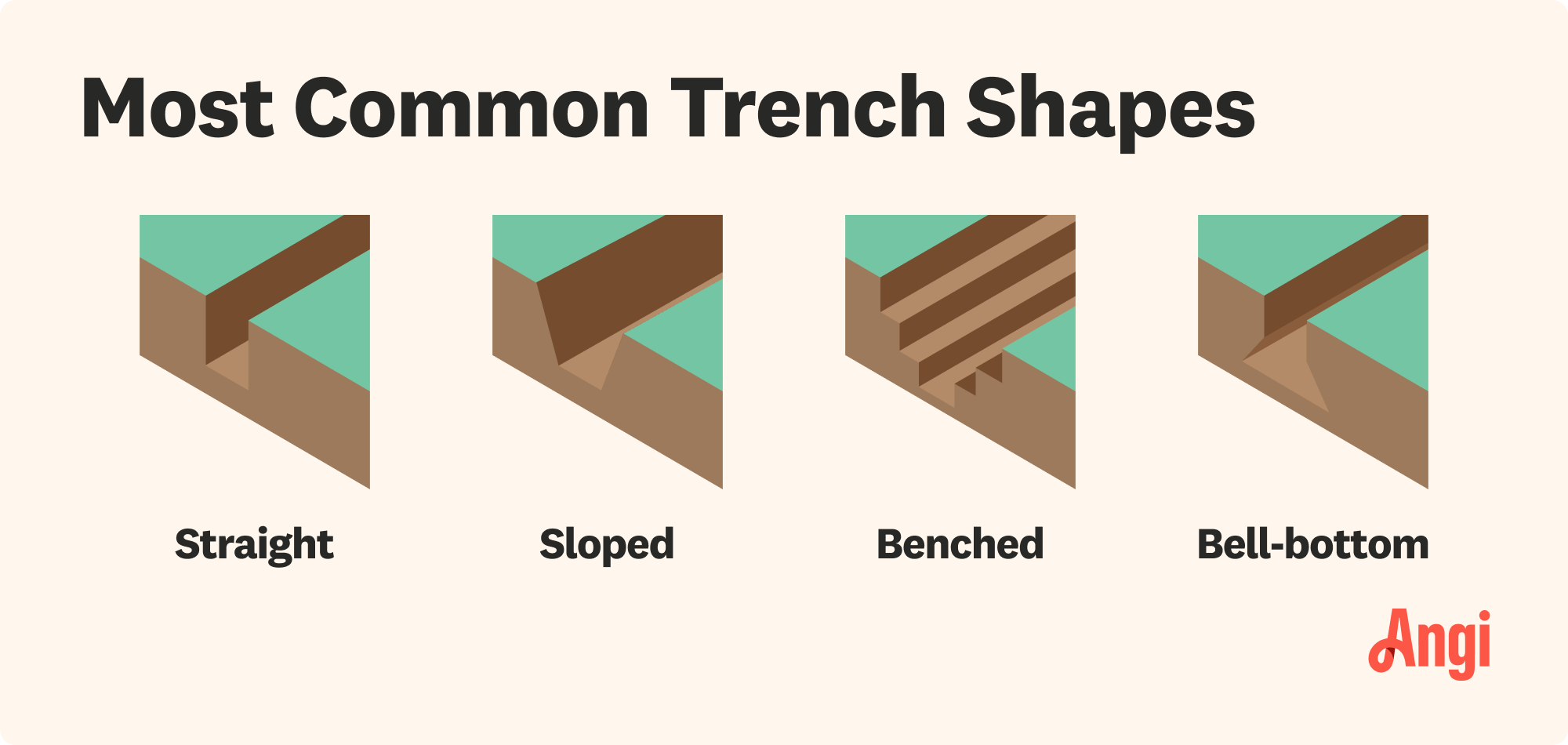
Trenches are narrow excavations that are deeper than they are wide. A trench’s purpose will determine how deep a pro will dig down for it, but most residential trenches are at least 1 foot in depth. As an example, if you’re digging a trench as part of a French drain installation, it should be 18 inches deep.
Residential ditches are wider than residential trenches, which helps water move through them easily. Since they’re located just below ground level, they tend to be shallower than trenches, as well.
Trenches lie underground. When creating a trench, your local excavation company will use a trencher or shovel to dig to the appropriate depth. Then, after setting up your underground utilities (or whatever you’re using the trench for), they’ll fill up the empty space with soil, stone, or another backfill material.
In contrast, ditches are open channels that are cut out of the earth’s surface. But unlike trenches, ditches aren’t filled back in after excavation.
Whether you’re installing a trench or a ditch, the process will require plenty of physical labor. However, since trenches are located underground and need to be backfilled, creating one takes more work, equipment, and time than digging a ditch. Larger trenching or ditch-digging projects require you to use a trencher, which is a heavy-duty machine with sharp teeth or chains.
You may be able to tackle small-scale trench or ditch installation yourself, but you’ll need to rent a trencher from a hardware store or equipment rental company. Make sure to weigh up the costs beforehand, though. The price of a trencher rental is often more costly than professional labor when you also factor in project time and other material costs.
It’s also important to locate any underground utility lines and check your local regulations before you start digging. Depending on the scope of your project, you may need a permit.
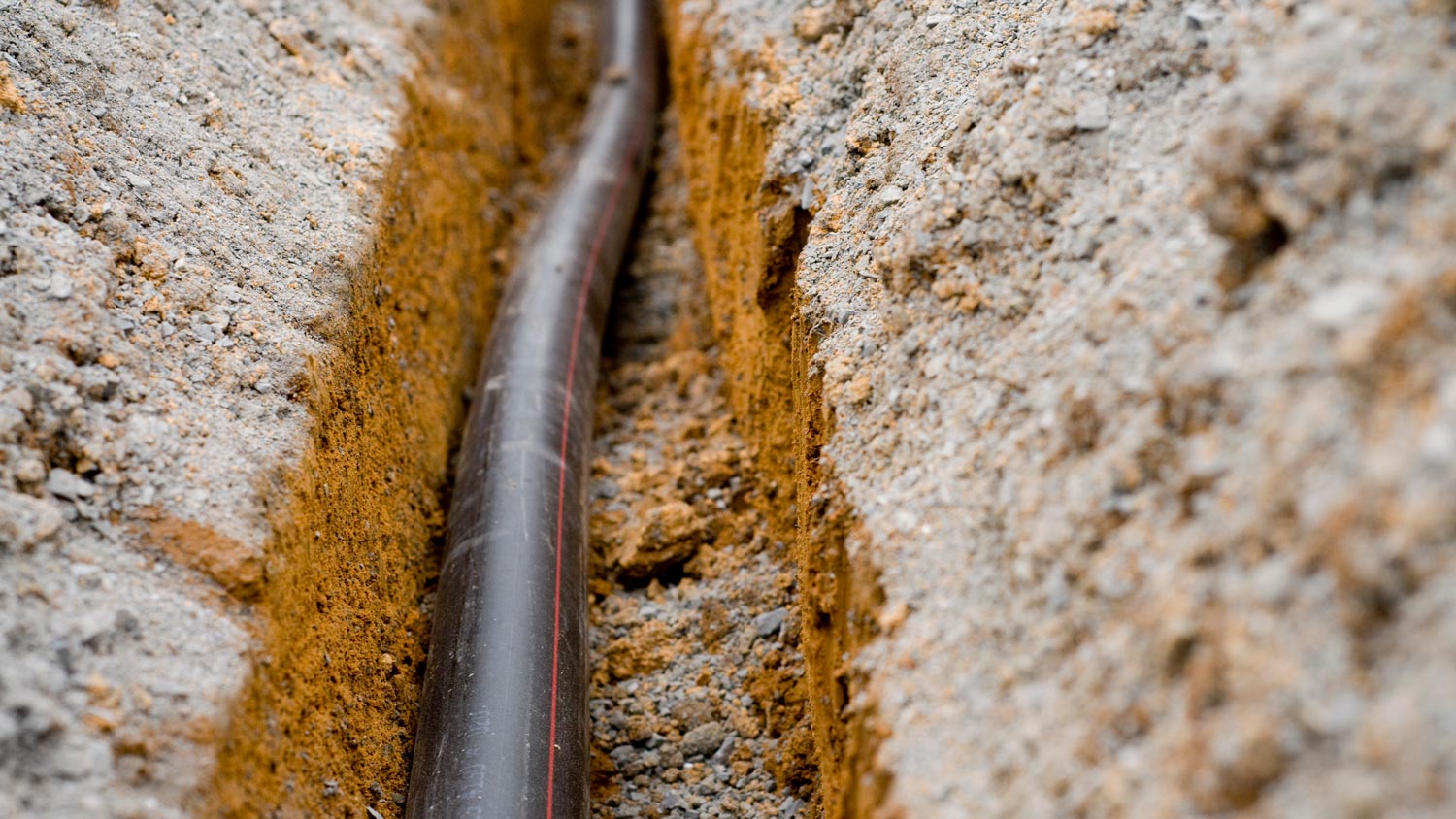
After you finish excavating and backfilling a trench, you won’t be able to see the trench itself. However, because trenching involves ripping up your lawn, it can leave a seam in your grass that you might not like the look of. If so, you can lay new sod over the area.
By comparison, a ditch is open at the top. It has gentle slopes that run from the ground’s surface to the bottom of the ditch. If you want to spruce up the look of your ditch, you can talk to a landscaping pro about planting trees, flowers, or rocks.
Amazing job. Efficient and quick without compromising quality. Basement feels brand new. Would use them again in a heartbeat.
 AffordaPro Restoration
This company is my go to resource for all my post renovation clean ups. They get the place spotless! All we have to do after is stage the place and sell, sell, sell! They are super professional and have some amazing scent that is left in every property. I highly recommend!
 The Royal Sanitation Group
Custom Paint Jobs LLC took our exterior from drab to fab! We couldnt be happier.
 Custom Paint Jobs, LLC
We had our houses windows and back door replace this summer by Window Depot USA of Central. He gave us grate advise and saved my family lots money. The team did a fantastic job with installation. If you need help, they sure get job done right!
 Window Depot USA of Central Ohio
Beginning with the estimate, Larry and Peyton were super helpful in getting my new condo's interior re-painted. Not only was the job well done, but also done in a super timely manner as promised.
 Five Star Painting of Plain City and Powell
Great job...edging and pre clean up went well with a great job with seal coat. Friendly, efficient and professional.
 All Star Paving and Sealing
Did an amazing job transforming my yard. Also installed sod in places, would recommend to everyone.
 Cardinal Landscaping & Construction LLC
Very knowledgable, very respectful and did a great job. They take pride in their work and it shows. I would highly recommend Dad's Home Repair and Excavation.
 Dad's Home Repair & Excavation
They do good work, were quick to respond, and their prices were as reasonable as plumbing work can be. They were fairly good with the sewer cleaning, and I have no complaints with their work, but I had to go beyond what they could do and get some excavation work done.
 ARS / Rescue Rooter Columbus
From average costs to expert advice, get all the answers you need to get your job done.
If you need to dig a trench, you might be tempted to do it yourself instead of hiring a pro. So, how much does it cost to rent a trencher? Let’s break it down.

The water main line is essential to your home’s plumbing. Over time, it can develop wear or damage. Find out how much a main water line replacement costs here.
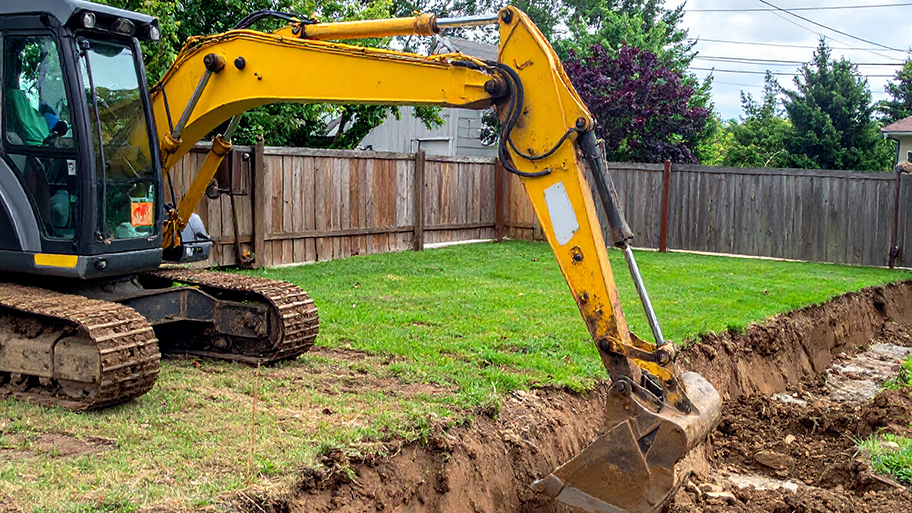
Digging a trench is usually the first step in a larger home project. Our trenching cost calculator breaks down the factors that affect the price tag of this job.
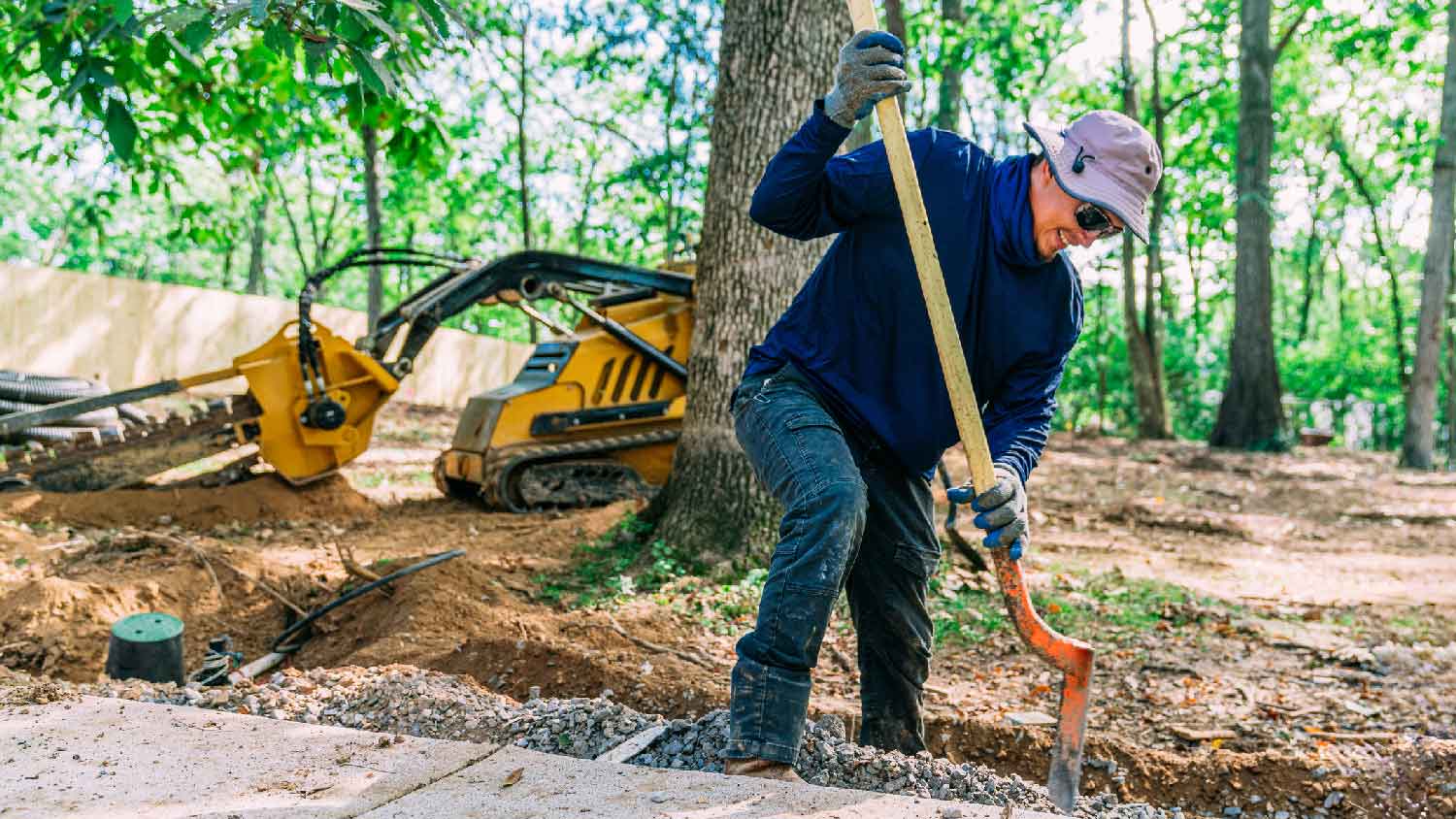
Trenching involves digging long, deep channels, but edging creates shallow, neat borders. Learn more about each method and when to use them.
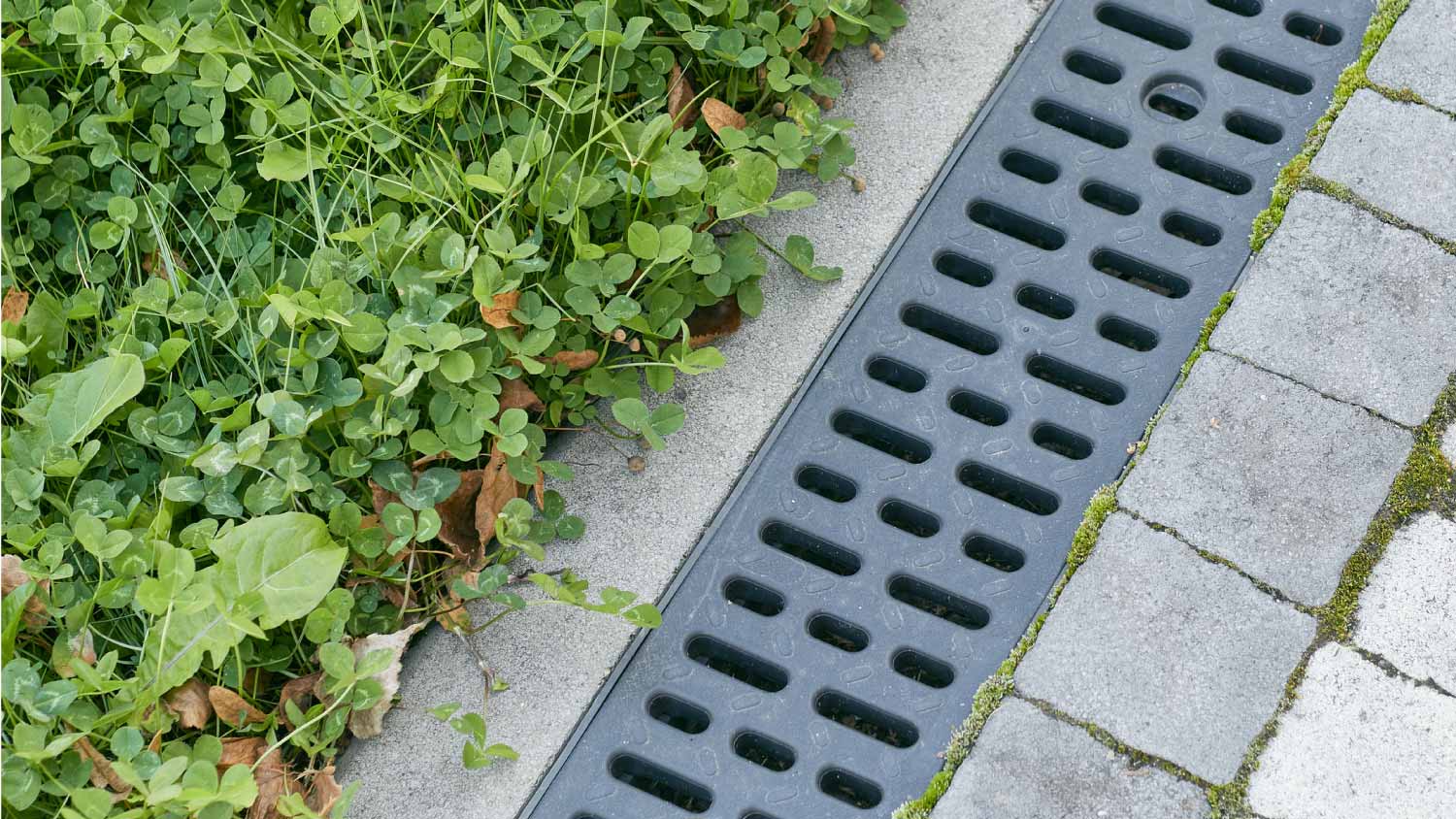
If you need more than a French drain, an alternative drainage system that handles more water can help you protect your property, inside and out.
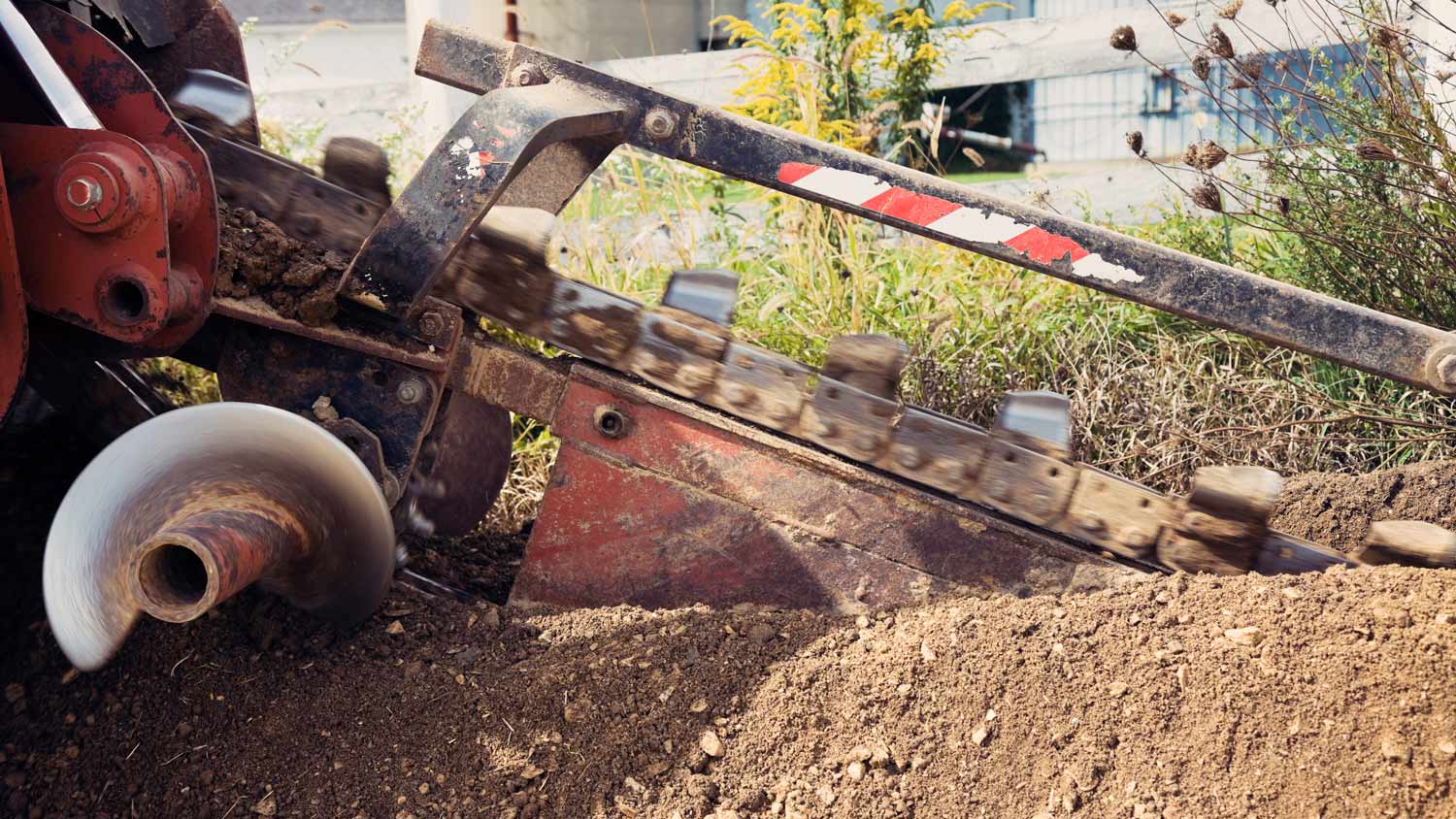
Using a trencher is more efficient than using a shovel when excavating. Here’s a basic guide on how to use a trencher for your next project.