
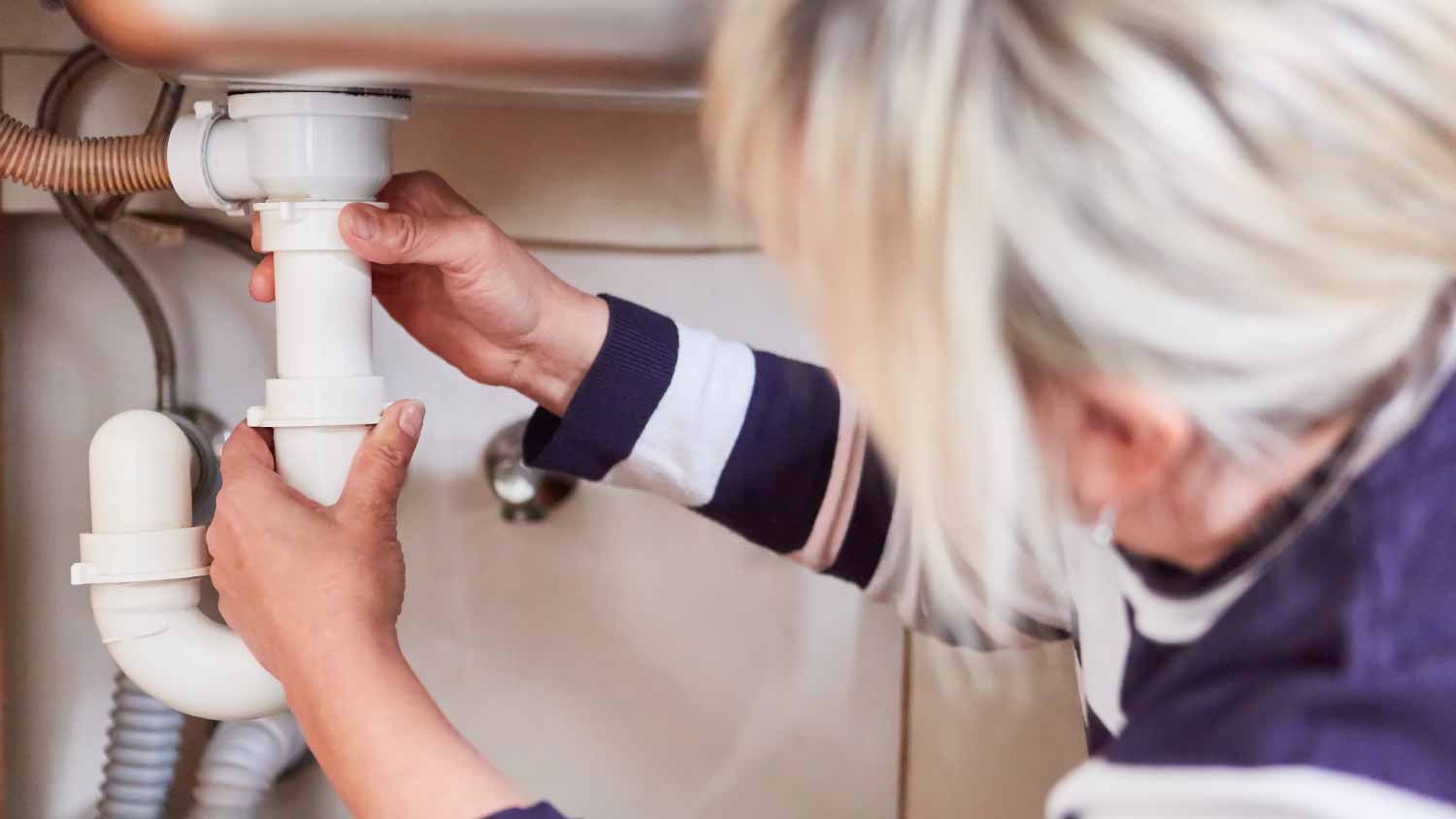
What is a P-trap? This essential plumbing part keeps sewer gas out of your home and helps prevent drain clogs. Here’s everything you need to know.
Flush away confusion with this closer look at toilet traps

P-traps connect to a horizontal wall drain while S-traps drain vertically into the floor, creating different plumbing footprints for your bathroom.
P-traps need additional venting that increases installation complexity, while S-traps lose their water seal more easily and allow sewer gases into your home.
P-trap toilets meet modern building codes and offer more design options, while S-trap toilets fit smaller spaces and work with older plumbing systems.
Hiring a local toilet professional provides reliable guidance on which trap type fits your home's plumbing layout and helps you stay code-compliant.
A toilet trap sounds like something you’d want to steer clear of, but it’s actually a key component of a toilet drain that helps keep sewer gases out of your home. There are two types of toilet traps—P-traps and S-traps—that accomplish the same goal with different designs. Here, we go into detail about toilet P-traps versus S-traps, the pros and cons of each, and which is best for your needs.

Both toilet P-traps and S-straps are part of toilet drainage systems and help prevent siphoning. In other words, sewer gases stay in the plumbing system and won’t make your home smell. However, when comparing a toilet P-trap and S-trap, P-traps feature a modern design, reduce siphoning risks, and meet updated plumbing codes. S-traps are less expensive and fit older plumbing systems, but they’re more likely to allow toilet gases to escape and may not meet modern plumbing codes.

A toilet P-trap is the part of the toilet that drains the bowl into the waste pipe and down into the home’s wastewater system. It gets its name from its shape—a P- or U-shaped bend in the pipe that retains a little water to create a barrier between septic gases and the bathroom. P-traps connect to a horizontal drain in the wall behind the toilet, and most have a separate plumbing vent that leads gases up and through the roof.
| Pros | Cons |
|---|---|
| Shape creates a water seal against siphoning | Requires a vent pipe |
| Venting lowers the risk of siphoning | Horizontal connection takes up more space |
| Meets modern plumbing code standards | Waste can collect in the trap and form clogs |
Best for:
Modern homes and plumbing systems
Toilets with horizontal drainpipe hookups
Compliance with modern building codes
Larger bathrooms with more space for exit pipes
While both P-traps and S-traps create a water seal against siphoning, the shape of P-traps creates an effective water seal that traps gases. The additional vent pipe most P-trap toilets require further lower the risk of gas siphoning. Most modern plumbing codes require P-trap toilets for residential installations.
The additional vent for P-trap toilet installations can increase the overall cost and complexity of the project. This is also true for installations in existing homes that don’t already have P-trap toilets or vent stacks. A plumber can inspect your plumbing and give you an estimate for the necessary work.
Due to their shape, P-trap toilets must have horizontal waste pipe exits, requiring more space behind the toilet. This makes them challenging or impossible to fit in smaller bathrooms. Likewise, the tight bend in the pipe can trap toilet paper and debris, leading to potential blockages that require more frequent maintenance or work to unclog your toilet.

These toilets have an S-shaped trap that leads out of the toilet bowl and connects to an outlet pipe in the floor. Like P-trap toilets, S-traps have a bend that holds water to block sewer gas siphoning, but the shape isn’t as effective at retaining the water seal. They don’t require an added vent pipe. Toilet S-traps are now less popular, and you’ll most commonly see them in older homes.
| Pros | Cons |
|---|---|
| Compact design fits smaller bathrooms | Can lose its water seal and siphon gases |
| Doesn’t require additional venting | Restricted or prohibited in some codes |
| Works with older plumbing systems | Less popular, so harder to find parts and service |
Best for:
Direct replacements for old S-trap toilets
Existing homes with older plumbing systems
Smaller bathrooms that need toilets with a vertical trap design
Homes with plumbing codes that allow for S-trap toilets
Because S-trap toilets empty into wastewater pipes in the floor rather than the wall, they have a smaller footprint than P-trap toilets and fit into smaller spaces. They also don’t need additional venting, so installation is faster, less expensive, and less invasive in spaces that don’t already have stack vents. This makes them one of the better types of toilets for existing homes and older plumbing systems built to accommodate S-trap toilets.
The shape and lack of auxiliary venting make S-traps more prone to siphoning, so they’re more likely to lose their water seals and allow sewer gas smells into the home. Because of this, many building codes restrict or prohibit them in new construction. And due to this, they’ve fallen out of popularity, so it can be harder to find replacement parts and repair services for them.
See how these two toilets compare in different categories, including options, compatibility with modern plumbing systems, price, and ease of installation.
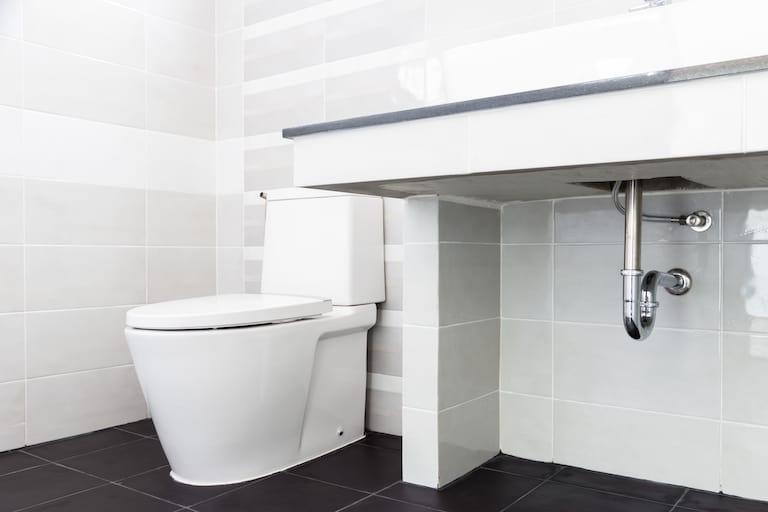
Depending on the model, you may be unable to tell which trap a toilet has based on its exterior appearance. That said, P-trap toilets tend to have a sleeker or nicer appearance than older S-trap toilets. On the other hand, they may have a visible pipe extending out the back of the toilet and into the wall, which can be visibly awkward and harder to clean than S-trap toilets that drain directly under the bowl. If appearance matters to you, choose a toilet that fits your home’s plumbing system and your aesthetic preferences.
P-traps are a newer kind of toilet that S-traps, so they come with more options and customizations. You can find them with dual-flush capabilities and in various colors, finishes, heights, and sizes. Options to fit different toilet drainpipe sizes are also available. The options for S-trap toilets are more limited because they’re not as common and aren’t allowed in new construction codes.
P-trap toilets are the more modern toilet, so they’re more likely to be compatible with modern plumbing systems and new construction. Most new construction codes require P-trap toilets because of their superior siphoning prevention, so plumbers install plumbing systems with the required wall pipes and vents to accommodate them.
S-trap toilets cost less to buy and install since they don’t need extra venting like P-trap toilets. However, repairs can be more expensive, and replacement parts and repair options may be limited because S-traps are becoming less common.
Since P-traps connect to the wall and not the floor, it can be easier to access areas that need repair or service. They also meet modern plumbing codes, so you’ll likely find it easier to find replacement parts or services. However, they also require ventilation that will need to be installed in older homes.
If cost is your main concern, compare the two trap options and how they fit into your home plumbing system when creating your toilet installation budget.
S-trap toilets don’t need added plumbing or venting, so they’re easier to install. This is especially true if you’re replacing an older S-trap toilet. DIYers will find it easier to swap out an S-trap toilet with a model that has the same type of plumbing connections than updating to a P-trap toilet, which connects to a pipe in the wall and needs additional venting.
P-trap toilets may be more attractive to home buyers because they comply with modern building codes, have more options, and are less likely to have siphoning trouble. S-trap toilets can signal outdated plumbing, and buyers may not like the idea of added costs, such as adding vents and drainpipes, in future remodels. For these reasons, P-trap toilets can assure buyers that the home they’re considering was thoughtfully designed and maintained and has reliable, modern fixtures.
While P-trap toilets are best for new construction, S-trap toilets may be the best fit for replacing existing S-trap toilets in homes without additional toilet vents or in smaller bathrooms. If you still aren’t sure which is the best choice for your home, call a toilet installer near you for personalized advice.
Positive experience. As previously stated, the replacement/repair could not be completed (no fault of the plumbing tech) b/c misinformation was rec?d by property management maintenance. Thanks to the plumbing tech for your efforts. Appreciate you!
 The Waterworks
If you want to pay the most exorbitant prices possible for your job, this is the company for you. “By the job” pricing is a rip-off, at least how these people use it. Every job is plugged into a category and prices are set by category. You might have a job that takes half an hour or one that...
 Benjamin Franklin Plumbing
Cole has been handling plumbing and general contracting for our four properties over the past three years, and he’s always done a great job. Most recently, he installed a sink and countertop in our retail store where none existed before, and it turned out exactly how we needed. He’s...
 ANB Renovations LLC
Matt is a consummate professional. The work turned out to be far more difficult than expected and rather than turn the job down, Matt rose to the occasion and completed a near impossible task. I can not recommend Greene's Plumbing Service more highly. On a scale of 1-5 I would give Matt a...
 Greene's Plumbing Service
Involved an extensive bathroom remodel, including removing tub & installing walk in shower, new drywall, custome tile work to ceiling, plumbing, etc. Overall, job was done on time and on budget. Nick & his team were very professional and had high attention to detail. Quality was great. Highly...
 Stamos Flooring and Remodeling LLC
Awesome company. Had a jacuzzi tub taken out and replaced with huge walk in shower with partial glass enclosure. Onyx to the ceiling with a decorative border, moved plumbing and installed hand held shower, new ceiling, flooring, and paint. Replaced window with glass block. Everything was done...
 Columbus Bath Design
The initial quoted price from a walk-through seemed high, but we discussed that the quote represented worst case scenario (re-wiring to two floors) and we were excited about the opportunity to have the work done in a timely manner with closing for fire safety reasons, etc. When the job was...
Initially, I called the Service People to have a leaking garbage disposal replaced. I had purchased a special deal through Angie's List: $79 for $200-worth of plumbing services. <br /> When I went to schedule the work, the earliest date I could get through Angie's List was after the upcoming...
This company did a very good job on the brick wall and it looks just amazing. The staff was always professional and was practically OCD on how the bricks were stacked and how they were laid. Although it took longer than expected, I am willing to sacrifice time over perfection anyday. The...
 My Handy Mate LLC Improvement & Remodeling
<p>I am so glad we called Rotor-Rooter. I was hesitant to call them because we usually prefer to give business to local providers. But when we had sewage back up in our basement on a Saturday evening, I had a hard time getting a hold of someone, not to mention the high weekend/evening rate...
 Roto-Rooter Plumbing & Water Cleanup
From average costs to expert advice, get all the answers you need to get your job done.
What is a P-trap? This essential plumbing part keeps sewer gas out of your home and helps prevent drain clogs. Here’s everything you need to know.
If you're DIYing your shower drain installation, there are several details to remember, including whether a shower drain needs a P-trap. Find out more in this guide.

P-traps come in various sizes for different types of drains around your home. This guide will show you what size P-trap to use for a bathroom sink.
Smelling sewer gas in your home is never pleasant. But the sewer gases that could be leaching into your house aren’t just stinky; they can also be dangerous. Read on to learn how to get rid of them and get your home smelling better in no time.
You never know when learning how to unclog a toilet will come in handy. Get to know these eight methods for the next time things stop flowing.
If your sink P-trap is leaking, there are some simple fixes you can try before you replace the pipe. Keep reading to learn how to fix a leaking sink P-trap.