

Average sink sizes vary depending on the style of sink you choose, but choosing the right size can save you time and money. Here’s what you need to know to choose a sink.
The right size P-trap will stop major clogs and banish sewer odors from your home

Your bathroom sink uses a 1 1/4-inch P-trap that holds water to block sewer gases and odors from entering your home.
Expect to pay $200 to $800 for professional plumbing repairs, while PVC P-traps cost $5 to $50 for parts alone.
Local plumbing code, your drainpipe size, distance to the main vertical drain pipe, and shared fixtures determine the right P-trap size.
Hiring a local plumbing repair professional helps you install a P-trap correctly and confirm your setup meets local plumbing code requirements.
P-traps may not be exciting, but they’re why your drainage system works. This curved section of piping prevents nasty sewer odors from seeping into your home and helps combat clogs by catching debris before it travels further into your plumbing. P-traps come in various sizes, but most residential bathrooms use a standard size. This guide dives into everything you need to know about which P-trap size you need for a bathroom sink.
Here are the outlet types you find in most U.S. homes:
15-amp, 120-volt (2-prong and 3-prong): The standard household outlet for lamps, TVs, and chargers.
20-amp, 125-volt: A higher-power outlet for kitchens, laundry rooms, and workshops.
240-volt (20-amp to 50-amp): A large-appliance outlet for dryers, ranges, and EV chargers.
GFCI: A shock-protection outlet for kitchens, baths, and other wet areas.
AFCI: A fire-protection outlet for bedrooms and living spaces.
Tamper-resistant: A child-safe outlet with internal shutters, now standard in new homes.
Weather-resistant: A corrosion-resistant outlet built for outdoor use.
Convenience types: Switched, combination, USB, smart, and rotating outlets.
P-traps come in two standard sizes: 1 ¼ inches for bathroom sinks or 1 ½ inches for kitchen sinks. Larger sizes—up to 2 inches in diameter—are reserved for showers and toilets. In some rare instances, you may have a larger bathroom sink P-trap size, but it’s not the norm.
Your bathroom sink uses a trap made from PVC or metal. Size matters because you want your pipes to fit correctly, but you should also choose a P-trap made from the same material as the rest of your sink plumbing.

Like other types of pipe fittings, P-trap sizing is standard. Nonetheless, there are some instances where your bathroom may call for a slightly larger trap. It depends on whether your sink has a higher drainage volume than most residential bathrooms. Here are some common sizes that you’ll find throughout your home.
| Type of P-Trap | Sink or Fixture | Size (Inches) |
|---|---|---|
| Small | Bathroom sinks | 1 ¼ |
| Medium | Kitchen sinks, utility room sinks, and commercial installations | 1 ½ |
| Large | Specialized sinks with a large flow capacity, showers, and toilets | 2 |
The smallest P-trap in your bathroom is beneath your sink. Most residential bathroom sinks use a standard 1 ¼-inch P-trap, made to fit with a 1 ¼-inch drainpipe as required by local plumbing codes. A local plumbing professional can advise on which size is best for your setup and will be familiar with the code in your area.
There are times when a bathroom sink uses a P-trap that’s 1 ½ inches in diameter. This slightly larger size can accommodate the volume of a commercial or large-scale installation. You may find this size in your bathroom if you have more than one fixture draining into a single line. It’s also the standard size for kitchen sinks and utility room sinks.
In rare instances, your sink may use a 2-inch P-trap reserved for specialized sinks requiring an unusually large flow capacity. That said, 2-inch traps are commonly found beneath showers and toilets.

There are some signs that your bathroom plumbing needs repair. You may need a P-trap replacement if you notice any leaks around your sink or odors in your bathroom. A local plumber can diagnose the issue, but some homeowners choose to replace their P-trap on their own. This project is a relatively simple DIY for someone who knows basic plumbing work.
In this case, you’ll need to measure for the correct size—but first, you’ll have to find the outside diameter:
Use a tape measure to measure the circumference of your existing P-trap.
Divide the circumference by pi (3.14159) to get the diameter.
Once you have the outside diameter, you can use a pipe size conversion chart to get the nominal pipe size (the pipe's name as you’d see it in the hardware store). The nominal pipe size is an approximation of the inside diameter of the pipe opening. Pipes are not named by their outside diameter because the walls have different thicknesses depending on the pipe and the material. In other words, the outside diameter of your pipe should be slightly larger than the size listed in a hardware store.
Remember to turn off the water in your home before you attempt to replace your P-trap. Water should also be in the trap, so work over a bucket to avoid a mess.
Though bathroom sink P-trap sizes are standardized, some factors may influence the trap size beneath your specific sink. Commercial or industrial properties often have different standards than residential properties because they need to accommodate a higher volume of waste. You’ll also find different-sized P-traps for the fixtures in your home. For example, a shower or toilet needs a 2-inch P-trap, while a bathtub or kitchen sink needs a 1 ½-inch trap.
Here are some factors to keep in mind:
Plumbing code: Most plumbing codes require a 1 ¼-inch P-trap beneath a sink drain, but there are some instances where your local code may deviate. A local plumbing repair pro will know how to make repairs up to code. If you go the DIY route, check your local codes before proceeding.
Size of the sink drainpipe: Your P-trap must be compatible with your existing drainpipe to ensure an even flow of water and prevent issues like clogging. Most bathroom sinks have a 1 ¼-inch drainpipe that connects easily to a 1 ¼-inch P-trap. Sometimes, certain bathroom sinks may have a slightly larger pipe.
Distance from the sink drain to the plumbing stack: If your sink is far from your home's main plumbing stack, you may need a slightly larger P-trap to maintain water velocity.
Number of fixtures: If multiple fixtures connect to the same drain, you may need a larger P-trap because the drain line must accommodate a larger volume of water.

If you have the wrong-sized P-trap, several problems can arise. If your P-trap is too large, it can siphon water, allowing sewer gases to enter your home. An incorrectly sized P-trap can also cause clogs or backups in your plumbing system. It’s also possible for homeowners to purchase a P-trap that doesn’t fit with the rest of their plumbing, even if it’s the standard size dictated by local plumbing codes.
Luckily, there are a few different solutions for this issue, but it depends on the size of your P-trap, the size of the surrounding pipes, and the local plumbing code.
If you have the wrong size P-trap, purchase the correct size to avoid any issues. A standard under-sink PVC P-trap costs between $5 and $50. Metal traps are slightly more expensive, but most fall below the $100 range. If you hire a plumber, bathroom sink repair costs an average of $200 to $800.
If your P-trap is the standard size but won’t fit with your piping, you may be able to use a P-trap adapter. These adapters are larger on one end to help connect two pipes of different sizes. You’ll have to cut the wall pipe slightly shorter to fit the adapter. Hiring a pro is best if you don’t have experience cutting pipes.
Sometimes, drainpipes deviate from the standard size, whether it’s due to improper plumbing or if your sink requires a specialized installation. There's no reason to worry if your drain meets the local plumbing code. If it doesn’t, consider replacing it with a standard-sized P-trap. This can sometimes solve plumbing issues like frequent clogs and slow drainage. A professional plumber will know which solution is best for your home.
Positive experience. As previously stated, the replacement/repair could not be completed (no fault of the plumbing tech) b/c misinformation was rec?d by property management maintenance. Thanks to the plumbing tech for your efforts. Appreciate you!
 The Waterworks
If you want to pay the most exorbitant prices possible for your job, this is the company for you. “By the job” pricing is a rip-off, at least how these people use it. Every job is plugged into a category and prices are set by category. You might have a job that takes half an hour or one that...
 Benjamin Franklin Plumbing
Cole has been handling plumbing and general contracting for our four properties over the past three years, and he’s always done a great job. Most recently, he installed a sink and countertop in our retail store where none existed before, and it turned out exactly how we needed. He’s...
 ANB Renovations LLC
Matt is a consummate professional. The work turned out to be far more difficult than expected and rather than turn the job down, Matt rose to the occasion and completed a near impossible task. I can not recommend Greene's Plumbing Service more highly. On a scale of 1-5 I would give Matt a...
 Greene's Plumbing Service
Involved an extensive bathroom remodel, including removing tub & installing walk in shower, new drywall, custome tile work to ceiling, plumbing, etc. Overall, job was done on time and on budget. Nick & his team were very professional and had high attention to detail. Quality was great. Highly...
 Stamos Flooring and Remodeling LLC
Awesome company. Had a jacuzzi tub taken out and replaced with huge walk in shower with partial glass enclosure. Onyx to the ceiling with a decorative border, moved plumbing and installed hand held shower, new ceiling, flooring, and paint. Replaced window with glass block. Everything was done...
 Columbus Bath Design
The initial quoted price from a walk-through seemed high, but we discussed that the quote represented worst case scenario (re-wiring to two floors) and we were excited about the opportunity to have the work done in a timely manner with closing for fire safety reasons, etc. When the job was...
Initially, I called the Service People to have a leaking garbage disposal replaced. I had purchased a special deal through Angie's List: $79 for $200-worth of plumbing services. <br /> When I went to schedule the work, the earliest date I could get through Angie's List was after the upcoming...
This company did a very good job on the brick wall and it looks just amazing. The staff was always professional and was practically OCD on how the bricks were stacked and how they were laid. Although it took longer than expected, I am willing to sacrifice time over perfection anyday. The...
 My Handy Mate LLC Improvement & Remodeling
<p>I am so glad we called Rotor-Rooter. I was hesitant to call them because we usually prefer to give business to local providers. But when we had sewage back up in our basement on a Saturday evening, I had a hard time getting a hold of someone, not to mention the high weekend/evening rate...
 Roto-Rooter Plumbing & Water Cleanup
From average costs to expert advice, get all the answers you need to get your job done.
Average sink sizes vary depending on the style of sink you choose, but choosing the right size can save you time and money. Here’s what you need to know to choose a sink.
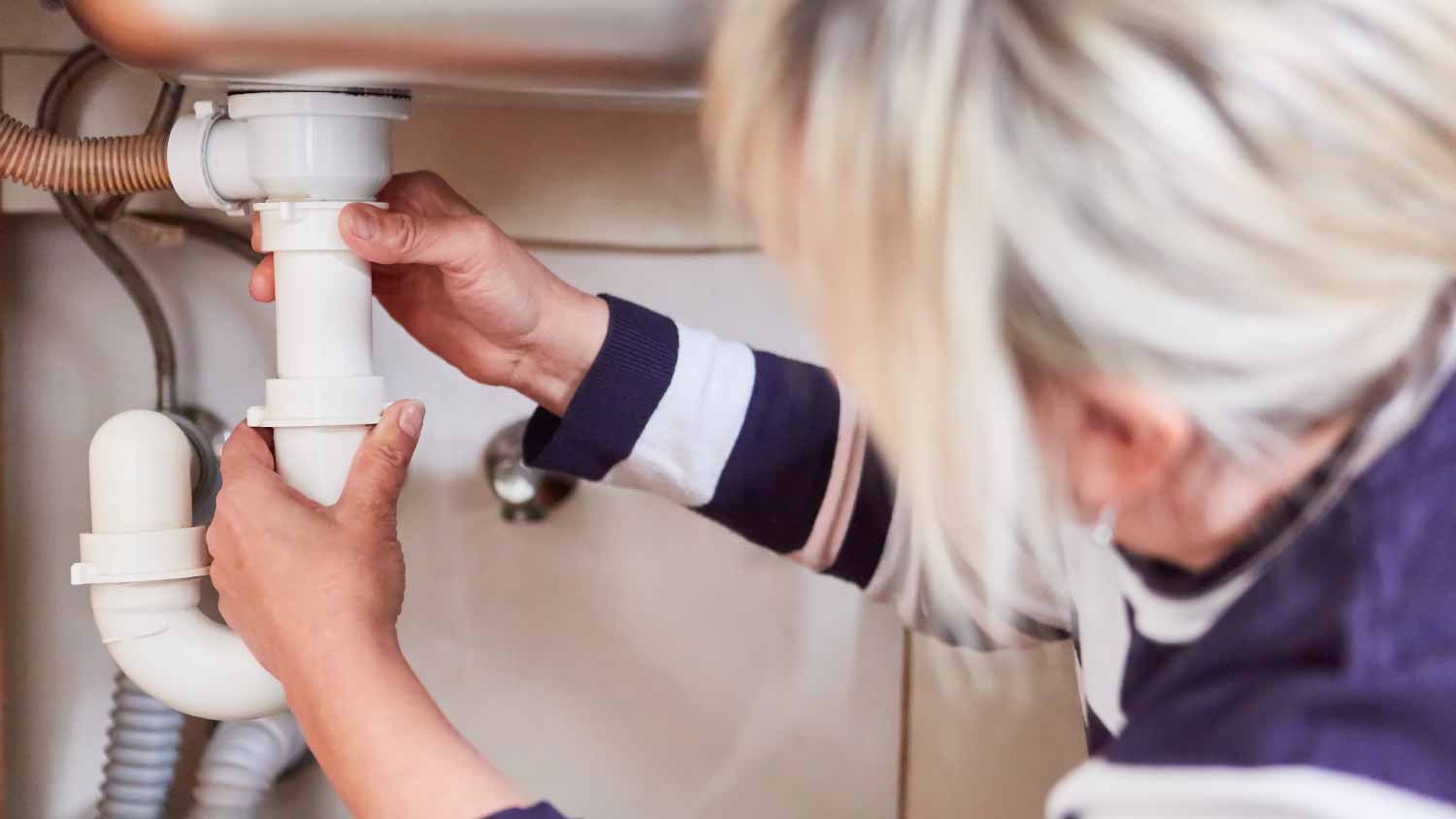
What is a P-trap? This essential plumbing part keeps sewer gas out of your home and helps prevent drain clogs. Here’s everything you need to know.
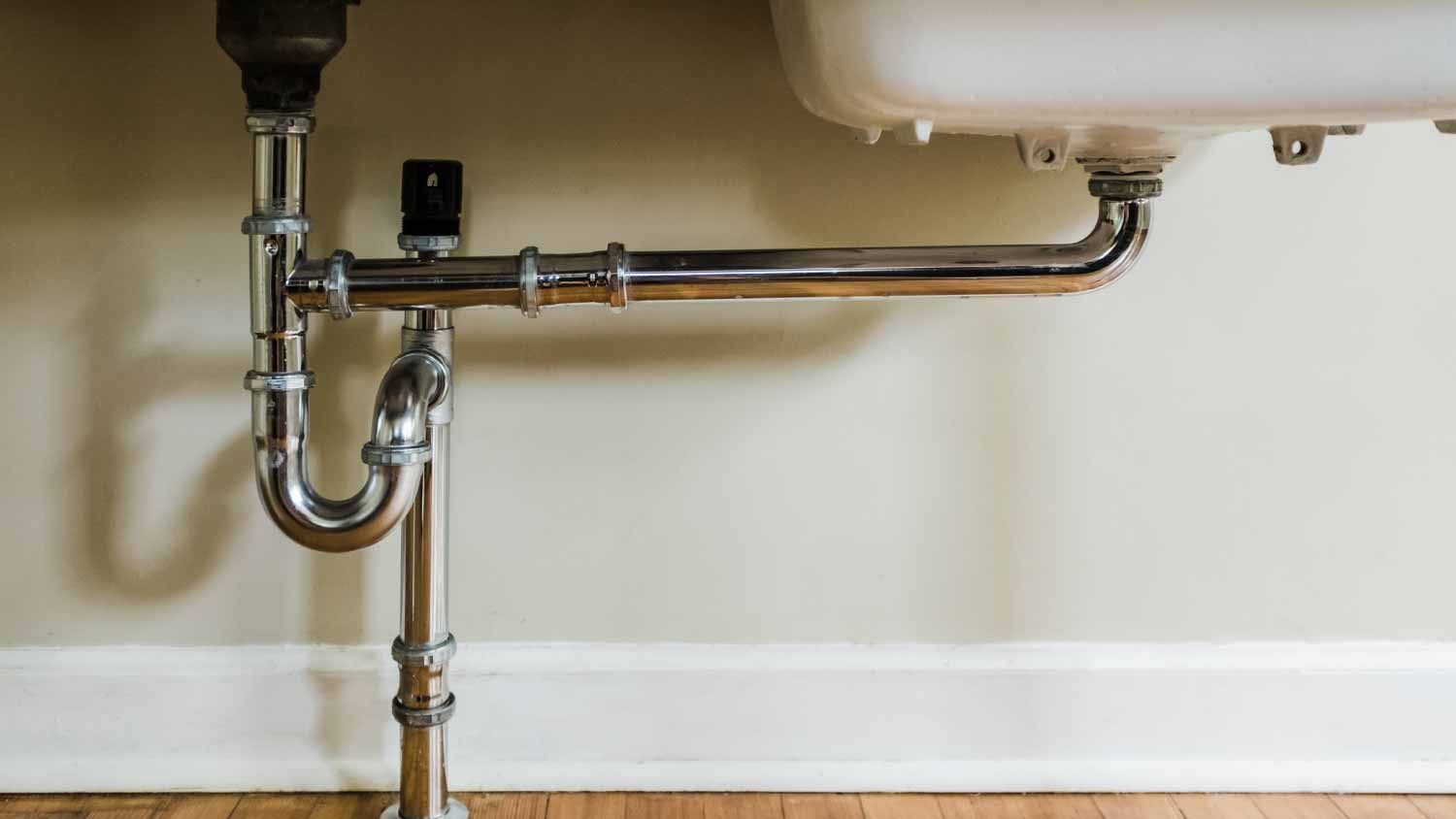
Want to get water down your drains quickly and efficiently? You need the right sink drain pipe size. Learn here how to find the right size and how to measure.

A bathroom sink draining slowly is a major inconvenience, but it's usually a simple DIY fix. Learn more about what you can do to troubleshoot the clog.
Struggling to understand the difference between P-trap and S-trap toilets? Here, we compare toilet P-traps versus S-traps and show you which comes out on top.

Whether you’re replacing your kitchen sink or installing a new one, you have options to fit your space. Learn the most common kitchen sink sizes.