

Cleaning out clogged or dirty septic field lines is a quick job for a seasoned pro. Learn what makes up the total cost to clean septic field lines
Leach lines are a linchpin of your septic system

Septic leach lines carry partially treated wastewater from your septic tank into the drain field, where gravel and beneficial bacteria continue filtering before reaching groundwater.
Expect to pay around $7,300 for septic system installation and $400 for septic tank pumping every three to five years to keep your leach lines working properly.
You should avoid flushing anything besides human waste and toilet paper, and keep heavy vehicles off your drain field to prevent pipe damage and costly repairs.
Hiring a local septic tank company provides reliable help with leach line clogs and drainage issues, keeping your system running smoothly for years to come.
Septic leach lines are the drainage pipes that carry partially treated wastewater from your septic tank out into the septic drain field (also known as a leach field). They’re an important component of a septic system, which is a common choice for wastewater management for those with homes that don’t hook up to the city sewer system. It’s a smelly job, but somebody’s got to do it—and the good news is, if it’s working properly, it shouldn’t even be that smelly.
But how exactly do septic leach lines perform this important task, and how can you tell when yours are in need of some tender loving care? Read on to learn more about how the leach lines for septic systems function, as well as when and how to step in and help.
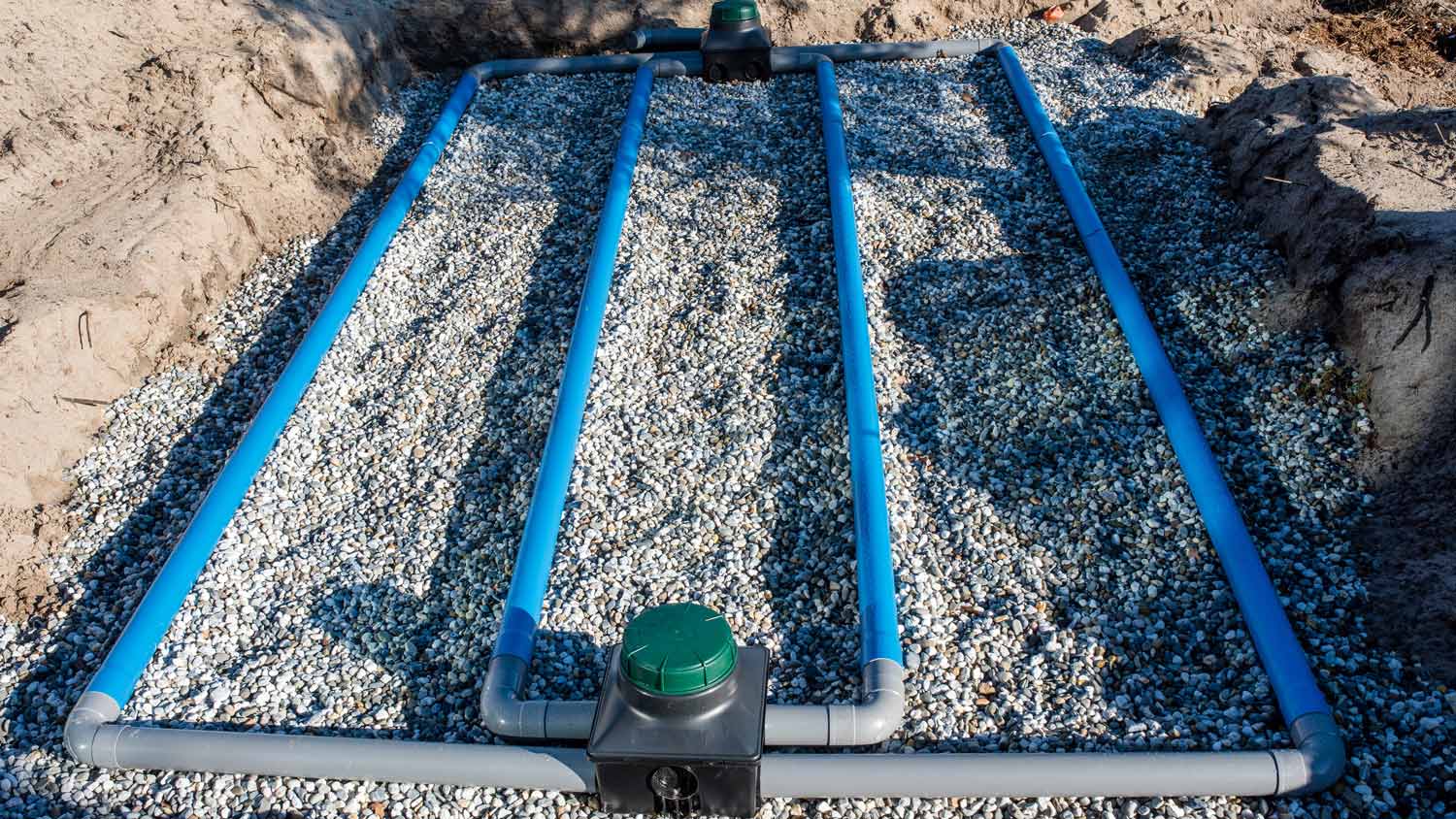
Septic leach lines are perforated drainage pipes, frequently constructed of PVC, that take partially cleaned wastewater, also known as effluent, from your septic tank back into the ground. These pipes are surrounded by gravel and sand, which, along with beneficial bacteria, help filter and treat the water further before it returns to the soil—and eventually the aquifer.
In order to understand exactly how septic leach lines work, it’s important to first understand what a septic tank is and how it works to separate solid waste from liquid waste. In short, your septic tank uses time as well as beneficial bacteria to separate scum (lighter solid waste particles, like grease) and sludge (heavier solid wastes, including human waste) from the remainder of the wastewater (effluent).
The effluent, which is already partially cleaned and treated, is what ends up draining into your leach lines. Screens and filters also work to help ensure that solid wastes don’t end up in the lines.
The percolation rate of your soil is a big part of your septic system’s waste management process. Percolation is a measure of how quickly liquids absorb into the soil. If your soil’s percolation rate is too fast, the wastewater that seeps out of the leach lines won’t get properly treated by the time it enters the groundwater. If the rate is too slow, your yard may flood with smelly, untreated wastewater.
Septic leach lines require a percolation speed of 5 to 60 MPI (minutes per inch of water absorption) to work properly. Before installing a septic system that uses leach lines, you’ll have to call a pro to get a perc test done. Failing a perc test means you may have to use an alternative septic system, like a mound system or sand filter system, that doesn’t rely on leach lines.

Septic tank leach lines are located adjacent to—and further away from your house than—the septic tank itself, which is buried underground. The leach lines are part of the drain field or leach field, which will be a flat, open area on your property (or, if you have a mound septic system, a built-up gravel mound).
The leach lines themselves are 1 to 3 feet wide and can be up to 100 feet long. They will likely be placed about 6 feet apart from each other and between 1 and 3 feet deep into the ground—so you can see how big a septic drain field can get.
It’s important to understand where on your property your septic tank and leach field are located because you don’t want to put unnecessary pressure on the physical pipes that make up your leach field. For example, it’s a good idea to avoid driving vehicles, setting up storage sheds, or otherwise putting excessive weight on your septic leach field.

Good news: Your septic drain field can last up to 50 years if it’s properly maintained, and the maintenance protocol isn’t very expensive or difficult. (That’s after the initial septic system installation, of course, which can get pricey. A septic system costs about $7,300 on average to set up.)
To keep your septic leach lines in good, working order for as long as possible, it’s important to follow these guidelines:
Pump your septic tank regularly: How often you’ll need your septic tank pumped will depend on factors like how many people live in your home and what kinds of appliances you use, but this project needs to be done every three to five years and costs about $400, or $0.30 per gallon.
Don’t put pressure on your pipes: As discussed above, your septic drain field is a fairly sensitive part of your property. So aside from gentle landscaping—no trees or plants with deep, grabby roots—it’s a good idea to avoid doing too much with that area. Otherwise, you risk damaging the pipes themselves.
Avoid using harsh septic system chemicals: While many additives are available on the market that claim to help your system do its duty, most septic systems are actually quite capable of working based on naturally occuring bacteria and enzymes. In fact, these chemicals can interfere with the natural process occurring in your drain field, so it’s best to avoid them.
Be careful what you flush: As is true even for those connected to city sewer systems, it’s a bad idea to flush anything aside from human waste and flushable toilet paper. Feminine hygiene products, cigarette butts, and other odds and ends should all be properly disposed of in a garbage can. In addition, avoid flushing a lot of toilet paper at once, as doing so can clog your septic leach lines.
In most cases, when it comes to a septic system, no news is good news. If your system is functioning properly, you’ll probably forget it even exists.
But there are some signs that indicate something’s going on with your septic system, be it a backed-up tank or clogged leach lines. Here are some signals to be aware of:
Audible gurgles coming from your leach field
A noticeable sewage smell around the septic tank, drain field, or drains inside your home
Backed-up toilets or drains or difficulty flushing
A marshy consistency to the ground above or around your leach lines
If your leach lines—or any other component of your septic system—need repair, you can contact your local septic tank company to help.
I recently moved to another state and chose United Trust Van Lines after comparing several companies. Their team was punctual, professional, and extremely careful with my belongings. I was especially impressed with how they handled my home office setup and fragile items. Everything arrived on...
 United Trust Van Lines, LLC
Positive experience. As previously stated, the replacement/repair could not be completed (no fault of the plumbing tech) b/c misinformation was rec?d by property management maintenance. Thanks to the plumbing tech for your efforts. Appreciate you!
 The Waterworks
As usual with ECO, tech Jordan was outstanding, very professional, very knowledgeable, and very thorough with repairs made to tankless water heaters. Very highly recommend ECO!!!
 Eco Plumbers, Electricians, and HVAC Technicians
I would recommend this company to anyone! He showed up on time, was friendly, completed a very difficult repair on our dryer vent cover, was responsive, and pricing was extremely fair and competitive. I would have him back to do any of our repairs or cleanings without hesitation!
 U.S.A. Dryer Vent, LLC
Best cleaning I've had at my property
I'm a repeat customer of All Star Paving & Sealing and I appreciate the service that all start paving has done for me in the past. I just recently had them out for an estimate and things couldn't have gone better. The staff that they send out to do the estimates are very knowledgeable. The...
 All Star Paving and Sealing
Supreme Brick & Chimney is one of the best service providers I’ve interacted with. Extremely efficient, knowledgeable, and thorough. They took the time to walk me through their detailed full-service inspection and were extremely professional. Not to mention their turnaround time was...
 Supreme brick & chimney
They were great! They were thorough and efficient and paid attention to the details. Definitely recommend. I'm definitely going back!
 FIFI'S EARTH FRIENDLY CLEANING
Storms Mobile Welding was great to work with. They were prompt, professional and did an overall excellent job on the project. I highly recommend.
Great experience all together. Dog friendly, courteous, great results and honest with recommendations. Will certainly be using Cardinal in the future for any carpet repairs
 Cardinal Carpet Care & Repair
From average costs to expert advice, get all the answers you need to get your job done.
Cleaning out clogged or dirty septic field lines is a quick job for a seasoned pro. Learn what makes up the total cost to clean septic field lines

Does your property have poor ground water or soil conditions? Learn about engineered septic system cost, types, and factors for you to consider.
Septic systems make use of septic lateral lines to disperse treated waste into the soil. Learn about the process and the types of lateral lines in this guide.

A leach field treats and disperses water from a septic system. Find out more about seven common leach field problems and how they can impact your septic system.

Not sure what you can put over your septic field? Use this guide to keep your leach field safe from damage and avoid issues with percolation.

What's the right septic leach field size for your property? It all depends on your home size, soil quality, and more.