
•
Find out how much a concrete retaining wall costs. Get average prices, cost factors, and expert tips to budget and save on your installation.
How to choose a block size for a rock-solid retaining wall

Standard retaining wall block sizes are 16 inches long and 8 inches tall, with depths from 4 to 12 inches for your project.
Block depth needs to be 50% to 66% of your wall height to ensure stability and prevent collapse from lateral forces.
Your choice depends on wall height, soil quality, lateral forces, drainage conditions, and topper width for a finished appearance.
Hiring a local retaining wall installing professional removes guesswork from measurements and provides reinforcement for walls over 2 feet tall.
Building a retaining wall might seem easy in practice, but choosing the right size blocks for your project can make the difference between a wall that lasts for decades and one that collapses prematurely. Understanding the standard retaining wall block dimensions and what size you need for your landscaping project is a crucial place to start for safety and wall longevity.
Retaining wall blocks come in many different sizes and shapes, but the concrete blocks that most retaining wall installers and homeowners use do have standard sizes. They come in depths ranging from 4 inches to 12 inches in 2-inch increments, and all of them are 16 inches long and 8 inches tall.

The height of your retaining wall is going to determine what size retaining wall blocks you need, as taller walls need deeper blocks for adequate support.
Gravity walls are the most common types of retaining walls that you construct with blocks that don’t interlock, aren’t reinforced, and just depend on their own weight and friction for stability. For these, your block depth should be 50% to 66% of your wall height. Given that the maximum block depth that’s usually available is 12 inches, the tallest retaining wall you should aim to build yourself would be 24 inches. For anything larger, consult a retaining wall professional to reinforce the wall.
| Block Depth (in.) | Height (Gravity) |
|---|---|
| 4 | 6–8 inches |
| 6 | 9–12 inches |
| 8 | 12–16 inches |
| 10 | 15–20 inches |
| 12 | 18–24 inches |
For shorter retaining walls that are under 1 foot tall, you can use slim concrete blocks that are 4 to 6 inches deep. Use 4-inch concrete blocks to save money on materials if your wall is under 8 inches and requires just a single layer of blocks, and upgrade to 6-inch blocks for added stability for walls between 8 and 12 inches tall. For walls between 8 inches and a foot tall, you’ll need two layers of concrete block walls.
For retaining walls that are around 1 foot tall, you can use concrete blocks that are 6 to 8 inches deep. Keep retaining wall costs low by choosing the thinner of the two if your wall is exactly a foot tall or just below a foot. Using 8-inch retaining wall blocks can support walls up to 16 inches tall and will be more than strong enough for a wall that’s 12 inches tall. For this size, you’ll need two layers of blocks stacked on top of one another.
A 2-foot wall is generally the largest retaining wall you should try to build yourself, and for this height, you’ll need 12-inch deep concrete blocks stacked in three layers.
For retaining walls that are higher than 2 feet tall, you should hire a professional. At this height, you can no longer achieve the 50% to 66% ratio of the block depth to wall height, so even 12-inch deep concrete blocks won’t be sufficiently stable. A professional can reinforce the wall using a variety of methods to get your wall well above the 2-foot mark.
Concrete retaining wall blocks come standard in 16-inch lengths and 8-inch heights, with depths ranging from 4 inches to 12 inches. You can measure the length and height of the wall you want to figure out how many blocks you need for your retaining wall, and then base the depth on the wall height using the table above. Keep in mind that you can also order half blocks in most cases, which have the same height and depth but come in shorter lengths, usually 8 inches.
When in doubt, consult a professional to determine the right size retaining wall block for your project. A pro can take many factors into account to get the right depth, including the quality of the soil or other material behind your wall, top-down forces that contribute to lateral forces, your local climate, and more.

Even if you don’t have a professional taking every factor into account, there are a handful of things you should consider to get the right retaining wall block size.
As mentioned above, the height of your wall is the primary determining factor for the minimum block depth you can safely choose. For the best results and the lowest risk of wall collapse, go a little wider than you think you need based on averages.
The length and height of concrete blocks are fixed at 16 inches and 8 inches, respectively, which means you can easily determine how many rows of blocks you need to reach your desired wall height. If you’re using paver stones, bricks, or another hardscaping material, make sure you consider the height of the blocks to see how many layers you’ll need.
The lateral or sideways force on your retaining wall can vary significantly, depending on what’s behind the wall. If it’s just loose soil, as in the case of a garden bed, you can go with the standard block width for your desired wall height. If you’re building a retaining wall to border a driveway or walkway that will see heavier loads, consider going deeper than you’d need for general purposes.
Soil quality and drainage behind your wall can play a role in lateral forces, too. Areas where the soil has a high clay content will expand in the presence of moisture and put excess hydrostatic pressure on your wall. You should choose blocks with a greater depth than you’d otherwise need for retaining walls that will hold back expansive clay soil.
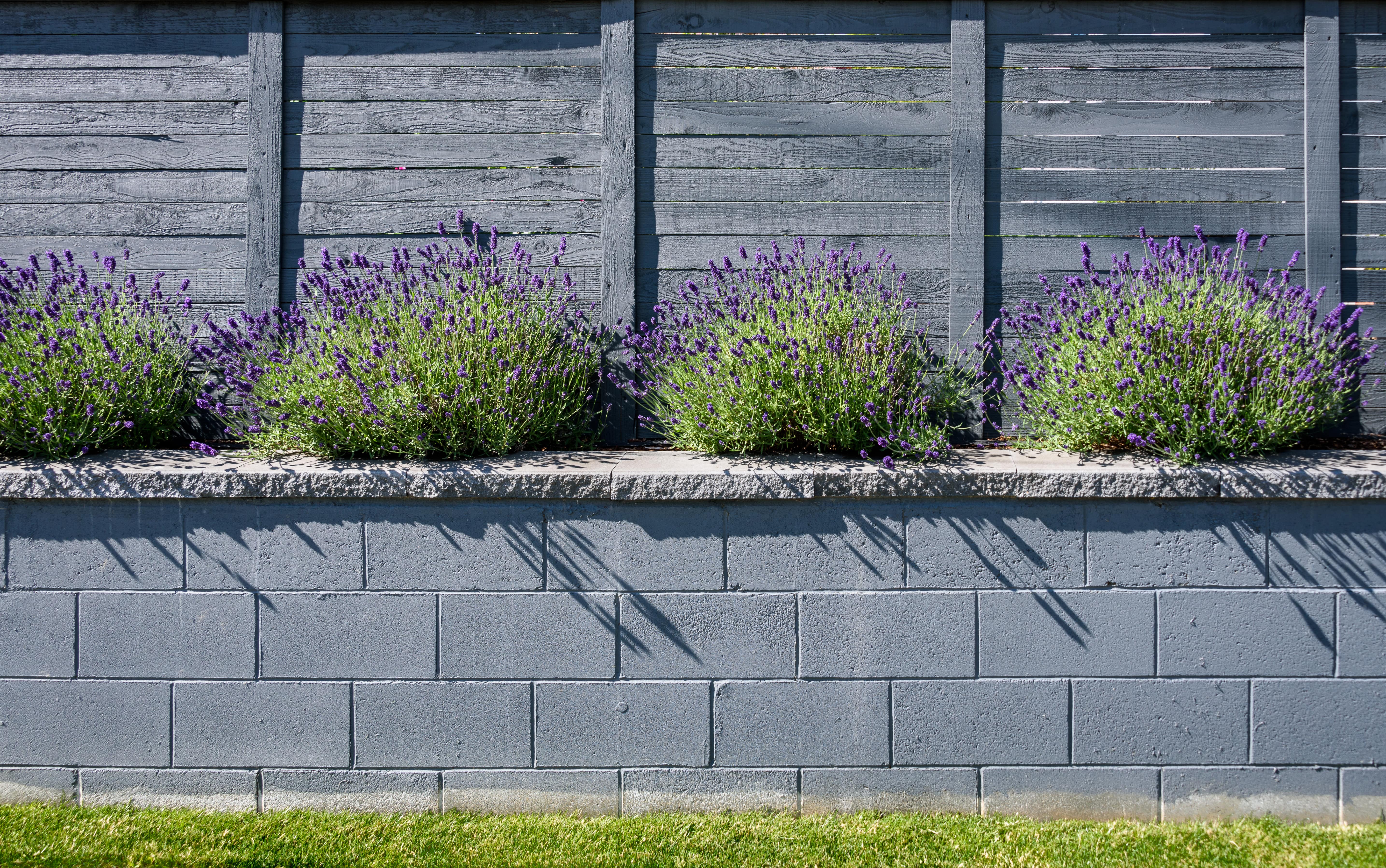
Many homeowners install toppers on their retaining walls to give them a more finished appearance, especially if they’re using standard concrete blocks that have voids that are visible from above. Toppers come in different widths, so you may want to choose your topper first and then pick your retaining wall block size to match. Make sure your topper is a bit wider than the retaining wall blocks for the nicest appearance.
Finally, your budget will play a role in the retaining wall block size that’s right for your project. If you have the option based on the block depth size requirements in the table above, downsize to the next smallest size to save on concrete retaining wall block costs. Have some more room in your budget? Consider upsizing for increased safety and wall durability.
Finding out that you have retaining wall blocks that are wider than you need usually isn’t an issue. In fact, it’s always better to go with a greater block depth for increased safety. However, it can be problematic if you have a specific wall topper in mind that has a depth that matches or is thinner than your blocks. If that’s the case, you can either contact the topper manufacturer to see if they have a wider option, or you can hire a pro to replace your retaining wall blocks with a thinner version.
More often, homeowners will find that their retaining wall blocks aren’t thick enough. This is more problematic because it can lead to wall instability and even collapse. The best solution in this case is to hire a retaining wall installer near you to replace the wall entirely or to add reinforcements to enhance stability. This can be an expensive process, but it’s definitely worth the safety and peace of mind you’ll get as a result.
This company does it right. Firstly, I want to say that Landan was a joy to work with. He was so kind, transparent, and had everything under control. His entire team showed up ready to work and they were all very respectful of the fact that we were in an office space. A little backstory – we...
 Krumlauf Floors
Amazing job. Efficient and quick without compromising quality. Basement feels brand new. Would use them again in a heartbeat.
 AffordaPro Restoration
D1 Roofing delivers outstanding service from beginning to end, backed by a strong warranty and expert teams. I highly recommend them for their excellence in meeting and surpassing expectations with unmatched communication. Choosing D1 Roofing was flawless decision
 Division 1 Roofing LLC
I'm a repeat customer of All Star Paving & Sealing and I appreciate the service that all start paving has done for me in the past. I just recently had them out for an estimate and things couldn't have gone better. The staff that they send out to do the estimates are very knowledgeable. The...
 All Star Paving and Sealing
Supreme Brick & Chimney did an excellent job restoring the brick and mortar joints on my home. Their team was professional, knowledgeable, and completed the work on time. I highly recommend them and will hire them again in the future! Thanks!
 Supreme brick & chimney
On time, clean and finished fast. Windows seem sturdy and the finish is good. Caulking was done with no smudges. Would recommend.
 Window Depot USA of Central Ohio
They are very reliable and available. They the drains all the time
 The Waterworks
Mary cleaning service does an amazing job cleaning my home. They go over and beyond the cleaning services that I have had in the past. They are very punctual and thorough with cleaning my home, I’m extremely happy with the service they provide and I highly recommend them.
We had a 20+ year old landscape lighting system that needed replacement. Midwest Lightscapes worked with us to design a much improved lighting system, lighting the exterior of the house and the back yard. Installation of the 45 light system took one and one-half days, and went very smoothly....
 Midwest Lightscapes
From average costs to expert advice, get all the answers you need to get your job done.
Find out how much a concrete retaining wall costs. Get average prices, cost factors, and expert tips to budget and save on your installation.
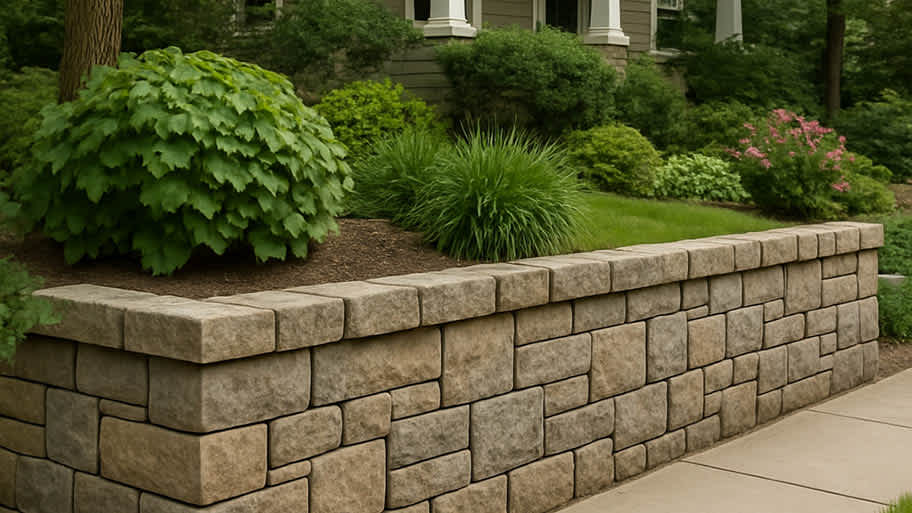
Kick erosion to the curb with an eye-catching retaining wall. Retaining wall costs vary based on the material, but this guide will help you budget.
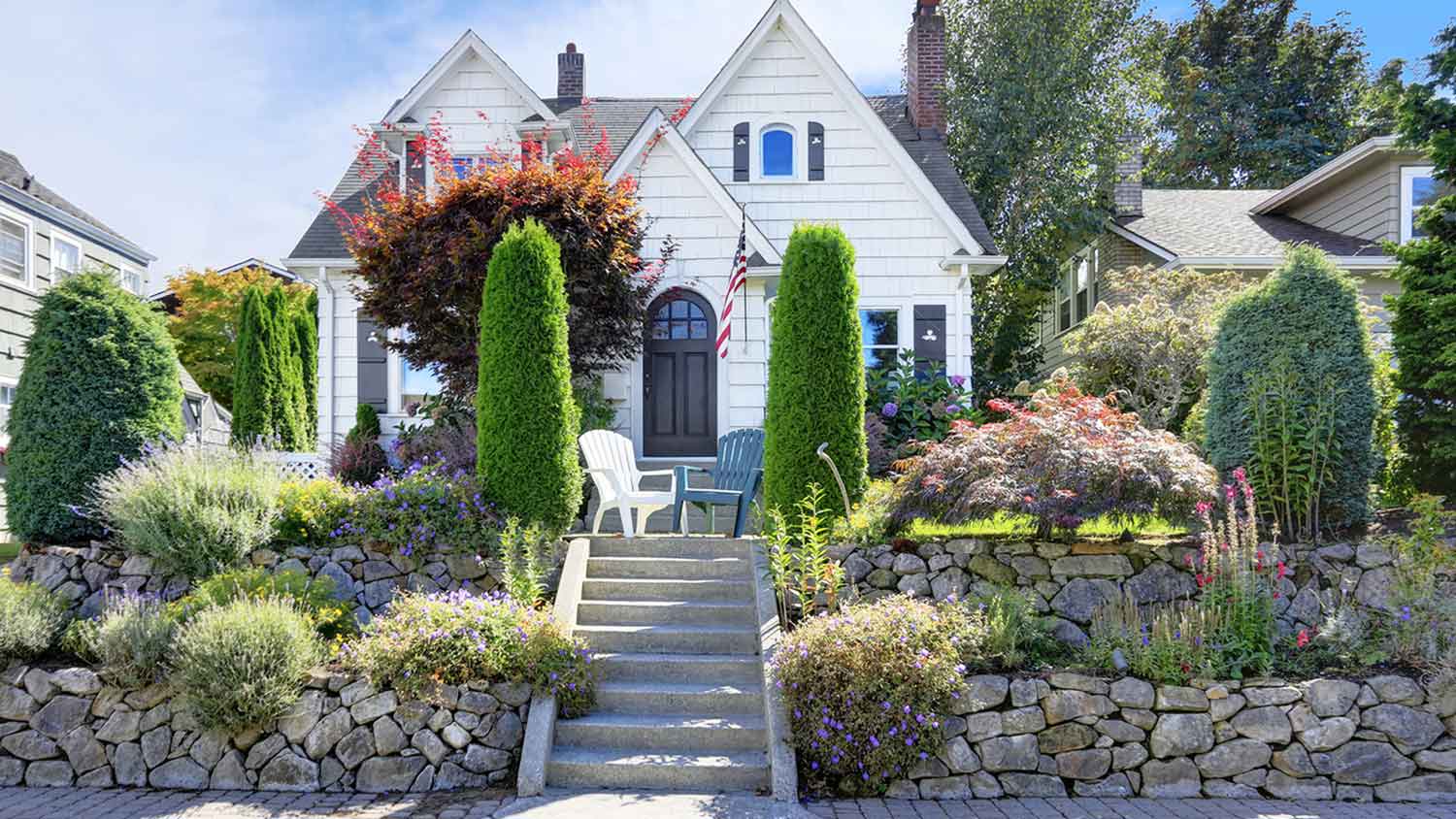
Retaining wall repair cost can vary widely based on the age and condition of the wall being restored. Learn why finding the right pro is important for getting the job done.
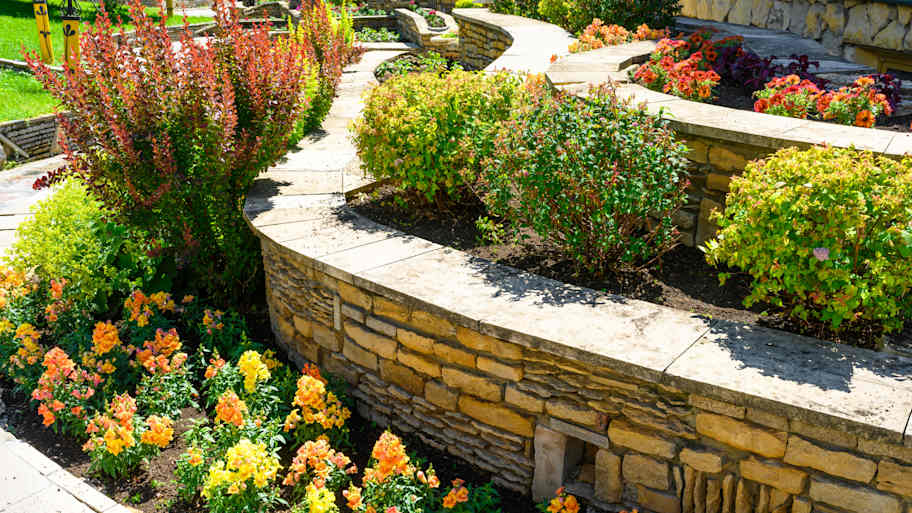
Not sure how to calculate blocks for your retaining wall? Here’s how to figure it out based on the size of your wall and the dimensions of your blocks.
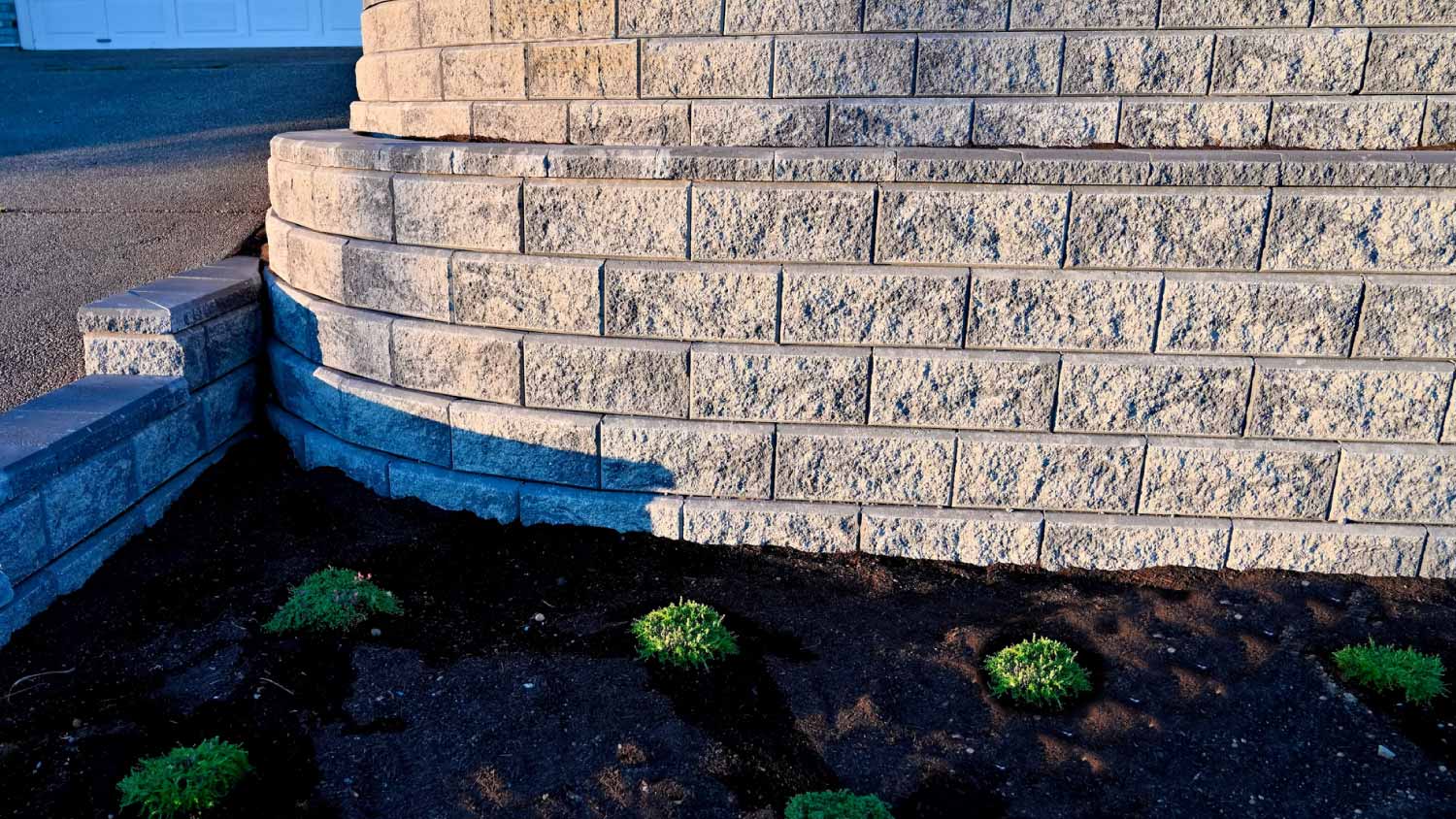
Replacing a retaining wall or installing a new one after grading? Here are some retaining wall questions you should be prepared to answer when hiring a pro.

Retaining walls increase your yard space and your curb appeal. Use this step-by-step guide on how to build a retaining wall to put in your yard.