

The cost of a radon mitigation system in Indianapolis, IN, depends mostly on the type of system being installed. Use this guide to learn about your options.
Biohazard remediation costs depend on your project and location. Check with a local pro for your specific job.

The average cost for a professional radon testing service in Indianapolis, IN, is $423 for most local homeowners.
The specific type of test you select and the overall size of your home determine your total testing costs.
Testing larger homes requires multiple kits, which increases your total local costs to between $480 and $670.
Hiring a local radon testing pro in Indianapolis, IN to do testing keeps you and your household safe from radon.
This article was created using automation technology and produced in accordance with our AI policy, which includes editorial quality standards.
Radon testing in Indianapolis, IN, costs $423 on average, and prices range from $119 to $727. Your total price depends on the size of your home and the specific type of testing method you choose. Before hiring a professional to check your home's air quality, understanding the cost helps you budget effectively for this important safety measure.
The price of testing your home's air quality depends on several distinct variables, from the testing method chosen to the square footage of the property. When hiring a radon testing professional in Indianapolis, IN, understanding these elements ensures you can budget accurately for this essential safety measure.
The specific testing method you select serves as the primary driver of your total expenses. Active and passive testing devices offer different levels of precision and reporting speed, which directly impacts the final price. In Indianapolis, IN, where cold, snowy winters keep homes tightly sealed for months, choosing a highly accurate professional test provides critical peace of mind. Homeowners opt for a DIY digital monitor for ongoing readings, which runs from $100 to $240. Alternatively, a certified professional using an active or passive device costs between $145 and $670. Combining this service with a standard home inspection streamlines the entire evaluation process.
| Test Type | Description | Local Average Cost | National Average Cost |
|---|---|---|---|
| DIY short-term | Charcoal or liquid scintillation kits are used for 2–7 days | $10–$40 | $10–$40 |
| DIY long-term | Alpha track or electret kits used for 90+ days | $25–$60 | $25–$60 |
| DIY digital | Electronic monitors for ongoing readings | $100–$240 | $100–$250 |
| Professional | A certified pro uses an active or passive device | $145–$670 | $150–$700 |
The total square footage and layout of your property dictate how many testing devices are required to get an accurate reading. Larger footprints or multi-level homes necessitate additional equipment and setup time. During the hot, humid summers in Indianapolis, IN, HVAC systems circulate air throughout the entire house, making it essential to test all levels of a large property. Testing a small home of 1,200 square feet requires a single kit on one level and costs $145 to $290. Testing a large home of 4,000 square feet or more requires multiple kits across multi-unit or multi-level spaces, bringing the price to $480 to $670. Overall, most homeowners see total project prices ranging from $119 to $727, depending on the exact dimensions of the house. Understanding these baseline figures helps you prepare for any future radon mitigation system installation cost if elevated levels are detected.
| Home Size/Type | Description | Local Average Cost | National Average Cost |
|---|---|---|---|
| Small home (1,200 sq. ft.) | Single kit, single level | $145–$290 | $150–$300 |
| Medium home (2,500 sq. ft.) | Two kits or multi-level testing | $290–$480 | $300–$500 |
| Large home (4,000+ sq. ft.) | Multiple kits, multi-unit or multi-level | $480–$670 | $500–$700 |
The testing schedule you maintain over the lifespan of your home influences your long-term maintenance budget. Regular monitoring ensures continuous safety, especially after major structural changes. Because severe thunderstorms and flooding in Indianapolis, IN, shift foundation soils and alter gas entry points, periodic retesting is highly recommended. While a single test averages $423, establishing a routine testing schedule every two to five years multiplies this baseline expense. Homeowners who invest in comprehensive indoor air quality testing alongside their radon checks incur higher upfront fees but gain a complete picture of their home's environmental health.
The physical components and technology used to capture radon gas samples vary significantly in price and sophistication. Disposable kits represent a minimal upfront investment, while advanced electronic monitors require a larger initial purchase. The cloudy, humid climate in Indianapolis, IN, interferes with basic disposable kits if not placed correctly, making higher-quality materials a worthwhile upgrade. A basic charcoal canister for short-term DIY testing costs $10 to $30. For a longer monitoring period, an alpha track detector measures levels over several months and runs from $25 to $60. Upgrading to professional-grade equipment ensures the most reliable data, which is particularly useful when budgeting for an upcoming HVAC inspection cost.
| Material/Kit Type | Description | Local Average Cost | National Average Cost |
|---|---|---|---|
| Charcoal canister | Disposable, short-term DIY kit | $10–$30 | $10–$30 |
| Alpha track detector | Long-term DIY kit, measures over months | $25–$60 | $25–$60 |
| Digital monitor | Electronic, reusable, needs calibration | $100–$240 | $100–$250 |
| Pro-grade equipment | Used by certified testers, higher accuracy | Included in service | Included in service |
The expertise and time required for a certified technician to place, retrieve, and analyze the testing equipment make up a significant portion of the final bill. Professional service guarantees strict adherence to testing protocols and accurate laboratory reporting. Navigating a property in Indianapolis, IN, during periods of heavy snow or ice storms requires extra time and care from the technician, which is factored into their flat service rates. Most certified testers charge a flat fee that covers the initial setup, the return visit for sample collection, and the final laboratory analysis. If the technician also needs to perform a detailed crawl space inspection to identify potential gas entry points, the total labor fee increases accordingly.
Gratuity is not a standard expectation within the environmental testing industry. Technicians are compensated through their established service fees. If a professional in Indianapolis, IN, goes above and beyond—such as braving severe winter weather to retrieve your test on time—a small tip is a welcome gesture of appreciation. While you are not required to tip, leaving a positive review for the company helps support local businesses and guides other homeowners in their hiring decisions.
Hiring a certified specialist in Indianapolis, IN, ensures accurate readings of your home's indoor air quality. Professional radon testing typically costs between $145 and $670 for the complete service, which includes setup, sample collection, and laboratory analysis. If your technician charges an hourly rate rather than a flat fee, expect to pay $30 to $75 per hour. When budgeting for your final bill in Indianapolis, IN, remember to factor in the local 7% tax rate.
Hiring a radon testing professional in Indianapolis, IN protects your family's health, saves you valuable time, and ensures you receive the best value for your home safety investment.
Local experts understand the specific soil composition and geology of Indianapolis, IN, which affects radon levels.
Professionals use calibrated, continuous monitors to provide highly accurate, hour-by-hour readings.
Certified inspectors deliver official reports required for seamless real estate transactions.
Experts pinpoint the exact testing locations indoors to prevent false data.
Home is the most important place on earth, which is why Angi has helped more than 150 million homeowners transform their houses into homes they adore. To help homeowners with their next project, Angi provides readers with the most accurate cost data and upholds strict editorial standards. We’ve surveyed thousands of real Angi customers about their project costs to develop the pricing data you see, so you can make the best decisions for you and your home. We pair this data with research from reputable sources, including the U.S. Bureau of Labor Statistics, academic journals, market studies, and interviews with industry experts—all to ensure our prices reflect real-world projects.
Want to help us improve our cost data? Send us a recent project quote to [email protected]. Quotes and personal information will not be shared publicly.
We hired The Mold Pros for our mold problem, and they made the problem worse — jeopardizing the health of our two young children in the process. This company is litigious and fraudulent. They had to come back THREE times in attempt to remediate the mold in our home— and still couldn’t do it!...
 The Mold Pros of Indiana
I used this company to remove mold from my kitchen . They did a great job. I didnâ t have an idea of how the remediation process goes but they explained what they were doing and why they have to do it. I am glad I called them. Thanks Sid!
 Prosilient Services, Inc.
Performed air quality testing and suggested remediation treatment. Appreciate their communication and follow up. Hoping not to need mold remediation in the future, but appreciate their expertise when needed!
 Mold Docs
BEWARE, I have been working with Terrance, the owner on a number of jobs giving him many projects to see his trustworthiness. When assigning a larger job ($1000+) he takes shortcuts, and or does not even do the work to the scope. Does not always provide the before and after pictures. Has...
Jason and Dino and crew did a thoroughly professional and efficient mold remediation in my basement which required a tear-out and mold treatment. Would recommend them to others without reservation.
 Mold Removal Masters, LLC
This is the second review I'm writing after iRESTORE responded to my negative review after my first encounter with them. Please ignore my first review as the owner, Clayton went out of his way to inform me of what went wrong on their first visit to my home. He told me what the challenges were...
 iRESTORE
I would highly recommend Mercury Restore Tech for mold remediation jobs. My mold remediation job was being completed as part of a real estate transaction. Not only was Rian punctual and professional, but he also took the time to answer a lot of questions for the buyers, the buyer's agent,...
Moore gave a very good and thorough estimate after our fire incident and seemed like the best company of all the estimates we got. Once we selected them however, things changed. They began smoke remediation quickly, but It took them months to obtain the permits for the restoration of the...
 Moore Restoration Inc
Quick response, no remediation services offered
 Capital Environmental Enterprises, Inc
From the start, I found the staff of American Mold Remediators professional, knowledgeable and perhaps just as important, reassuring. When Cody, the lab technician, came to do the initial testing as I walked him through the house he first told me to stop throwing things out. With the enzyme...
 American Mold Experts
From average costs to expert advice, get all the answers you need to get your job done.
The cost of a radon mitigation system in Indianapolis, IN, depends mostly on the type of system being installed. Use this guide to learn about your options.

Find out the average indoor air quality testing cost in Indianapolis, IN. Learn what you can expect to pay for local testing and keep your home's air safe.

Find out what impacts radon testing costs, including average prices for DIY kits and professional services, so you can protect your home and budget confidently.
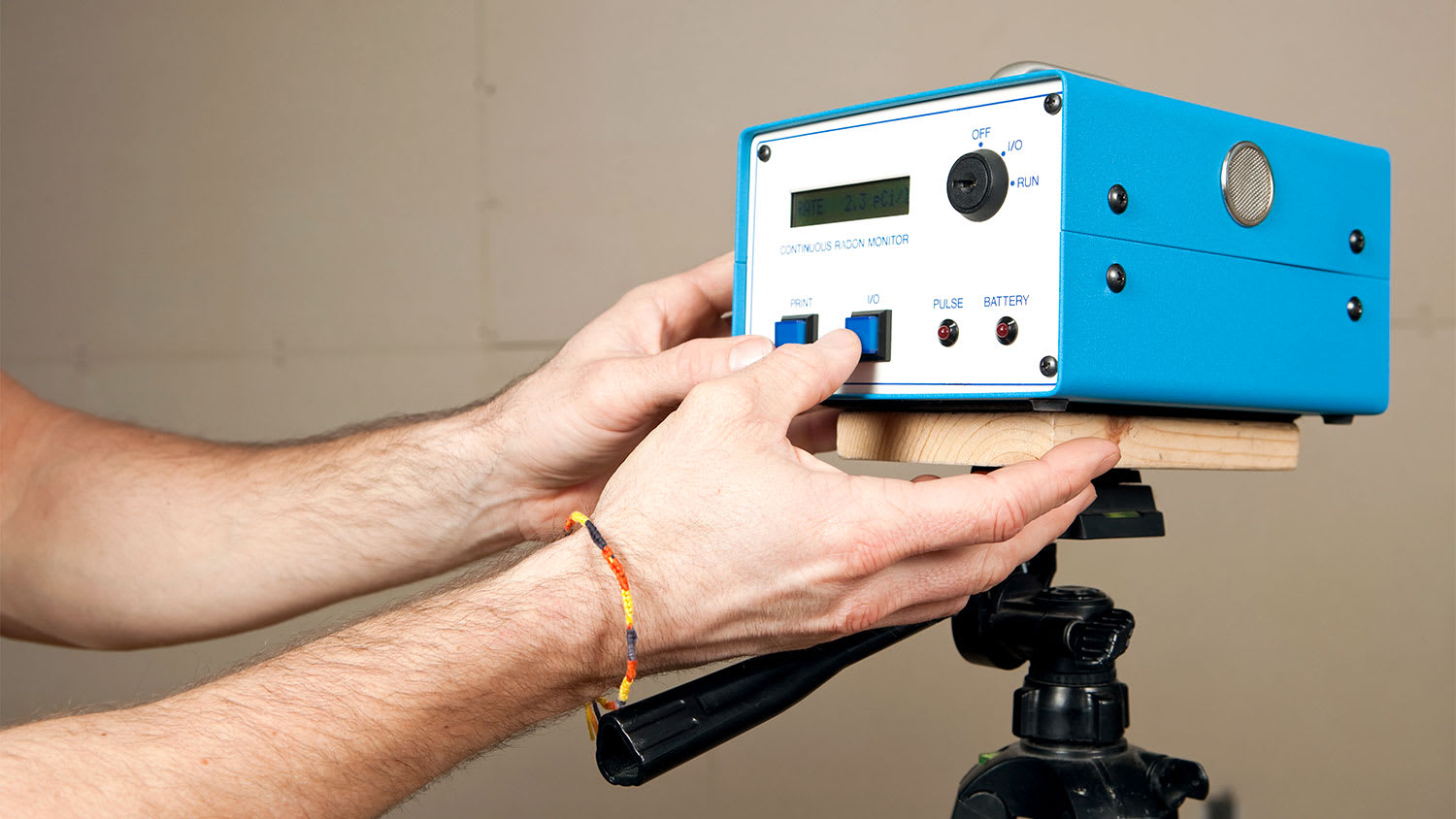
Learn how to hire a qualified radon testing pro for your home. Find certified professionals, understand costs, and get expert tips to protect your family.

Knowing how to test for radon will keep your home free and safe from this odorless gas—you just have to decide whether to do it yourself or hire a pro.

Radon is a gas that you can't see or smell and is harmful to your health. If your home has radon, you need to know who installs radon mitigation systems.