
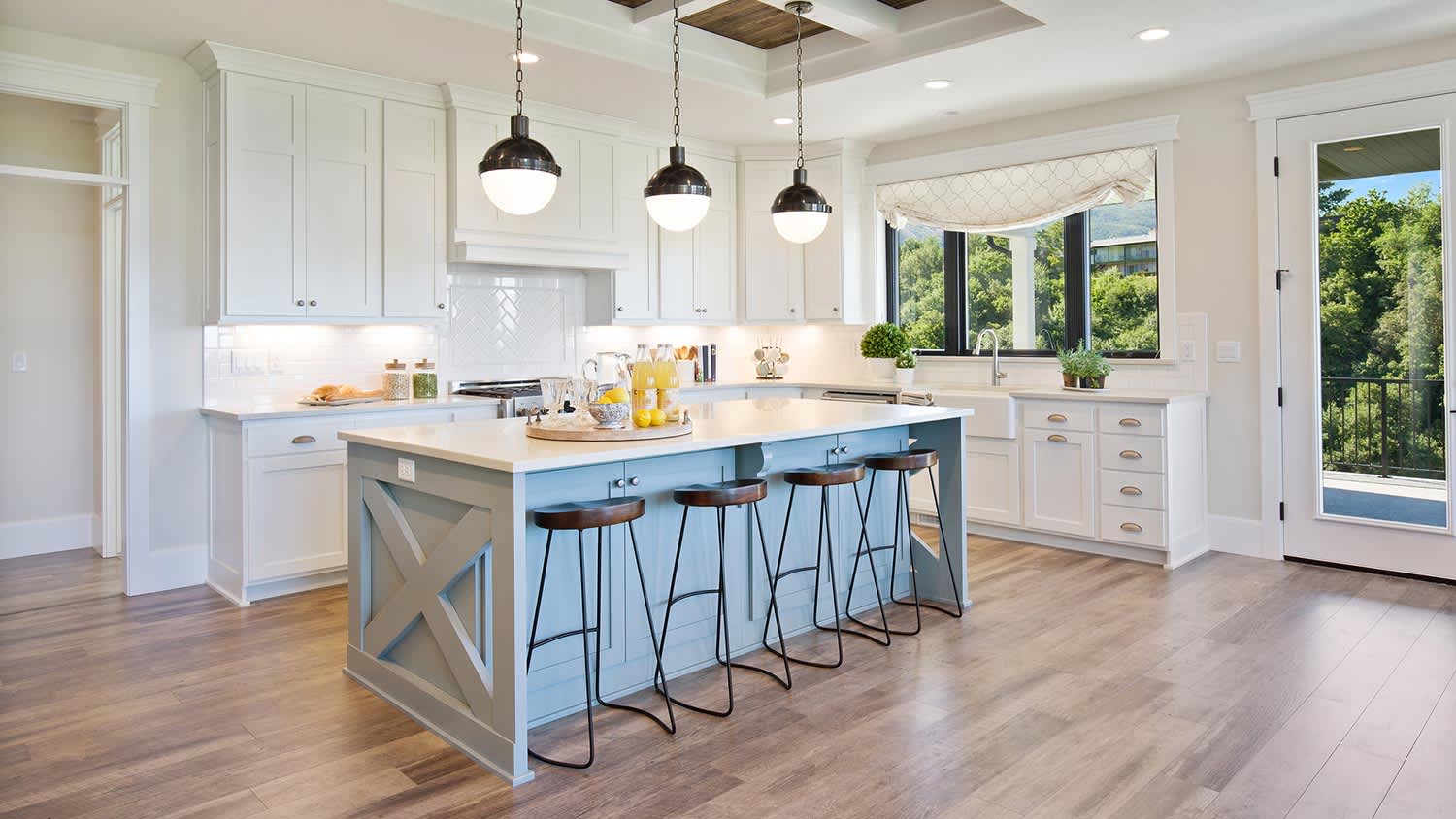
Kitchen islands are multipurpose workhorses in your kitchen. When looking to add one to your home, you should consider its size, materials, and its primary use in your home. Learn about the price of kitchen islands and their different features.
When your kitchen island’s size fits your needs, it becomes a true oasis

Professional kitchen island installation costs , but you'll pay more if you need demolition and floor repair for your existing island.
Your kitchen size and whether you want seating or storage determine the island dimensions that work best for your space.
Account for clearance space between the island and counters, countertop overhang for seating, and structural support for larger overhangs.
Hiring a local kitchen designing professional helps you choose the right island size and ensures your layout maximizes functionality and flow.
Because the kitchen is such an important space in your home, you want everything to be perfect, from the color scheme to the functionality of the appliances to the flooring. Your kitchen island size should also be perfect, fitting your food prep, seating, and storage needs while leaving you enough room to maneuver. Find the sweet spot for your kitchen island dimensions, delivering the ideal functionality for all the sweet treats you are itching to make.

The perfect kitchen island dimensions will depend on the size of your kitchen, your storage requirements, and whether you want to have the ability for people to sit around the island and eat.
Minimum kitchen island sizes are 2 by 4 feet, but you may only be able to use a small island like this for storage or seating, not both.
Most people prefer islands closer to the average size of 3 by 6.5 feet. This size allows for a mixture of seating and storage.
If you need several seats at the island, an island 10 feet long or more could fit nicely in a huge kitchen.
One good rule of thumb is that the kitchen island should not occupy more than 10% of the total square footage of the kitchen. If you have a 10x10-foot kitchen, you want the island to be no more than 10 square feet.
Measure the size of the kitchen from wall to wall when trying to stay within the 10% rule.
If you’re having trouble visualizing what the kitchen island size you want to use will look like in your space, use large boxes or folding tables to simulate the positioning and kitchen island dimensions you are considering.

Once you have an idea of the maximum square footage that the kitchen island should occupy, you can then begin determining the best kitchen island dimensions that fit your particular space and usage needs.
Understand that these factors are only recommendations. If you have an odd-shaped kitchen or someone in your home uses a wheelchair, you may need to adjust these recommendations. A local kitchen design professional can help you figure out the best size and shape for a kitchen island in a non-traditional situation.
The island should have between 42 and 48 inches of clearance between the edge of the island and the edge of the existing countertops along the walls in the kitchen. This is the best distance from the kitchen island to the counters to allow free movement in the space while making it easy to swing open cabinets, a dishwasher, and oven doors. This distance is ideal for easily moving items back and forth from the counters to the island as well.
If you have a tiny kitchen, you may be able to live with a kitchen island that allows for only 36 inches of space to the counters.
Even in a huge kitchen, you should have at most 60 inches of space between the island and the counters. Any larger gap between the two would look strange and detract from the kitchen’s aesthetics. Large gaps make it difficult to move items between the two places efficiently, too.
If you want to allow people to sit and eat at the kitchen island, it should be at least 30 inches wide. Selecting 36 inches or more in width is even better if your kitchen space allows it because of the need for overhang.
Remember, when you have seating, the countertop overhang will eat into the width of the cabinet structure under the countertop on the island. People sitting at the island need somewhere to place their legs, and you’ll want somewhere to slide seats and stools underneath the counter on the island when no one is sitting there. The overhang serves this purpose.
The overhang needs to be between 12 and 18 inches in width, depending on the height of the island. Taller islands need less overhang (closer to 12 inches) than shorter islands (closer to 18 inches).
If the overhang is close to 18 inches, you may need extra support for the weight of the countertop. A local countertop repair professional likely can determine whether you need extra support.
To determine the best length of the kitchen island to accommodate seating, think about how many people will be sitting along the length of the island at the same time.
You should allow for at least 24 inches of space per person. If you have four people sitting together, for example, around 8 feet of length would be ideal. However, if those sitting at the island frequently will be children, you could shrink the recommendation to at least 20 inches of space per person.
If you plan to place storage cabinets inside the kitchen island, try to make it as large as possible. Although you can use it for storage when it’s the minimum recommended size of 2x4 feet (24x48 inches), the storage capacity will be less than optimal.
If you are going to include seating at the kitchen island, meaning you have to use an overhang of the counter, you will limit your storage opportunity. You want a wide kitchen island if you want to use it for both storage and seating.
| Island Type | Height | Overhang |
|---|---|---|
| Table style | 30 inches | 18 inches |
| Counter style | 36 inches | 15 inches |
| Bar style | 42 inches | 12 inches |
In addition to determining the proper dimensions, you must figure out the best kitchen island height to use for your island. Most installers will have you choose among three different heights.
Counter: The most common height is 36 inches, which matches the typical countertops inside the home. If you plan to use the island frequently as a food prep area, having the same height in your countertops and the island is the most functional option when moving items back and forth.
Bar: A bar height of 42 inches works nicely for those who plan to use the kitchen island primarily for seating and eating. The bar height is useful in a small kitchen, too.
Table: A table height of 30 inches is less common in a kitchen island. However, if you place the kitchen island abutting your kitchen table, you can use it for overflow seating for a big gathering.
If you have a kitchen island now that doesn’t match your needs because of its size, you have some options to try to fix the situation. However, tearing out the current island and replacing it may be the best option.
If you want to extend your kitchen island length-wise, you have multiple options. Adding a kitchen cart, installing a cantilever, or adding a right-angled countertop to create an L-shaped island all may work. You also could add a second island that abuts the first one, perhaps at a different height to provide a different type of functionality.
It can be challenging to add these items and to make them look like a seamless part of the kitchen, though. Calling a local countertop installation company for advice on how to accomplish this is your best bet.
If you have a skylight over kitchen island layout, be sure to consider how expanding the kitchen island size may affect the way the skylight lines up.
If your current kitchen island dimensions are too large for the space, leaving the kitchen cramped and nonfunctional, you have limited options for fixing the situation. Cutting the current island down to a smaller size may not be possible because of structural and aesthetic considerations.
Reach out to a local kitchen remodeling professional for advice on what you can do. In nearly all circumstances, the pros recommend removing the huge current island and building a smaller one that perfectly fits your needs. But they may have some other ideas to try to save you some money.
Starting from scratch allows you to pick which of the types of kitchen islands perfectly fits your needs for the space. The cost of installing a kitchen island averages about $4,000, but you may pay a bit extra for demolition and floor repair when removing an island that’s too large.
I had FabClean 614 clean my apartment, and she did an outstanding job. She was so professional and efficient. My apartment looks absolutely spotless every surface, every corner, all cleaned to perfection. Definitely highly recommend FabClean 614 if you're looking for top-notch cleaning...
 Fab Clean 614
Cole has been handling plumbing and general contracting for our four properties over the past three years, and he’s always done a great job. Most recently, he installed a sink and countertop in our retail store where none existed before, and it turned out exactly how we needed. He’s...
 ANB Renovations LLC
D1 Roofing delivers outstanding service from beginning to end, backed by a strong warranty and expert teams. I highly recommend them for their excellence in meeting and surpassing expectations with unmatched communication. Choosing D1 Roofing was flawless decision
 Division 1 Roofing LLC
This company is my go to resource for all my post renovation clean ups. They get the place spotless! All we have to do after is stage the place and sell, sell, sell! They are super professional and have some amazing scent that is left in every property. I highly recommend!
 The Royal Sanitation Group
I had Ace Fireplace Services install custom chimney caps for my home, and the results are stunning. They fit like a glove and have added a touch of sophistication to my chimney. I can't recommend their services enough.
 Ace Fireplace Services
Supreme Brick & Chimney did an excellent job restoring the brick and mortar joints on my home. Their team was professional, knowledgeable, and completed the work on time. I highly recommend them and will hire them again in the future! Thanks!
 Supreme brick & chimney
I recently hired Custom Paint Jobs LLC to repaint my home, and I couldnt be happier with the results. Their attention to detail and professionalism were outstanding. Highly recommended
 Custom Paint Jobs, LLC
Window Depot did an amazing job on my deck. I wasnt sure what I wanted to do, but their composite decking was affordable and will last a long time. I am excited to have family over, and I am no longer embarrassed by my backyard. Jeff and the ground crew were polite, respectful, and caring for...
 Window Depot USA of Central Ohio
If I could give 10 stars for Kitchen Tune Up, I would. I cannot say enough good things about my experience with Kitchen Tune Up and the entire team involved in the process of my kitchen project. They went above and beyond as far as service and quality with my cabinets, paint, countertops, and...
Great job...edging and pre clean up went well with a great job with seal coat. Friendly, efficient and professional.
 All Star Paving and Sealing
From average costs to expert advice, get all the answers you need to get your job done.
Kitchen islands are multipurpose workhorses in your kitchen. When looking to add one to your home, you should consider its size, materials, and its primary use in your home. Learn about the price of kitchen islands and their different features.
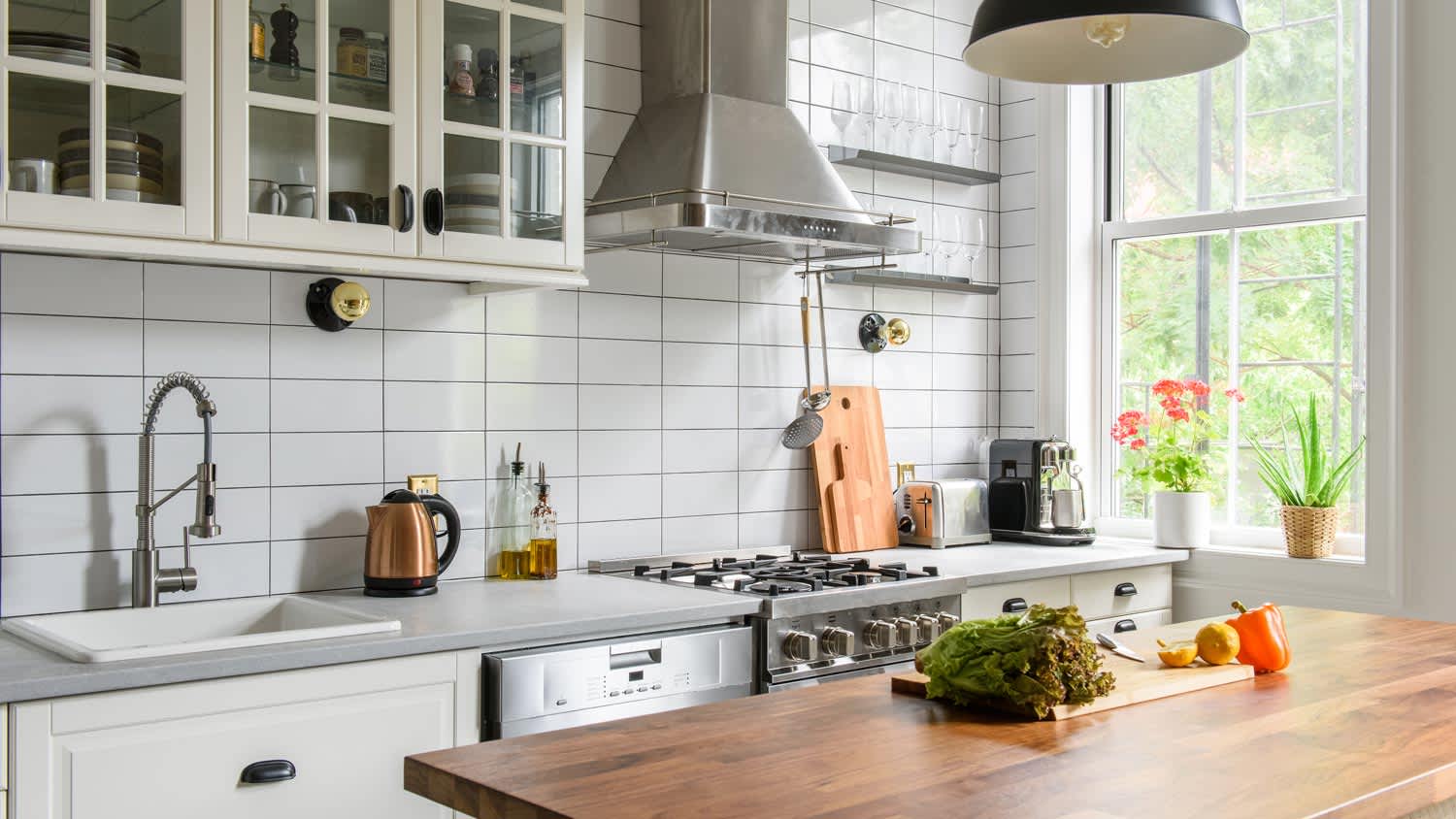
Floating kitchen islands provide plenty of style and function for your home. Read this floating kitchen island guide to learn the pros and cons of having one in your home, and how to measure it correctly so that it fits your space.
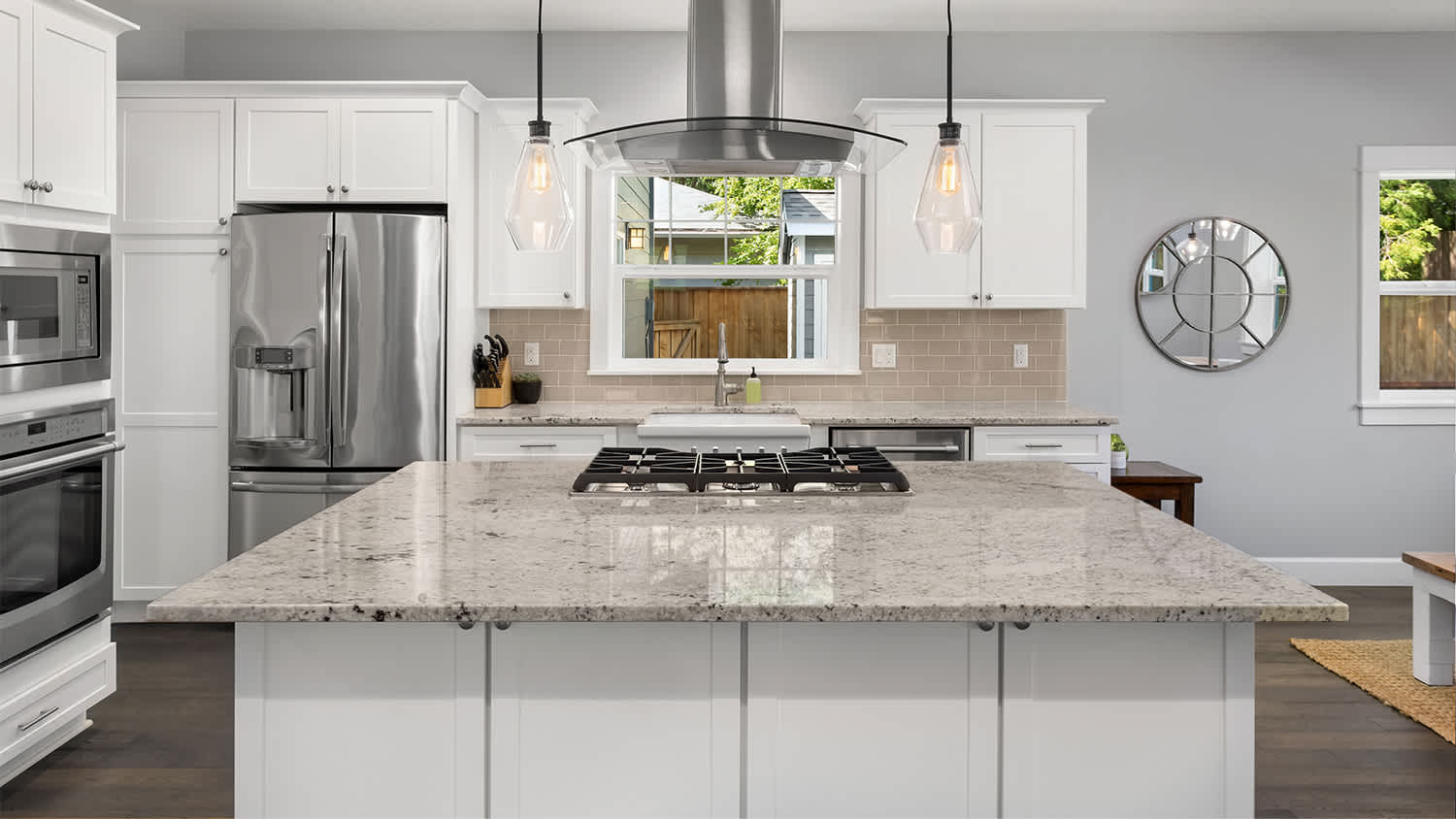
What is a kitchen island, and should you add one to your home? Learn what the different types of kitchen islands are, pros, cons, and cost to help make your decision.

Figuring out which types of kitchen islands will fit your space and your usage habits can be challenging. Use our tips to zero in on your perfect design.

Understanding the nuances of kitchen island heights is essential for creating a functional and inviting culinary haven that truly reflects your lifestyle.
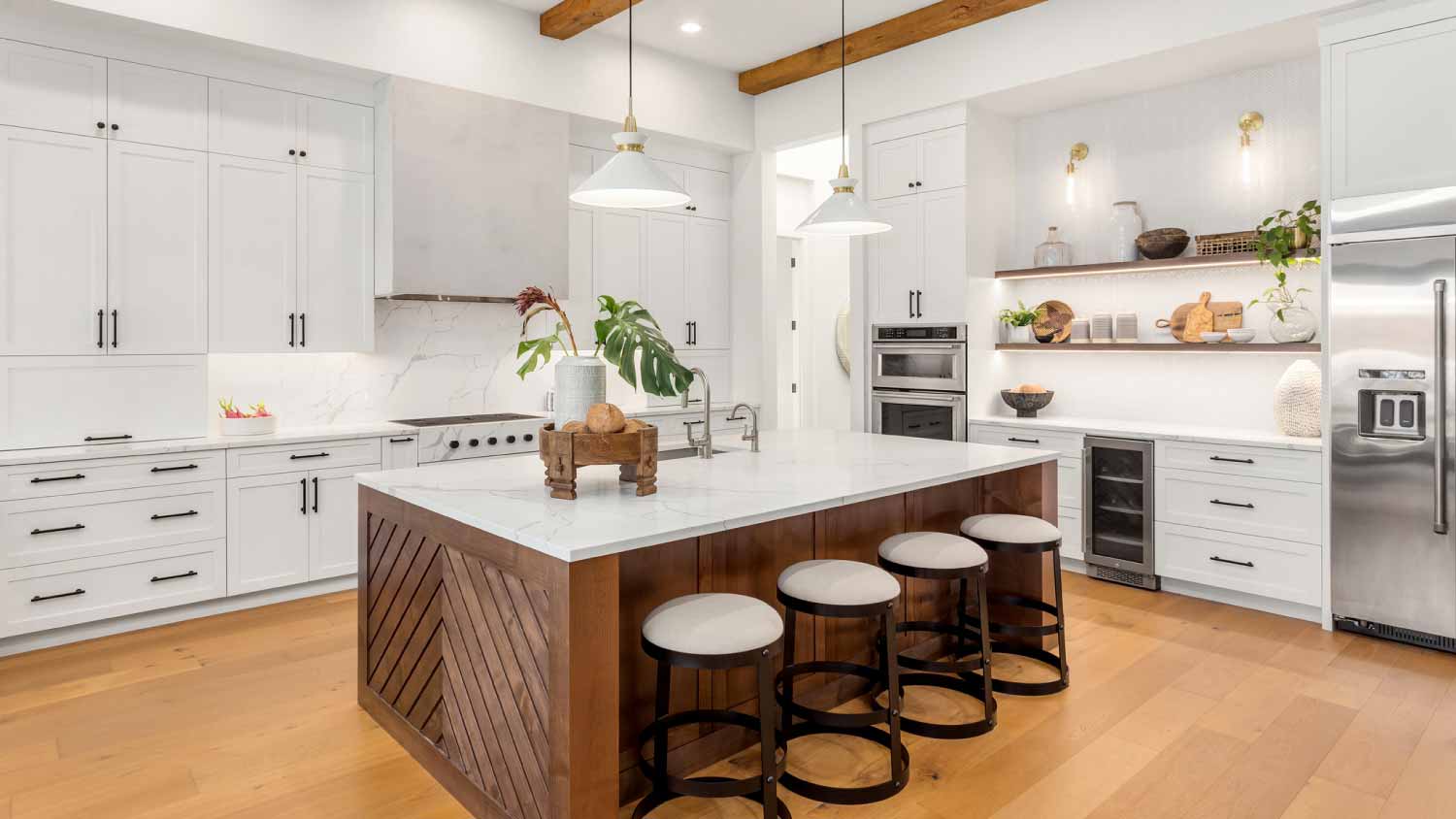
When it comes to kitchen islands, you can make a statement with the right execution. Use these 40 kitchen island ideas to inspire your project.