
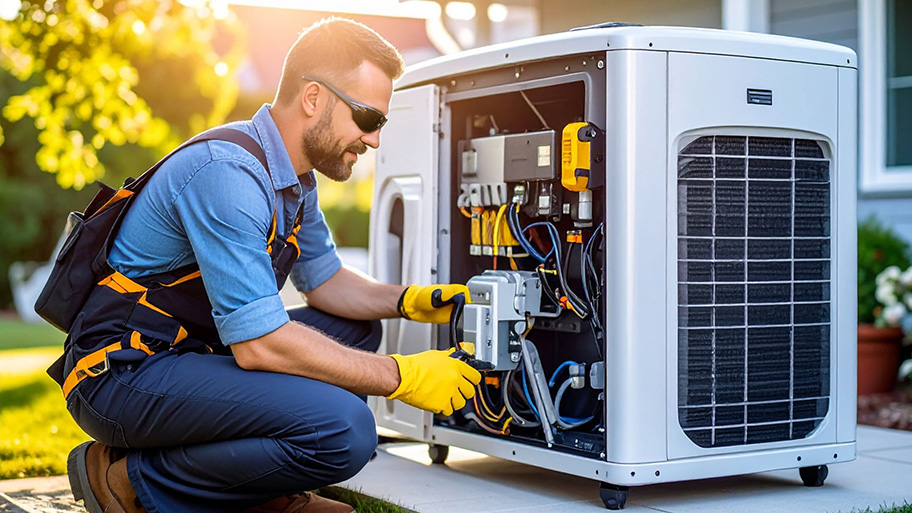
Keeping on top of generator maintenance and repairs gives you extra peace of mind as a homeowner. Find out how much regular generator maintenance costs.
Take back your power if the storm hits close to home

Hurricane generators come in three main types: portable generators for temporary power, inverter generators for short-term outages, and whole-house standby generators for automatic long-term backup.
Whole-house standby generators cost $1,520 to $8,815, making them the most expensive option, while portable and inverter models offer more budget-friendly alternatives for your hurricane season preparedness.
You should calculate your electrical load by identifying must-have appliances like refrigerators and medical equipment, then choose a generator sized to power 80% of its total capacity.
Hiring a local generator installing professional keeps your home protected with proper sizing, fuel line connections, and transfer switch installation for reliable automatic power during hurricanes.
Preparedness is an absolute necessity for hurricane season, especially when it comes to powering your home. You’ve likely considered a backup generator to help you weather the storm, but with so many different types out there, it can be challenging to narrow down your options. So, what is the best generator to use during hurricane season? Let’s review what to consider and how to choose the right generator for your home.
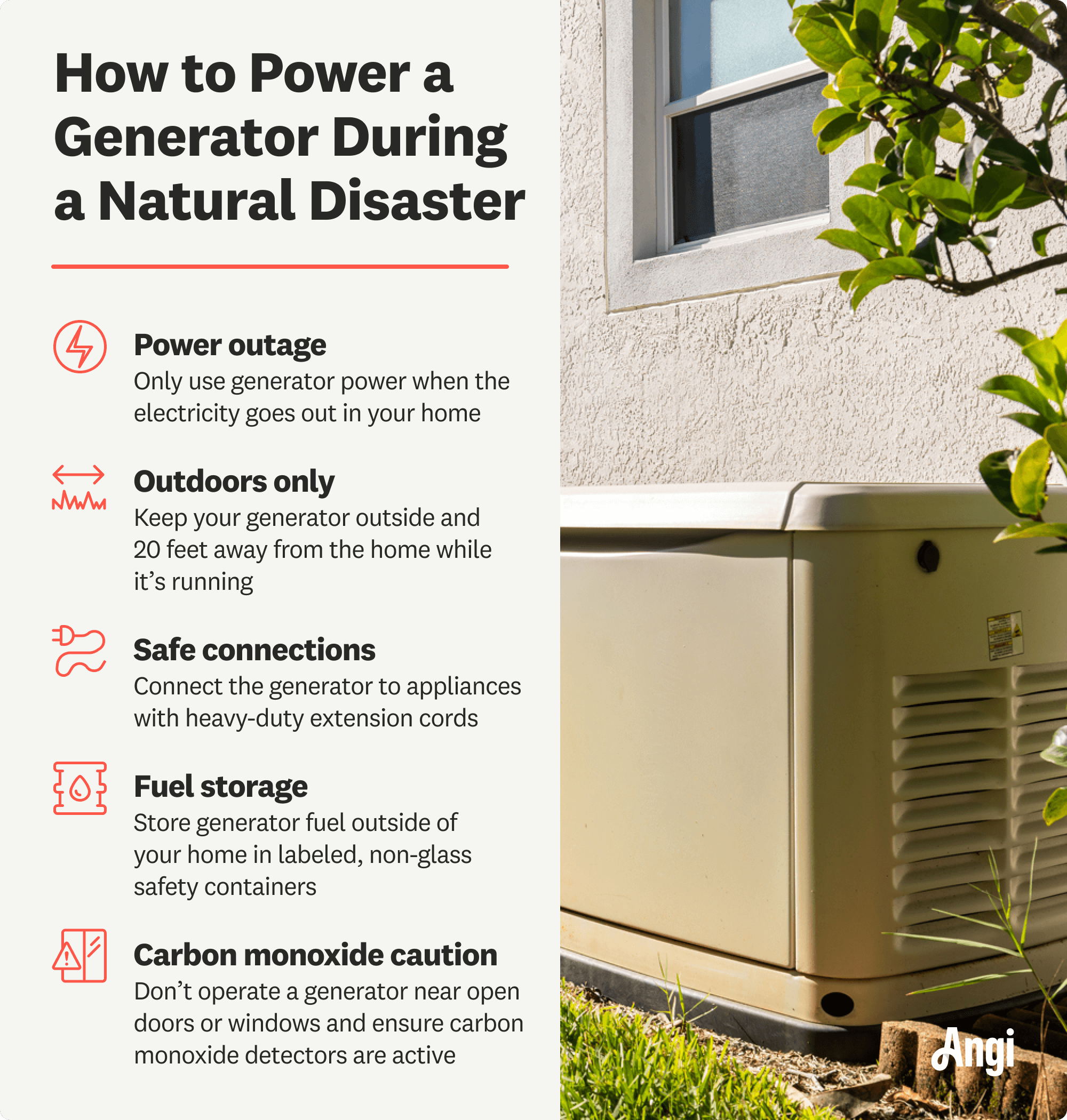
The main types of generators to use in the event of a hurricane are portable, inverter, and whole-house generators. Here’s how they compare.
Portable generators are a budget-friendly choice for temporary power needs during a hurricane. They’re ideal for running electronic devices, small appliances, and critical equipment during an outage. As a bonus, there are other uses for these generators, such as providing a power source for camping trips or outdoor events. However, they require a significant amount of fuel, which may be difficult to find after a storm, and take up a lot of storage space.
Compact, quiet, and fuel-efficient, inverter generators produce between 800 and 5,000 watts of power, making them ideal for short-term power outages during a hurricane. This type of generator can keep a refrigerator running or power small appliances, but they won’t support a central AC system. Some models allow parallel operation, letting you combine two units for extended power. While they’re not designed for whole-home use, they provide a reliable and efficient backup option for short-term hurricane relief.
The ultimate solution for long outages during a hurricane, whole-house generators turn on automatically when the power goes out. They can run for days or even weeks on natural gas or a full propane tank, making them ideal for hurricane-prone areas. However, they are the most expensive option, ranging from $1,520 to $8,815. It’s necessary to weigh the pros and cons and determine whether installing a whole-house generator is worth it for your home.
Whether you’re purchasing a portable generator or installing a whole-house generator, it’s crucial to select the right size to power all of your home’s necessary electronics. Generators are measured in watts or kilowatts (1 kilowatt equals 1,000 watts). For optimal performance, they should power a maximum of 80% of their total capacity.
If you’re not sure what portable or whole-house generator sizing you need, you can calculate the electrical load of your must-have appliances, such as your refrigerator, freezer, lights, and medical equipment. Then, multiply the generator’s size by .80 to ensure it can handle the load with the proper amount of capacity to spare.
| Generator Size | Wattage | Power Capabilities |
|---|---|---|
| Small | 1,000–10,000 watts | Lights, refrigerators, fans |
| Medium | 15,000–22,000 watts | Major appliances, sump pumps, AC units |
| Large | 22,000+ watts | HVAC systems, electric overs, water heaters |
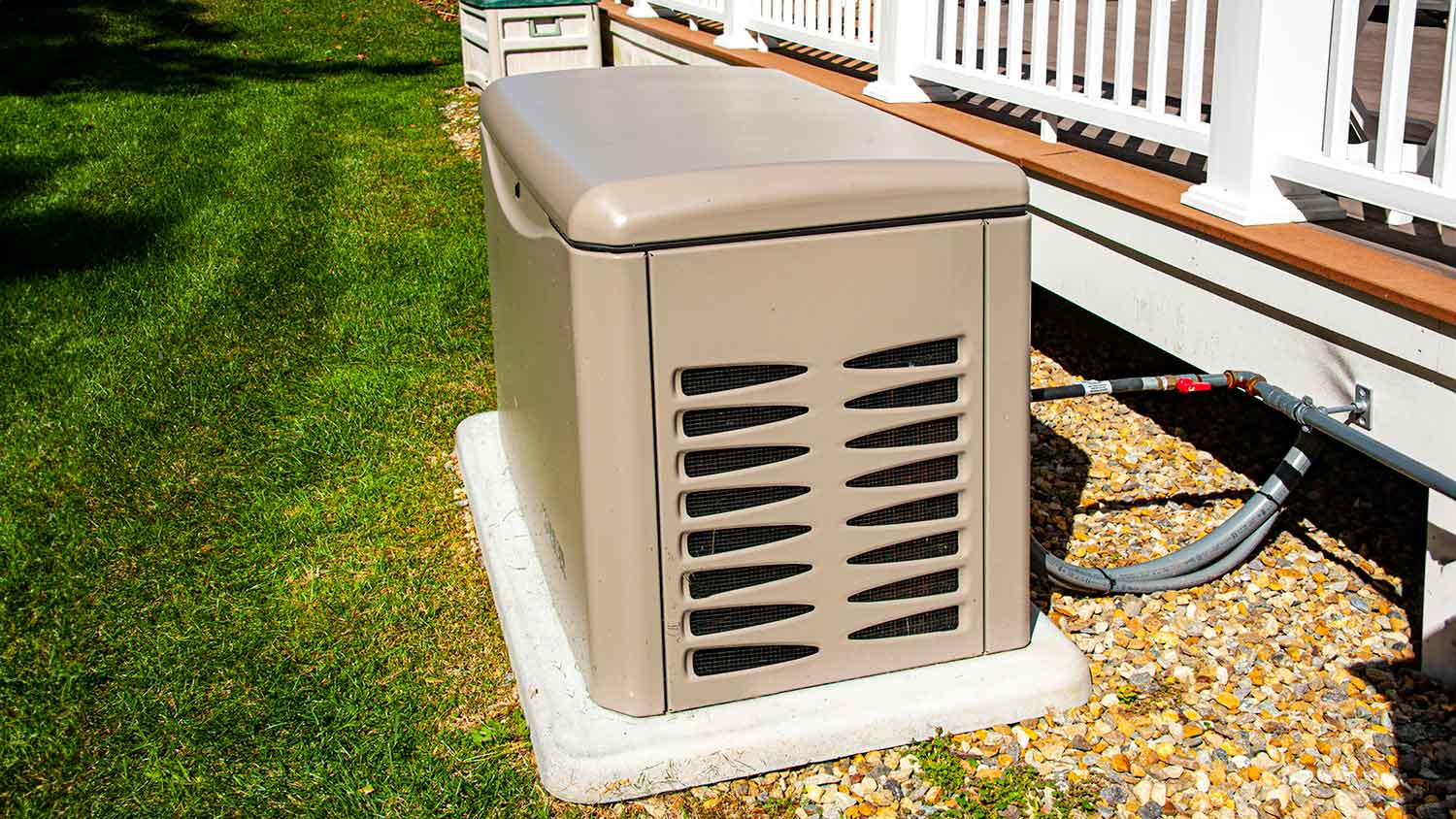
Choosing the right generator fuel depends on availability, storage life, and efficiency. Some fuels are easier to find during emergencies, while others offer cleaner energy or a longer shelf life. Here are the most common generator fuel types and the advantages of each.
Gasoline is a popular choice due to its affordability and easy availability. However, it has a short shelf life of about one year and it can be difficult to obtain during severe weather events. If you rely on gasoline, consider storing extra fuel in approved containers. Proper storage and rotation can help ensure you have a usable supply when needed.
Diesel generators are known for efficiency and durability, with fuel that lasts six months to one year when stored correctly. While diesel is flammable, it has a lower ignition risk compared to gasoline. However, diesel generators tend to be louder and produce more emissions. Despite these drawbacks, diesel remains a reliable option for backup power.
Propane, available in liquid or vapor form, is a clean-burning fuel commonly used in inverter generators. Unlike gasoline and diesel, propane does not degrade over time, making it a great long-term storage option. It also performs well in cold weather and might be easier to find after storms when other fuel sources are scarce.
Solar-powered generators offer clean, renewable energy with no emissions, making them safe for indoor use. Many come with solar panels to enhance power output, but they depend on sunlight and have lower energy capacity compared to fuel-based options. While not ideal for high-power needs, solar generators can still work well for small electronics and emergency backup.
Battery-powered generators, often paired with solar or inverter technology, provide a quiet and eco-friendly power source. They’re safe for indoor use, but typically have lower power output and longer recharge times.
Preparing for a hurricane requires a solid plan and essential supplies to keep you and your family safe.
Create an emergency kit: Assemble an emergency kit with a seven-day supply of food, water, medications, flashlights, and hygiene items.
Backup power: Keep backup power sources like a generator, solar chargers, and extra fuel ready to go, bearing in mind the shelf life of whatever type of fuel you’re using.
Seal important documents: Store important documents in a waterproof container and have emergency cash on hand in case card readers and ATMs break down during the storm.
Create an evacuation and communication plan: Assign family members specific tasks, map multiple escape routes, and designate an out-of-state emergency contact. Charge electronic devices in advance, and if evacuation orders are issued, leave immediately.
Secure your home: Protect your home by trimming trees, reinforcing doors and windows, and removing outdoor objects that could become dangerous in high winds.
Joseph did a great job with the staircase and trim. Timely and efficient, clear communication about the work, very fair pricing. For the stairs in particular, done very skillfully in an old house (1893) in a tight spiral, and very creative with how to do the handrail. Did a nice job with...
 Vouis Trim Carpentry L.L.C.
Jason has helped me with multiple household projects, with the most recent being new door installation. He has always showed up on time and organized and has done an incredible job! Jason is very professional and he's now my go-to for anything around my house that needs to be fixed or...
 Huff Garage Rescue, LLC
Very professional, knowledgeable and helpful! Completed the install on time and as expected.
 Ward's Services
Excellent, Prompt, Courteous Service!!! They were super friendly and quite personable. I felt very comfortable with the gentlemen that did the installation. They installed it exactly where I asked them to and they did an excellent job!! I loved their service so much.
 Tether House
The Mosby team went above and beyond for my project. They not only installed my light fixture; they also worked through an old, wonky, and as it turns out incorrect wiring issue from the work of prior contractors. Professional, thorough, conscientious, and kind. Five star experience. Thank you!
 Mosby Electric
Window Depot did an amazing job installing the windows in my basement! The process from start to finish was by far more than what I expected. I would highly recommend Window Depot if you want professionalism from the the consultation to the installation. Dont settle for mediocre when you can...
 Window Depot USA of Central Ohio
The guys did an outstanding job and we had a great experience with CarifaTile. I appreciated that Joe reviewed the quotes with me and set expectations prior to the install. The crews showed up as scheduled and always left the areas clean upon leaving the house. We will definitely use...
 CarifaTile
Called ahead and worked quickly to install keyless locks on vintage wooden doors.
 Expert Lock and Key, LLC
We had a 20+ year old landscape lighting system that needed replacement. Midwest Lightscapes worked with us to design a much improved lighting system, lighting the exterior of the house and the back yard. Installation of the 45 light system took one and one-half days, and went very smoothly....
 Midwest Lightscapes
Did an amazing job transforming my yard. Also installed sod in places, would recommend to everyone.
 Cardinal Landscaping & Construction LLC
From average costs to expert advice, get all the answers you need to get your job done.
Keeping on top of generator maintenance and repairs gives you extra peace of mind as a homeowner. Find out how much regular generator maintenance costs.
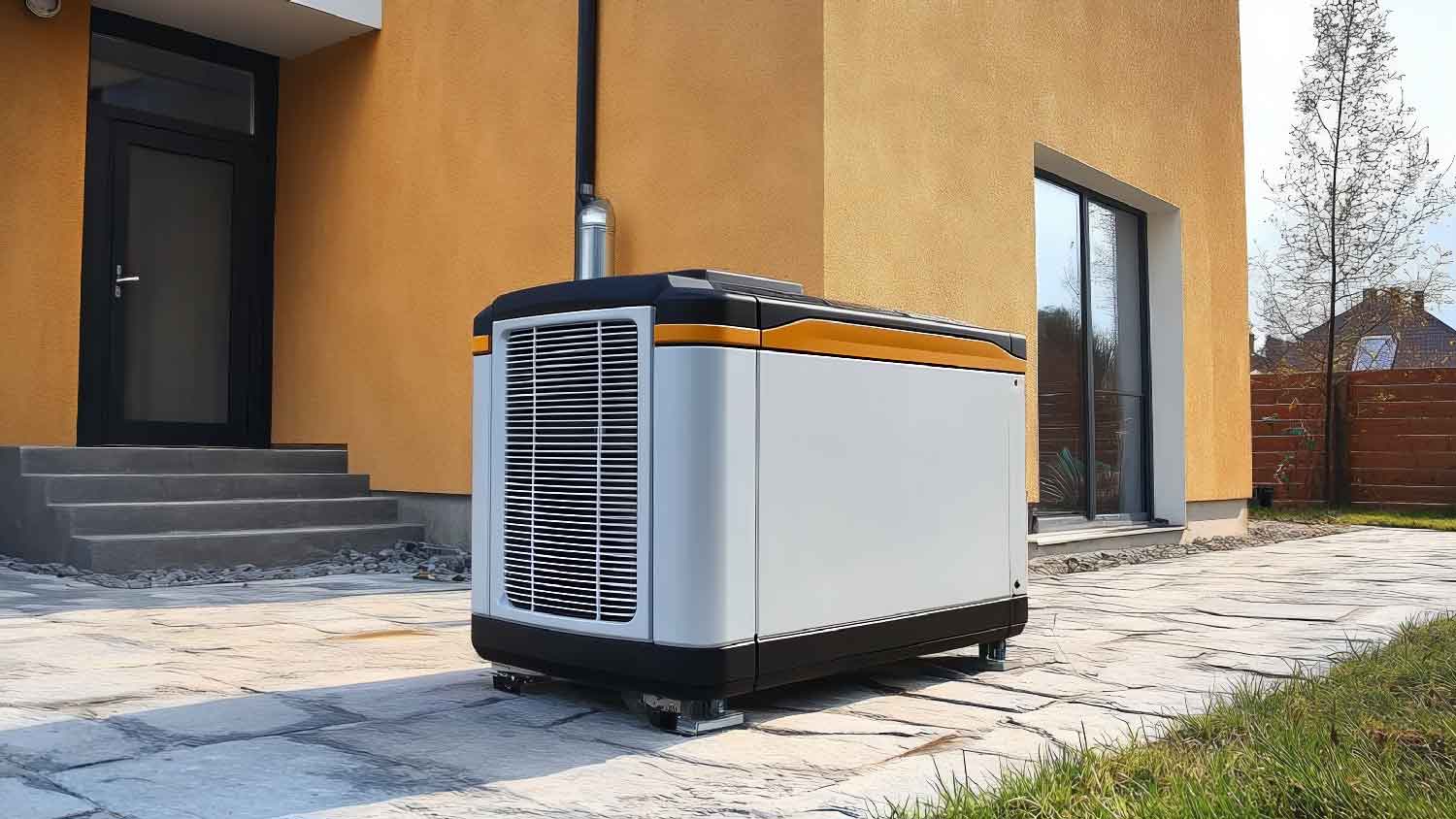
Natural gas generators are whole-home standby generators that are connected to your home’s natural gas line. The average cost for a natural gas generator is $12,000.

Hurricane shutter costs vary widely depending on many factors. Explore our breakdown of the elements that impact what you’ll pay for hurricane protection.
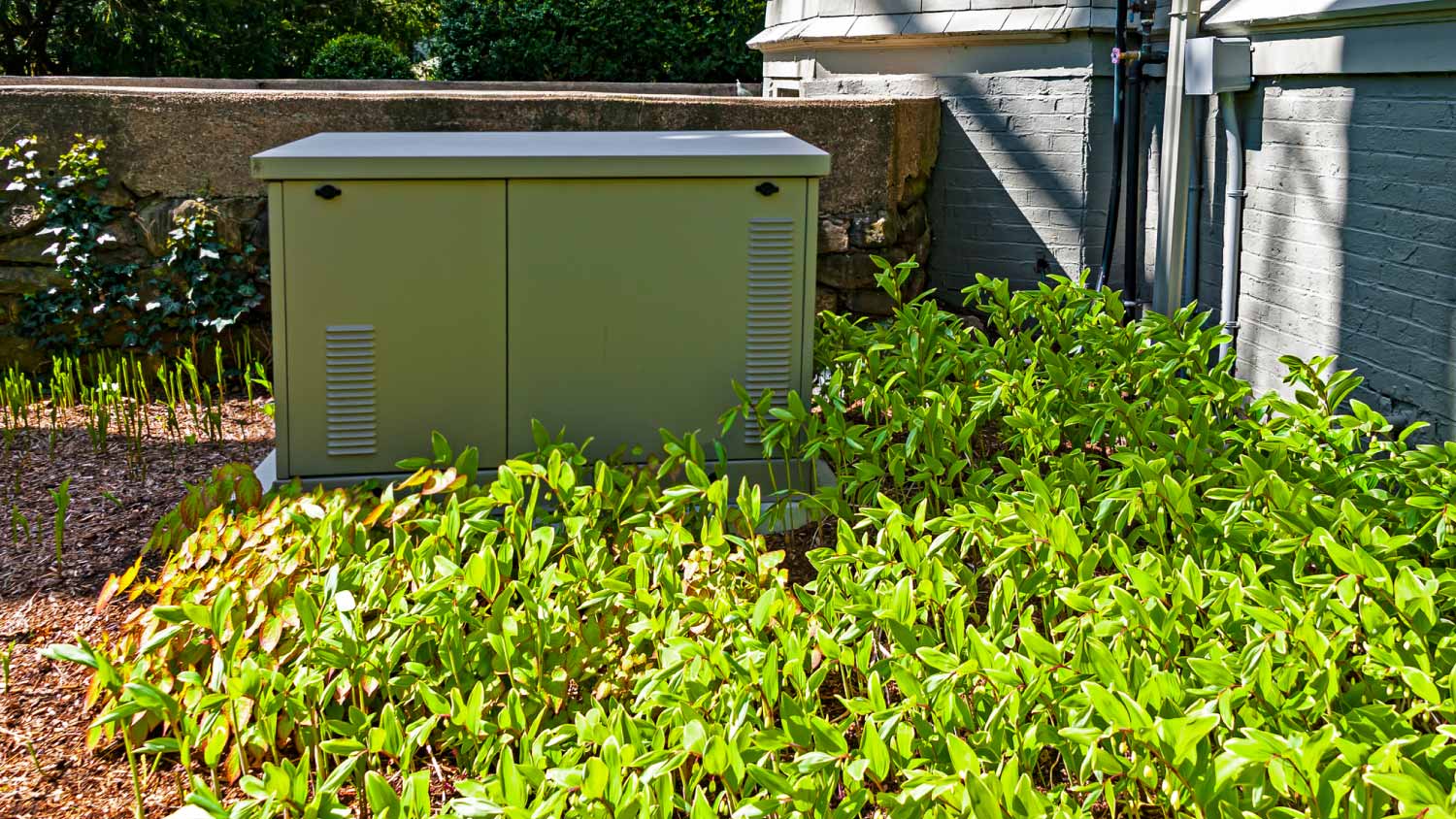
Generator maintenance is key to keeping your appliance in good condition. Follow our checklists to make sure your generator stays up and running.

If your home is located in an area prone to hurricanes, then it’s imperative you learn how to hurricane-proof your home. Read on for a comprehensive guide.
Do you live in a hurricane evacuation zone? Learn what damage a hurricane can cause, how to prevent it, and what to do after a cyclone or tropical storm.