
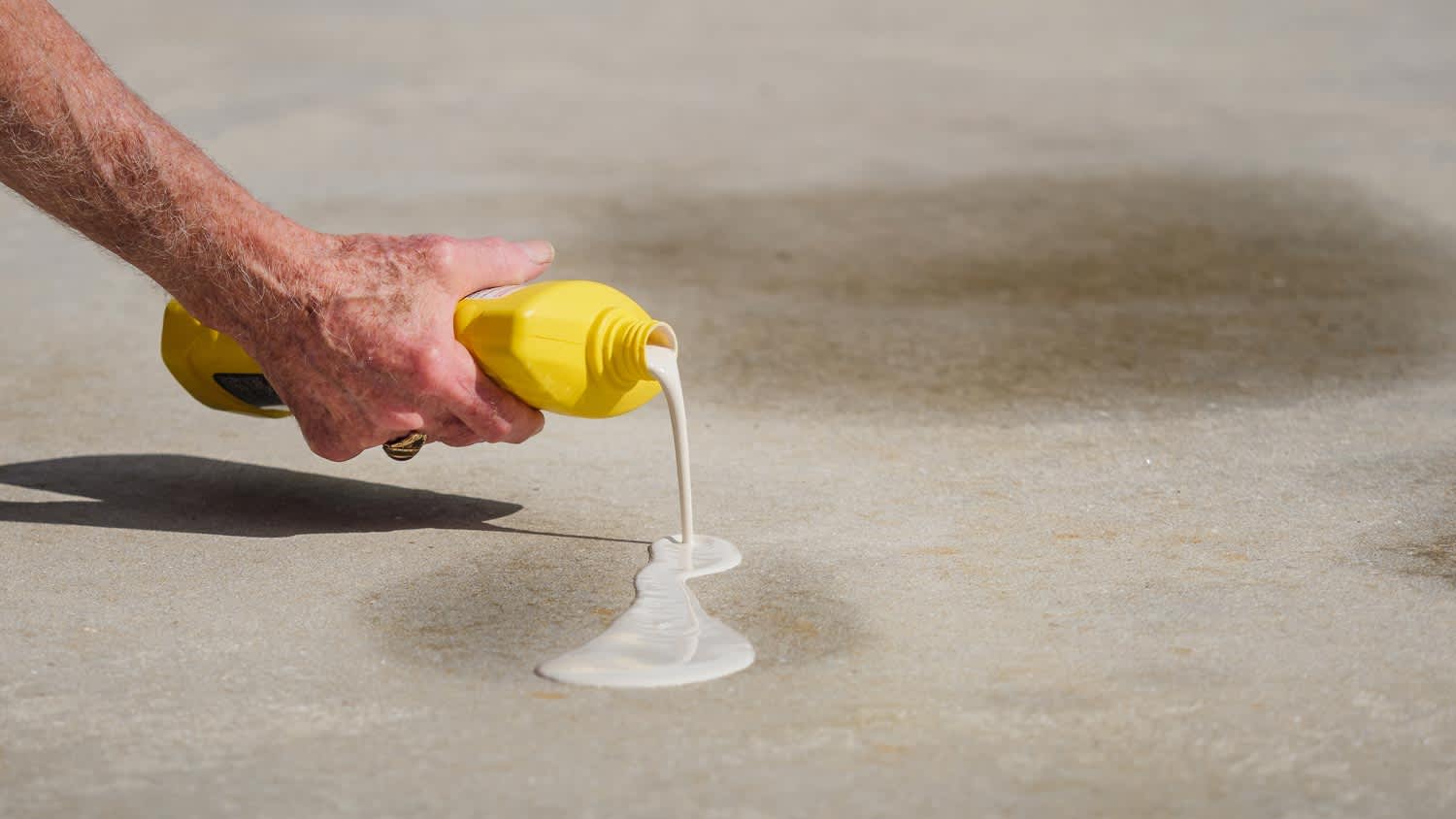
Learning how to remove driveway stains depends on the type of stain, your driveway, and your abilities. Luckily, these 8 methods are pretty simple. Learn more.
Oil and driveways don’t mix

Oil stains from your car or gas appliances can slowly erode your driveway material, leading to cracks and crumbling that require costly repairs.
Expect to pay $100 to $350 for pressure washing or $60 to $130 per hour for professional cleaning with commercial-grade degreasers that remove stubborn stains.
You can remove fresh oil stains by applying cat litter to absorb the oil, then scrubbing with dish soap or baking soda paste.
Hiring a local power washing professional provides commercial-grade equipment and expertise to remove deep stains without damaging your driveway surface or nearby landscaping.
Oil from gas appliances, transmission fluid, and your car’s engine can all turn your pristine driveway into a splotchy mess. Thankfully, removing oil stains from driveways can be as simple as opening up your pantry and following a few quick steps. Follow these steps to remove oil stains from your driveway DIY-style.
Oil stains don’t just present an eyesore every time you pull up to your home—leaving stains on your driveway can slowly erode your driveway material, leading to high driveway repair costs. It’s best to tackle oil stains immediately to prevent your driveway from crumbling or cracking and needing driveway repairs before its natural time.
If you choose to use a driveway oil stain remover and DIY it, you’ll only spend between $10 and $20 for the stain remover supplies. Depending on the size of the oil stain, your purchase should last several cleans. Pressure washing costs an additional $100 to $350 on average. If you hire a professional to clean your driveway, most pros charge between $60 and $125 per hour.
Before you take on removing oil stains, you’ll first need to prepare your driveway to get the most out of the cleaning process. We’ve rounded up several tips on prepping to remove oil stains.
Depending on your type of driveway material, some oil stain removers work better than others, while others shouldn’t be used on certain surfaces. Asphalt and concrete driveways have different compositions, so using the wrong stain remover could cause damage to your driveway. For example, asphalt is oil-based—a solvent stain remover can eat away at the surface.
Always refer to the instructions on a driveway oil stain remover to ensure you have the right product for the job.
You’ll want to clear the area beforehand, so park your vehicles on the curb and move any items from your driveway. Then, use a broom to remove dirt, leaves, and debris. This will make it easier to clean the surface effectively.
If you have a large oil stain or stains close to the edges of your driveway, you might want to protect any surrounding plants or decorations from harsh chemicals. You can do so by watering grass, trees, and gardens to saturate the ground and dilute any cleaning agents that happen to reach them.
You have several options for removing oil stains from your driveway. Some solutions might already be lying around the house, while others require a little more investment.
Pressure washers can help clean oil stains off driveways while also giving your driveway a cleaning. Here’s how to use a pressure washer to clean your driveway:
Consider adding detergent before operating the washer.
Wear safety goggles, gloves, and ear protection.
Stand 10 feet away from the oil stain.
Spray the cleaner onto the stain in a bottom-to-top manner.
Like a grease-ridden dish, dish soap can work to remove oil stains from driveways. To use dish soap, follow these steps:
Apply a few drops of dish soap to the stain.
Put on gloves to protect your hands.
Scrub the stain using a stiff brush.
Use warm water to rinse the soap away.
Repeat if needed.
Baking soda is a mild abrasive that, in paste form, can help to remove oil stains from hard surfaces. Because baking soda is alkaline, it also breaks down oil stains better than pH-neutral solutions. Here’s how to clean oil off a driveway using this strategy:
Apply baking soda to the oil spill.
Add warm water to make a paste.
Wear gloves to protect your hands.
Use a stiff brush to scrub the stain for several minutes.
Wait at least 15 minutes.
Follow with white vinegar.
Rinse the baking soda and vinegar solution using water.
Repeat if necessary.
Powdered laundry detergent is another good option because it’s abrasive yet gentle on surfaces. You’ll want to use powdered detergent to create a paste, which you’ll use to scrub the oil away. Follow these steps to try it out:
Sprinkle your powdered laundry detergent on top of the oil spill.
Add warm water until the detergent becomes a paste.
Put on gloves to protect your hands.
Use a stiff brush to scrub the stain for several minutes.
Wait at least 15 minutes.
Rinse the detergent away using warm water.
Repeat if necessary.
WD-40 is a versatile solution that helps remove oil stains from concrete driveways. To use WD-40 as a driveway stain remover, do the following:
Shake your can of WD-40.
Spray the WD-40 onto the oil stain.
Let it sit for at least 15 minutes.
Wear gloves to protect your hands.
Scrub using a stiff brush.
Use baking soda or cat litter to absorb the solution (optional).
Rinse the area using water.
Repeat as needed.
Cat litter won’t do much for old oil stains, so go straight to oil stain removers if it’s already dry. But, if your oil stain is fresh, you might be able to use cat litter to absorb the oil. Here’s how:
Pour cat litter over the stain until the stain is no longer visible.
Let the litter sit for at least 30 minutes.
Use a broom and dustpan to sweep the litter up.
Wear gloves to protect your hands.
Scrub the stain using a stiff brush and laundry or dish detergent.
Rinse the area with water.
Repeat as needed.
For stubborn oil stains, you might need to switch to a stronger solution. Concrete driveways can handle tough solvents that break down oil stains. If you need to remove oil stains from an asphalt driveway, use a degreaser designed for asphalt. With this in mind, here’s how to use a concrete oil stain remover:
Wearing gloves, apply the stain remover to the stain.
Let the product sit according to the manufacturer’s instructions.
Use a stiff brush and dustpan to sweep up the product.
Spray the area with water.
Repeat as necessary.
Removing oil stains from a driveway can be a mild inconvenience, but staying on top of your driveway maintenance can help you prevent oil stains from seeping into your driveway and becoming harder to remove. Here are some tips on how to prevent driveway oil stains from taking over your driveway:
Seal your driveway every five to seven years if it’s concrete and every three to five years if it’s asphalt to prevent stains from sinking deep into the surface material.
Take your car in for scheduled maintenance.
Fix leaks from your car as soon as problems arise.
If you must wait before fixing your vehicle, place a piece of cardboard underneath the leak to keep it from reaching your driveway.
Clean your driveway once yearly.
Sprinkle cat litter onto fresh oil leaks before they have a chance to enter your driveway surface.
Most driveway oil stains are easy to remove using household products and a little elbow grease. However, if you have deep stains that don’t come out after following these at-home steps, hire a local power-washing pro to remove the stains and get your driveway looking spotless again.
Archie did a good job cleaning up the driveway before he laid down the sealer. It looks good. He was gracious and even helped me bring up my groceries. His rate was comparable to another company who came out to give me a quote and he talked to me personally rather than just text me a quote...
 Pro Seal Roofing & Paving
D1 Roofing delivers outstanding service from beginning to end, backed by a strong warranty and expert teams. I highly recommend them for their excellence in meeting and surpassing expectations with unmatched communication. Choosing D1 Roofing was flawless decision
 Division 1 Roofing LLC
This company went above and beyond with their work, chimney sweeps are usually pretty messy, but the clean up was spot on.!! Josh explained every thing that he was doing, and the things that he was checking to make sure the chimney was safe for me and my family. He was very professional,...
 Supreme brick & chimney
Our homes curb appeal skyrocketed thanks to Custom Paint Jobs LLC s exterior painting.
 Custom Paint Jobs, LLC
Very well! Two men came to do the work. They were both polite, punctual and professional in manner. When they finished, Cameron explained about preserving an asphalt driveway, as I had never had one in the past. I will definitely be calling them in the future.
 All Star Paving and Sealing
Fantastic! Top Line was early for the appointment and very knowledgeable and took time to explain everything they had found during the home inspection. The report included clearly defined issues and what they recommended to remedy the same. The report also included many pictures to help...
 Top Line Home Inspections, LLC
Working with Peter and his crew was a breeze. They were exceptionally polite and did a neat job to repair and seal our driveway. I will definitely talk to them first for additional work.
 Central Paving
The preformed a really good job the staff is incredible never been so happy with my home, A brand new driveway is like a face lift!!
 Pristine Paving
Called Mark on a Thursday morning. Not really knowing if he could help me or not. I was having driveway, flooding issues due to a clogged channel drain and I was trying to figure out what direction to take. Heavy rains had come on Monday and again on Thursday leading to flooding in my garage...
 Mark Rodgers Construction
Had already met with 2 other contractors before Blue Ring, and Blue Ring's price quote for the work was better than either of the other 2, and the came out the next morning and cleaned up a very large fallen tree branch from a storm that was blocking my driveway. Work was completed in...
 Blue Ring Residential Services, LLC
From average costs to expert advice, get all the answers you need to get your job done.
Learning how to remove driveway stains depends on the type of stain, your driveway, and your abilities. Luckily, these 8 methods are pretty simple. Learn more.

Learn to remove stubborn oil stains from asphalt driveway using simple household items like baking soda, powdered detergent, or floor degreaser.
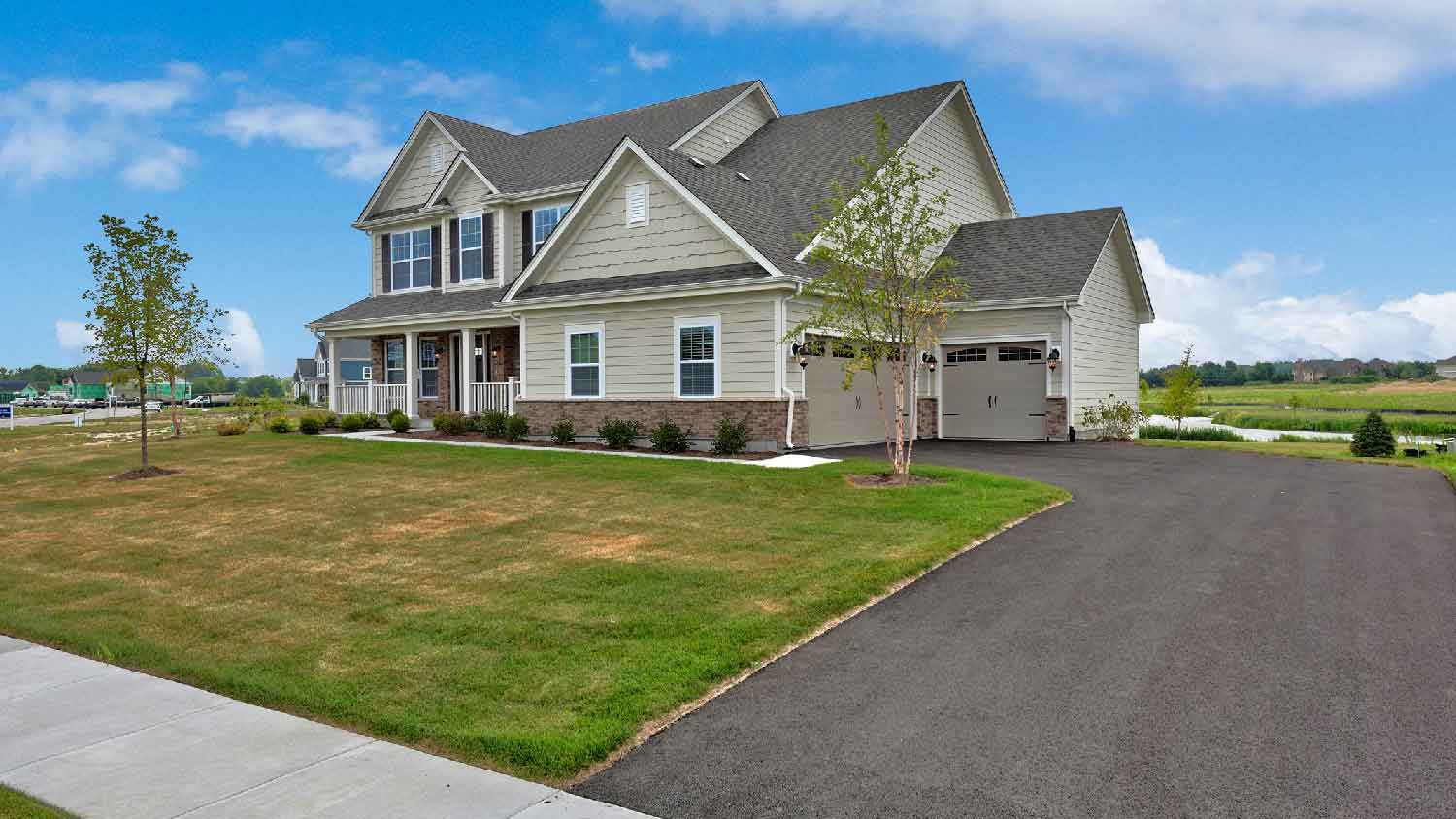
Learn how to keep your asphalt driveway protected longer as we compare the performance of water-based vs. oil-based sealer for a driveway.

Accidentally spilled paint on your carpet? It happens to the best of us. Follow along to learn the best removal process for water-based and oil-based paints.
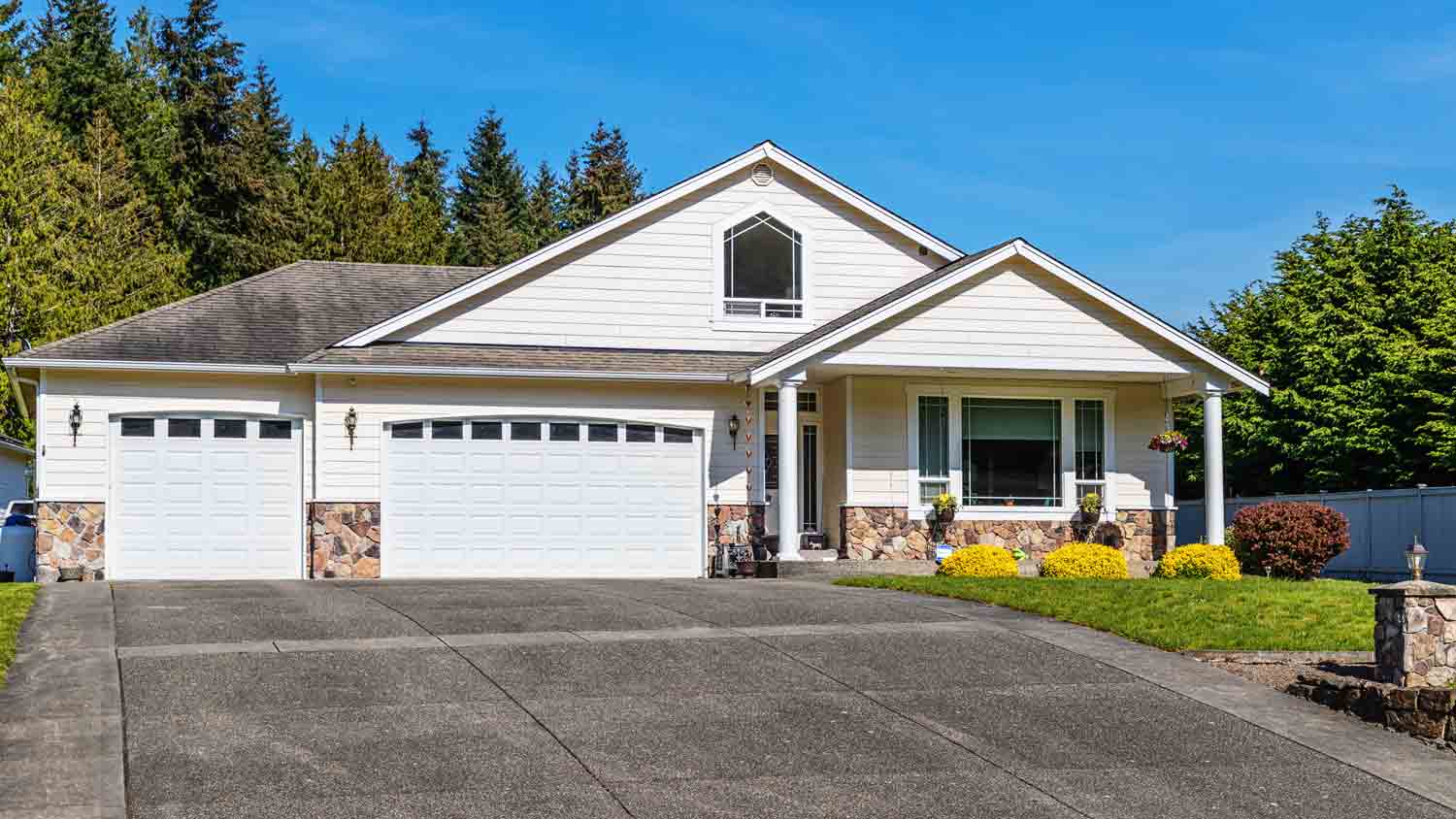
This summary of the best driveway cleaning methods shows you how to remove stains, mildew, mold, and more from your driveway after choosing the right tools and products.

Stains don’t have to ruin your fabric, upholstery, and carpeting. If you’ve got household staples, you have stain removers at your disposal. Find out our top stain removal tips here.