
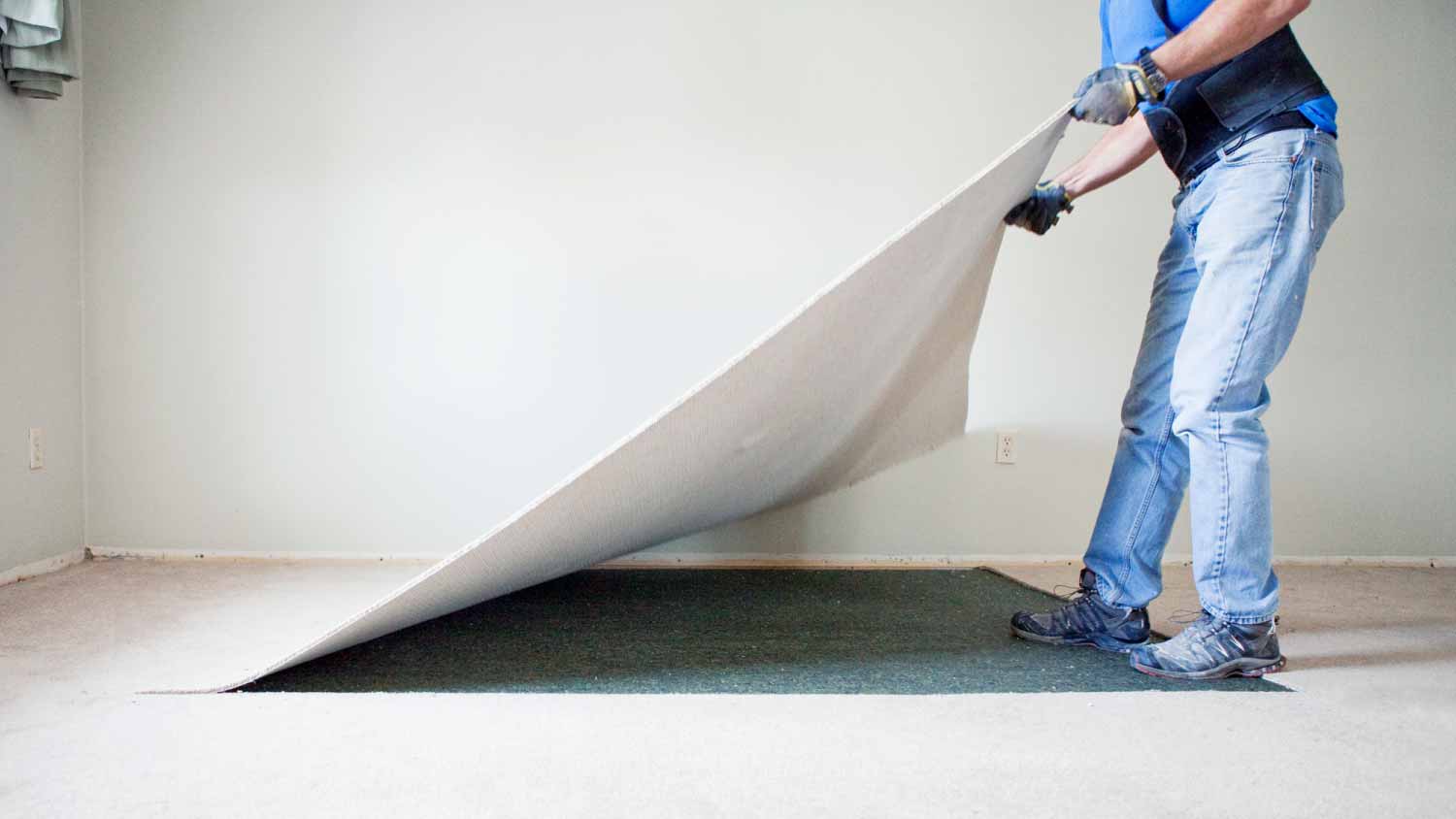
The average range to remove carpet costs $120 to $720. Contractors base carpet removal costs on square footage, home location, and installation type.
If you’re stuck in flooring limbo, learn how to ditch glued carpets

Removing glued carpet from your floor is necessary before installing new flooring, as leftover adhesive can compromise the installation and reduce your new floor's longevity.
Expect to pay around $180 for professional carpet removal, with costs ranging from $3 to $5 per square foot depending on your room size and glue difficulty.
You can loosen stubborn carpet adhesive by applying heat with boiling water or a steam cleaner, then scraping the softened glue from your subfloor systematically.
Hiring a local carpet removal professional saves you hours of manual labor and prevents subfloor damage by using specialized tools and proven removal techniques for glued carpets.
Dingy, old, or out-of-date carpet gets truly ugly when you try to remove it, only to find out it’s glued in place. It can take hours of tedious scraping to remove, making the most patient DIYer rethink their design plans. However, a little knowledge about how to remove glued carpet can quicken your pace through a tiresome task.
You have to remove glued carpet to install new carpet or flooring. You might have heard a few tales of installing carpet over carpet, but that’s not a situation you want to get yourself into. Before installing any type of new flooring, you need to check the subfloor's condition. Glue that’s still stuck to the subfloor can compromise the installation of new flooring, reducing the effectiveness or longevity of the new floor.

You can go about the task of removing glued carpet in one of several ways. You might take the heat route to keep things simple and low tech. Or you can opt to rent a carpet puller to take some of the manual labor out of the job. Either way, you’re looking at a good chunk of time to rid yourself of old carpet. The following are four different methods for removing glued carpet.
Heat softens and loosens carpet glue, making it easier to remove. Without loosening the adhesive, you can end up scratching and scraping at the glue for hours and pulling up carpeting and carpet padding in hand-sized chunks. However, you need to take a few steps before applying heat, including:
Use a hammer or pry bar to remove the baseboards, giving you access to the edges of the carpet. Number the baseboards so you know which wall they go on after you’ve installed the new carpet. Remove the nails from the baseboards if you’ll be re-installing them.
Use a utility knife to cut the carpet into strips. Grab and peel or pull up one section of carpet at a time. You may have a layer of carpet padding or foam that’s in direct contact with the adhesive still stuck to the floor. Don’t worry—continue to the next step.
Use a scraper to scrape off as much glue (and carpet pad or foam) as possible.
Next, apply heat with either boiling water or a steam cleaner (see the steps below).
Soak a large towel in boiling water and lay it over a section of carpet.
Let it soak for approximately one hour.
Use a scraper to remove the adhesive in the area under the towel.
Repeat on the next section of the floor.
You can use everything from a portable steam cleaner to an iron for this heating method. Something that steams a larger area will help you work faster.
Use a portable steam cleaner on one small section of the floor to loosen the adhesive.
Scrape the steamed section of the floor with a scraper.
Repeat this process until you’ve removed all of the glue.
The reciprocating saw method is a good option for removing carpet from a large area. Start with the following steps:
Start again by using a hammer or pry bar to remove the baseboards. Remove the nails from the baseboards and number them if you’ll be re-installing them.
Cut the carpet into strips with your utility knife. Then, grab and peel or pull up one section at a time.
Use a scraper to remove any loose glue.
Fit a reciprocating saw with a 2- to 4-inch scraper blade and get to work on the remaining glue. The reciprocating saw adds vibration, shortening the time it takes to remove stubborn glue.
Chemical adhesive removers can help loosen and break down carpet glue for easier removal. Follow the same steps as when applying heat, including:
Remove the baseboards with a hammer or prybar and number them if you’ll be reusing them.
Cut the carpet into strips with a utility knife and pull of the strips one at a time.
Scrape off as much glue as you can with the scraper.
Next, apply the chemical adhesive remover as instructed by the manufacturer. Usually, this involves applying it to small sections, letting it sit for 15 to 20 minutes, and then scraping the glue manually.
A power puller takes some of the grunt work out of removing carpet. You can usually rent one from a local home improvement store. Use the following steps to remove glued carpet with this machine:
Remove the baseboards to gain access to the corner of the carpet.
Use a utility or carpet knife to cut the carpet into strips.
Pull up one corner of the carpet, and cut a slit in the pulled-up corner of the carpet.
Put the carpet puller on the opposite side of the room from the slit corner.
Place the carpet’s pulley plate underneath the carpet and extend the hook through the slit.
Attach the hook to the pulley plate and tighten.
Turn on the power puller to activate the winch, and pull the plate toward the opposite side of the room.
Once you have pulled the section, repeat the steps to pull up each strip of carpet.
If there’s glue still stuck to the subfloor, you might need to use one of the other methods, such as applying heat or using a chemical adhesive remover, to get all of the glue off.

Carpet installers don’t use carpet glue as often as they used to. And, it’s more common in older homes. This type of glue is a strong mastic that doesn’t deteriorate over time. Unfortunately, that means when it’s time to remove the carpet, you’ve got a battle ahead of you.
At the same time, you have to remove the glue to access the subfloor. A solid subfloor ensures the longevity of the new carpet or any other type of flooring you choose, whether you’re installing linoleum, hardwood floors, or an epoxy floor.

Glued carpet can slow a recarpeting project to a standstill. If you’re removing carpet over a large surface area, it can take all day. You can speed up the process by:
Cutting the carpet into strips before pulling it up.
Going high-tech by using a reciprocating saw or steam cleaner.
Letting hot water, steam, or chemical adhesive sit on the carpet for a period of time before scraping the floor.
Some carpet pads have a layer of foam that sticks to the subfloor, while the carpet layer pulls off. You can use any of the above methods to remove anything still stuck to the carpet glue.
The average cost to rip up carpet is around $180. For a 12-by-12-foot room, you’re looking at approximately $3 to $5 per square foot. However, the total cost will depend on the size of the room, and you might get extra charges if there are any difficulties or unforeseen problems (think: a damaged subfloor or particularly difficult to remove carpet and carpet pad).
A local carpet remover typically charges between $3 and $5 per square foot for glued carpet removal costs, including the cost of labor, cleanup, and disposal of the old carpet. If you’re also installing new carpet, your carpet installer should include the cost of removal and disposal in the quote, but ask to make sure.
You can save money by removing glued carpet yourself, but be prepared to put in some manual labor and a chunk of time to get it done. Small areas might not eat up an entire day, but larger spaces around 150 to 200 square feet or more may take all day or longer if the glue is stubborn.
Showed up on time and cleaned carpets well, but didn?t move furniture.
 Voda Cleaning & Restoration of Columbus
Carpet repair done well. Scheduling was easy. Showed up on time.
 BR Flooring Installation
Joseph did a great job with the staircase and trim. Timely and efficient, clear communication about the work, very fair pricing. For the stairs in particular, done very skillfully in an old house (1893) in a tight spiral, and very creative with how to do the handrail. Did a nice job with...
 Vouis Trim Carpentry L.L.C.
This company does it right. Firstly, I want to say that Landan was a joy to work with. He was so kind, transparent, and had everything under control. His entire team showed up ready to work and they were all very respectful of the fact that we were in an office space. A little backstory – we...
 Krumlauf Floors
Very professional, knowledgeable and helpful! Completed the install on time and as expected.
 Ward's Services
Excellent, Prompt, Courteous Service!!! They were super friendly and quite personable. I felt very comfortable with the gentlemen that did the installation. They installed it exactly where I asked them to and they did an excellent job!! I loved their service so much.
 Tether House
I hired windows depot USA of central to install new windows in house in Oshawa. Ilya was very professional from the start, not only did he offered a great price, he also made sure the installation was on time. I am very satisfied with final outcome. The windows look great and the overall...
 Window Depot USA of Central Ohio
AFS was excellent from start to finish. Jess, the sales associate, was fantastic...very knowledgeable and very professional. The installation crew was excellent. I couldn't be more pleased with the process. Best of all, my new floor looks fantastic!
 America's Floor Source
We were having 2”x 2” tile installed . There was a small installation error and the new additional replacement tile was from a different lot and the colors didn’t match. Joe assured us that he would rectify everything , which he did without hesitation. We decided to go with the 18” x 36” tile...
 CarifaTile
Great experience all together. Dog friendly, courteous, great results and honest with recommendations. Will certainly be using Cardinal in the future for any carpet repairs
 Cardinal Carpet Care & Repair
From average costs to expert advice, get all the answers you need to get your job done.
The average range to remove carpet costs $120 to $720. Contractors base carpet removal costs on square footage, home location, and installation type.
Discover how much carpet replacement costs based on factors like the project size, the carpet material, and the labor required.
Not only are carpet tiles easier to install than carpet, but they’re often more affordable. So, how much does carpet tile installation cost? Let’s take a look.
You could have all the ingredients to remove carpet stains in your pantry. Keep reading to learn how to make your own DIY carpet stain remover.

If gum finds its way to your carpet, you don’t have to be stuck with the gooey mess. With a few household items and the right precautions, you can safely get gum out of the carpet. Follow these four methods to remove chewing gum from carpeting.

Stains don’t have to ruin your fabric, upholstery, and carpeting. If you’ve got household staples, you have stain removers at your disposal. Find out our top stain removal tips here.