
Looking to expand your ceiling and send claustrophobia running for the hills? This guide covers the cost to vault a ceiling and factors that impact estimates.
Maximize the living space in your home

Your ceiling-raising costs depend on structural changes needed, with projects ranging from $3,600 to $80,000 based on ceiling style, roof modifications, and electrical rework.
Homes with roof trusses require more extensive work to raise your ceiling height compared to simple rafter systems, which affects both project complexity and timeline.
Before moving forward, you need to map existing electrical wiring, plumbing, and ductwork locations, as these systems will need rerouting when raising your ceiling.
Hiring a local home remodeling professional handles permit applications, structural modifications, and crew coordination while keeping your home safe throughout the ceiling lift.
Want to add a sense of roominess without expanding your home’s footprint? Raising the ceiling in a room—or the whole house—can create space, avoiding the need for a home addition. It’s a big job and not one that lends itself to DIY. However, considering the cost of raising a ceiling, it helps to know about the process before deciding whether or not a higher ceiling is right for you.
Here are many of the popular reasons why homeowners choose to raise their ceilings.
Higher ceilings can make a room look bigger, which might be aesthetically appealing. A higher ceiling also leaves more room for decorative elements, such as chandeliers, wall art, and ceiling lighting. With more vertical space, you can fit more in the space.
Higher ceilings allow you to install taller windows, which can provide your home with abundant natural light. Given their steep angles, they might also make installing skylights easier.
Is your family blessed with the gift of height? Taller people can be frustrated in spaces with lower ceilings, often needing to look out for hanging lights or crouching down to get through spaces. Raising your ceiling can give tall people in your home comfort and make them feel welcome.
The average cost to raise a ceiling is about $20,000, but it ranges, on average, from $3,600 to $47,500. Many factors determine the final cost, including construction type, ceiling location, size, and more.
Before raising your home’s ceiling or ceilings, you should investigate which permits will be required for this work. Rather than get the permits yourself, you should determine what is needed and then confirm that with your contractor, once you have hired one. Most experienced contractors will know how to manage the permit system and can submit applications on your behalf. Note that your city or municipality might take several weeks to approve all of your permits. Permits are non-negotiable—without a permit, you could face fines or have to halt work in progress.
While this project will ultimately need to be done by a professional with the right equipment and safety gear, there are initial steps you can take to make the process go smoothly and understand all of your options for raising a ceiling.
There are several styles of raised ceilings to consider and many considerations for each type. Not the least of which is the construction style of your home. Here are five styles to consider.
To add height to a room or throughout your home, you could consider simply raising the level of its conventional ceilings. The ceiling will be higher, but they’ll still meet the walls at the same 90-degree angle. It may sound simple, but there are numerous obstacles that, depending on your home’s structure, will vary in difficulty to tackle.
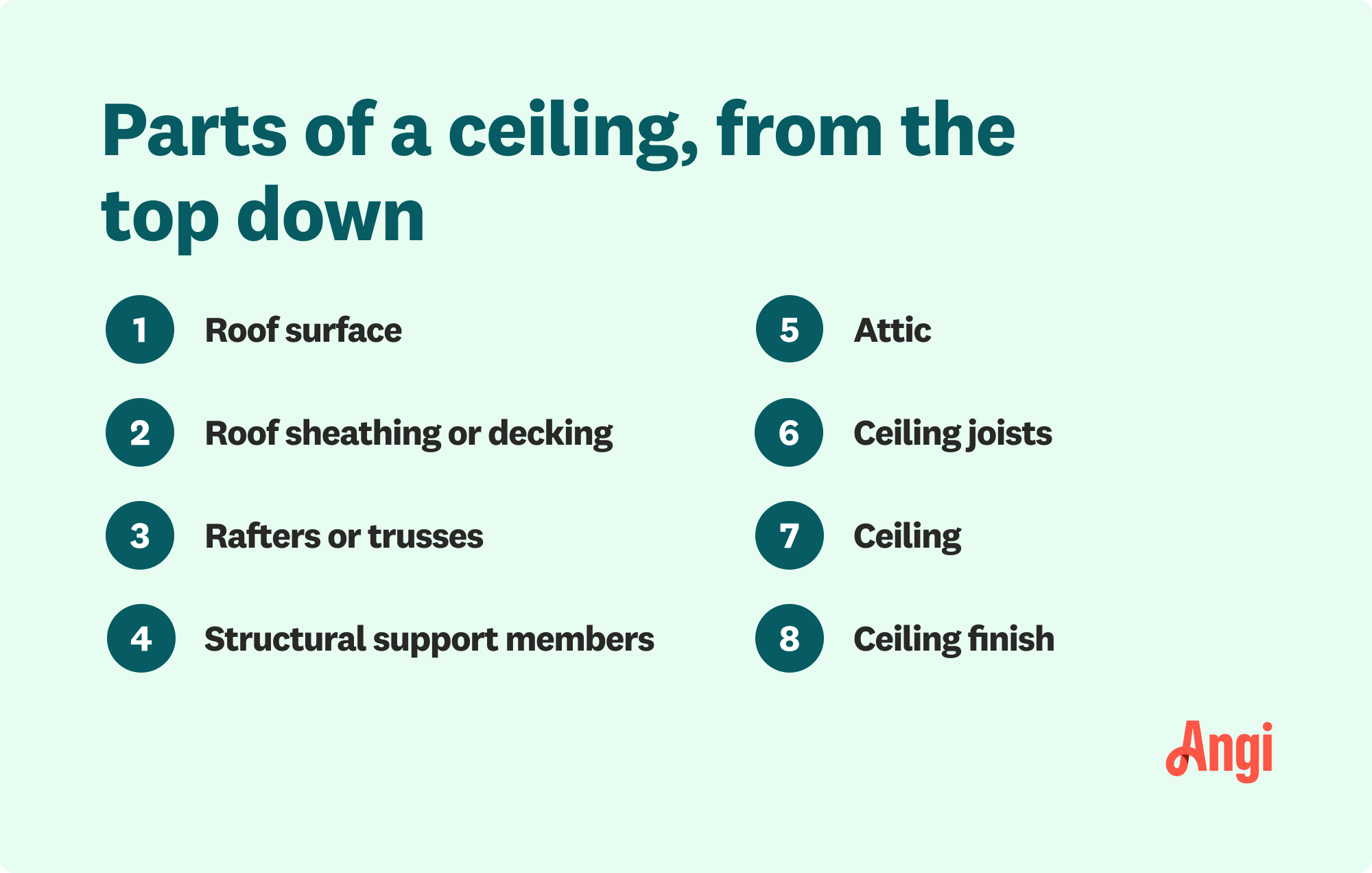
Adding a vaulted or cathedral ceiling is a common addition to many remodeling projects. Technically speaking, a vaulted ceiling is any ceiling that is taller than a traditional flat 8-foot-high ceiling. However, the visions that most people imagine when discussing vaulted ceilings are ceilings with a slope that doesn’t necessarily follow the roofline of the house and cathedral ceilings with slopes that do follow the roofline.
Your local home remodeling contractor can provide a list of options that fit your house's style. The final look of your ceiling may depend on the location of various mechanical equipment overhead. In cold climates, the thickness of necessary roof insulation can affect the final height measurement.
Vaulted and cathedral ceilings generally require that the roof of the house is a gable-style roof and that the room doesn't have living space above it.
Consider a shed ceiling for a home with a sloped roof, or if you desire a vaulted-type ceiling in one room that doesn’t span the width of a house. A shed ceiling is half of a vaulted or cathedral ceiling. Adding a shed ceiling during a whole-house remodel can create the perfect transition to a lofted room or space. If your remodel includes rebuilding the roof, adding a dormer with a shed ceiling creates extra living space that’s functional and cost-effective.
Often, the support structure under the roof of an old home consists of little more than roof rafters and thin ceiling joists. That’s a perfect situation for considering raising the ceiling several inches into the attic space in the form of a tray or cove ceiling. The job is possible if your home is built with roof trusses, too. It just takes more planning and extra work.
A tray ceiling has a central area that is higher than its edges. The edges square off into what appears as a crown. They meet the wall at a 90-degree angle to form the look of an inverted “tray.”
A cove ceiling is similar to a tray ceiling. However, the edges form a round or angular slope shape rather than a box-like look.
Creating an elegant look and feel is what curved-vault ceilings are all about. With barrel vaults being the most common, domed ceilings and groin-vault ceilings add style like no other ceiling type. Surprisingly, they aren’t much more complex to install than a standard vaulted ceiling.
If your home’s structure can accommodate a raised ceiling of any kind, you could incorporate a curved-vault ceiling design for a slightly larger price tag.
A barrel vault is a raised ceiling in which two sides of the ceiling form an arch and meet in the middle. The archway creates what looks like the concave inside of a barrel.
A groin vault is similar but includes adding more than two arching sides that all meet in the middle. Think of stereotypical ancient Roman architecture examples for ideas.
A domed vault is a distant relative of a cove ceiling. The main difference is that a domed ceiling incorporates a small central raised section instead of having most of the ceiling higher than the perimeter.
Considering the number of options and applications of curved-vault ceilings, many choose to hire a local qualified architect to maximize their home’s elegance potential.
Inspect the room where you want to raise the ceiling—does the ceiling already have rafters? Rafters are wood beams running across the ceiling. If the beams cross, your home has trusses that will make this project more expensive, so prepare for that. Trusses might also be a barrier to raising the roof at all, so if they are present, you should talk to a local structural engineer before moving forward.
Since raising a ceiling requires opening up walls, plumbing, and ductwork might need to be moved. Note where any exposed pipes or ducts are, which should help you trace their route inside the walls. Plastic pipes are much easier to reroute than metal ones; rerouting metal pipes and ducts will raise the cost of the project, and they might need to be rerouted underneath your home.
Electrical wiring usually needs to be removed when a ceiling is being raised. Complicated wiring that runs through the ceiling could make the project more complicated (i.e., longer to complete) and expensive. In simple cases, removing the wiring is not a big deal—it’s simply taken out and then reinstalled after the ceiling has been raised. If you’re not sure how complicated your wiring is, contact a local electrician to inspect your ceiling.
After understanding any complicating factors that will affect raising your ceiling, you can contact ceiling professionals near you to provide a quote for the project. Be sure to:
Get quotes from at least three companies
Check online reviews and recommendations from other customers
Ask neighbors, friends, and family members for recommendations
Ask the contractor about their insurance coverage, credentials, and licenses
Review photos of past work, specifically other ceilings they have raised
While much of the planning work can be done by you, it’s advisable that you hire a ceiling professional to raise your ceiling. It’s possible that you will need to raise your roof to complete this project, which is not something a DIY-er—even an experienced one—should tackle alone. Note that the final cost of raising a ceiling can range wildly, depending on your existing ceiling style, the ceiling you wish to have after the remodel, whether or not the roof needs to be moved, and the electrical wiring. This project could cost as much as $80,000.
Flawless finish and exceptional service. Custom Paint Jobs LLC is the only choice for me.
 Custom Paint Jobs, LLC
Visited my home for estimate same day that I called. Painted on Saturday. Great job. Good price!
Window Depot did an amazing job on my deck. I wasnt sure what I wanted to do, but their composite decking was affordable and will last a long time. I am excited to have family over, and I am no longer embarrassed by my backyard. Jeff and the ground crew were polite, respectful, and caring for...
 Window Depot USA of Central Ohio
The guys did an outstanding job and we had a great experience with CarifaTile. I appreciated that Joe reviewed the quotes with me and set expectations prior to the install. The crews showed up as scheduled and always left the areas clean upon leaving the house. We will definitely use...
 CarifaTile
Beginning with the estimate, Larry and Peyton were super helpful in getting my new condo's interior re-painted. Not only was the job well done, but also done in a super timely manner as promised.
 Five Star Painting of Plain City and Powell
BJ Trim Carpentry rescued me in the middle of a do-it-yourself project. I found I needed more expertise than I had...and more TOOLS! BJ Trim Carpentry responded quickly and completed what I needed expertly, politely and with a little humor!
This brownstone is historical and the carpentry work is very detailed. I was very happy to secure a company in NY and living in OH to complete the request. Wood work on this brownstone has been existing since approximately 1888 and West side did a GREAT JOB. I will not be able to...
 Westside Home Improvement
We had a great experience with Mark Rodgers Construction. We were in the process of seeking out estimates for possible foundation work for our front porch. Mark came out himself to provide the estimate. Turned out that the company deals mainly with concrete, so we wouldn't be getting an...
 Mark Rodgers Construction
Overall this experience was incredible! I looked on Angies List for a cleaning service because I was planning a holiday party and wanted to make sure we found a reliable, thorough and efficient cleaning service to make sure everything was perfect for the party since we had co-workers and...
From beginning to end our experience with Joe was very good. He was professional and prompt in his estimate for the job and worked hard to meet our schedule so that he could remove our old backsplash the day before our new countertops were removed and return shortly after they were removed to...
From average costs to expert advice, get all the answers you need to get your job done.
Looking to expand your ceiling and send claustrophobia running for the hills? This guide covers the cost to vault a ceiling and factors that impact estimates.
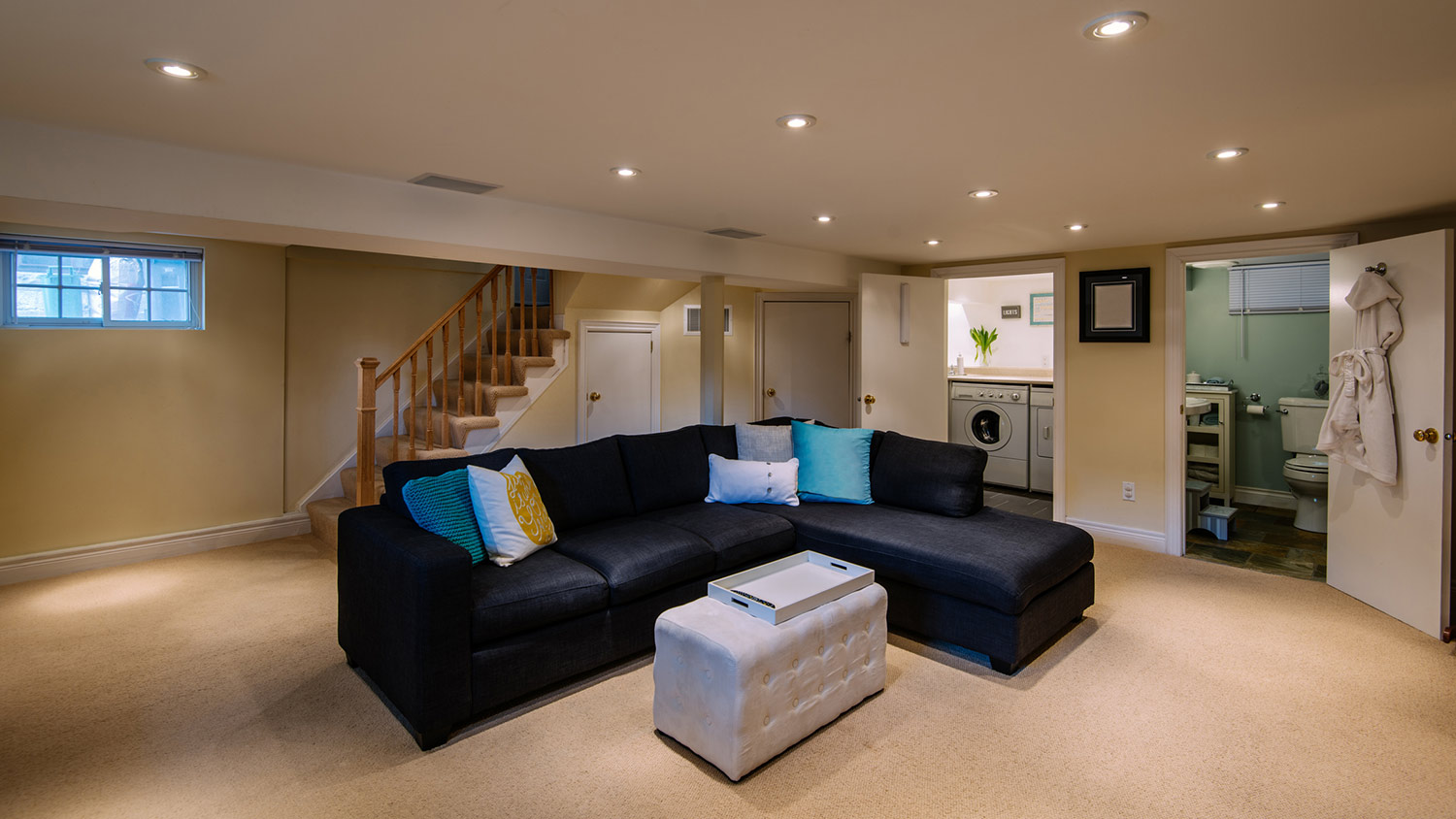
If your basement ceiling is low, there are ways to raise it. Learn more about the cost to raise a basement ceiling to be able to enjoy your basement and create a more usable space in your home.

Raising the roof in your home can add character and intrigue, as well as living space. Use this guide to learn the cost to raise a roof, as there are expenses you may not have considered.

A small ceiling leak could be the sign of a large problem and potential water damage. Use this guide to learn how to find, fix, and prevent a leaking ceiling.

A drooping, damaged ceiling isn’t just an eyesore; it’s also a potential safety risk. Learn how to fix a sagging plaster ceiling in this step-by-step guide.

With the right size, ceiling fans are an energy-efficient way to cool a room. Use this ceiling fan size guide to find the perfect model for your space.