
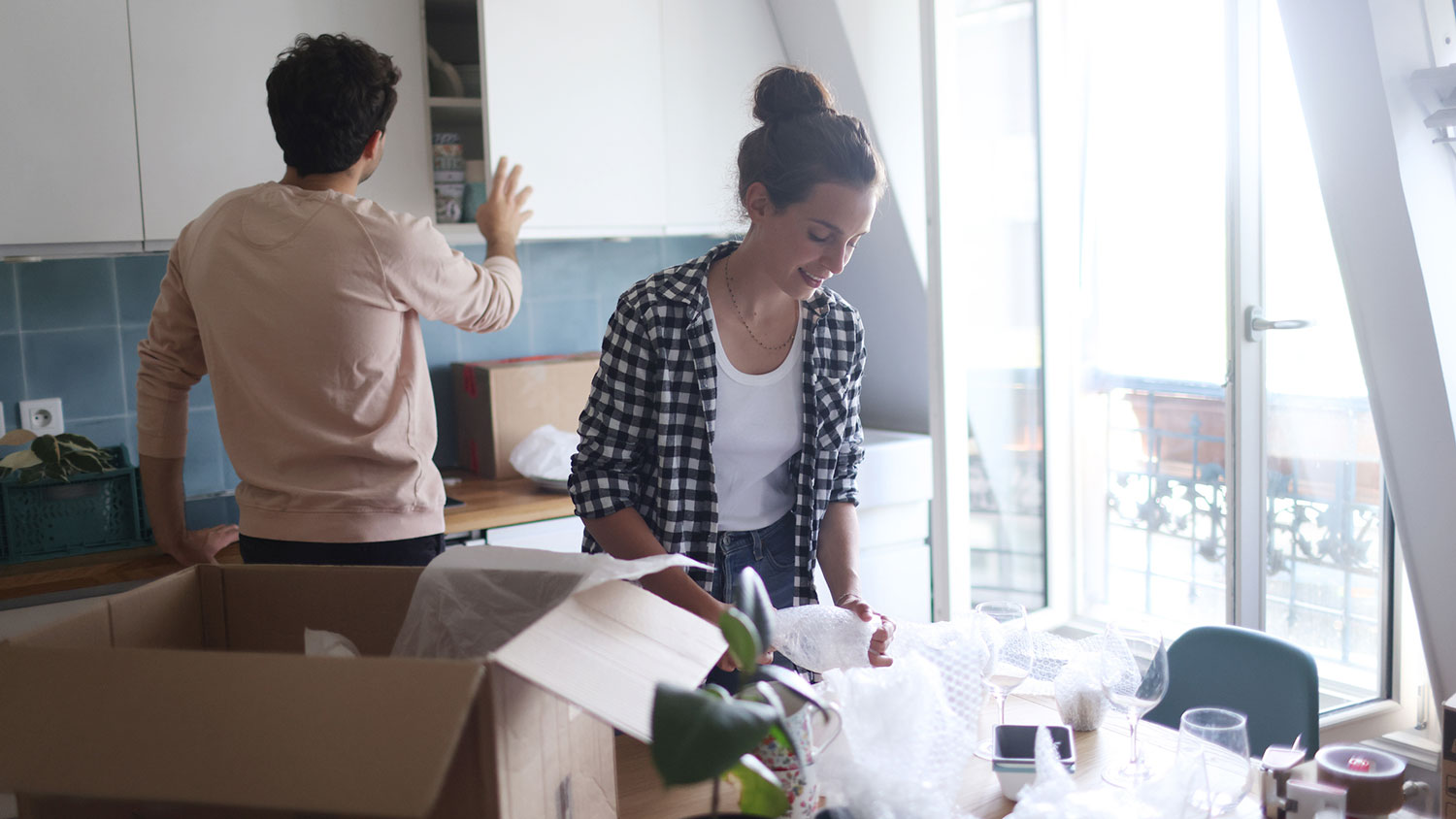
Packing dishes is often an overlooked part of the moving process. Learn how to pack dishes for moving in a safe and strategic way with this DIY guide.
Take your packing skills to another level for the biggest moves in your life

Packing moving boxes properly starts with lining the inside with bubble wrap, foam, or towels to protect your belongings and prevent box damage.
Your heavy items like books need smaller boxes to stay under 30 pounds per box, keeping them safe to lift and stack without strain.
Fill empty spaces in each box with packing materials or crumpled paper so your belongings stay secure and boxes don't collapse during the move.
Hiring a local moving company provides reliable support for specialty items like TVs and artwork, keeping fragile belongings safe from packing through transport.
Moving to a new home is a major project, and learning how to pack boxes for moving is an essential step in the process. For example, you’ve probably grabbed free paper boxes from where you can get them (we have a guide on tracking down moving boxes for these occasions). But with the big moving day approaching quickly, it’s time to pack everything properly. Here’s how to pack boxes for moving to help save time, prevent damage, help out your professional movers, and give your back a break.

Moving boxes can be fragile, so it’s best to add a layer of protection to the inside of the box before you start filling them up. That’s why it’s important to check moving supplies off of your to-buy checklist. If you have packing peanuts, sprinkle a layer on the bottom. If you’re using bubble wrap or foam wrap, place a layer on the inside that runs up the sides—that also works for towels and blankets.
It’s tempting to categorize your box by certain types of belongings, but that’s not always efficient. Instead, go room by room. For each room, focus on grouping objects by general size and weight. Ideally, you’ll want to create a section of “heavy” boxes and a section of “lighter” boxes when you’re finished. That makes them very easy to sort and stack when your moving day comes around.
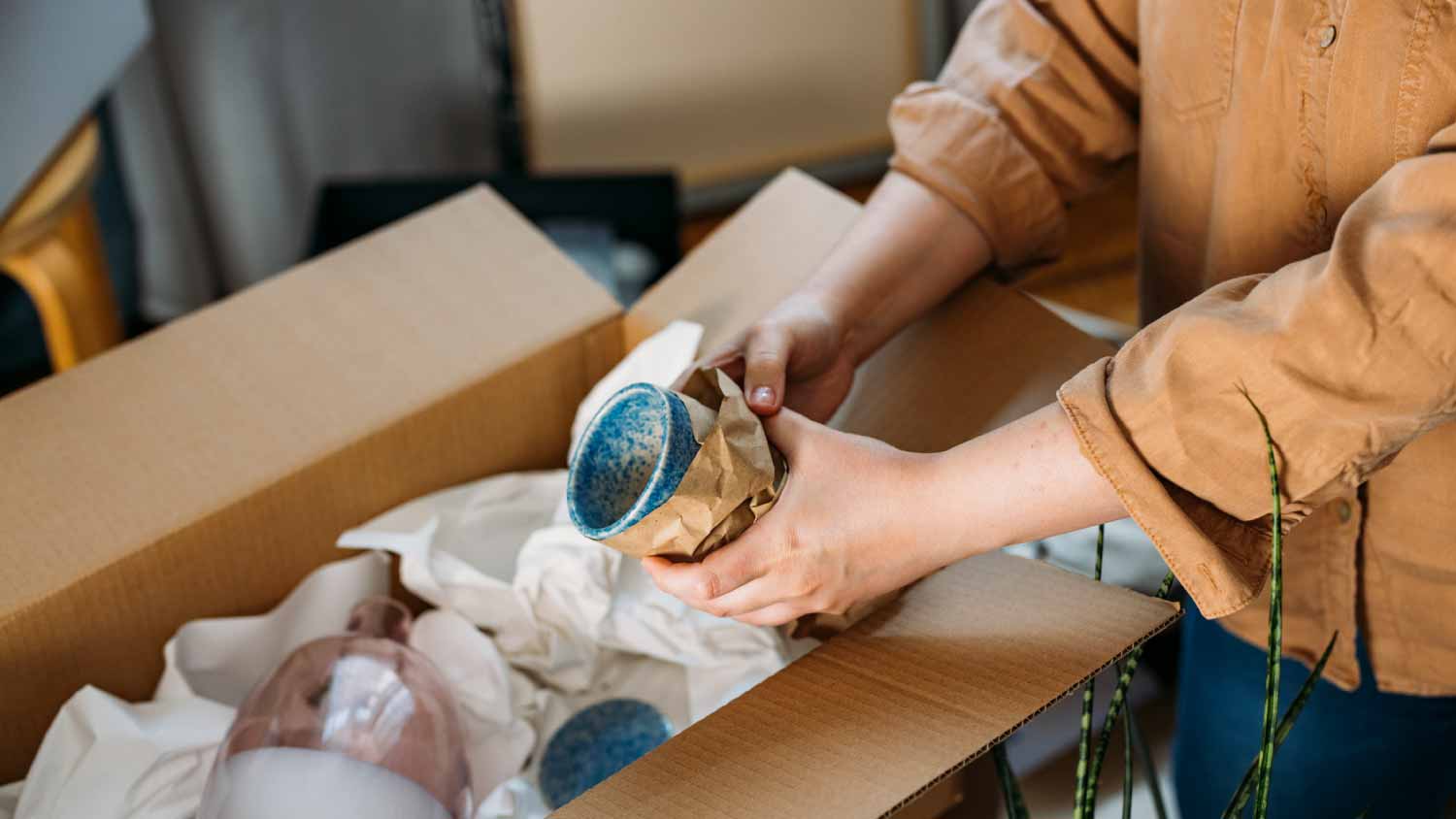
Certain belongings should be wrapped individually—but what exactly? Set packing materials aside to individually wrap fragile items like:
Glassware
Durable electronics like A/V receivers, speakers, and clocks
Candles
Picture frames
Fragile decor pieces
While packing may feel like a game of Tetris, you’re still likely to end up with empty spaces inside as you fill boxes up. Those spaces are bad news. They make it more likely for boxes to crumple and create room for belongings to jostle around and damage each other. So when you fill your box up nearly to the top, remember to fill up spaces as much as possible.
You have several options for filler materials. You can use packing materials like foam, but it may get expensive depending on how many moving boxes you have. You can sacrifice towels and old clothes for the job, but they may get damaged in transit. Old standbys like crumpled newspaper and magazine pages aren’t as easy to find in our digital age, but still provide an affordable alternative.
If you want eco-friendly packing materials, you have lots of options. Foam and wraps come in recycled or biodegradable forms, and don’t usually cost more. You can often distinguish them by their bright colors.
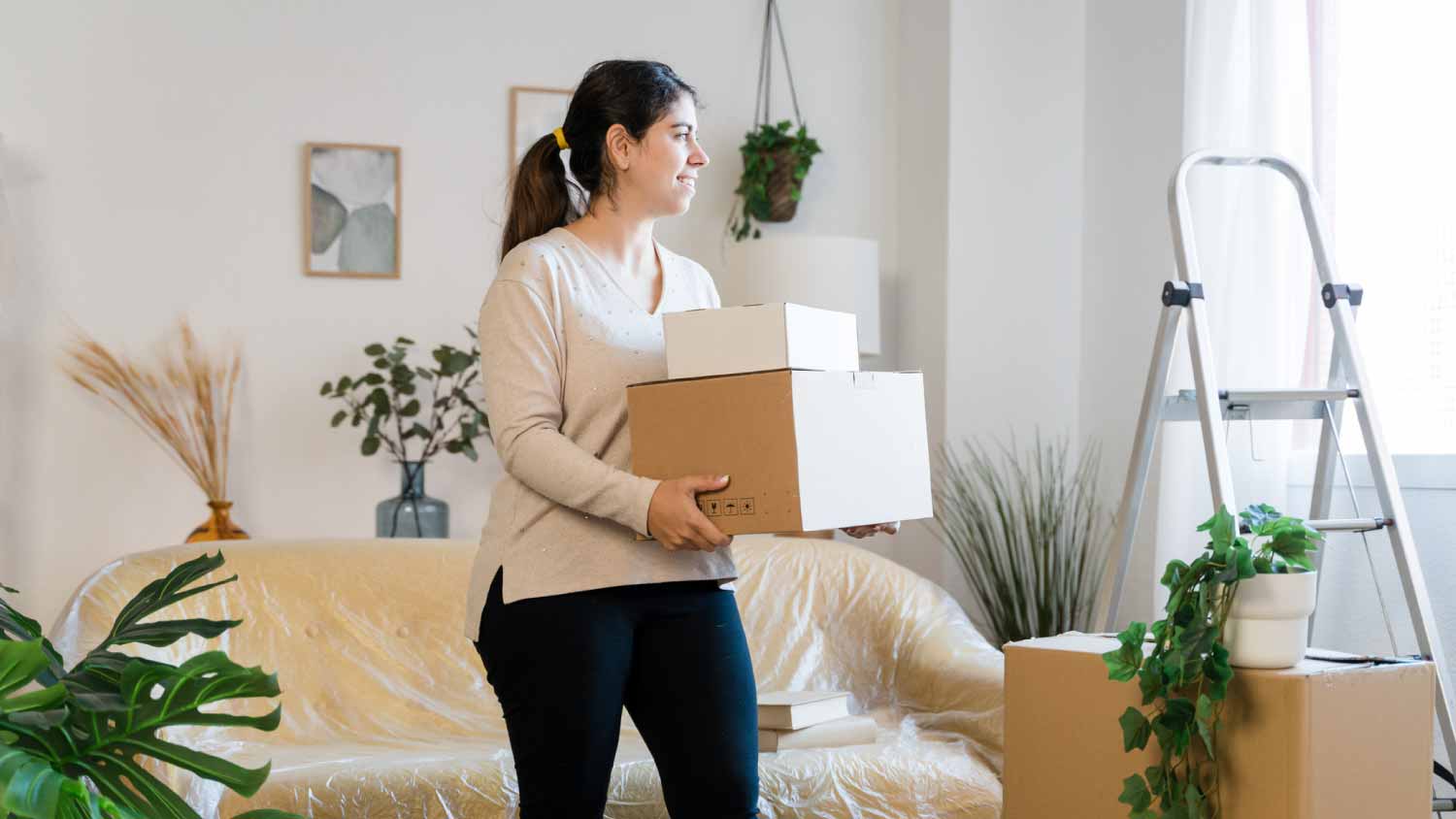
The perfect box weight is what you can safely lift and stack. But for general safety and structural integrity, don’t pack a box that weighs more than 30 pounds—about the weight of an average beagle or young toddler. Always use boxes that have handle openings for easier manipulation. When stacking, always place the heaviest boxes on the bottom and the lightest boxes on top: Now is also a good time to keep in mind lessons on moving floor protection, as pushing too-heavy boxes across the floor can damage it.
With that 30-pound weight limit, what do you do with very heavy items like books and files? You don’t want to pack a half-empty box if you can avoid it. One method is to get several different sizes of moving boxes, some smaller than the others for heavier objects. Ordering different sizes is simple through moving websites or online stores, but you may not be able to be choosy if you’re getting free moving boxes from friends or local stores.
As you move through drawers and cupboards, it’s inevitable that you’ll find small collections of odds and ends, like adapters, batteries, hair clips, bottles of sunscreen, crafting supplies, and more. We recommend buying a fresh box of resealable, gallon-size baggies for these occasions. Group up similar objects and divide them into baggies before packing them into moving boxes. This step will make unpacking much easier and prevent any unintentional spillage.
Along with managing empty spaces and adding box liners, don’t forget to watch how much you fill each box. Overfilling can be a serious problem: Avoid packing objects too close to the top of the box, even if weight isn’t an issue. Nothing should peek over the top of the box or interfere in any way with fitting the lid on top. That’s also true if you’re renting crates for packing, since you’ll still be stacking these crates on top of each other. Keep everything about an inch below the top edge of the box for the best results.

Once your box is filled and the lid is on top, it’s time to label it. Use a market to label the side of the box, not the top (you’ll be stacking them, after all). Use large, bold lettering so it’s easy to read at a glance. Indicate both the room that the box came from and exactly what’s inside. Add other details if necessary, such as its contents. Some homeowners like to mark multiple sides of a box so it doesn’t need to face a particular side to be readable
Taping is very important for heavier boxes and longer moves. Taping helps secure the box and greatly reduces the chances that it will collapse or that the bottom will fall out when people are carrying it.
To begin, use packing tape on the bottom of the box and tape in an “H” pattern. One strip should go down the middle and protect the most vulnerable seam (run the tape a few inches over the sides for extra support). The other two strips should go on either end, securing the edges for transport.
If your boxes have a secure lid, you may not need to tape the top. If you are using boxes without a lid at all, tape the top as well, using at least one strip to properly secure it.
Our tips work great for the average moving box that you can pack with nearly anything. But some belongings don't fit well in the average moving box, including hanging clothes or TVs. Luckily, there are customized boxes for packing TVs, paintings, décor, and more. If you have lots of these belongings, you may want to consider hiring professional movers near you to pack them correctly and transport them safely to your new home.
My furniture was delivered today, and the whole move went smoothly. The final cost matched the original quote with no extra charges. The movers were friendly, professional, and handled everything with care. Even after the long distance, everything arrived in perfect condition. I’m very happy...
 Moving of America
Showed up on time and cleaned carpets well, but didn?t move furniture.
 Voda Cleaning & Restoration of Columbus
A reliable team for moves across state. My switch to a new place needed careful lifting through tight hallways. The movers checked the doorway first, then carried heavier pieces with slow, controlled movements. Their patience helped prevent damage, and I?d choose them again.
**Would rate a 0 if i could** NEVER USE THIS COMPANY!!!!! They shattered my tv console and dresser, lost a mirror, and never finished the move. The broken furniture cost me over $600 to replace. They left me with 6+ hours of personal labor moving my 1BR apartment, when I was quoted a FULL...
 All My Sons Moving & Storage
I could not have moved without the help of Jen Stover! I was in my house for nearly 20 years, so the thought of clearing it out while working full time was overwhelming. Jen takes great joy in sorting and organizing while asking the hard questions with patience and compassion. Jen is...
 Go and Stow Home Organizing
Excellent experience for me! They helped me a lot with my move. very reasonable price. Good communication with the office manager is excellent.
 Goodview Moving and Storage
I was concerned about my possessions safety throughout the move but Bridge View Van Lines took all necessary security measures to make sure everything arrived in mint shape I am really appreciative of their effort and commitment They made my long distance move seem simple
 Bridgeview Van Lines
This moving company is the best in Columbus, Ohio! They rescued me when my movers didnâ t show up. Do not ever use Plane Movers! They never showed up for my move, claiming that I never signed the contract. They didnâ t call me to follow up, communication was awful. The people that work for...
 All My Sons Moving & Storage
Ozie and Tyquese were great and worked fast. It was a good move
 All My Sons Moving & Storage
Just moved from PA to Columbus in a studio apartment and needed help with some heavy furnitures because I couldn't do it alone. I called Hyremovers and they did a great and timely job and also left my apartment walls intact. Great service!
From average costs to expert advice, get all the answers you need to get your job done.
Packing dishes is often an overlooked part of the moving process. Learn how to pack dishes for moving in a safe and strategic way with this DIY guide.
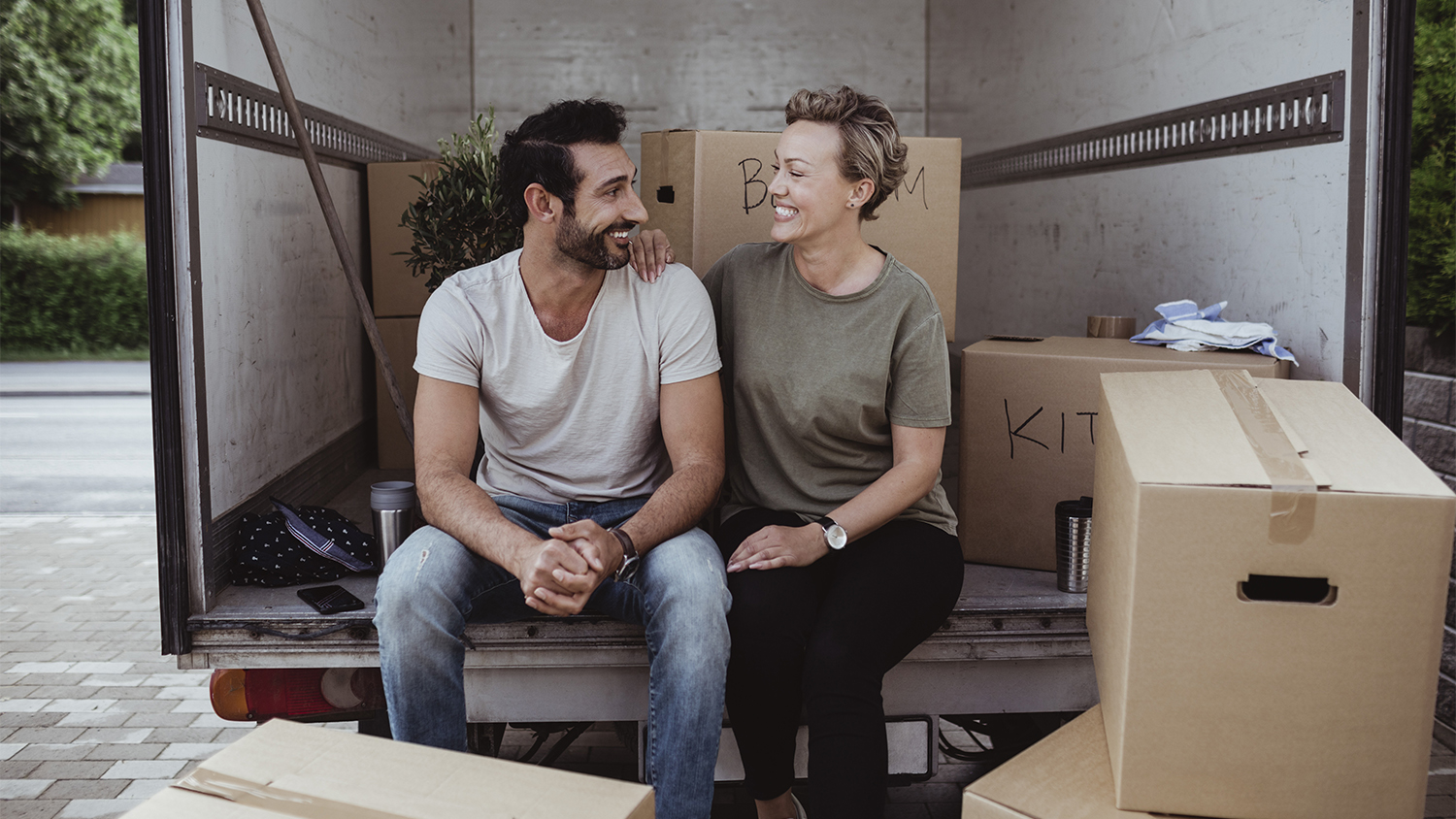
Packing a moving truck doesn’t have to feel overwhelming. If you’re planning to move soon, these seven tips will help you pack your truck like a pro.
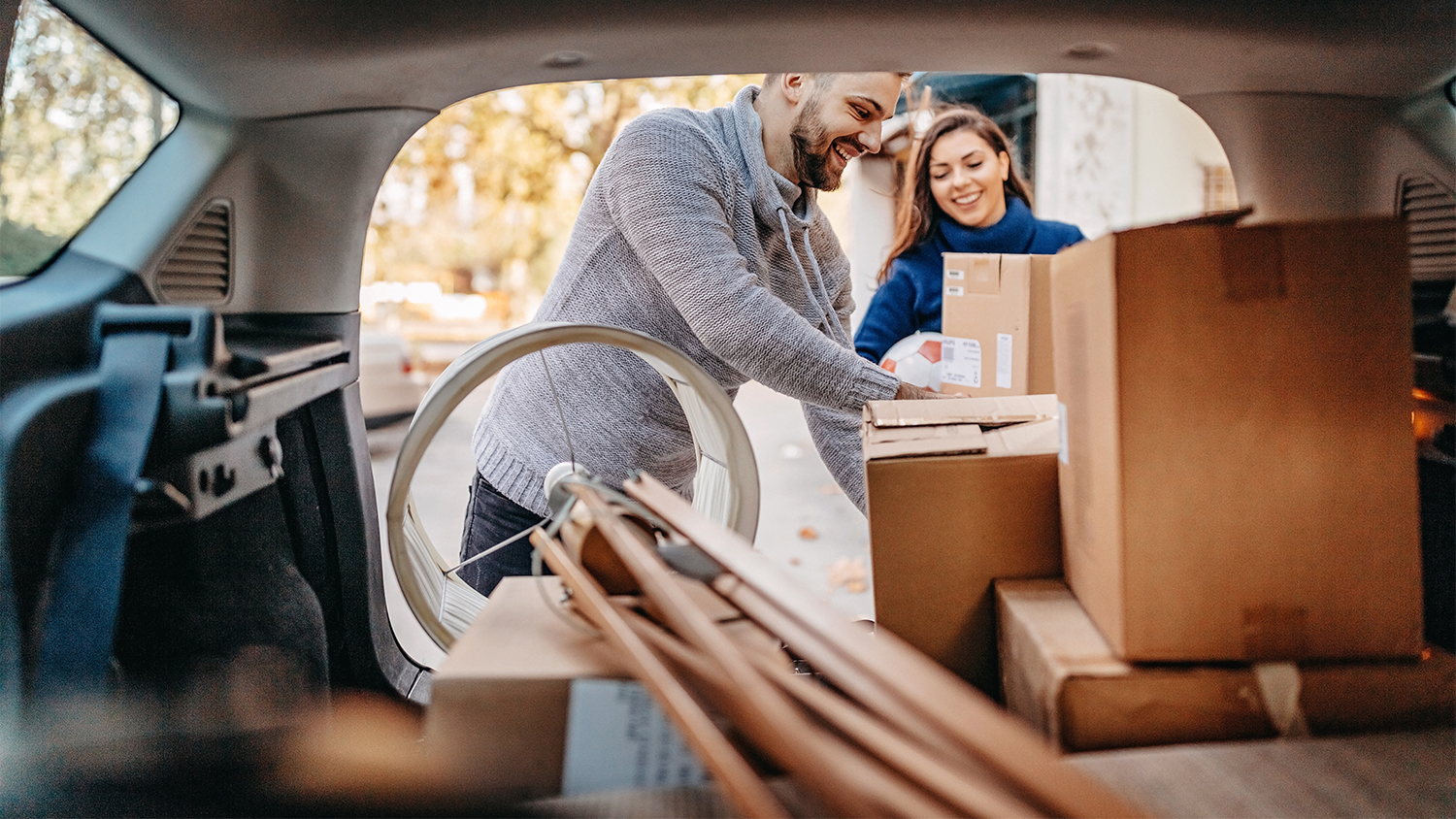
Moving your belongings in a car can be stressful. Here are eight tips to help you maximize storage space and move all your possessions safely.

Are you packing your belongings but unsure how to get boxes for moving? Read on to learn eight ways to track down boxes of all sizes to help you move.
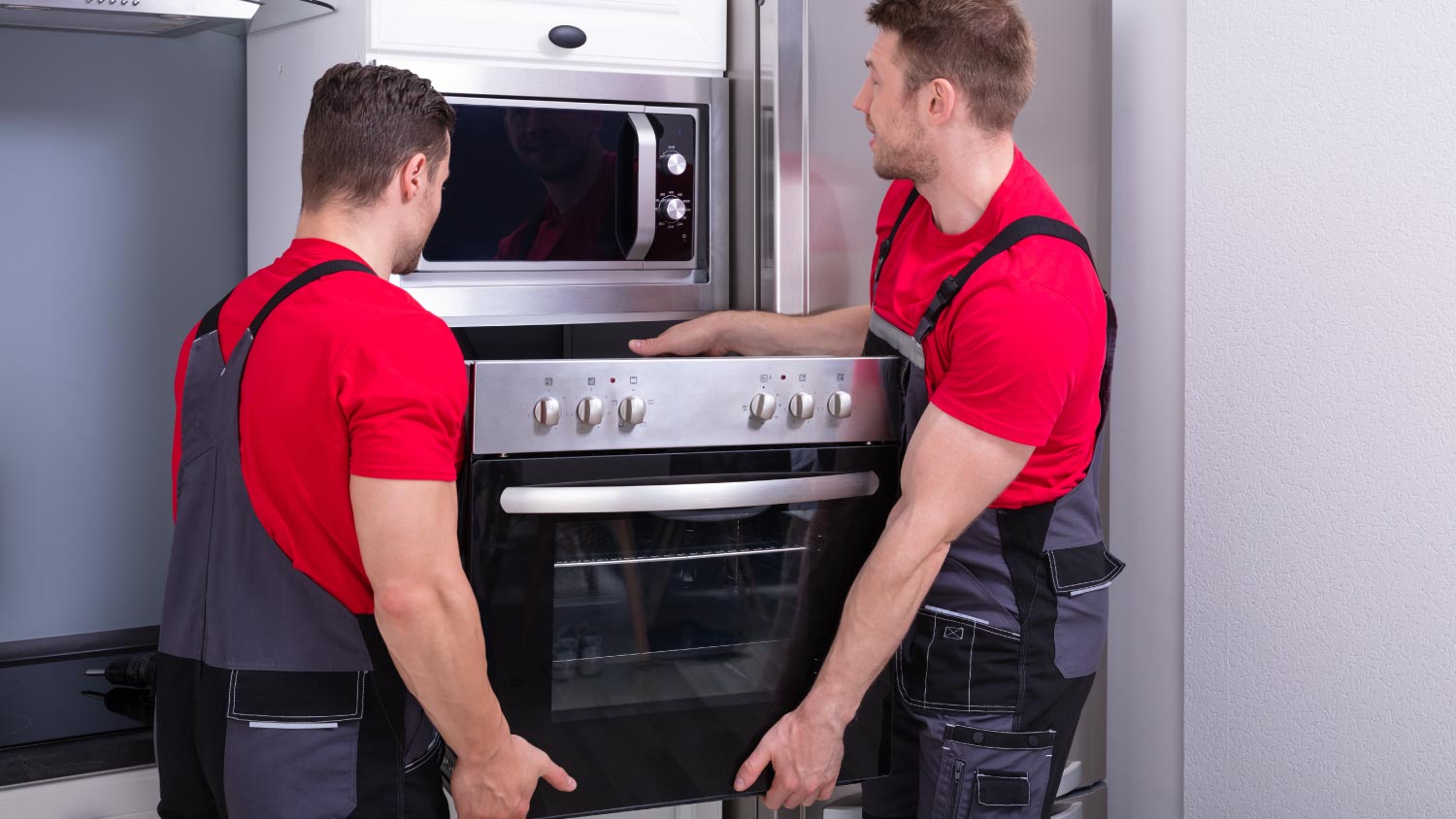
If you’re wondering how to pack appliances for moving, these tips will set you up for success whether you plan to DIY or hire professional movers.
The pictures in your home can be high-value items—money- or sentimentality-wise. Learn how to pack pictures for moving to avoid frame or glazing damage.