
Water softener repair costs can add up, but they’re almost always worthwhile. Use this guide to see what your project is going to cost before you get started.
Don’t let a clog make your day—or your water—harder

A clogged water softener shows up when you notice soapy spots on dishes, low water pressure, resin beads in your faucets, or hard water symptoms like dry skin.
Water softener repair costs range from $170 to $980, so addressing clogs early helps you avoid larger repairs or a full system replacement down the line.
You can fix a salt bridge by tapping the brine tank with a rubber mallet, breaking up the hardened crust, and adding fresh salt to restore normal operation.
Hiring a local water softener repair professional provides reliable help with resin bed replacement and brine line clogs, keeping your system running smoothly without the guesswork.
Hard water is a nuisance that water softeners prevent—at least until they get clogged. There are a number of different ways a plumbing feature like this can get backed up, from salt buildups in the brine tanks to a damaged part flooding your faucets with purifying resin beads. But how do you tell where the clog is coming from, and, more importantly, how do you solve it?
This guide breaks down all the different ways to discover and deal with blockages, so you know how to fix a clogged water softener yourself.

A water softener is a device that filters incoming water through a purifying system that removes hard minerals and other impurities before they flow through your faucet. There are many small parts of a water softener, but two major components are the brine tank and the resin tank. Water is directed into the resin tank, where the resin beads attract and connect to minerals that cause hard water, like calcium, before finally being ushered into your home.
The brine tank is filled with salt and water and rinses the resin beads once every one to three days to recharge their lost sodium and potassium particles in a process known as regeneration, which allows the whole system to continue working without the need to replace the beads each and every time.
But why should you consider getting one? There are many benefits to having a water softener, from making it that much more likely your pipes won’t clog from a mineral buildup to being gentler on your laundry, hair, and skin.
The cost to install a water softener ranges from $200 to $6,000 and what you’ll pay depends on the size, style, and capacity of the model you choose. You can save between $150 and $1,000 by going the DIY route—but at the risk of improper installation and unintended plumbing damages.
Not sure if your water softener is clogged or not? Keep an eye out for these clues.
Soapy spots on glasses: The minerals in hard water create the effect of soap stains on dishes and countertops.
Low or no water pressure: There are plenty of issues that cause low water pressure, like a problem with your water supplier, so make sure it’s not something else before assuming it’s your water softener.
Resin beads coming through faucets: If you spot small, sand-like particles in your water or the water is a different brownish color, this could signal an issue like a ruptured resin bed.
Presence of hard water: If your showers leave your skin drier than normal or your hair more brittle, combined with lower water pressure, that could be because your water softener isn’t doing its job.
There are several different kinds of water softener clogs, each requiring a specific fix. These DIYs are achievable but don’t hesitate to hire a water softener pro near you if you have any doubts.

Salt bridges form when salt crystals link together to form a hard crust. While it can happen from any kind of salt, you’re less likely to experience this issue by using a higher-quality water softener salt with fewer impurities. If you’ve determined that this is your water softener problem, here are the next steps to take.
Turn off the water supply.
Tap a rubber mallet along the exterior of the brine tank, moving from the bottom up to loosen the salt masses within.
Once you hear a hollow sound, strike the tank with more force to break the bridge.
Add new salt to your tank, restart the water supply, and your softener will return to normal in two to three days.

Finding resin beads or noticing a change in color in your water supply is a sign that the resin bed in your water softener has been disrupted. That could be because the resin beads have lived out their lifespan and are no longer regenerating. Instead, they are disintegrating and slowly entering your water supply.
It could also be due to damage to an interior water softener part that allows the beads to flow into your home with the treated water. Here’s what you need to do if this is your issue.
Turn off the water supply.
Detach the tank from the pipes and the control head and the attached manifold tube from the tank.
Replace any broken parts, like a cracked basket at the bottom of the manifold tube, which normally prevents resin from flowing out with your softened water supply.
Empty the resin tank of water and the remaining resin beads. Use a hose to rinse out bits that are stuck to the tank interior.
Return the manifold tube to the tank and seal the open top of the tube with duct tape.
Pour in five inches of gravel, then fill the tank up to 15 inches below the top.
Remove the tape and reattach the control head.
Reattach the tank to the pipes and the brine tank.

Salt has a tendency to harden and form a crust over time, even in the smallest of spaces—like in a fine brine line pipe. When that does happen, the blockage prevents the brine from traveling to the resin tank, in turn inhibiting the regeneration process of the resin beads. Here’s how to take care of this element if you’ve determined it’s the source of your problems.
Locate and disconnect the brine line that connects to the control valve.
Use a can of compressed air to fit into the tight opening and blow out the salt buildup within.
If you’re still dealing with a blockage after all that, it might be time to replace the brine line.
While it’s possible that a water softener will clog at some point in its lifespan, that’s not written in the stars. Here are some steps you can take to make sure it always runs as it should.
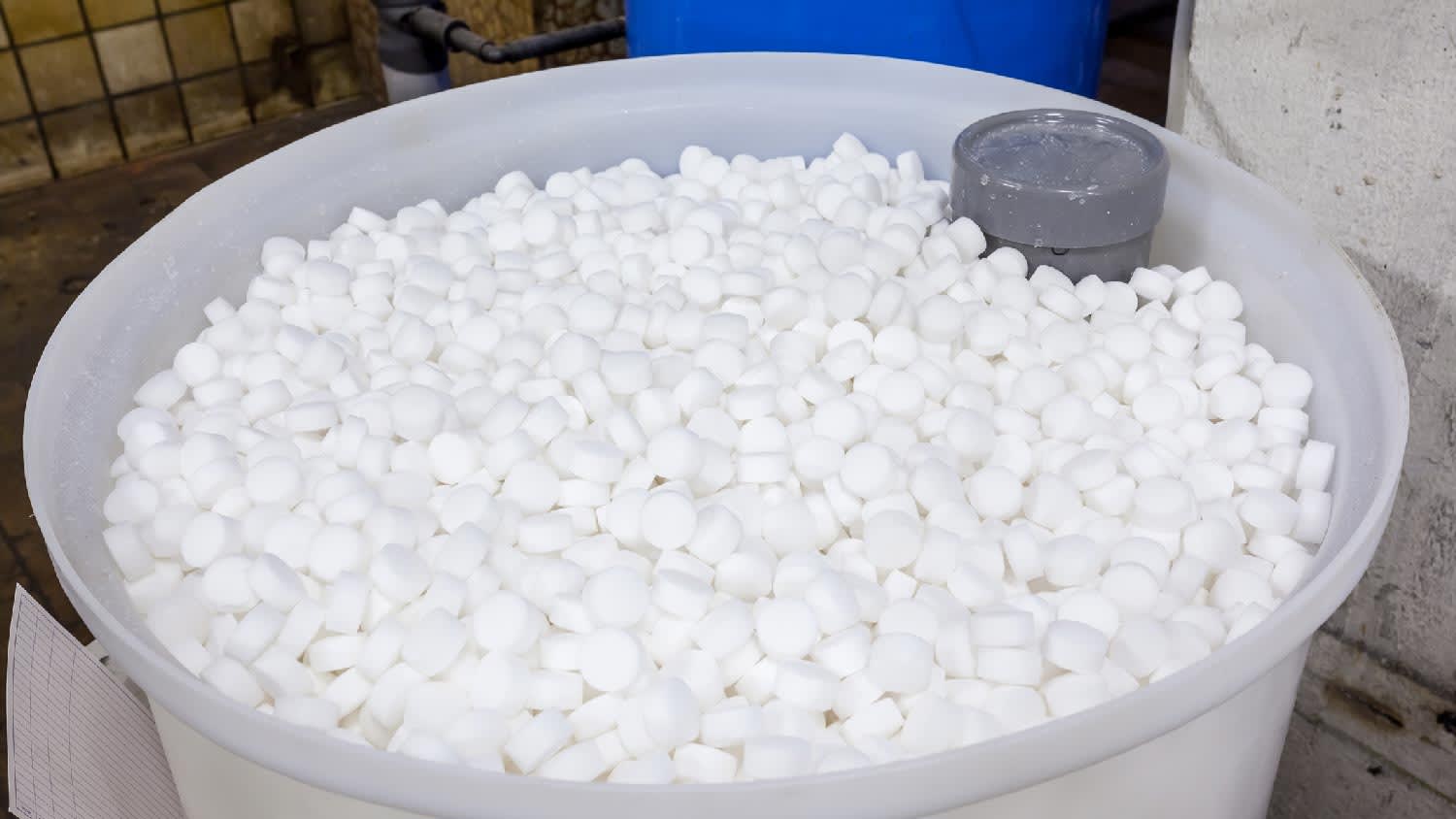
There are many different types of water softener salt, including pellets, crystals, rock salt, potassium chloride, and solar sea salt. In general, the best options are those with the least impurities or additives. Most of those options come pretty close to perfection, but pellets are often ranked at 100% pure, meaning they’re the least likely to cause problems down the line.
The ideal salt level for a water softener is about a half-full tank, though a quarter-full tank will also do the job. Avoid letting it fall below that minimum to guarantee a proper regeneration is always possible.
Learning how to clean a water softener is simpler than you might think, and doing it every four months is a good way to keep it in working order. Plan to do a task like this before you go to bed or when you know you won’t be using much water, because the softener will need about two hours to recharge after cleaning. Remove the cap from the brine well and pour in an entire container of water softener cleaner, press the recharge button, and check back in two hours.
Resin beds don’t last forever, and at some point, you’ll probably need to replace yours as instructed above. You’ll know it’s time if you spot degraded resin beads in your water supply or if you suddenly have hard water.
Some water softener clogs—like a salt bridge or a blocked brine line—are easy to unclog yourself. However, replacing a resin bed is a bit harder, and if you don’t do it right, your water softener won’t work properly.
Water softener repairs cost between $160 and $980, but the good news is that smaller fixes, like replacing a resin bed, are on the lower end of that scale. Learn who repairs water softeners so you can find the right pro in your neighborhood.
If you’re good people wanting to do business with good people, hire Matt. He is a consummate professional and utterly competent. He installed a water heater in my home at a price that beat competitors by hundreds of dollars with a promise to support the unit for its life (even after its 6 yr...
 Greene's Plumbing Services
As usual with ECO, tech Jordan was outstanding, very professional, very knowledgeable, and very thorough with repairs made to tankless water heaters. Very highly recommend ECO!!!
 Eco Plumbers, Electricians, and HVAC Technicians
Did a great job replacing the ice maker and water regulator on my refrigerator. He was quick and thorough, very friendly and professional. If I needed a heart transplant I'd want him to do it!!!
We had a gutter blockage that was causing water to sheet down the side of the house and ultimately it started to come in at a window (need mortar people next). Called around 7:30am, and he responded by 8am. He was able to come out the same morning and do a look over and clean out. He also...
Scott checked our large crawl space for mold and water infiltration and recommended a viable solution. The crew was efficient and they cleaned up well after the job. The job was expensive but I am confident that I won't have to deal with the problem again. Highly recommend.
 AdvantaClean of Dublin
They were the most through inspecting the water system in my house. Even going the extra mile to get the water professionally tested for contamination.
 Hague Water Conditioning, Inc.
It went very well. The drain is absorbing all the access water. I had other estimates a year earlier and Hughes was right on. I will use them, again.
 Hughes Construction Co
Very well. Have already used them again to fix hot water heater
 Service Olympians
The Paul Davis team was very professional and went the extra mile to take care of my water damage. The work was very high quality and done in a timely manner. I would highly recommend their services.
 Paul Davis Restoration
Honesty is hard to find in business today. GBR met me today at a 3 story building regarding my being told that I needed to tuckpoint the brick because of water leaks. The owners took the time to evaluate the situation and advised me that I did not need their service at all. They pointed me...
 GBR Masonry Inc
From average costs to expert advice, get all the answers you need to get your job done.
Water softener repair costs can add up, but they’re almost always worthwhile. Use this guide to see what your project is going to cost before you get started.
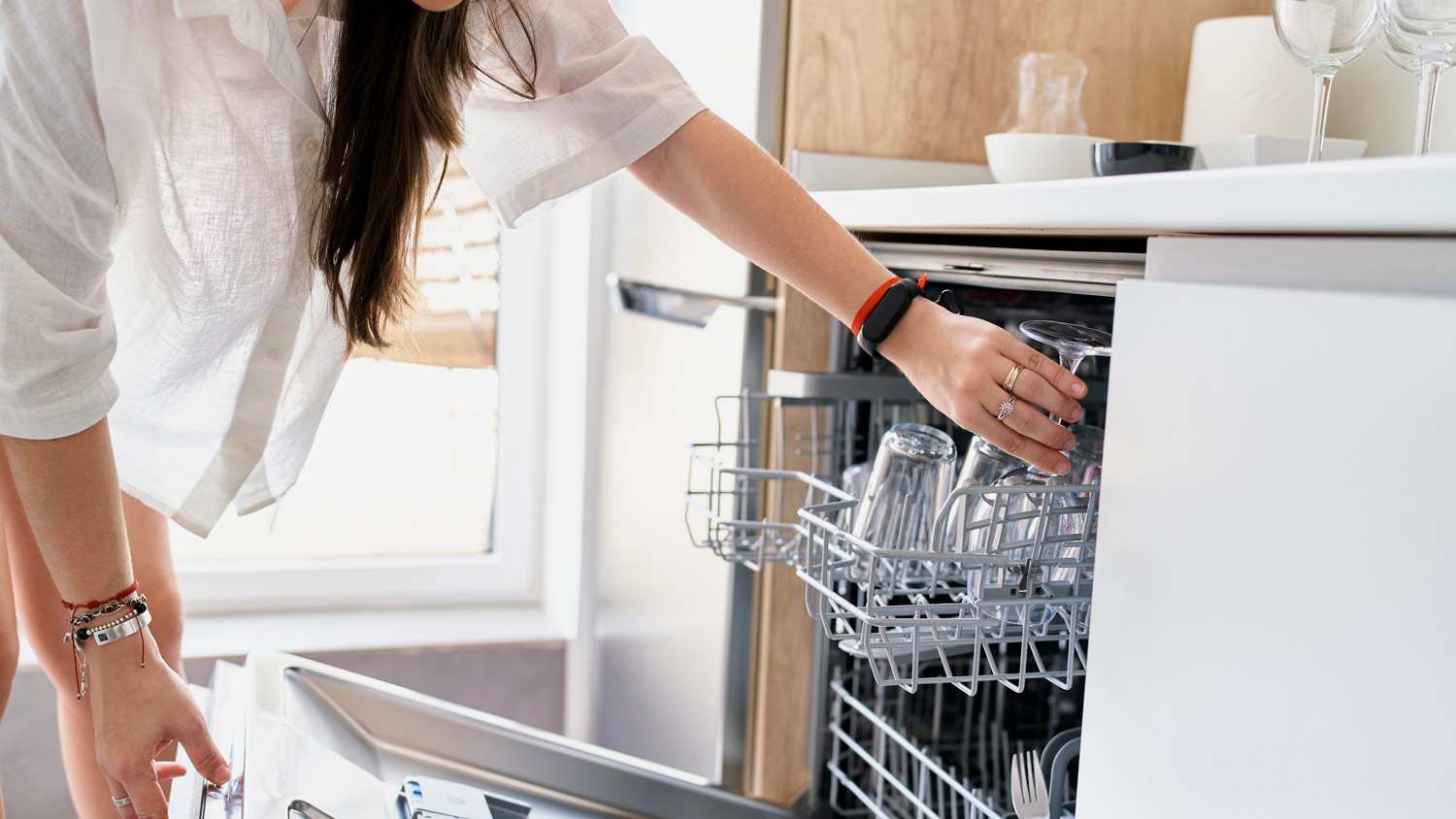
A clogged water softener can reduce the system's efficiency and your water pressure. Here's how to identify problems with yours and what to do about them.

Why does my tap water taste salty? Common reasons why softened water tastes salty range from a broken water main in your city's water supply to debris buildup in your brine tank.
Who repairs water softeners? You should be able to hire water softener repair and installation companies or plumbers to fix issues with these appliances.
Water softeners can face several problems during their life spans, including blockages, timer problems, and more. Read on to learn about water softener problems.
Water softeners last up to 25 years, but maintenance, usage, and other factors can affect the life span. Learn more about how long water softeners last.