
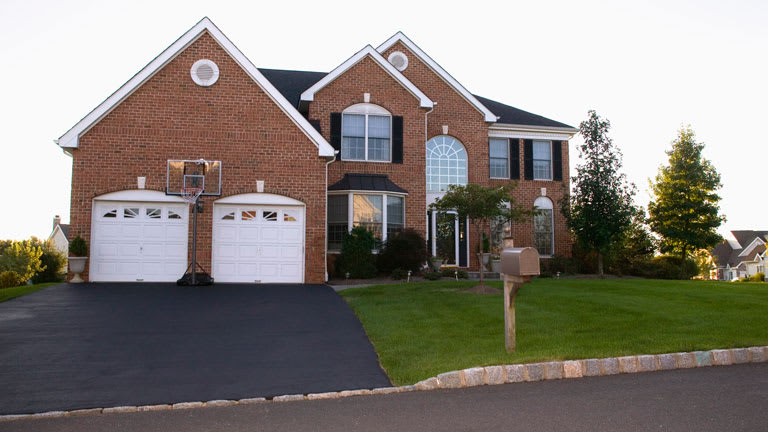
Asphalt driveway repair costs account for everything from hairline cracks to complete overhauls. Learn what to expect from your asphalt repair bill.
Ditch the alligator cracks and potholes with a little TLC

Repairing your asphalt driveway as soon as you notice signs of damage can keep it in good condition for longer. Fortunately, many minor asphalt repairs can be handled DIY-style. This guide will walk you through the steps to do asphalt repairs like a pro.
Knowing how much asphalt filler you need for the project is key to successfully repairing your asphalt driveway. If you don’t have enough filler, you could end up rushing to the store while your partially filled driveway cures—leading to an uneven repair.
A 50-pound bag of asphalt filler covers around 6 to 7 square feet if you’re filling your driveway at a depth of 1 inch. Most driveways range from 200 to 800 square feet, so if you have a large driveway that needs several cracks or holes filled, you could need multiple bags of asphalt filler.

Before you can repair your asphalt driveway, you'll need to clean the surface in preparation. It's important to remove any plants, dirt, and debris so that any repairs properly adhere to the surrounding asphalt.
Use a putty knife to dig plants out of the cracks and a shovel to remove plants from larger potholes. A stiff broom or leaf blower can remove debris from the surface, while a pressure washer or garden hose and some water can really get in there to remove heavy or stuck debris in hard-to-reach areas.
If you have severely damaged sections of asphalt, but the majority of your driveway is in good condition, you’ll need to remove the weak spot to repair your driveway. To do this, use a gas-powered circular saw to disconnect the old asphalt.
Any asphalt debris from the cleanup process can be recycled. Take your old asphalt pieces to an asphalt recycling company, or contact a waste removal pro near you to remove large sections of asphalt so that it can get repurposed.

You can fill simple linear cracks less than 1/2 an inch using cold-pour crackfill. Hot mix asphalt is best for cracks larger than 1/2 an inch. Follow the instructions on the fill to know how to use cold patch asphalt fillers correctly.
If your asphalt cracks look like scales, they are called alligator cracks. These scaly intruders need to be removed before you can repair the driveway, as each individual piece is at risk of shifting and breaking again if you simply cover the cracks with filler. Repair the cracks using the patching method: Remove the loose pieces with a circular pavement saw first, then fill the hole with asphalt cold patch filler.
To patch a pothole, fill the hole with a pothole fix patch until it’s flush with the old asphalt material. Avoid overfilling or underfilling, as this can make your pavement bumpy and cause it to crumble faster.
Large potholes need a cold patch asphalt filler to fill them, but if you want to increase the stability of your asphalt, consider topping it off with hot mix asphalt as the top layer. This technique, called asphalt overlay, helps harden the surface layer of the repaired asphalt better than cold patch asphalt alone.

If you’re repairing a hole, you must compact the asphalt using a tamper or vibrating plate compactor. A tamper should get the job done for smaller holes, but large surface areas are better off using the vibrating plate compactor to tamp down the filler and keep it even.
Once you’ve compacted the asphalt and given it a smooth, level surface, wait for it to cure. The typical cure time is between 24 and 48 hours, but to be on the safe side, follow the instructions on your particular filler.
After your asphalt has cured, there’s no threat of sealing moisture inside the asphalt and weakening it. The best driveway sealer for asphalt is an asphalt emulsion sealer, an oil-based driveway sealer, or a latex-acrylic sealer. Coal tar sealers are banned in some communities due to the release of volatile organic compounds (VOCs), whereas water-based and fast-drying sealers have a shorter lifespan, making them less effective.

Now that you have the right sealer for your driveway, go ahead and apply the sealcoat over the repaired section—or all of your driveway if your entire driveway needs a new sealant. To seal your driveway cracks, use a wide paintbrush to cover the driveway with a thick, even layer of sealant. If you’re covering the whole driveway, use a broom or squeegee to spread your sealant evenly.
Applying sealcoating can be a laborious process, so consider hiring a driveway sealcoating pro near you to complete this task if you’re sealing a large driveway.
Most sealants need to dry for around eight hours before you can use the driveway or walk on it. However, allow your sealant to dry according to the suggested time on the instructions.
Some sealants require you to apply another, thinner layer over the top one for added protection. If the manufacturer recommends doing so, follow the instructions and apply a second layer of sealant with a broom.

If you applied a second layer of sealant, wait for it to dry based on the instructions, and voila. Your driveway is as good as new.
Knowing what you're doing when repairing asphalt can make all of the difference in how effective your repair is in the long run. Here are some tips on what to watch out for when repairing asphalt:
Don’t skip the preparation. If you don’t clean the asphalt fully, then the filler won’t adhere to the surrounding asphalt well, causing it to crumble or crack faster.
Consider the type of repair. Linear cracks are easier to fill than alligator cracks, while potholes require a different approach. Use the correct method for repairing your asphalt for a long-lasting repair.
Check the weather. If you have rain, cold temperatures, hot temperatures, or wind in the forecast, wait for clear, mild weather to do the repair.
Apply the correct amount of filler. Applying too little or too much filler can shorten the lifespan of your repair, so make sure that you follow the instructions that come with the filler for a level application.
Wait for it to cure. As tempting as it is to step on or drive over your newly repaired asphalt driveway, you should wait the full duration of the product's cure time to allow the asphalt to dry.
Don't forget the sealant. Adding a sealant to your asphalt can help prevent it from cracking prematurely. However, wait the correct amount of time for the asphalt to cure before you apply the sealant, as this can trap moisture and promote cracks.
Since correctly repairing asphalt can be challenging, we recommend hiring a local driveway repair pro to avoid common mistakes.
The best time to repair asphalt is during the spring or fall, when it's sunny and clear skies are in the forecast for the next few days. 70 degrees Fahrenheit is the ideal temperature for paving asphalt. If temperatures are in the 50s or lower—or it’s windy outside—the asphalt may cool and harden too quickly, making it harder to compact larger repairs.
Likewise, hot weather in the 90s or above can make it difficult for your asphalt repair to cure properly. UV rays and heat are a bad combination because they can dry your asphalt's binding agents, making the asphalt more brittle and susceptible to breakage.
In some cases, your asphalt driveway’s condition is too poor to repair. You’ll need to replace an asphalt driveway if:
It’s over 15 years old and needs constant repairs
There’s severe damage
The driveway has very large potholes
There are cracks wider than 1/4 of an inch
The average cost to replace an asphalt driveway is $5,200, but prices can range from $3,100 to $7,400, depending on the size of the driveway, the type of asphalt, and the terrain.
Minor asphalt repairs, like cracks smaller than 1/4 of an inch, are simple DIY projects that you can knock out over the weekend. Other than the tools to clean your asphalt driveway, some cold-pour crack filler, a sealant, and a squeegee, you won't need many tools or materials to get the job done on your own.
But if your asphalt driveway has large potholes or wide cracks that require a gas-powered street saw, it may be easier to hire a local asphalt repair company. Street saw rentals cost around $100 to $200 per day, so when you add that to the supplies and any tools you don’t already have, it may be more cost-effective to hire a professional. This can help ensure your repair is long-lasting, as a pro has the skills to correctly prepare, repair, and seal your asphalt driveway.
Archie did a good job cleaning up the driveway before he laid down the sealer. It looks good. He was gracious and even helped me bring up my groceries. His rate was comparable to another company who came out to give me a quote and he talked to me personally rather than just text me a quote...
 Pro Seal Roofing & Paving
D1 Roofing delivers outstanding service from beginning to end, backed by a strong warranty and expert teams. I highly recommend them for their excellence in meeting and surpassing expectations with unmatched communication. Choosing D1 Roofing was flawless decision
 Division 1 Roofing LLC
This company went above and beyond with their work, chimney sweeps are usually pretty messy, but the clean up was spot on.!! Josh explained every thing that he was doing, and the things that he was checking to make sure the chimney was safe for me and my family. He was very professional,...
 Supreme brick & chimney
Our homes curb appeal skyrocketed thanks to Custom Paint Jobs LLC s exterior painting.
 Custom Paint Jobs, LLC
Very well! Two men came to do the work. They were both polite, punctual and professional in manner. When they finished, Cameron explained about preserving an asphalt driveway, as I had never had one in the past. I will definitely be calling them in the future.
 All Star Paving and Sealing
Fantastic! Top Line was early for the appointment and very knowledgeable and took time to explain everything they had found during the home inspection. The report included clearly defined issues and what they recommended to remedy the same. The report also included many pictures to help...
 Top Line Home Inspections, LLC
Working with Peter and his crew was a breeze. They were exceptionally polite and did a neat job to repair and seal our driveway. I will definitely talk to them first for additional work.
 Central Paving
The preformed a really good job the staff is incredible never been so happy with my home, A brand new driveway is like a face lift!!
 Pristine Paving
Called Mark on a Thursday morning. Not really knowing if he could help me or not. I was having driveway, flooding issues due to a clogged channel drain and I was trying to figure out what direction to take. Heavy rains had come on Monday and again on Thursday leading to flooding in my garage...
 Mark Rodgers Construction
Had already met with 2 other contractors before Blue Ring, and Blue Ring's price quote for the work was better than either of the other 2, and the came out the next morning and cleaned up a very large fallen tree branch from a storm that was blocking my driveway. Work was completed in...
 Blue Ring Residential Services, LLC
From average costs to expert advice, get all the answers you need to get your job done.
Asphalt driveway repair costs account for everything from hairline cracks to complete overhauls. Learn what to expect from your asphalt repair bill.

Calculate the cost of installing a new asphalt driveway based on dimensions, depth, finishes, and other custom driveway details.
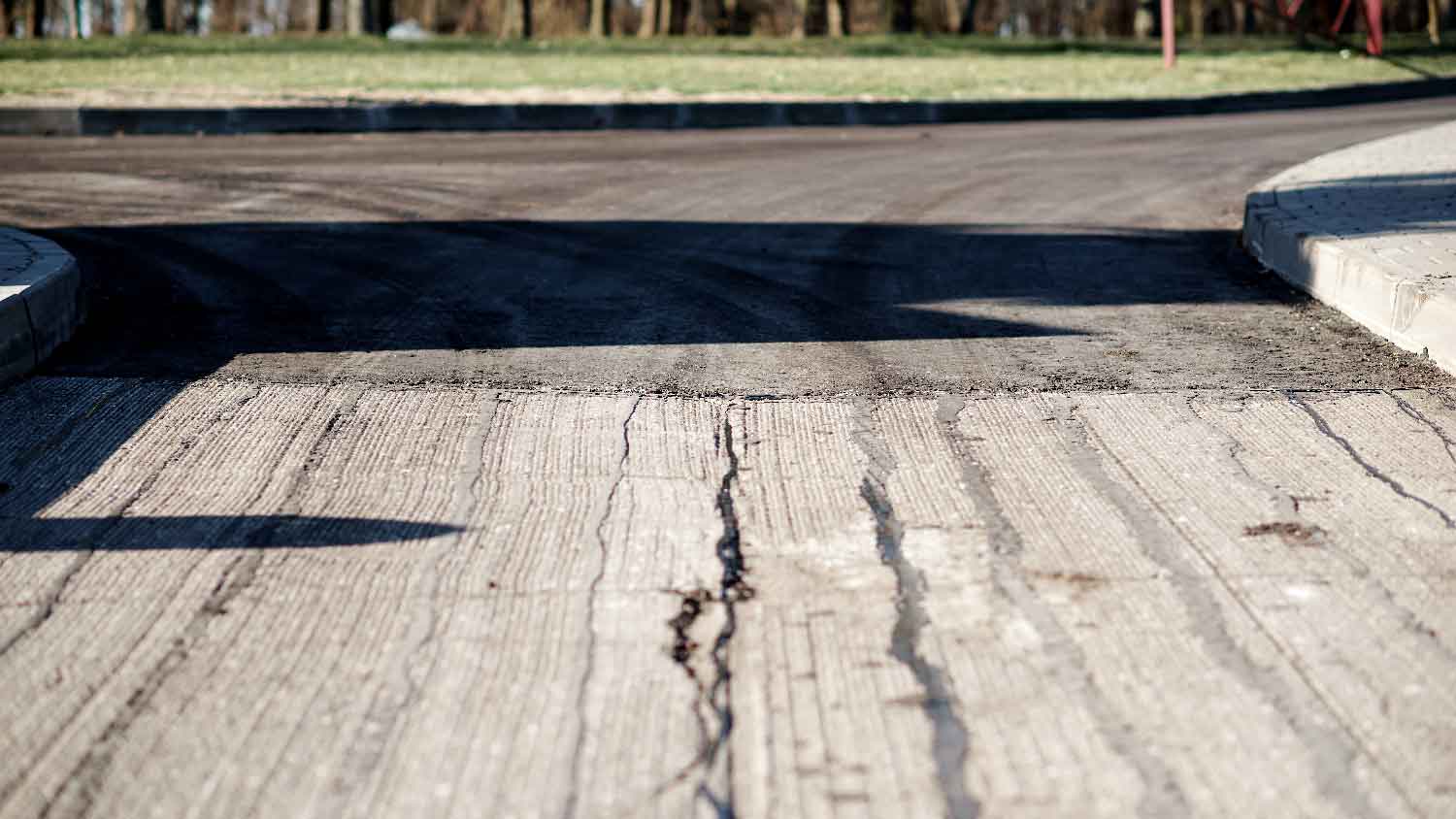
This guide gives you an idea of the average cost of asphalt millings for projects of different sizes.
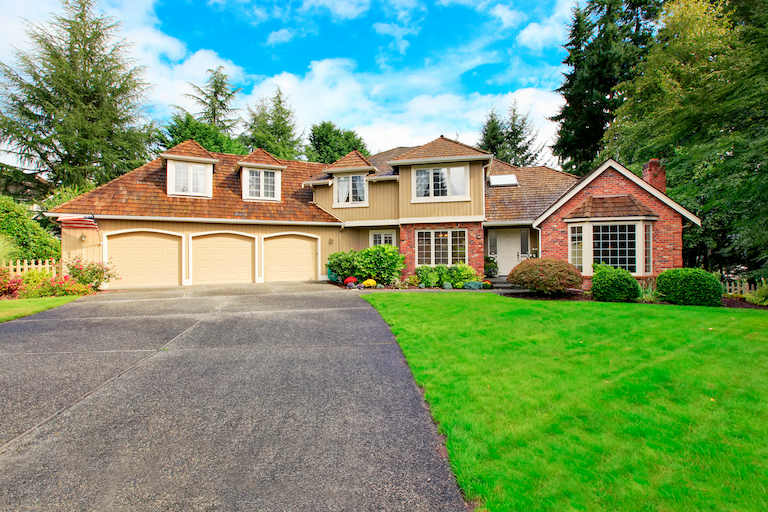
Need to know who to hire for asphalt repair? See which pros fix driveways, what they do, and how the process works. Start planning today.
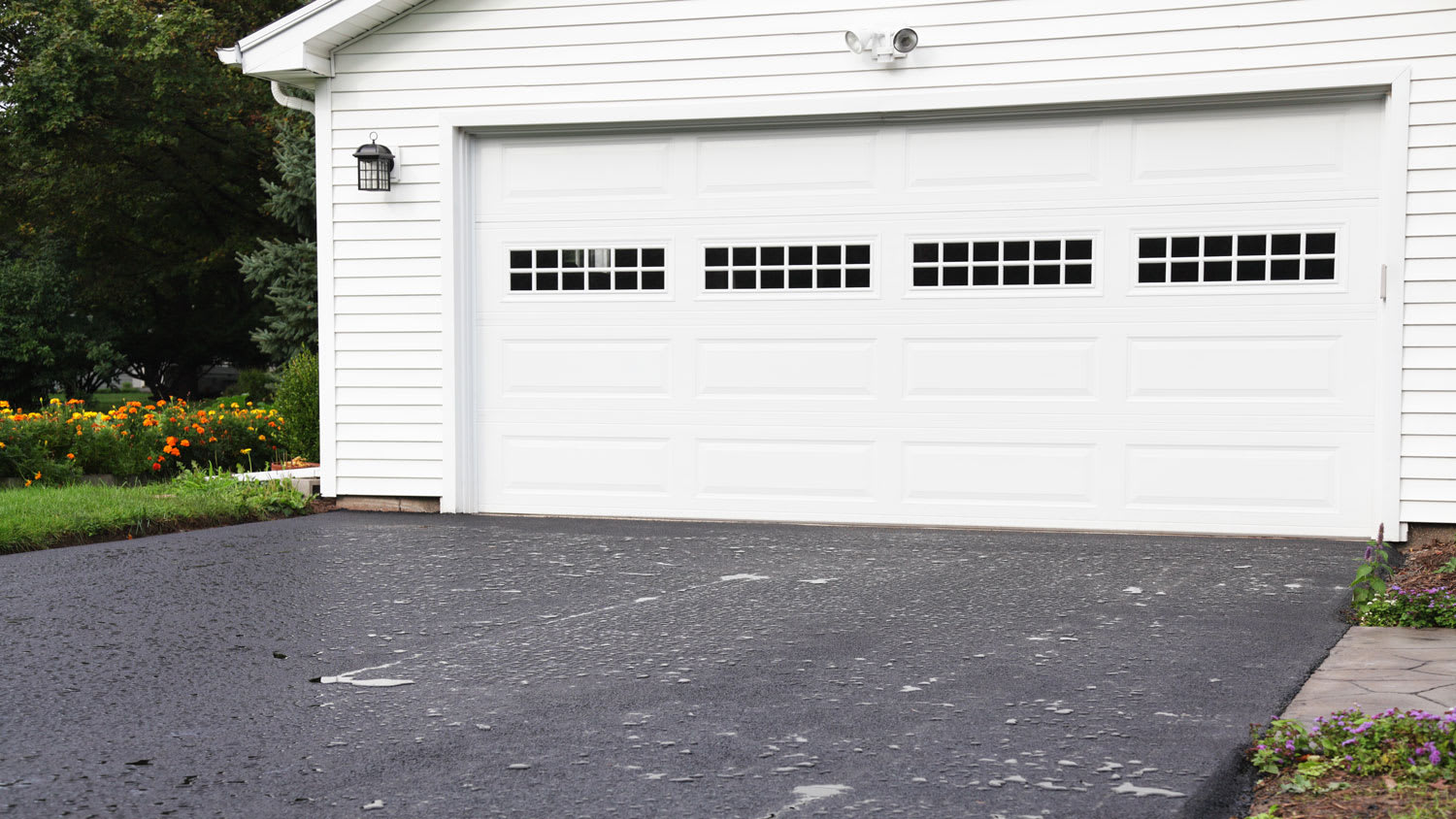
With proper asphalt driveway maintenance, your home’s entrance should last around 25 years. This detailed guide will help you maximize your exterior investment.
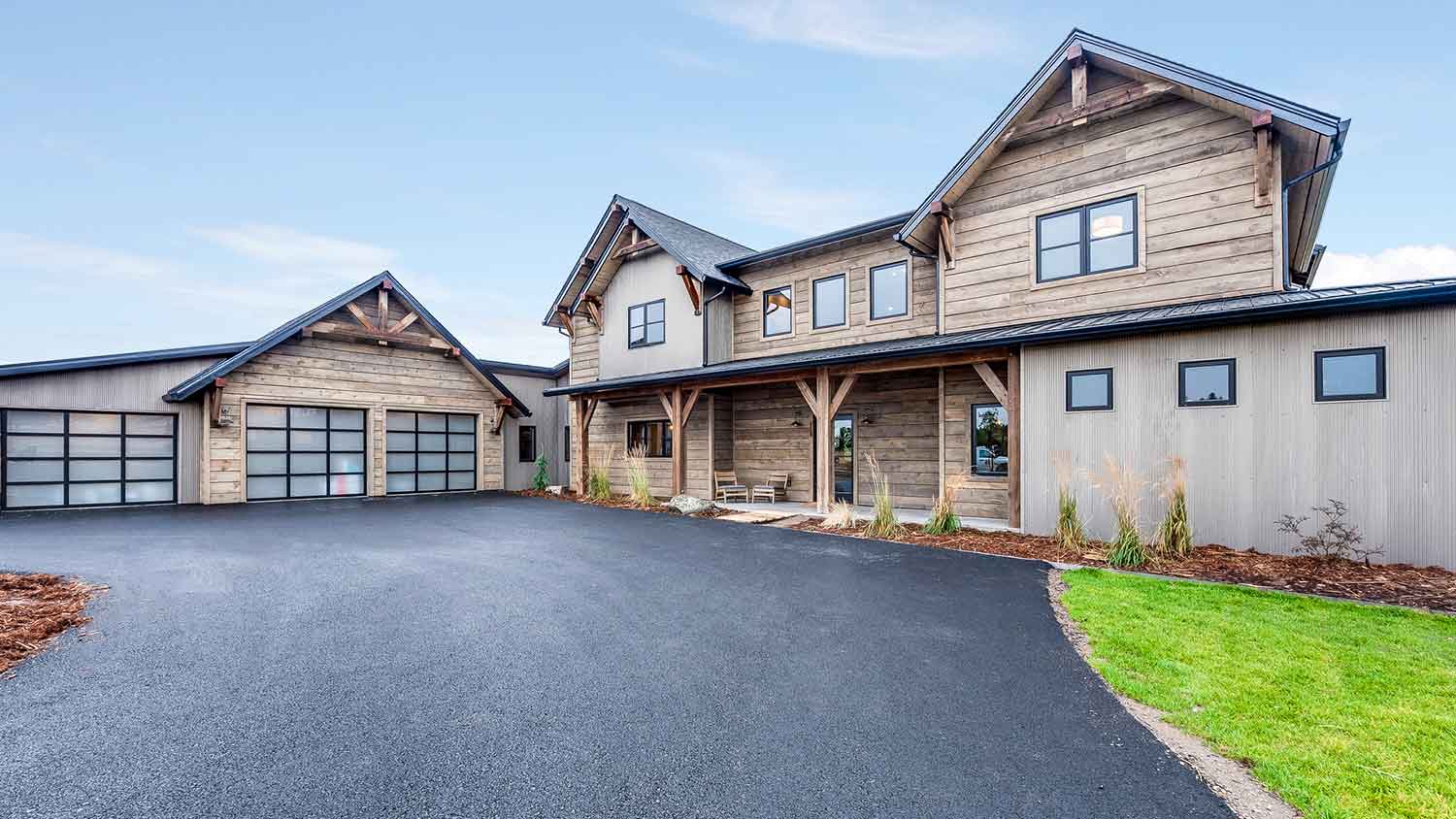
Asphalt driveways take anywhere from 48 to 72 hours to dry enough for vehicles. Stay tuned to learn more about how long before you can drive on asphalt.