

Dreaming of building your own home from the ground up? Learn how much it costs to build a house yourself and if it’s worth it to skip the pro on this project.
Get ahead of the house-hunting game by determining how much home you can afford

Your housing expense ratio and debt-to-income ratio determine how much mortgage payment you can manage each month based on your current income and debts.
Your credit score, savings, and down payment amount affect your mortgage approval and interest rate, helping you secure better loan terms when buying a home.
You can use a home affordability calculator to estimate your maximum budget before applying for a mortgage, helping you set realistic expectations during your home search.
Hiring a local real estate agent provides trusted guidance through the mortgage process, helping you understand loan options and navigate the complexities of home buying confidently.
Are you wondering if it’s the right time to buy a house? Whether you’re preparing to purchase your first home or buy an investment property, the first step is to evaluate your financial situation and determine how much home you can afford.
Luckily, there are several ways to calculate how much mortgage you can afford based on your current debt, income, and expenses. Read on to learn what goes into determining how much you can spend on a new home.
Looking for a new home is an exciting process—it’s fun to scroll through photos of homes in your desired area and daydream about moving in. But it’s essential to house hunt with a strict budget in mind to avoid purchasing a house that’s more expensive that you can afford.
Before creating your house-hunting checklist, calculate your maximum budget for your monthly mortgage payment, down payment, and home price. This crucial step will help you set a realistic price range for your future home and stay on track during the home-buying process.
If curiosity takes over, you can drop your current financial information into a home affordability calculator to get an estimation of how much house you can afford before applying for a home loan.
For example, this home affordability calculator from Freddie Mac provides a payment breakdown of your total monthly payments and ideal home worth based on your financial details and mortgage requirements.
There are multiple ways mortgage lenders calculate how much house you can afford, but your housing expense ratio and debt-to-income ratio are two of the main factors. These calculation methods predict whether or not you can pay your mortgage payment each month.
The housing expense ratio (also known as the house-to-income ratio and the front-end ratio) is the percentage of your income dedicated to your housing costs, including mortgage payments, taxes, and homeowners insurance. Mortgage lenders use this ratio as one way to determine how much money to loan you for your mortgage. Many mortgage professionals advise that you should spend a maximum of 28% of your gross income (before taxes and deductions) on housing.
Here’s how to calculate your housing expense ratio:
Add your total housing expenses, including monthly mortgage payment (principal, interest, taxes, and insurance).
Divide that number by your pre-tax income.
Convert that number into a percentage by multiplying by 100.
If your housing expense ratio exceeds 28%, you’re likely overextending yourself financially under those circumstances.
When reviewing your mortgage application, mortgage lenders also take your debt-to-income ratio (DTI) into account. This ratio is expressed as a percentage, and it represents your monthly debt payments divided by your monthly gross income. A low debt-to-income ratio helps you qualify for a favorable mortgage rate because lenders trust your ability to pay the loan each month.
Here’s how to calculate your debt-to-income ratio:
Add your monthly debts (except taxes, utilities, and groceries), such as rent or mortgage payments, credit card payments, car loans, student loans, alimony, and child support.
Second, divide all your debts by your gross monthly income. The percentage remaining is your debt to income ratio.
When you apply for a mortgage, many lenders use the 28/36 rule to ensure you can afford the loan and its monthly payments. Mortgage lenders like to see that you spend no more than 28% of your gross monthly income (your housing expense ratio) on housing expenses and 36% of your income on your total debts (debt-to-income ratio). Each bank and lender calculates borrowers’ risk differently, so you may also see the 29/41 rule, but the concept is the same.

Mortgage lenders want to ensure you're financially prepared to take on new debt, so they’ll also look at your overall financial status. As a future homeowner, you’ll need to know how other financial factors contribute to how much house you can manage.
Your credit score is a significant factor on the path to a home loan. Before applying for a mortgage, check out your credit report and correct any mistakes. Lenders usually consider credit scores above 720 excellent, but you can qualify for loans with a lower credit score. However, a low credit score may affect your mortgage rate.
Buying a home is more than a monthly mortgage payment, which is why your lender wants to ensure you have enough cash for other costs associated with buying a home, including closing costs, property taxes, private mortgage insurance, and homeowners insurance. Lenders also want proof that you have adequate savings in your emergency fund in case of job loss or financial change.
You can provide your savings and investment account balances during the loan application process to prove you’re financially ready to buy a home. For example, if you receive passive income from an investment rental property, you should list this additional funding to prove you can afford a new mortgage.
Your mortgage term is the amount of time it takes to repay your home loan. Most borrowers choose a 15 or 30-year loan, but some banks offer different terms. If you choose a shorter term, your monthly mortgage payment is higher, but you’ll own your home faster. Longer mortgage terms have lower monthly payments, but the payments stretch for years ahead.
Your mortgage rate is the interest rate attached to your loan. It also affects your monthly mortgage payment amount. The higher the interest rate, the more your monthly payment increases. Your lender will consider factors like your credit score and down payment amount and then, according to your information, offer you a fixed or adjustable-rate interest rate. Talk with a local mortgage broker to find the best combination of mortgage terms and mortgage rates for your finances.
A down payment is the percentage of the home’s purchase price that you pay upfront. Traditionally, a down payment is 20% of the sale price, but some loans require far less or even no down payment. Keep in mind that the larger the down payment, the smaller the monthly payment amount. Your mortgage application also looks more attractive to lenders if you secure the purchase with a significant down payment.
Along with determining your home-buying budget, you should learn about the types of home loans available, especially if you're a first-time home buyer. Home loans aren’t one size fits all, so talk with multiple mortgage professionals before deciding which loan makes the most sense for you.
Conventional loans are the most popular type of home loan, and it requires stricter debt-to-income ratio and credit score requirements. To qualify for a conventional mortgage, you’ll need a minimum credit score of 620, plus the ability to put down at least a 3%down payment. This loan type can be conforming or non-confirming, and it’s ideal for a borrower who has a low debt-to-income ratio and a strong credit score.
The name proceeds this type of loan. A fixed-rate loan carries the same principal and interest rate through the mortgage term, which is typically 15 or 30 years. This type of loan is popular with homeowners who want to pay the same mortgage payment for the life of the loan. However, interest rates are typically higher for fixed-rate mortgages than adjustable-rate loans.
Adjustable-rate mortgages (ARM) have fluctuating interest rates that depend on current market rates. Most loan holders get a fixed-rate period at the beginning of their mortgage term, then it changes based on market conditions. ARM loans typically allow homeowners to save on interest payments over time, they risk having to pay higher rates over time.
The U.S. government partially insures certain loans through the Federal Housing Administration (FHA), the U.S. Department of Agriculture (USDA), or the U.S. Department of Veterans Affairs (VA). There are specific qualifications for each loan type, so be sure to research whether you can consider applying for government-backed loans. A government-backed loan could be a good choice if you’re a first-time home buyer with less than a 20% down payment, served in the military, or buying a home in a rural area.
This company does it right. Firstly, I want to say that Landan was a joy to work with. He was so kind, transparent, and had everything under control. His entire team showed up ready to work and they were all very respectful of the fact that we were in an office space. A little backstory – we...
 Krumlauf Floors
Great communication throughout from discussion of the project, and its options, to installation. They found a number of unforeseen challenges when mounting my TV and soundbar to, what was found as, an untraditional wall that didn’t allow for wires to be hidden behind the wall. The team was...
 Tether House
Couldn't ask for a better company. Josh and Dee were Very professional, efficient, courteous and takes major pride in their work. They will travel to come to your home and will still give you a fair price. They are honest and trust worthy. Their focus is on their work and their work is...
 Supreme brick & chimney
Professional and great to work with. Reliable, detail-oriented and knowledgeable. Will hire again in the future!
 P&P Painting, LLC
Custom Paint Jobs LLC took our exterior from drab to fab! We couldnt be happier.
 Custom Paint Jobs, LLC
The guys at PaveWay are top notch. From the estimate to the job being completed,all was done in a timely and professional manner. I myself was a DOT Engineer Inspector(know what to look for) and got to talking with Cameron and he himself was a Contract inspector for a few years,same job as...
 All Star Paving and Sealing
Before choosing a real estate agent, we conducted a lot of research to see who would be the best choice. Homes that Click stood out as the best Columbus has to offer: their rankings are excellent, their social media presence was strong, and I could tell they put a lot of work into their...
 Homes That Click Realtors
I have witnessed Mary Goodwin's knowledge, determination, and persistence in real estate and the way she professionally guides her clients throughout the home buying process. I am in the early stages of looking for a home, but already feel confident in the process with Mary leading the way.
 Ed Huck Team
Called Mark on a Thursday morning. Not really knowing if he could help me or not. I was having driveway, flooding issues due to a clogged channel drain and I was trying to figure out what direction to take. Heavy rains had come on Monday and again on Thursday leading to flooding in my garage...
 Mark Rodgers Construction
These guys are the real deal! Their pricing was definitely competitive and fair; nothing really to write home about. But when it came to attitude and installation they knocked it out of the park. I had 3 estimates and while one was similar $$ to Eco's, the can-do and professionalism Steve...
 Eco Glass Designs
From average costs to expert advice, get all the answers you need to get your job done.
Dreaming of building your own home from the ground up? Learn how much it costs to build a house yourself and if it’s worth it to skip the pro on this project.
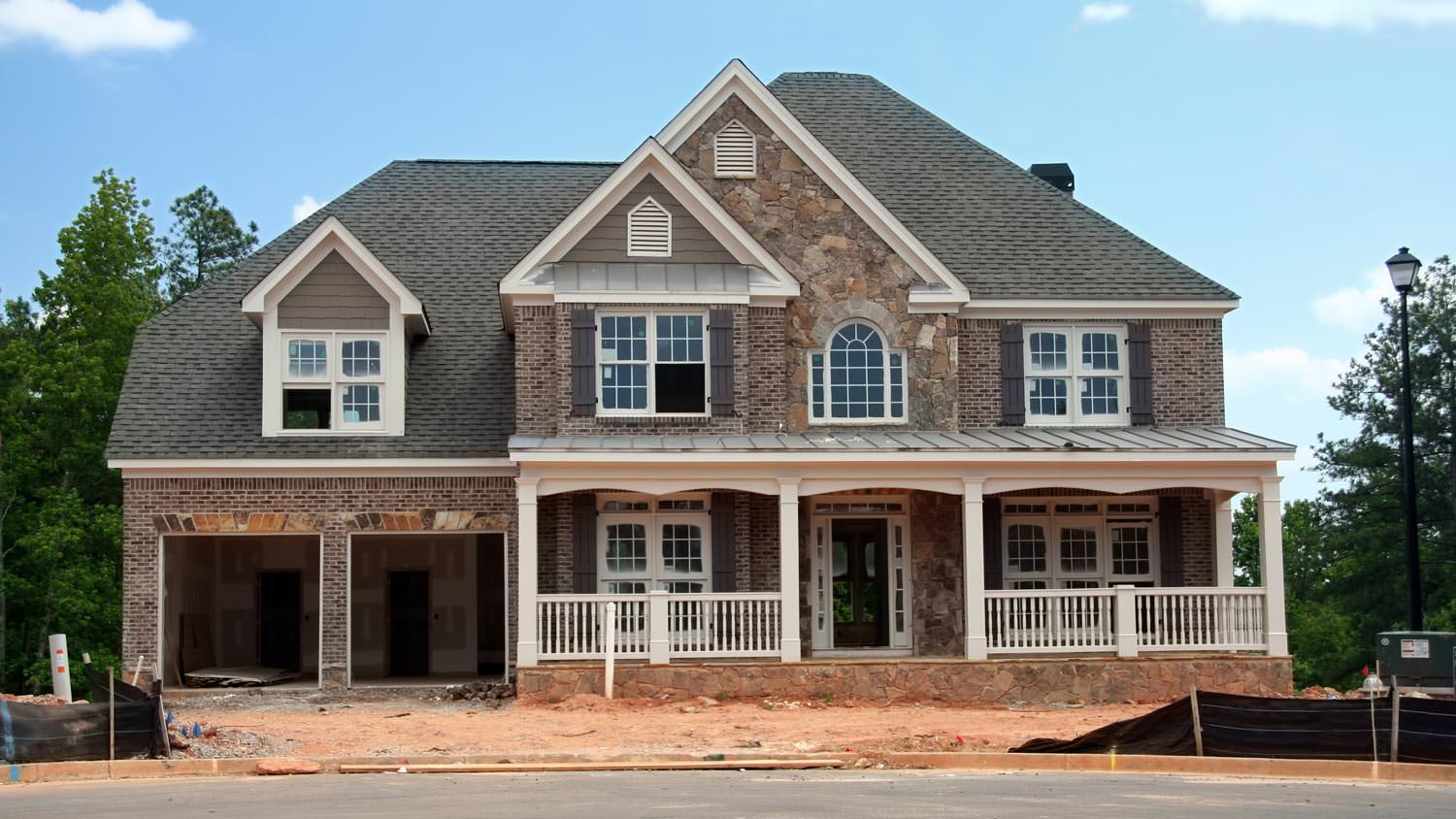
Wondering how much it costs to build a house? Use this guide to cover all your bases, from permits and planning to construction and finishing touches.

Considering a home exterior makeover with cladding? Find out the average house cladding cost to help you plan your budget.

Considering a multifamily unit? Trends show multifamily housing is on the rise. Find out why multifamily homes could be a good investment for you.

You've saved for your down payment and closing costs, but what are you missing? Let's review all of the costs of homeownership to expect.

When the power goes out, your whole house generator can keep your home running if it has enough propane to fuel it. Read our guide to propane use for whole house generators to determine how much you need.