
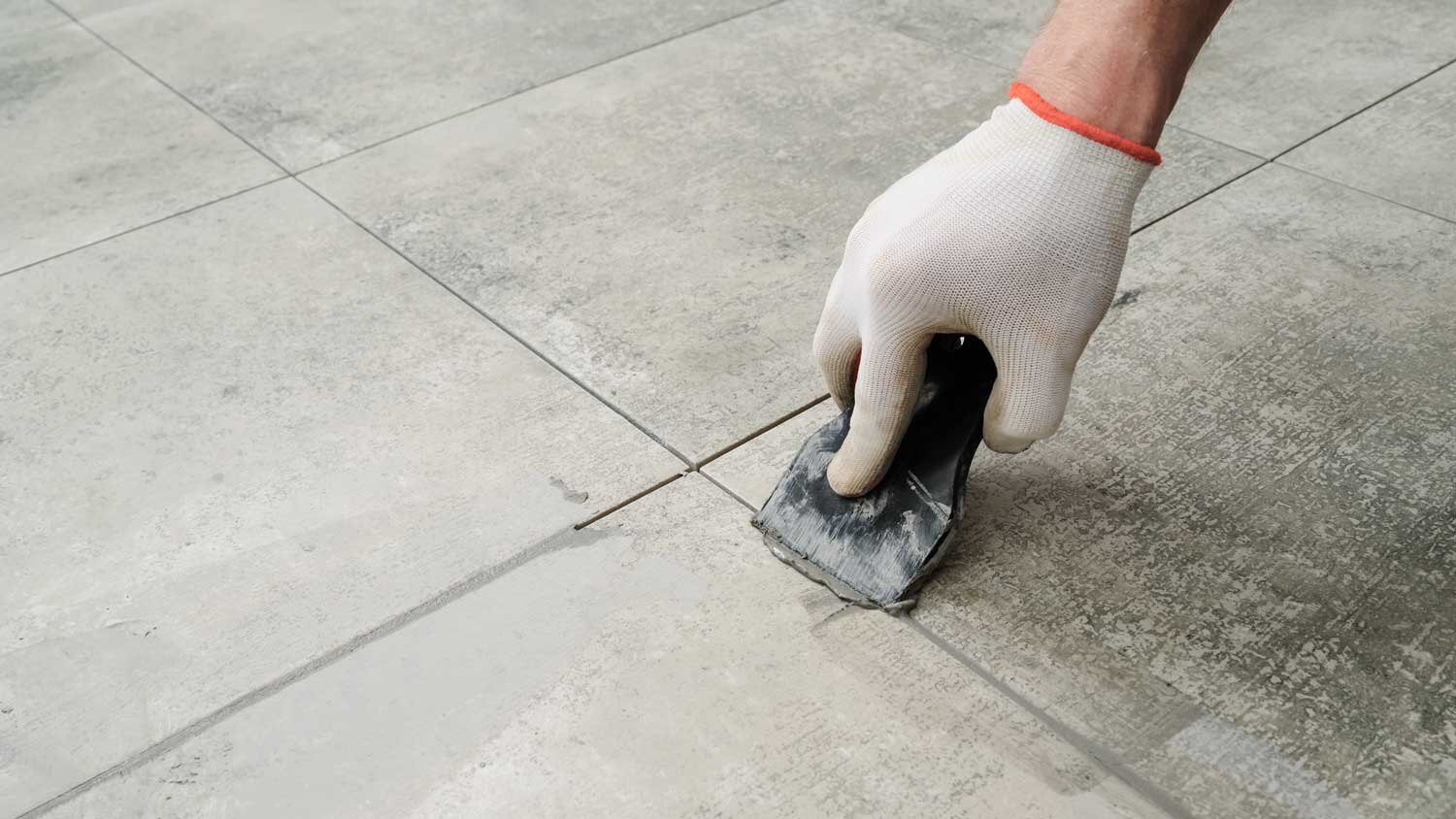
Discover the average cost of grout repair, key price factors, and tips to save. Get expert advice to plan your grout repair project with confidence.
Grab your calculator and measuring tape

Grout coverage per square foot depends on tile size, joint width, and tile thickness, so smaller tiles with deeper joints need more grout than larger tiles.
Your tile project needs calculations based on tile length, tile width, joint width, and joint depth to find the total kilograms or pounds of grout required.
Add 10% to your final grout volume to account for mistakes or waste, ensuring you have enough material to complete the job without running short.
Hiring a local tile professional keeps measurements accurate and grout application smooth, especially when working with complex patterns or multiple joint sizes.
Most of the time, we don’t think too much about grout. It’s an overlooked part of the kitchen or bathroom—at least until we notice some obvious stains and have to endure a stubborn grout deep clean. But the truth is that grout makes a difference.
A good grout job will help support and protect your tiling for years to come, but you have to install it right—and that all begins with using the correct amount of grout. With some simple measurements and math, you can easily calculate how much grout you’ll need for your project
Ever noticed the white lines between bathroom or kitchen tile? That’s grout. This mixture of water, cement, and sand is used to hold tiles in place. It also protects the edges of the tile from cracks and chips while preventing gaps between tiles that can harbor mold, mildew, and dirt.
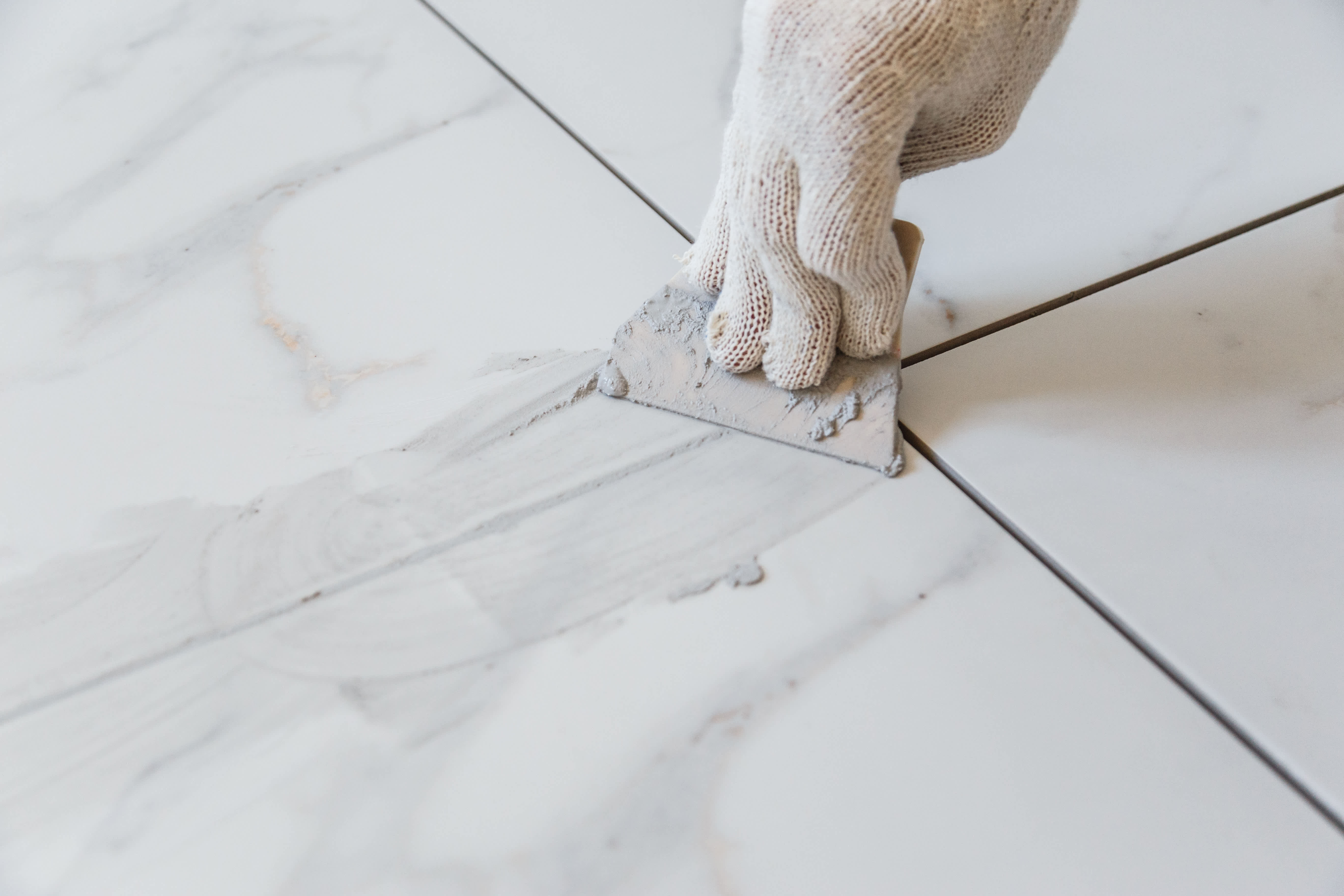
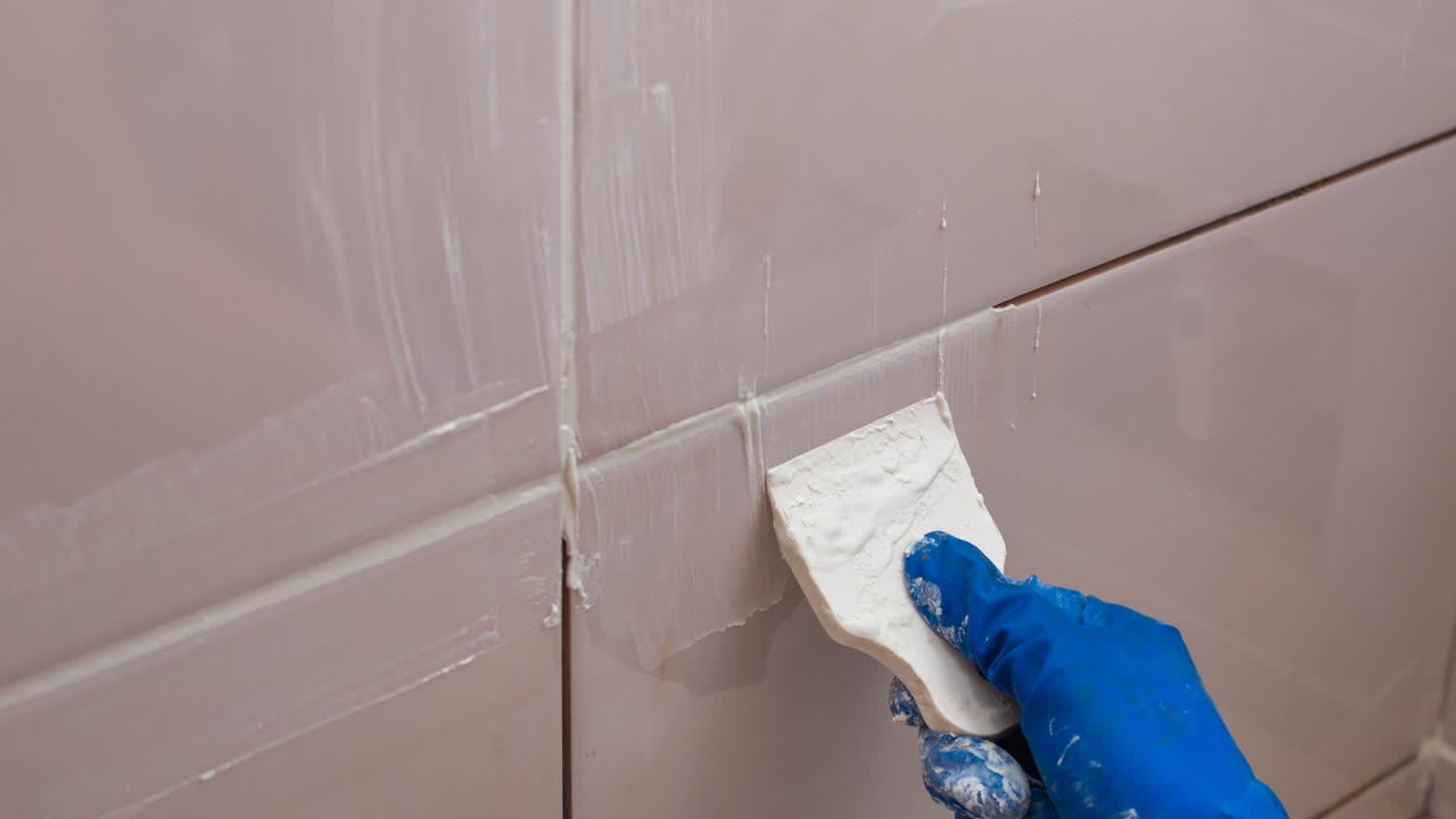
Grout is applied to the joints between tiles as a wet paste that hardens as it cures. Typically, you’ll have to mix the ingredients with water before you can apply it, but you can also purchase pre-mixed varieties. You’ll also need a few tiling tools—like a grout float and grout sponge—to apply, smooth, and finish the grout unless you plan to hire a pro.

There are a few different types of grout that you can use for a tiling project—whether you’re installing shower tile or a backsplash. Most come powered, and you’ll need to mix in the right amount of water to have long-term durability.
Sanded grout: As the name suggests, this type of grout contains sand. It’s ideal for grout joints between 1/8 inch and 5/8 inch because it has more structure and resists cracking and shrinking.
Unsanded grout: This type of grout is typically used for narrower grout joints of 1/8 inch or less. It’s also thinner than sanded grout and less likely to scratch delicate glass, metal, or polished stone patinas.
All-in-one grout: If you need to use sanded and unsanded grout in the same tiling project, you can use all-in-one grout instead. This way, you won’t have to mix separate batches or buy more grout than you’ll need.
Epoxy grout: Instead of cement, epoxy grout is made from a mixture of epoxy and sand. This is an ultra-strong, non-porous material that’s often used for waterproofing tile and areas that need extreme durability.
Acrylic grout: This type of grout has an acrylic polymer additive that makes it more flexible and water-resistant than traditional grout.
Premixed grout: This type of grout comes as a wet paste you can apply right out of the bucket.

You’ll have to take a few measurements and put them into a series of formulas to calculate how much grout you need for a tiling project. If math isn’t your strong point, you may want to hire a tile contractor near you or use an online grout calculator.
Because tile joints and thicknesses are typically fractions of an inch, it’s best to measure in millimeters and square meters. Grab a pen and record the following measurements.
The size of the area you want to tile (sq. meters)
The length of the tile (mm)
The width of the tile (mm)
The width of the joint (mm)
The depth of the joint/tile thickness (mm)
To start your calculations, you’ll need to take your measurements and add them together to find two different sums. We’ll label these A and B. Use the following formulas:
A = the width of your tile + the height of your tile
B = the width of your joint + the depth of the joint or tile thickness
Now that we have the value of A and B, we’ll multiply them to find a product that we’ll call C. To do this, we’ll use the multiplier 1.2. This number is the typical coverage ratio of a standard grout. Use the following formula, and record the value:
C = A x B x 1.2
Next, we need to find another product. We’ll label this product D. Find D using the following formula, and record the value:
D = the width of your tile x the height of your tile
E is the kilograms of grout you’ll need per meter. To find this figure, divide C by D using this formula:
E = C/D
Once you know the amount of grout you’ll need per meter, you need to find out how much grout you’ll need for the whole project. Take E and multiply it by the total area of your project (in square meters). The formula should look like this:
Total kg of grout required = E x total area (sq. meters)
Most people don’t want to know the amount of grout they’ll need but the grout coverage per bag. In the United States, dry grout is sold in pounds-sized bags. Most commonly, you’ll find bags ranging from 1 to 50 pounds.
Finding the total number of pounds for your project is as easy as converting the total number of kilograms. There are about 2.2 kilograms in every pound, so just multiply that figure by 2.2. If you’re using epoxy grout, convert your kilograms into a liquid volume unit like ounces or milliliters.
Tip: Add 10% to your final volume to account for mistakes. It’s better to have too much grout than too little.

Once you know what kind of grout to purchase, you must figure out how much you’ll need. A few factors will impact the overall required volume of grout:
The size of the tile: Smaller tiles have more joints per square foot and require more grout.
The thickness of the tile: Thicker tile creates deeper joints, which require more grout.
The width of the joint: Grout joints start at a minimum of 1/16 inch (for rectified tile) and 3/16 inch (for calibrated tile). Always follow manufacturer instructions.
Some bathroom tile trends, like rectified or Zellige tiles, have almost non-existent grout lines. In this case, you’d use the smallest possible joint width, 1/16 inch.
Medium grout joints are between 1/8 inch and 1/4 inch. This spacing is used when tiles have lugs or are slightly different sizes (like certain natural stone tiles). 3/16 inches is one of the most common joint sizes for installing ceramic tile, whereas 1/8 inches is usually recommended for mosaic tiles.
Large grout joints are between 3/8 inch and 1/2 inch. You’ll typically use this width for tiles with significantly different sizes in specific patterns (like the Versailles tile pattern).
Terrible experience. Walls/trim/floors/cabinets/doors all have drip marks, overspray, etc. Tiling at the fireplace had to be redone by another vendor due to incorrect and shoddy install by Profect. Contractor had his children in our house while he was on site without prior authorization or...
 Profect painting & exteriors
It was wonderful working with Yordy and his team. They were very professional and are experts in what they do. They have completed the work on time, with better quality and with in fairly reasonable price. We just started with backsplash work , but liking his work, we went on to provide...
 Flooring Solutions
We were having 2”x 2” tile installed . There was a small installation error and the new additional replacement tile was from a different lot and the colors didn’t match. Joe assured us that he would rectify everything , which he did without hesitation. We decided to go with the 18” x 36” tile...
 CarifaTile
For several months I was looking for somebody to tile a wall in my master bath and move lighting fixtures, and could not find anybody who was responsive. I contacted Rowe through Home Advisor and within days they came by to assess the job and provide an estimate. The cost was very...
 Rowe House Development
It went very well! The end product was amazing and we keep getting a lot of compliments from friends! M&E were very professional and they made sure we were happy with the product before leaving. They met with us in our home and at the tile shop to make sure we were okay with our tile and...
 M&E Remodeling
Involved an extensive bathroom remodel, including removing tub & installing walk in shower, new drywall, custome tile work to ceiling, plumbing, etc. Overall, job was done on time and on budget. Nick & his team were very professional and had high attention to detail. Quality was great. Highly...
 Stamos Flooring and Remodeling LLC
Very pleased with the service and level of professionalism. Courteous and very unobtrusive in performing service. Unlike several other companies, Bradford Xteriors was willing to perform work on a three story home with a clay tile roof. <br />
 Bradford Xteriors
This company did a very good job on the brick wall and it looks just amazing. The staff was always professional and was practically OCD on how the bricks were stacked and how they were laid. Although it took longer than expected, I am willing to sacrifice time over perfection anyday. The...
 My Handy Mate LLC Improvement & Remodeling
He did the tile work and he was good at it. He used other subcontractors for the rest of the work (like putting in the cabinetry) and they were okay but not great. He was a great guy! He was easy to work with and had a good eye for the detail of his work. There were a couple of things that I...
 Brian Miller Custom Remodeling
I was very impressed with Miller Cantrell! I live in an old home in which the sewage line that runs from my home to the sewage system is a line of clay tile. These eventually collapse and need to be replaced - an expensive problem and sure to happen at the worst time. I told them that my...
From average costs to expert advice, get all the answers you need to get your job done.
Discover the average cost of grout repair, key price factors, and tips to save. Get expert advice to plan your grout repair project with confidence.
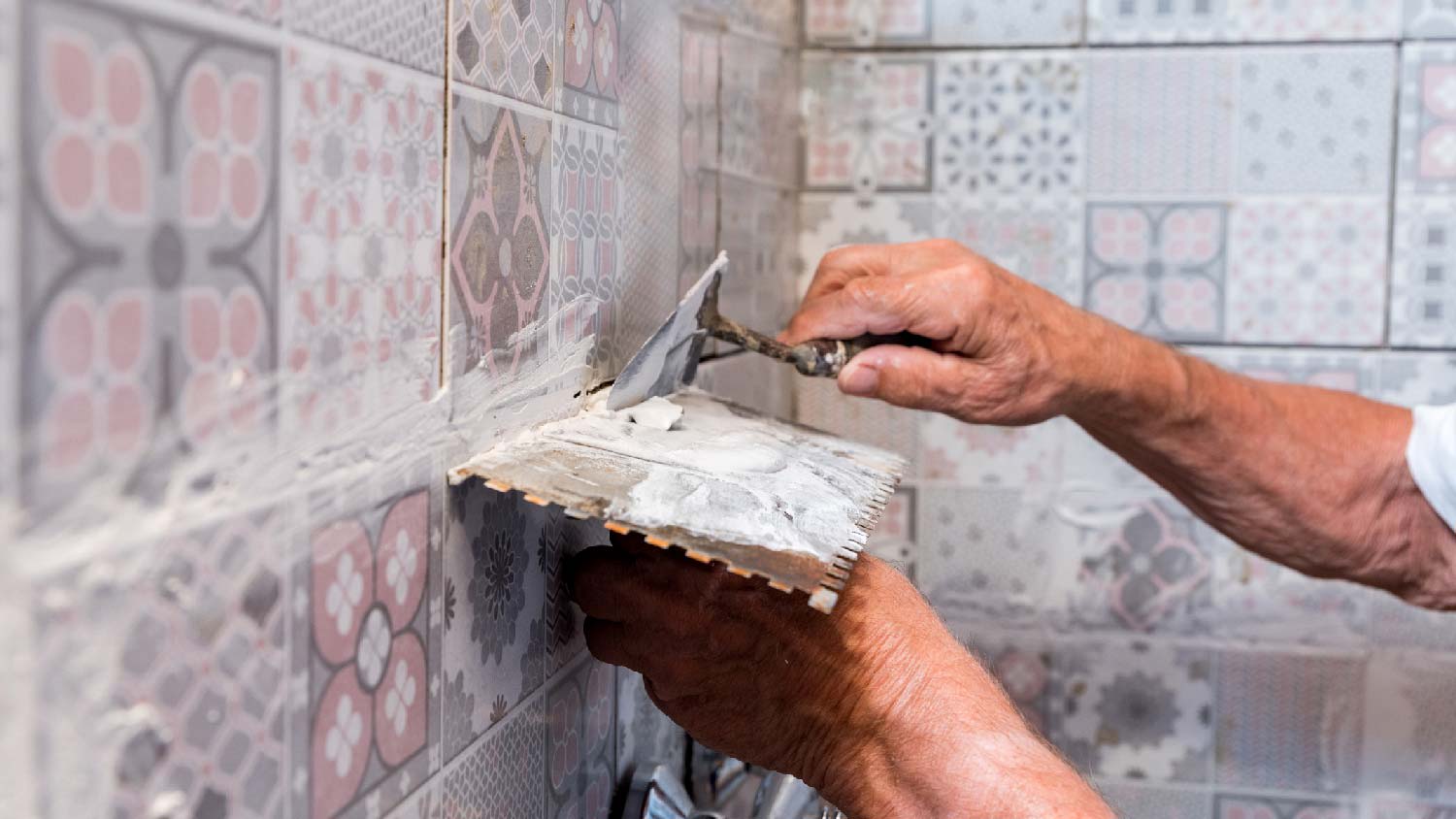
Sealing your grout goes a long way toward extending its life span. This guide breaks down the cost factors for sealing grout, including size, materials, and labor.
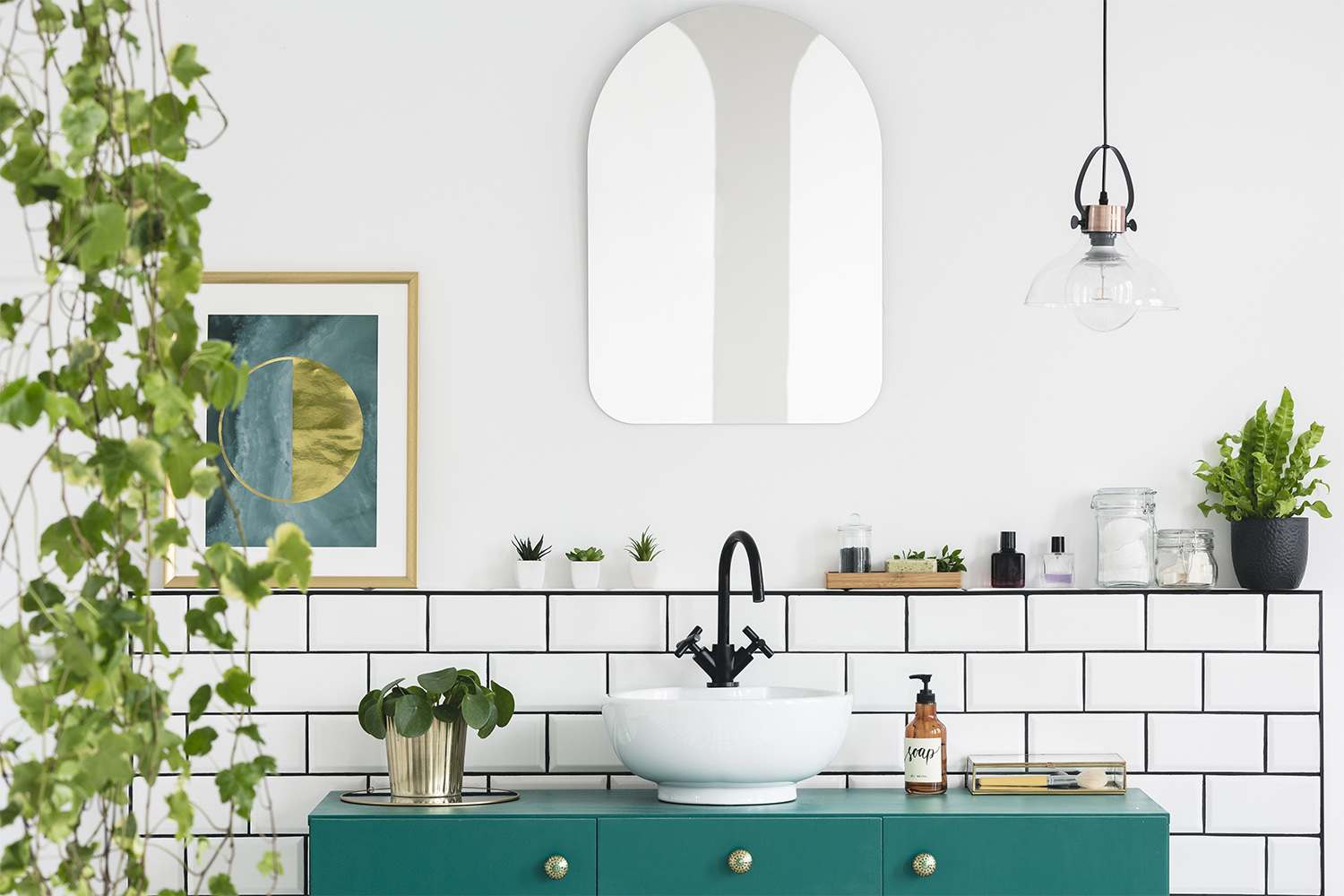
Tile and grout cleaning brings your tiled rooms back to life. In this guide, find out the details of how much it costs to hire tile and grout cleaners.
How much grout do I need? This calculator will help you estimate how much grout you’ll need to purchase for your tiles so that you can start budgeting.
Learn how to hire a qualified grout repair pro. Find tips on questions to ask, credentials to check, and how to choose the best specialist for your project.
Tile grout can become dirty or discolored over time, but regrouting your tile can give your floor new life. Here’s everything you need to know about grouting tile floors, along with whether you should hire a professional for the job.