
•
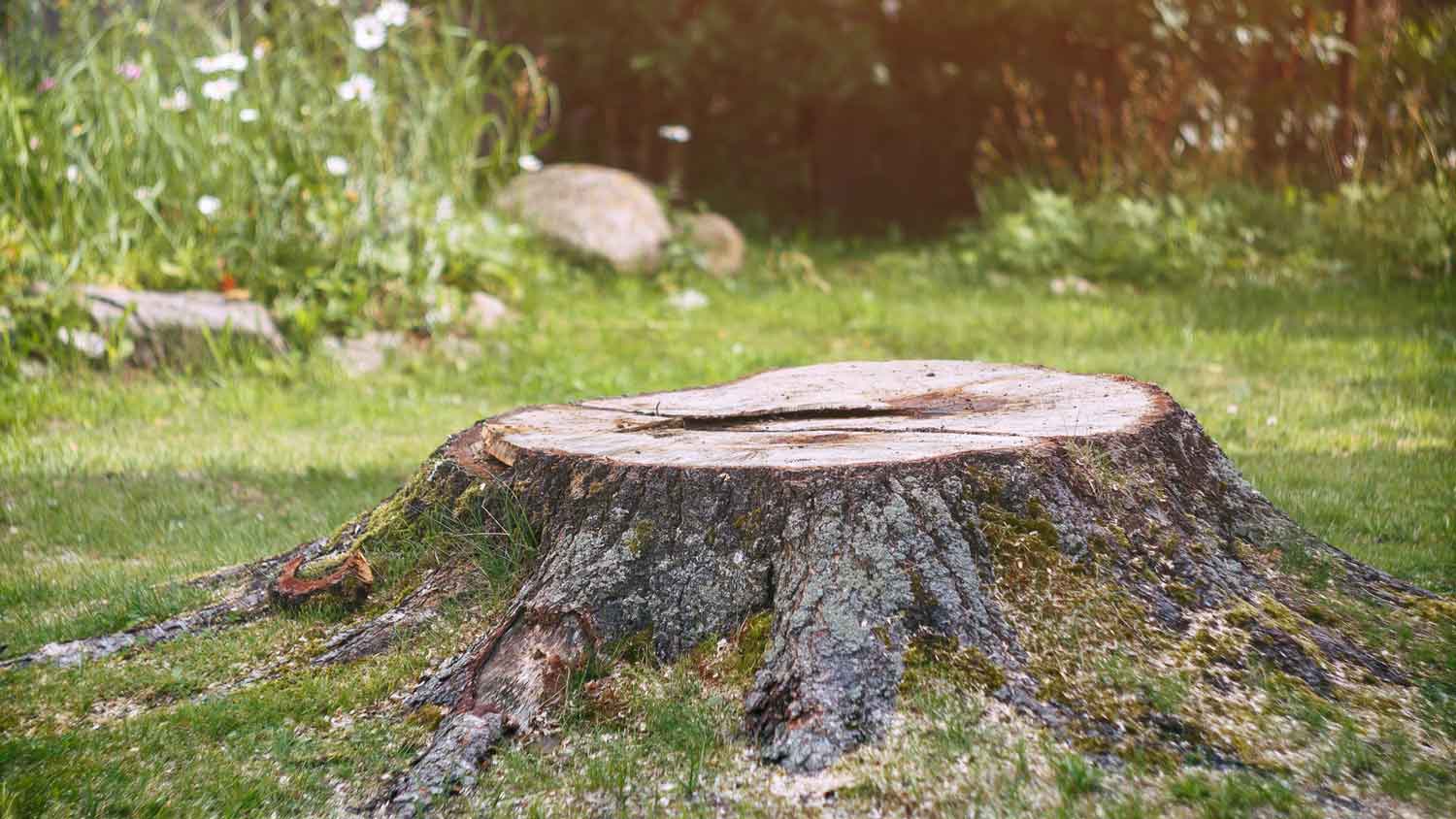
Find out the average tree stump removal cost in Atlanta, GA. Learn what you can expect to pay for local stump grinding services and clear your yard today.
Tree service costs depend on your project and location. Check with a local pro for your specific job.

The size and height of your tree are the most important cost factors to consider and will largely dictate what your total cost will be.
The proximity of your tree to your home and other structures can determine the best method of removal and plays a key role in removal costs.
Oaks and hickory trees are the most prevalent in Georgia, and these species drive average removal costs higher due to their large sizes and dense wood.
The average lot size in Atlanta is just 7,500 square feet, so close proximity to structures, which can drive removal costs higher, is typical.
Tree removal costs in Atlanta average $751, and most residents pay somewhere between $200 and $2,002. Your exact costs will depend mostly on the size and height of the tree you need removed, but the proximity to your home and other structures, the method your specialist uses, and even the species of tree can influence your costs.
Some residents in Atlanta pay as little as $150 for tree removal services for small trees, while larger trees can cost as much as $10,010 to remove. Pricing will depend on many factors, so be sure to consider the following to get an accurate estimate for your project.
A tree's size affects several main tree removal cost factors—the removal method, how long it takes to cut down, the accessibility to higher branches, and possible interference from other trees, power lines, or structures. For example, take a look at the primary tree removal price ranges by size:
| Tree Size | Average Cost |
|---|---|
| Up to 30 feet | $160–$500 |
| 30–60 feet | $485–$1,300 |
| 60–80 feet | $860–$1,700 |
| Over 80 feet | $1,100–$2,200 |
The price for tree removal can climb much higher if it’s over 80 feet high. At this stage, your team will need to bring in a crane to access its branches, which will cost an additional $500, at a minimum, including the truck rental and additional staff.
Also, keep in mind that trees get wider with age, making the trunk more difficult and time-consuming to cut. In many species, branches and root systems also expand quite far in either direction, adding up to a possible multi-day project to safely remove the tree from the area without affecting other utilities.

Some trees can grow to a very stately 100 feet tall or more, which means removing them can drive prices much higher than average. As such, the tree species you’re removing will affect your costs.
Oak trees and hickory trees are the two most popular hardwood species in Georgia, and these can both grow to 100 feet tall or more. The loblolly short-leaf pine is the most prevalent softwood species in Atlanta, and while the tree itself is easier to cut through, the species can grow to over 150 feet tall, potentially making removal very expensive.
Here are the costs for various types of tree removal:
| Type of Tree | Average Removal Cost | Important Details |
|---|---|---|
| Oak/hickory | $220–$2,200 | Older oak and hickory trees are common in Atlanta and may cost more |
| Japanese Knotweed | $2,20–$10,800 | Highly invasive shrub, some states prohibit their possession |
| Japanese honeysuckle | $270–$1,000 | The most invasive plant in Georgia |
| Aspen | $1,100–$2,000 | Enormous poplar tree, have complex root systems |
| Pine | $270–$1,700 | Tall loblolly pines in Atlanta can cost much more |
| Palm | $700–$1,600 | Extremely heavy and expensive to remove |
| Maple | $270–$2,200 | Can grow 100 feet high and have large branches |
| Ash | $270–$2,000 | Striking leaf colors in Autumn, can reach 80 feet in height |
| Cedar | $270–$1,600 | False cedars are common in North America while “true” cedars are native to places with high altitudes |
Most of the time, you aren’t going to want to keep the tree stump after the tree is removed. Stump grinding costs between $130 and $430, on average.
Removing a tree can also leave behind a trail of branches, bark, leaves, and the trunk itself. The company might haul away your tree for about $80, put it through a chipper for an average cost of $100, or split it into firewood for your home at about $80.
The location of the tree can play an important role in the tree removal cost for a few key reasons, one of the most important of which is the proximity to your home and other structures.
Trees that are close to your main structure, outbuildings, or fences are riskier to take down, so the tree removal process takes much longer, driving labor and equipment costs higher. The average lot size in Atlanta is just over 7,500 square feet, so the chance of close proximity to a structure is high. This is one reason why the average tree removal costs in Atlanta are above the national average.
Luckily, most of the power lines in Atlanta are buried, so you won’t have to pay extra for safe removal near electrical lines or poles. In other cities, this can dramatically increase costs and may involve additional permits and specialists.
Almost all of your total will go toward labor, and since the cost of living in Atlanta is 8% higher than the national average, you can expect the cost of hiring a tree removal specialist in Atlanta to be higher than it would be in most other cities. While the labor is expensive, hiring a pro is always a good idea, even if you know how to remove a tree properly, as mistakes can be costly.
In addition to labor costs, you’ll also need a tree removal permit to remove any tree with a diameter of 6 inches or greater at 4.5 feet above the soil level. For pines, which are the most common softwood species in Atlanta, you’ll need a permit if the diameter is 12 inches or greater at the same height.
Unless you’re removing a dead, dying, or diseased tree, you may have to pay “recompense,” which adds $100 per tree to your total, plus $30 for every diameter inch. You can contact the city or ask your tree removal professional to calculate your recompense costs based on the actual trees you’re removing.
In most cases, removing trees won’t increase your home value, and it may actually decrease curb appeal, which can bring down home value. The only exception would be if you’re removing a tree that’s dead, dying, diseased, or located dangerously close to your home or another structure. In these cases, buyers may see the tree as a liability and may be willing to pay more for your home if you remove it before the sale.
To help homeowners plan their next project, Angi provides readers with carefully researched cost data and upholds strict editorial standards. We start with national average project costs, which we collect by analyzing competitor information, retailer material costs, and input from professional contractors. We then apply local price index data to calculate location-specific estimates that reflect what homeowners typically pay in their local area. To do that, we use data from the U.S. Bureau of Economic Analysis (BEA), including its Regional Price Parities (RPPs), which measure price differences across cities. This helps us account for differences in labor, materials, and overall cost of living, so estimates in higher- or lower-cost areas better reflect real-world local pricing.
Every estimate undergoes a thorough editorial review to verify accuracy, consistency, and alignment with observed market conditions.
Want to help us improve our cost data? Send us a recent project quote to [email protected]. Quotes and personal information will not be shared publicly.
Great job. Affordable. Our Association hired Atlanta Tree Movers to take down 4 hazardous pine trees. We would, without hesitation, use their services again if needed!!!!
 Atlanta Tree Movers LLC
This was complicated tree service involving 3 large water oaks, landscaping with masonry and very little space for the takedowns. The team of 5 Doug Solorzano sent to do the job was expert and hard-working. The tree climbers and rope handlers on the ground planned and then brought major limbs...
 Northside Tree Professionals
I live in Atlanta's Virginia Highland neighborhood and have used Don's Tree Service a few times over 20 years. In April 2025, they removed one tree and trimmed another enormous tree. As usual, they delivered great communication, perfect cleanup and the quality of their work and...
I came in and dropped two huge trees for me. Both were close to structures. They did a fantastic job, no damage to the property. They came on time. They cleaned up after their work, extremely professional, and all very friendly. I will use them again..
 Tree Surgeon Atlanta, LLC
Saddletree is a very professional tree maintenance and removal company. They did a great job removing some very large limbs over our Decatur bungalow. The cost was fair and they did a great job cleaning up the yard. I encourage you to try this new area tree business!
 Saddletree
The tree I needed removed as in a challenging location close to a lot of structures. They did an excellent job for a fair price. They cleaned up all the sawdust and branches on my property and the neighborâ s property. Jr was very responsive and communication was excellent.
 Jr Rodriguez Tree Service, LLC
I was very pleased with the services provided by Atlas Tree Services. Their representative provided an instant job quote and was readily available for any questions or modification request. The work crew was skilled and professional and thoroughly cleaned the work site once the job was...
 Evergreen Oasis, LLC
We recently used Atlanta Arbor to trim back some large branches on several mature trees close to our house. We had Ryan come to the house, assessing the situation, consulting us on our options and providing us a very reasonable and transparent estimate on the spot. We scheduled the service a...
 Atlanta Arbor Tree Care Specialist
Totally professional service. When the project was completed, you could not tell anyone had been there……..other than the trees were gone. Total cleanup.
Wonderful and stress free experience working with Erin and Too Tier Trees. I originally was going to use another service provider until I spoke with Erin from Top Tier. After one conversation and an affordable quote I never looked back. Quick, quality and efficient. I highly recommend too...
 Top Tier Trees, LLC
From average costs to expert advice, get all the answers you need to get your job done.
Find out the average tree stump removal cost in Atlanta, GA. Learn what you can expect to pay for local stump grinding services and clear your yard today.
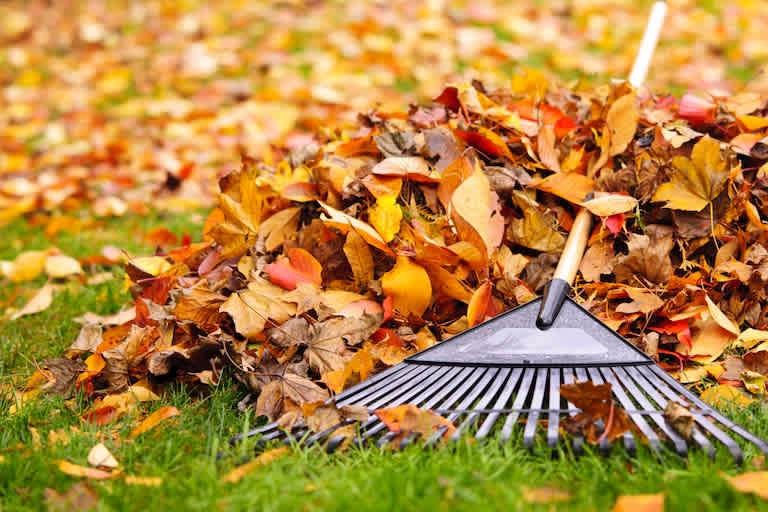
Find out the average leaf removal cost in Atlanta, GA. Learn what you can expect to pay for local yard clean-up services and get your lawn ready for winter.

If you discover a wasp nest near your home, you’ll want to remove it ASAP. Learn about wasp nest removal costs in Atlanta, GA in this guide.

Weather getting colder? The cheapest time of year for tree removal is right on the horizon. This guide will show you how to plan your project and save.
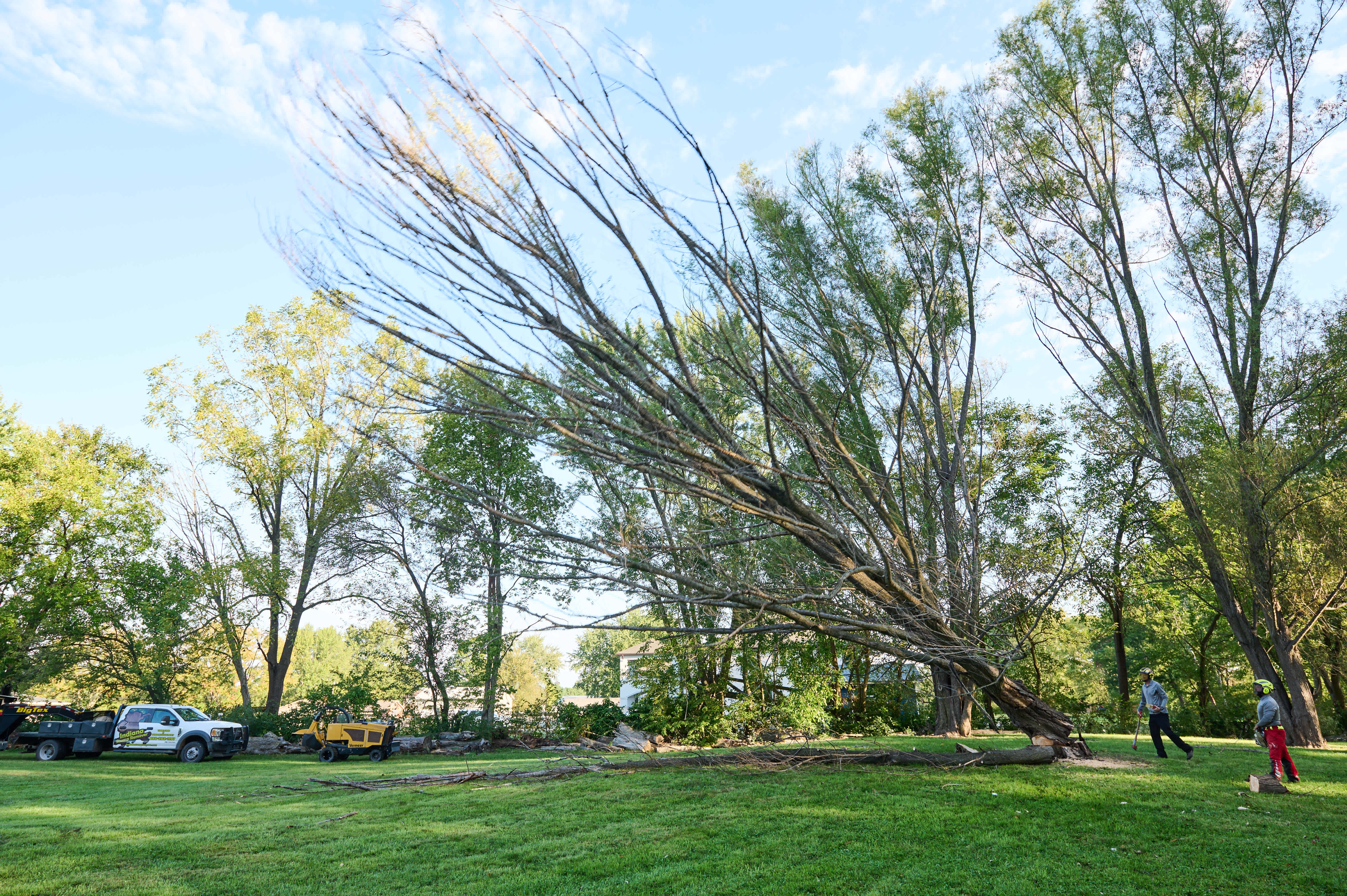
Need a tree removed from your yard? Learn how to negotiate tree removal to get the best rates on having dangerous trees removed from your property.
Asbestos removal costs vary based on location, the size of the job, and if there is any underlying damage. Learn what has the biggest effect on the cost in Atlanta, GA.