
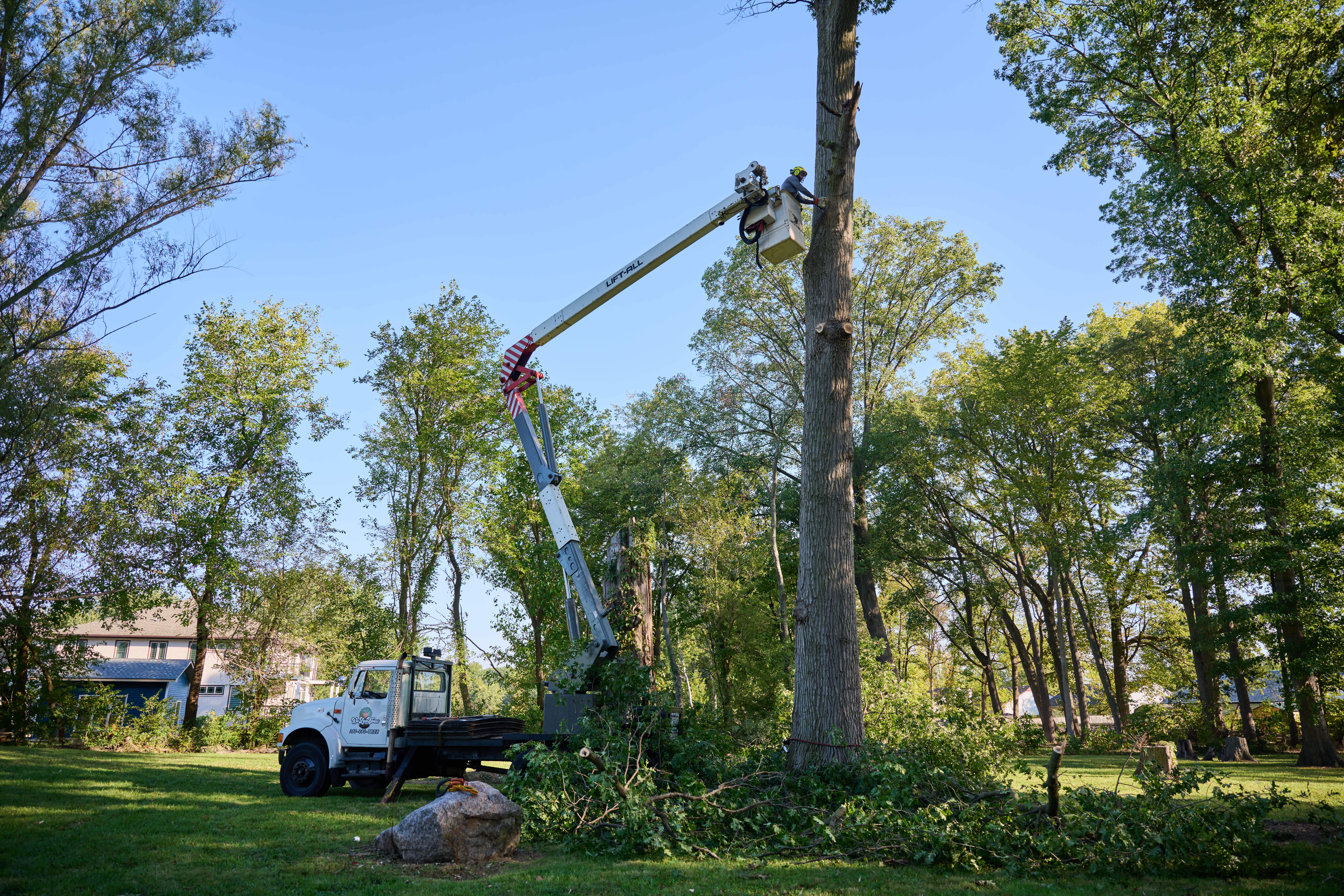
The most significant factor in tree removal costs is the amount of debris. Read on to learn more about the average tree debris removal costs in Tampa, FL.
Tree service costs depend on your project and location. Check with a local pro for your specific job.

Tree removal costs in Tampa are comparable to average national costs.
Storm damage and emergency removals can increase costs due to urgency, hazardous conditions, and additional labor requirements.
Removing a tree near structures, fences, or pools can increase costs due to the need for precision cutting and specialized equipment.
Whether it's removing safety hazards following a hurricane or simply clearing the landscape, tree removal is a common service Tampa homeowners hire for. The average tree removal cost in Tampa, FL ranges between $202 and $2,018, with most homeowners paying around $757, depending on factors like tree height, storm damage, and the difficulty of the removal. Here’s a closer look at what you can expect to pay for tree removal in Tampa.
If it’s the right time to cut the tree down, here are the main factors to consider when planning your budget for tree removal in Tampa.
A tree's size affects several main tree removal cost factors—how long it takes to cut down, the accessibility to higher branches, and possible interference from other trees, power lines, or structures. For example, take a look at the primary tree removal price ranges by size:
| Tree Size | Average Cost |
|---|---|
| Up to 30 feet | $150–$450 |
| 30–60 feet | $450–$1,200 |
| 60–80 feet | $800–$1,500 |
| Over 80 feet | $1,000–$2,000 |
The price tends to increase once the tree grows over 80 feet high. At this stage, your team will need to bring in a crane to access its branches, which will cost about $500, including the truck rental and additional staff.
Also, keep in mind that trees get wider with age, and the larger trunk diameter makes the tree removal process more difficult and time-consuming. In many species, branches and root systems also expand quite far in either direction, adding up to a possible multi-day project to safely remove the tree from the area without affecting other utilities.

Some trees can grow to a very stately 100 feet tall or more. American ash, bur oak, and maple are considered to be more difficult to remove than others, and therefore, removing them costs more. Here are the costs for various types of tree removal:
| Type of Tree | Average Removal Cost | Important Details |
|---|---|---|
| Oak | $200–$2,000 | Some states forbid the removal of these heritage trees |
| Japanese Knotweed | $2,000–$10,000 | Highly invasive shrub, some states prohibit their possession |
| Aspen | $1,000–$1,800 | Enormous poplar tree, have complex root systems |
| Pine | $250–$1,500 | Older pine trees may have a tap root buried in the soil, requiring specialist removal |
| Palm | $650–$1,500 | Extremely heavy, expensive to remove |
| Maple | $250–$2,000 | Can grow 100 feet high and have large branches |
| Ash | $250–$1,800 | Striking leaf colors in Autumn, can reach 80 feet in height |
| Cedar | $250–$1,500 | False cedars are common in North America while “true” cedars are native to places with high altitudes |
Most of the time, you aren’t going to want to keep the tree stump after the tree is removed, and it’s more affordable to include it in your service rather than paying for the separate cost of stump removal later on. Removing a tree can also leave behind a trail of branches, bark, leaves, and the tree itself. The company might haul away your tree for about $70, put it through a chipper for an average cost of $95, or split it into firewood for your home at about $70.
In Tampa, the location of your tree can play a major role in removal costs, especially if it’s close to homes, fences, pools, or other structures. Trees growing in soft or saturated soil, or in areas with limited yard access, may require additional precautions and equipment, increasing both labor time and overall project costs. Storm-damaged or hazardous trees can also be more complex to remove safely, which can drive your bill higher.
If a tree is on power lines, the right person to call is your local utility provider. Since this is a safety concern and could impact power service, they will schedule the work and typically cover the associated costs.
While it’s possible to learn how to remove a tree, tree felling can be unpredictable and extremely dangerous, so it’s best to enlist the services of a professional. These are the main factors that impact the cost of tree removal services in Tampa.
Tree removal costs in Tampa are generally in line with the national average, with only slight variations depending on factors like storm damage, tree size, and accessibility. More complex and labor-intensive jobs, like large trees or trees located near structures, push costs towards the higher end of the range.
Tree removal in Tampa is regulated under Florida law, and whether you need a permit depends on the tree’s size, type, location, and condition. Removing protected trees, such as certain oaks, pines, and elms over five inches in diameter, often requires approval from the City of Tampa. In any case, checking with the city is a must before removing a tree. Your tree removal service should handle this for you and incorporate any associated costs in your estimate.
Tree removal companies in Tampa should hold an occupational license to comply with Florida regulations. Beyond licensing, reputable tree removal companies should carry liability insurance and workers’ compensation coverage. Top professionals also hold certifications from the International Society of Arboriculture (ISA), which demonstrates advanced knowledge in tree health and safe removal.
Removing trees won’t significantly impact your Tampa home’s value unless they’ve become a major eyesore or safety risk. However, if you’re thinking ahead rather than preparing to sell immediately, it’s important to remember that large root systems can damage foundations, sidewalks, and surrounding structures. If left untreated, this type of damage can lead to costly repairs and reduce your home’s value in the future. Removing hazardous or poorly placed trees can help prevent these issues and protect your home’s structural integrity, helping preserve its value over time.
To help homeowners plan their next project, Angi provides readers with carefully researched cost data and upholds strict editorial standards. We start with national average project costs, which we collect by analyzing competitor information, retailer material costs, and input from professional contractors. We then apply local price index data to calculate location-specific estimates that reflect what homeowners typically pay in their local area. To do that, we use data from the U.S. Bureau of Economic Analysis (BEA), including its Regional Price Parities (RPPs), which measure price differences across cities. This helps us account for differences in labor, materials, and overall cost of living, so estimates in higher- or lower-cost areas better reflect real-world local pricing.
Every estimate undergoes a thorough editorial review to verify accuracy, consistency, and alignment with observed market conditions.
Want to help us improve our cost data? Send us a recent project quote to [email protected]. Quotes and personal information will not be shared publicly.
Everything about Affordable Arbor Professionals was excellent. Customer service, price and skill. We had very large tree branches removed from over our home and needless to say, they kept our roof safe. It was amazing to watch. We highly recommend them. Thank you Andrew & Humberto!
 Affordable Arbor Professionals, LLC
By far the best Tree Service company in the Tampa Bay Area. Excellent service and excellent communication. Answered all of my questions professionally and quickly. Look no more, get on the books with TNT. You will not be disappointed. We’re already planning to bring them back for additional...
 TNT Tree Service & Landscaping LLC
Great teamwork and tree sculpting artistry!!! We have a lovely ancient oak tree in the front yard. During Hurricane Milton, a large branch was struck by lightening and fell on our fence. Ever since, we have been concerned about other branches hanging over the fence, power and cable lines....
 A Thousand Oaks Tree Service - Startseite Facebook
Matt at Reece’s Tree Service trimmed limbs off very large oak trees to prevent the limbs from damaging surrounding structures. They made sure to make sure all the debris was cleaned up and hauled off. Very affordable, professional, and we will definitely call Reece’s Tree Service for all our...
 Reeces Tree Service
Excellent job from the crew. Took down 3 huge trees in 2 days with no damage or complications. They even cleaned my driveway when finished! Will definitely recommend them to anyone needing tree work. I will use them again in the future. Ronald
 Haven's Tree Service
When all the tree services in Florida raised their prices after Hurricane Milton, Gerardo and Lege
 Legendary Landscapes
Fantastic service! Would highly recommend them to anyone for tree service.
 Dr. Recovery LLC
I wish to recommend Sanders Precision Tree Service. Ty Sanders and his crew worked tirelessly and cheerfully on an absolutely horrendous bamboo removal for me. This huge bamboo had been growing in a confined space for 22 years. The base had become as high as the fenceline and I was no...
 Sanders Precision Tree Service
What a wonderful company to do business with. Matthew and his crew was very respectful on time and do good work. They went above and beyond for my property did more tree trimming then we talked about! I would recommend them to anybody I will definitely be using Reeses tree service again!...
 Reece's Tree And Lawn Service
I'm thrilled with the excellent service provided by Oaks Tree Service! They've done two fantastic jobs for me, efficiently and professionally. Their team is skilled and reliable, and I appreciate their dedication to quality work. Highly recommended!
 Oaks Tree Service
From average costs to expert advice, get all the answers you need to get your job done.
The most significant factor in tree removal costs is the amount of debris. Read on to learn more about the average tree debris removal costs in Tampa, FL.
Find out the average snow removal cost in Tampa, FL. Learn what you can expect to pay for local snow removal services and keep your property safe.
Find out the average bat removal cost in Tampa, FL. Learn what you can expect to pay for local wildlife exclusion services to keep your home safe and secure.

Weather getting colder? The cheapest time of year for tree removal is right on the horizon. This guide will show you how to plan your project and save.

If you discover a wasp nest near your home, you’ll want to remove it ASAP. Learn about wasp nest removal costs in Tampa, FL in this guide.
Expect your weed removal service cost in Tampa, FL to depend on the size of your yard, the type of treatment, and the severity of the infestation.