
Just bought a plot of land and need to get it build-ready? Learn how much it costs to clear land in San Francisco, CA, to gauge your initial budget before you break ground.
Tree service costs depend on your project and location. Check with a local pro for your specific job.

Make sure you hire a pro with a watertight insurance policy.
Trees in hard-to-reach places, especially around power lines, will cost much more than a tree on flat ground in the middle of your yard.
Almost all of the cost involved is labor unless you need it disposed of outside your property.
If the wood is in good condition, strongly consider having your pro split it into firewood and reselling it to offset costs.
Removing a tree in San Francisco, CA, will cost $867 on average, with most homeowners spending between $231 and $2,312. Small trees run on the lower end of the spectrum, while large or hard-to-access trees cost significantly more. Additional factors like permits and stump removal can add to the overall price. Getting multiple quotes from licensed, well-reviewed arborists is the best way to ensure you're getting a fair rate for quality work.
The size and height of a tree are the biggest drivers of tree removal cost in San Francisco, CA, as larger trees require more labor, time, and specialized equipment. Location also plays a major role, with trees near power lines, structures, or in tight spaces requiring extra precautions that increase the price. Stump grinding carries a cost, as well as removal. Finally, the type of tree (oak, aspen, cedar, etc.) plays a factor as well.
A tree's size affects several main tree removal cost factors—how long it takes to cut down, the accessibility to higher branches, and possible interference from other trees, power lines, or structures. For example, take a look at the primary tree removal price ranges by size:
| Tree Size | Average Cost |
|---|---|
| Up to 30 feet | $150–$550 |
| 30–60 feet | $550–$1,400 |
| 60–80 feet | $950–$1,800 |
| Over 80 feet | $1,200–$2,300 |
The price tends to increase once the tree grows over 80 feet high. At this stage, your team will need to bring in a crane to access its branches, which will cost about $700, including the truck rental and additional staff.
Also, keep in mind that trees get wider with age, making the diameter of their trunk more difficult and take longer to cut. In many species, branches and root systems also expand quite far in either direction, adding up to a possible multi-day project to safely remove the tree from the area without affecting other utilities.

Some trees can grow to a very stately 100 feet tall or more. American ash, bur oak, and maple are considered to be more difficult to remove than others, and therefore, removing them costs more. Here are the costs for various types of tree removal:
| Type of Tree | Average Removal Cost | Important Details |
|---|---|---|
| Oak | $250–$2,300 | Some states forbid the removal of these heritage trees |
| Japanese Knotweed | $2,300–$11,550 | Highly invasive shrub, some states prohibit their possession |
| Aspen | $1,150–$2,100 | Enormous poplar tree, have complex root systems |
| Pine | $300–$1,750 | Older pine trees may have a tap root buried in the soil, requiring specialist removal |
| Palm | $751–$1,750 | Extremely heavy, expensive to remove |
| Maple | $300–$2,300 | Can grow 100 feet high and have large branches |
| Ash | $300–$2,100 | Striking leaf colors in Autumn, can reach 80 feet in height |
| Cedar | $300–$1,750 | False cedars are common in North America while “true” cedars are native to places with high altitudes |
Most of the time, you aren’t going to want to keep the tree stump after the tree is removed. Removing a tree can also leave behind a trail of branches, bark, leaves, and the tree itself. The company might haul away your tree for about $90, put it through a chipper for an average cost of $120, or split it into firewood for your home at about $60. You can always negotiate a lower price for firewood if you split the wood with your pro.
In San Francisco especially, hard-to-access trees will cost significantly more. One of the reasons for hiring a seasoned pro is that they won’t waste time figuring out how to navigate around power lines or between homes, costing you money. Trees on high-angle ground, those encroaching on utility lines or streets, and other oddball scenarios will always carry a premium.
Hiring a tree removal pro in San Francisco, CA, should be taken seriously. The first thing you should do when discussing removal is check a pro’s insurance. The last thing you want is a 600-pound limb crashing through your roof and ending up in your kitchen. Hire a pro with solid reviews who offers you a fair price, which can be anywhere from $30 to $90 per hour or more if specialized equipment is required. While there is some negotiation room with tree removal costs, consider the danger and importance of the work before pressing too hard on your pro’s rate.
It’s a nuanced answer and depends on your property, but the process of tree removal almost never raises your home’s value. When we say nuanced, we mean that certain trees being removed can preserve your home’s value, while removing healthy, aesthetic trees can actually lower it. Trees are excellent at blocking the sun in the summer, which can have a direct effect on lowering your air conditioning costs.
Older trees can raise the value of your property, so removing them would lower it, sometimes drastically. For dead trees or those that may fall, removing them will preserve your home’s value, but it won’t increase it.
To help homeowners plan their next project, Angi provides readers with carefully researched cost data and upholds strict editorial standards. We start with national average project costs, which we collect by analyzing competitor information, retailer material costs, and input from professional contractors. We then apply local price index data to calculate location-specific estimates that reflect what homeowners typically pay in their local area. To do that, we use data from the U.S. Bureau of Economic Analysis (BEA), including its Regional Price Parities (RPPs), which measure price differences across cities. This helps us account for differences in labor, materials, and overall cost of living, so estimates in higher- or lower-cost areas better reflect real-world local pricing.
Every estimate undergoes a thorough editorial review to verify accuracy, consistency, and alignment with observed market conditions.
Want to help us improve our cost data? Send us a recent project quote to [email protected]. Quotes and personal information will not be shared publicly.
Great service, I highly recommend it; my house was left very clean.
 Cleaning pro
Wor was done in a pro manner very efficient and prompt. High level of customer service. I would recommend this service to all my friends.
 Sine D
Dusty and his team really went above and beyond for us. Removing our large tree took day longer than planned and they still showed up first thing the next day and completed the job with excellence and professionalism. They encouraged us to turn it into firewood rather that waste it and...
 Dynamo Dusty's Tree Service
Friendly helpful service for help with gardening, great knowledge and expertise.
 Zamora's Maintenance & Service - Unlicensed Contractor
Awesome service... I am so happy of their service, They are full clean my house.. thank you so much for this service..
 J D Appliance Repair
Love their service... They worked tirelessly on our front porch.. thank you so much for your service...
Amazing, Efficient and Friendly Service
 A2B Moving and Storage
Best job I have has done. Very knowledgeable About trees
 Bay Breeze Landscaping Inc
I was impressed with their services. Very polite team, they moved everything with care. They did an amazing job. I would highly recommend their services.
 Esquire Moving, Inc.
Great affordable service, with a friendly honest attitude.
 Golden Coast Plumbing and Rooter
From average costs to expert advice, get all the answers you need to get your job done.
Just bought a plot of land and need to get it build-ready? Learn how much it costs to clear land in San Francisco, CA, to gauge your initial budget before you break ground.
Asbestos removal costs vary based on location, the size of the job, and if there is any underlying damage. Learn what has the biggest effect on the cost in San Francisco, CA.
Popcorn ceiling removal costs in San Francisco, CA depend on the size of your ceiling and additional services, like asbestos removal. Learn all the costs here.
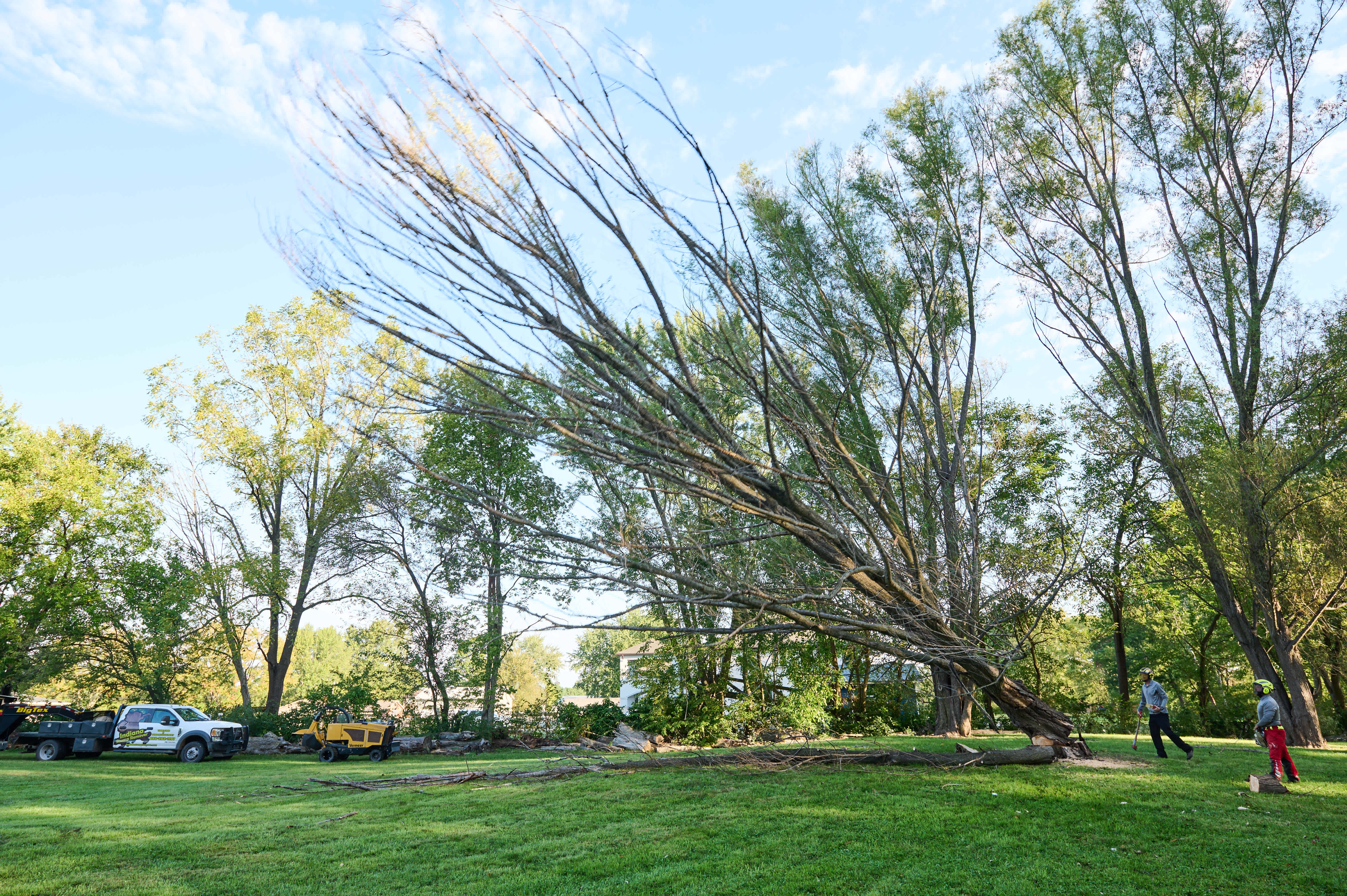
Need a tree removed from your yard? Learn how to negotiate tree removal to get the best rates on having dangerous trees removed from your property.

Weather getting colder? The cheapest time of year for tree removal is right on the horizon. This guide will show you how to plan your project and save.
Learn what the tree removal process entails and find out what qualities to look for in professional tree removal services in this guide